Tag Archives: scifi

Snippet # 2 from Leo Champion’s Highway West

Here’s another snippet from Leo Champion’s Highway West, coming soon to Amazon, Smashwords and other ebook vendors near you!


Chapter Two

It was mostly dark when Najif woke Ashford, shaking his shoulders hard. He’d been sleeping – was lying down, now – on a rough straw mattress in a corner of Najif’s room, in an apartment in the fisherman’s district.

You need to change,” was the first thing Najif said to him. His tone implied heavy urgency. Ashford got to a sitting position.

Why?”

Najif held out some clothing.

Change. Now. Later I will explain.”

It’s got to be something bad.

Ashford got to his feet, stripped out of his white uniform and down to his briefs. He wished he could shower or something first. He changed into the clothing Najif gave him – grey linen trousers, a once-white sleeveless shirt, black leather belt, leather sandals. As he pulled his socks off and stepped into the sandals, worry went through him. The clothes, his uniform, were the last connection he’d had to civilization after his ship had been destroyed and his men had deserted.

In the first moments after waking, Ashford had hoped all of that might have been a bad dream, a nightmare. The cool morning air and Najif’s terse urgency, the coarse linen on his skin over the mild sunburn and the slowly-starting-to-heal wounds, dispelled that hard.

The pants were loose. He buckled the belt tight.

Your skin is white. There are not many things we can do about that. Some men have white skin, and the sunburn can help. Hmm.”

Najif turned around. He’d packed two rucksacks the night before. He rummaged in one and came up with a black kerchief.

You have fair hair. Put this on. Less men have blond hair than white skin.”

Ashford took the kerchief. He’d never worn one in his life, and for good reason. Bandannas were what laborers, dockside workers and common sailors wore. Ashford’s family was upper-middle-class and proud of it in a class-conscious society.

There’s danger. There’s obviously danger, Ashford thought. He put it on and inexpertly tied it behind his head.

The uniform is worth some money. Good cotton has a price,” said Najif. “Rosa will say she found it in the street. If someone speaks to you, say nothing. You know some Greek, but your accent gives you away. The talking, I will do.”

Najif picked up one of the rucksacks and handed it to Ashford.

Put this on. It’s time to go.”

Why? What’s the urgency? Why are we hiding?”

There could be a million reasons. Ashford didn’t doubt Najif’s sincerity. But why?

Najif scraped his hands along a corner of the room,where boarded floor met stucco wall and a lot of dirt had been swept. Then he carefully daubed Ashford’s face with it.

Do not move,” he said. Smearing a little more of the dirt on his face, spreading it thinner.

This should be adequate. Take a look and go to the window. Tell me what it is that you see.”

Gut in his throat, Ashford went to the window. It was open and glassless and looked out from the third storey directly onto the harbor. Some of the morning fishermen were already out, and there was a buzz of activity on the fishermen’s docks.

And in the mouth of the harbor, surrounded by a wide margin of empty water because the early fishermen had heard all about yesterday’s devastation, was the battleship. Eight hundred feet long, brutally wide, dark steel and heavy batteries of massive guns. Men moved around on it, but there was not a single flag to be seen on her grey-black shape.

Ashford ducked instinctively, staggered back to where Najif was.

She arrived in the night. Men have landed. There is a rumor out that they are looking for Americans. That they will pay a price for live ones.”

Oh shit.

Do you know who they are?”

The rumor did not say,” said Najif. “Do you want to find out by asking them? Or should we leave before one of my apartment-sharers hears the same rumor?”

There were noises outside. Najif shared this place with two other unmarried fishermen.

Oh, shit.”

You understand the urgency now. Put some more dirt on you. Not a lot. It does not do for a fisherman to appear muddy. But enough to darken the skin a little.”

Ashford didn’t think. He took more dirt from the ground, dusted it across his arms, his neck and his ankles.

Najif nodded.

Come on.”

Wait – do we have money? What about your boat? Where are we going?”

Captain Enos is a good man; he has had a standing offer for my share since I bought it some years ago. He was not able to raise the full price, not at a few hours notice. He was able to raise a sizable amount of it. Do you have any more urgent questions or shall we hurry? Ask, because we might not be able to talk easily once we leave here.”

Can I trust you? came immediately to mind, but he shot that down immediately. Where are we going? might take a while to answer, and Ashford completely understood Najif’s urgency now. He himself wanted to run, run, run as fast as he could away from that ship.

Can you give me a weapon?” he surprised himself by asking.

A gun, I do not own. Needless violence is against my religion; I am a true follower of Mohammed.. But we may need to defend ourselves. In the countryside there are sometimes bandits. For what little good it may do, I can give you a fish knife.”

It was a six-inch gutting knife. A thin steel blade, slightly curved, set into a short wooden handle.

In there,” said Najif, gesturing to a short loop on Ashford’s belt that he hadn’t noticed before. He put it in and drew the loop closed; the blade hung by his side. There was a similar loop with a slightly longer knife on Najif’s belt.

Let’s go.”

* * *

Ashford kept his head down as they hurried down the stairs and out of the apartment. The fishing district here was as bustlingly busy as the one in Provincetown had been, this time of morning. They passed fishermen checking their nets, wives doing last-minute repairs or carefully threading hooks onto lines. Vendors sold clay jugs of wine and kebabs of smoked fish and vegetables.

The traffic grew a little quieter as they transitioned from the fishing district to the area around the commercial docks. Kids and old men slept in doorways. A teenaged boy sold booklet-like newspapers from a small wooden barrow, crying out in fast Greek that Ashford barely understood the gist of. The big item of the day’s news was, of course, the Wilson’s destruction.

Ashford wanted to buy a paper – he could read Greek well enough – but he didn’t have any money. Besides, Najif wasn’t about to stop.

They hurried on past, staying a couple of streets away from the docks. A gasoline-powered truck was being unloaded in front of one warehouse by half a dozen muscular men in brightly-colored bandannas. A man on horseback trotted past in the opposite direction. In front of a surprisingly elegant building that had to be some prosperous merchant’s dockside offices, an electric light shone onto the street.

At a market square, stallholders were starting to unpack their wares. Fish, fruit, meat, eggs and a hundred other things. Another newspaper vendor was yelling shrilly. This time Najif stopped. He handed over a couple of coppers.

The kid nodded thanks and gave him a paper. It was thin, only four pages, and badly-typeset; the Boston papers were much better but Ashford was surprised there was one at all in a place like this.

Well, the city bosses probably needed some way to get the word out about new taxes, or to criticize their rivals. There were a lot of crudely-woodcut pictures, which made sense. Probably not too many literate people around here.

This way,” Najif said. They took a right turn, heading uphill on a road that steadily got steeper. Past shuttered-up shops and through a small slum. Tenement buildings gave way to nicer apartments and, as they ascended further, the fortified houses of the upper class. They crested the top of the hill, past more warehouses and another slum on the downslope, and then they were at the city walls.

A hundred and seventy years ago, of course, Kyrenia had been a lot bigger; everywhere had been. Deaths, sickness, violence and food-seeking migrations to the countryside, had shrunken Cyprus’s northern port from forty thousand to – well, probably almost nothing for a while like most of the towns and cities, but it’d only recovered now to maybe a fifth of that. Most of the stone from the abandoned buildings had been rebuilt into these twenty-foot-high walls.

A line of people and vehicles were slowly shuffling uphill toward the gate. Early farmers coming back from delivering their goods to the city. A few merchants. A good number of individuals on their own errands. Individuals on foot mixed with donkeys, carts, wheelbarrows and a single gasoline-driven car that flew a complex flag from a low pole on the center of its roof.

Guards with bolt-action rifles were looking over the people as they left, but not interfering too much. The people coming into the city got more attention, and most had to pay a toll. The outgoing line moved pretty quickly.

Ashford expected something to happen when they passed the guard, but he did nothing; he barely even moved his head to motion them forwards.

Rusty coils of barbed wire were strung here and there amongst the dirt on the hundred yards or so between the city walls and the nearest construction, a couple of buildings that smelled vile. Tannery or something. A steep downhill slope looked across a narrow valley.

Najif had slowed down when they approached the gate. To Ashford’s relief, because the effort of walking so fast had opened up the cut on his chest, he didn’t resume the earlier pace when they were out.

Instead, they headed along the badly-maintained tarmac road at a slow walk. A few hundred yards out, as they were climbing the facing slope, he stopped a man with a donkey coming towards the city. There was brief haggling, before Najif handed over a couple of coins in return for a double-handful of large black olives.

Breakfast,” he said to Ashford. “There’s a stream on the other side.”

***

Where the hell are going?” Ashford asked about half an hour later. They were sitting down by the stream in the next valley, where there was fresh water to go with the olives they’d eaten.

Overland,” Najif said, replying in English to Ashford’s Greek.

I thought we were going by sea.”

I thought so too,” said Najif. “Then the ship came. Do you know anything about Kyrenia politics?”

Nothing. Don’t they usually just obey whoever controls Constantinople this week?”

That indicates their character. Not their allegiance,” said Najif. “Governor Kosmas is a greedy coward who would sell his province to the Greeks in ten minutes if they’d offer him enough. And if he thought they were any more honest than he is – if he really believed they’d let him keep the money. If the people on that battleship want to offer money for American survivors, they won’t just put a reward on the streets. If they understood Cyprus they’d go to the Governor directly and offer him money.”

Ashford nodded. He’d been turning that idea over in his mind all yesterday afternoon.

There might be ships bigger than that battleship in the Mediterranean, but you wouldn’t need all the fingers of one hand to count them.

He’d spent most of his career handling logisticals, finance, those numbers swayed for political purposes and budget wrangling; he knew exactly what it cost to build and run a ship like that. You had to be a nation and probably a large one. Or you had to be an independent with so much money and power that functionally you were a nation.

US intelligence this far east was almost nonexistent. Until the Wilson had arrived in the area a couple of weeks ago, it had been completely nonexistent. And that might have been the motivation: somebody wanted to keep it that way.

Without more information, there was no point in trying to guess who that was. He wanted to find out, but speculating on it now was insane. The fact was that these people had resources, and if they’d gone to the trouble of killing a cruiser of the United States Navy, they probably had good reason to want absolutely no survivors from that cruiser.

He’d pushed that concern to the back of his mind until that ship had arrived in harbor now. This morning, less than an hour ago, the battleship had again become a pressing threat.

Yes,” said Najif. “And Kosmas is a coward. When there is a ship in his harbor that outguns his shore batteries by ten to one, he probably does not need bribes to obey its captain. The Governor has customs inspectors. He relies on them for a good part of his taxes. He can inspect any ship that leaves. He can have it boarded and searched.”

Which kills the idea you were talking about last night,” said Ashford. “Of just getting on a freighter for Athens via Crete. Shit.”

Yes. They might have searched it. And then your mission, and my green card, go. Look on the bright side; perhaps they will catch your mutineers and save you the trouble of hanging them.”

Ashford hadn’t thought about that, but he disliked the idea a lot more than was rational.

Briggs is going to face a Navy court and he’s going to hang for mutiny, desertion, grand larceny and the attempted murder of an officer,” he said coldly. “He’s not going to die at the hands of some foreign power for the crime of being an American. I’m going to get him or the Navy will. Nobody else.”

Until yesterday, Ashford had never seriously imagined himself killing anybody; not up close and personal. Now, he thought he’d enjoy shooting Briggs and his traitors. Knew he would.

To his surprise, Najif nodded.

I can understand that. Well, hope they escape and we run into them again. When we have friends, and guns. We can arrest them and see them face a court.”

We need both of those,” Ashford agreed. “Guns especially.”

We won’t find them here and last night I didn’t have time to look for them. Not since we wanted to wake in time for the morning outgoing tide.”

How far is it to the Greek port?”

To Paphos? Sixty miles,” Najif said. “Perhaps four days, if it was flat and our course was straight. It’s not, and it won’t be. We’ll be going over mountains and we have to cross a border. The border means we might need to take detours. It could take a week if we’re lucky. Perhaps longer.”

Right.”

Ashford closed his eyes. A week’s travel, just to the next port.

Before the Pulses, when there had been cars and good roads, it would have been a half-day or less. Except that there had been aircraft then, commonly available and flying everywhere. There had been satellite phones to make the trip unnecessary. There had been a lot of other things; computers and computer networks, microchips and cars everywhere; wishing for them now was stupid.

Just as pointless as wishing for fifty stars on the US flag, instead of twenty. That motivation was why Ashford had joined the Navy – his nation had been glorious once, and perhaps he could help rebuild it. The Pulses had only been a hundred and seventy years ago; his grandparents’ parents had probably heard stories of the old world first-hand.

The motivation had survived four years at the Annapolis academy, narrowly outside the safe-radioactivity line around what had been Washington DC. It had survived six years of glorified clerking and unglamorous errand-boying in the capital, in Charlestown and Beacon Hill; it had survived a pretty-boy assignment as the naval liaison for a Philadelphian traders’ combine run by a politically-connected family friend, and somehow it had survived the last couple of days.

Been strengthened by the last couple of days, in fact, because this was meaningful. For the first time in his life, there was something critical, something important, that only he could do.

He was surprised that he felt this way; this wasn’t supposed to invigorate you, it was supposed to break and terrify you. Especially someone like him; he’d always seen the Navy as a stepping-stone to eventual political office, from which he’d do his truly meaningful work. The line officers on the Wilson had perhaps guessed that, or perhaps they’d simply had the fighting man’s contempt for a career staff officer whose first ship duty had come after his first promotion.

Their put-downs had led Ashford to think even more that he’d break under pressure, and driven him to spend his off-hours with other staff types, engineers and technical officers, who seemed to have decided in childhood that they were not going to be any more than parts of a machine, that heroics were for the men with the balls connections. He’d come to empathize with that viewpoint.

Especially since Susannah’s letter, ending what he’d hoped would become an engagement when he returned. The worst part about her stinging criticisms of his courage and his character, the really painful part, was that he knew at gut level that they had been right.

That thought made him get to his feet.

We’ve been killing time long enough,” he said. “Gibraltar is still a thousand miles away, and Athens isn’t much closer. The sooner we get moving and the faster we walk, the sooner they’ll know.”

***

It was slow going; the ground was rough and steep and there wasn’t much of a road; it was badly-maintained and usually not much more than a dirt track, large parts of it turned to drying mud by the spring rains. Grapes and olives grew on the steep slopes, and thin sheep grazed in other areas, perhaps competing with chickens for the rugged grass and moss. There were rock ledges, too, and occasional drops; these were somewhere between high hills and low mountains.

You went down one hill, perhaps a few hundred yards through an extremely narrow valley, then up another hill. Wheat and some other crops that Ashford didn’t recognize grew in ordered little farms in the valleys, tended by stocky peasants.

Here and there they passed other traffic; donkey carts laden with farm produce for the most part, a horseman here and there, a few pedestrians. Two heavy carts pulled by teams of oxen, carrying barrels that might have held rock oil, or olive oil, and copper ingots from the mines in these mountains. Once they were overtaken by three open-backed motor trucks loaded with soldiers, the last of them towing an artillery piece. The trucks’ engines were loud and the exhaust pipes left a thick trail of foul-smelling black smoke.

By evening they’d only made seven miles on Najif’s map. They stopped, with the sun setting, at an inn in a medium-sized village. Najif haggled briefly with the proprietor, shook hands and gave him a large piece of copper.

It was a small private room. Closing his eyes, Ashford collapsed onto a filthy straw mattress. Najif said something about food and departed.

God, he hurt. The map said seven miles, but that was as the plane flew. In practice, the road zigged and zagged to make the slopes easier, and to route away from the steeper hills. They might have walked eighteen or twenty in the hot sun.

His chest hurt, and so did his throat. He stripped to the waist and examined the cut that he could see; he wished he had some more of that ointment.

Only seven fucking miles. At this rate it’ll be almost a week and a half until we get to Paphos, and that’s just the first step.

It was logical; he understood that. Trying to get out through Kyrenia, past the battleship, wouldn’t have been safe; they had to go to Paphos and hope the battleship wasn’t there. Maybe there was some small fishing village they could leave from instead. Najif had also raised the possibility of getting a ride by sea to Paphos.

They’d get there. And his wound hadn’t been agitated so badly; it wasn’t much worse now, he thought, than it had been this morning. His feet hurt worse; my soul for a good pair of boots. For any pair.

Najif came back with a tray of food, bread and goat cheese and olives and dried meat, and a jug of wine. He set the tray down on the small table between the room’s two mattresses. Ashford poured himself a cup of the wine and gulped it down, it was the sourest thing he’d ever tasteed but that didn’t matter right now. He poured another cup and reached for one of the pieces of meat.

Tell me about where we are going,” said Najif, sitting down and cutting off a slice of goat cheese with the belt knife. “Tell me about the United States.”

Later,” said Ashford. “For now; do you think we’re safe here? We’re only seven miles away from the port.”

We’re a day’s walk,” Najif said. “Distance is different here than on the sea; seven miles is further because it takes longer. It should be smooth until we reach the border. I think the border is quiet right now, but sometimes it flares up. Constantinople is massing for another war, you know. We’ll be out of the mountains by tomorrow midday, I think. We can go faster then.”

Any chance we can buy some transport?”

Najif shook his head.

Not if we also want to buy our ship tickets for a thousand miles. Perhaps we can get a ride, if we’re lucky.”

The further we are from those bastards, the luckier we are,” said Ashford. “And preferably the sooner we’re out of Turkish territory and into Greek. I know from ship Intelligence that some of these local militaries have radio communications.”

I think you might be starting to be becoming overly paranoid in that,” said Najif. “The Governor’s customs men are one group; the Army is another; they’re less corrupt and they answer directly to Constantinople. We’re out of Kyrenia; I don’t think we have a great deal more to worry about than the usual dangers, unless we’re unlucky.”

Two days ago I didn’t think my ship had a great deal more to worry about than the usual dangers,” said Ashford. “And she got unlucky, remember? The same bad luck is still hanging around, and you told me the rumor that they were looking for Americans. I’ll feel safe at Gibraltar and not before.”

You’re becoming overly paranoid in that,” said Najif again, but this time he didn’t seem to mean it as much.

***

The ship was called the Woodrow Wilson?”

Yes.” Gasping, the prisoner let some blood drool through the smashed wreckage of what had been his front teeth. “I said. Heavy cruiser. Peacemaker-class. Twelve thousand tons. Outta Charleston, Carolina.”

You told me all that earlier. I’m bored.”

A knife descended, made its cut with a surgeon’s precision. Screams. A wet thud in the aluminum trash bin. Alcohol splashed on the injury.

You have another eye remaining. You may yet see Charleston, South Carolina with it. How was she armed?”

Gasping, panting. He tried to hold back screams and say what the man wanted to hear. Say the truth; maybe he’d keep his other nut if he didn’t lie again.

The knife descended again.

Three batteries; fore was two six-inch guns and two four-inchers. Aft was triple four-inchers. Twelve twenty-millimeter boatsinkers on deck mounts.”

He gasped. Heavily. The knife stayed where it was. For a few seconds. Then descended towards his right hand, which was manacled in place. Three fingernails and four fingertips remained.

Some of the boatkillers could be used for anti-air if needed. Had two thirty-foot cutters, capable of short-range independent operations, each had two twenty-mms. No rockets or torpedoes.”

Not much of a heavy cruiser,” said an observer.

The man remained silent. Thank God they’d only got him. No; not thank God. Maybe if he hadn’t been the only stupid one, they’d be leaving him alone a little. No; they’d be torturing them in front of each other.

He was already telling them what they wanted! They didn’t need to hurt him any more! He’d learned!

The knife moved towards his hand.

The officer asked you a question,” said the man who held it.

Oh! Oh! I’m sorry!” He restrained the urge to blubber. That would mean pain. Talk. Not much of a heavy cruiser. Talk about that, then. Elaborate on that and keep the rest of his fingers.

Not meant as one. Armed like a light cruiser, yes. The extra tonnage goes to ammo storage, fuel storage, provisions. Trade off firepower for more range. Can operate on extended tours of duty without external support. That’s what they’re for. But they’ve got the tonnage. Classed as heavy. Really only more of a light. They use the cutters for chasing stuff. Cutters were the fast ones.”

The Atlantic United States Navy has four Peacemaker-class heavy cruisers in service,” said a second observer. “Two more are being built, we understand. They have a crew of six hundred and thirty, including a forty-five man Marine complement. How many crewmen does the unlamented ship have now?”

Seven, goddamn it! Seven! I said seven!”

You said there were eight, earlier.” The knife descended. Screams. Scraping bone. Blood. Louder screams. Something thick and rubber was shoved between the man’s teeth and he hyperventilated briefly. The cutting board tilted and the top joint of a ring finger slid into the trash. The hyperventilation came to a ragged conclusion when the knife began to slowly draw blood on the second joint.

Seven! Seven of us and the lieutenant but I don’t know where he is!”

A lieutenant,” said the first observer to the second.

A lieutenant,” the man with the knife said.

His name’s Ashfour; no, Ashford! Ashford, Ashford. Peter or Paul Ashford. Ship’s assistant purser. They put him in charge of the buying party. Mid twenties. This’s his first cruise. Brown-blond hair, not a big guy, not a smart guy, just a pretty boy doing his time `cause he saw the flag and had an urge. He was a Beacon Hill staff puke until this cruise. Lieutenant junior-grade; junior, not senior. Annapolis. He was assistant to the purser. REMF. From Beacon—”

A gesture told the man to shut up. He forced himself to.

Very good,” said the first observer. “I think that calls for some anaesthetic.”

The man smiled. The injection went into his right hand, a fairly strong local. Pain, less pain. He still hurt, but less pain. Thank God.

You have other organs, remember. Why didn’t you know where the lieutenant is?”

The man tried to be calm. It was easier, with his right hand numb. Not easy. Other parts of his body hurt, terribly. If he was good, perhaps they would not.

We ditched him. He didn’t want to split the cash from what we’d bought; he wanted to use it all to go to Gibraltar. To tell about it. About the attack. We were going to take it and go independent. So we drugged him and ditched him.”

You let him go?”

Briggs didn’t wanna kill him. Said nature’d do that without getting on his conscience; we just ditched him without his braid or his shit.”

A fisherman reported that his boat’s assistant captain had an injured man aboard their boat yesterday,” said the second observer to the first observer. “Wearing a white uniform and speaking English.”

What did this Lieutenant Ashford look like?” asked the first observer. “If you describe him, and describe him well, you will only have a few more questions. Then you will have anaesthetic and food.”

The description took some time; the man with the knife had an assistant who was an artist. He produced a sketch of the man, erasing bits and modifying them, down to small details. Presently he held up a draft that the prisoner nodded enthusiastically at.

That’s him. That’s just him. He looks like that. It’s like a photo. I’d recognize him from that.”

We can verify. We have other men who may have seen him,” said the man with the knife.

He’s real. I swear, that’s what he looks like; it’s good, I’d recognize him. I swear I would!”

Very well,” said the man with the knife, coldly. “Finally. You said that you were three months out of the joint US-British base at Gibraltar. Now tell us what you know about Gibraltar. Tell us about Gibraltar, her garrison, and her defenses.”

Snippet from Leo Champion’s Highway West

Leo Champion’s book, Highway West, will be coming later this month.  He’s asked me to post a sample here, which you should find enjoyable:

Chapter One

Lieutenant junior-grade Peter Ashford had just returned to the Kyrenia docks with his shore supply party when the first salvo slammed into his ship, which was moored a few hundred yards out in the mouth of the shallow harbor.

Oh shit, was his first reaction. There were two waterspouts and two explosions, one in the center of the USS Woodrow Wilson’s superstructure and the other by the stern. Thick smoke began to boil up from the stern area, by the cruiser’s main aft battery.

The local boats – lighters, skiffs and rowboats – that had been surrounding the Wilson, fled like water bugs, those that hadn’t been overturned by the forty-foot high waterpouts. People on the docks ran for cover. One of the delivery men with Ashford’s party dropped his wheelbarrow of fruit sacks and bolted. Chief Petty Officer Briggs, the senior NCO of Ashford’s eight-man party, muttered something vile and drew a very non-regulation automatic pistol from somewhere inside his jacket.

Ashford stood at the docks, numbly watching his ship die.

Men ran across the deck with fire extinguishers; others ran for the guns. The ship shuddered as secondary and tertiary explosions set the aft battery on fire, as the superstructure burned. The Wilson’s engines started and she moved slightly; her fore turrets begin to traverse to port.

How the hell? What the hell? Who the hell?

Alarm bells began to clang somewhere. No doubt the garrison of the harbor fort was going insane right now. Maybe this was a pre-emptive Greek strike on a misidentified target.

Another salvo hit the Wilson, at least two explosions and a huge waterspout. In one blazing explosion the fore part of the superstructure, including the bridge, simply vanished; smoke and blazing fire. A wave of secondary detonations rippled across the stern of the ship; the aft battery itself was ripped apart. Something at the very aft started to burn furiously, waves of heat making Ashford, more than a quarter of a mile away, turn his face. Men started to bail overboard.

Who the hell was doing this and why the hell?, Ashford wondered desperately. He wanted to turn and run or do something, but he couldn’t turn away. It was inconceivable that this could be happening.

The United States was not at war. Not on this side of the Atlantic, not even officially on the North American side. The Wilson was here for a few reasons, the main one being just to show the flag. Gathering intelligence and killing pirates were stated but secondary objectives. People out this way had to be reminded that the real United States was the secular East Coast government and not the fundamentalist theocracy inland.

Colorado, thought Ashford. They were the enemy he’d grown up hating, grown up fearing. But the Inland Republic governed from Colorado Springs, the false United States, didn’t have a navy – they didn’t have a coastline outside a few miles on Lake Michigan around the rebuilt ruins of Milwaukee. Most pirates used cigarette boats or fast sailboats. The Caliphate nations sponsoring them didn’t have ships capable of laying down this level of fire – their engineering mostly depended on slaves and was nowhere near good enough.

Some European nations disliked the United States, but they were fighting a constant low-intensity war against Islamic invasion and preparing right now for an imminent high-intensity one. Even if they wanted to, they couldn’t do this.

The last time anybody in this part of the world had considered the United States of America to be their number one enemy had been a hundred and eighty years ago. Before the Pulses, in the near-legendary days of computers and jet aircraft and nuclear weapons. Back when there had been fifty stars on the United States flag.

Something drew his eyes to a dark shape, barely visible above the edge of the horizon. Tiny even in the binoculars his hands had unconsciously raised. Brutally-shaped and angular, without the elegant lines most cruisers had.

Not like Captain Reece to get caught with his pants down like that,” muttered Briggs. “Intelligence musta really fucked up. That or someone got the wrong target.”

Shit oh shit oh shit oh shit,” the newest of the enlisted men, Riden, was saying. Grundy, the second-ranking NCO of the party, said something and Riden shut up.

Ashford could empathize. It took an effort of self-control – I am an officer of the United States Navy, I am an Annapolis graduate and an officer of the United States Navy – to keep from gibbering in fear himself.

The Wilson was slowly turning to port, putting on steam, moving, trying to fight. There was a huge waterspout near the cruiser’s stern, a hundred-foot-high blast of water that swamped the fleeing small boats and drenched the men on the docks. Ashford barely noticed that he was soaked. One of the shells that hit went through the center of the cruiser’s already-blazing superstructure.

He had an instant to remember that seventy percent of the Wilson’s ammunition was in the amidships hold when the shell exploded.

Down!” yelled somebody in English. Ashford refused to move as his cruiser became the biggest explosion he had ever seen. A bigger explosion than he could ever have imagined. Pieces of metal rained across the port, zinged into the concrete docks, snipped into wooden trading boats and snicked through the metal roof of a truck’s cab.

Then there was nothing but thick grey smoke over the turgid water where Ashford’s ship had been. Of the six hundred and thirty men that Ashford and his party had gone out to buy food for, only the eight men of that party remained alive.

For what must have been half a minute, he stood there in shock. Not seeing, not thinking. A part of his mind watched for survivors and prayed for them, but nothing moved around the spots of burning flotsam.

Then something other than what the hell or oh God went through his mind. Something new.

That was the realization that he was alone with a handful of enlisted men, a thousand miles away from the base at Gibraltar and the nearest friends. Aside from his service automatic and whatever contraband weapons the enlisted men had, they were unarmed. They had no money to speak of. Between them and Gibraltar were pirates, hostile navies and an emerging New Great Jihad. The very nation he was in now, the Turkish Empire, was about to go to war with Greece.

And around them now were a thousand traders, spies, pirates and freelance killers who knew just how alone he and his seven men had suddenly become.

Shit,” Ashford said – almost casually – to Briggs. Nodding his head.

Shit,” he said again.

* * *

We need to sell this crap,” Briggs said. The eight of them were sitting in a large private room in the back of a shoreside tavern. Most of the room was filled to the ceiling with the supplies they’d bought. Chains of bananas, bags of dates, orange and lemons, sacks of flour and bundles of corn-sheaves. Shanks of beef and mutton. Strings of chickens tied together by their strangled necks. Several fresh meals for six hundred and thirty men. It took up a lot of space and had cost a lot of money.

Ashford nodded. He was just starting to understand that the Wilson’s destruction had been real.

Briggs had done most of the buying. Ashford came from a merchant’s family and spoke more than one language, but he barely understood the trade argot that they used here. It was a bit of Spanish, a bit of Italian and of Greek and Arabic, with no more than one in five words English. Briggs was an old-time Navy man who’d been tough when Ashford was a toddler. He didn’t know any individual foreign language, but he spoke the trade pidgins as though he’d been born to them.

Briggs scared Ashford. All those hard-core veteran enlisteds did. The line officers, the guys from old Navy families whose fathers and great-grandfathers also had Annapolis rings, knew how to deal with those guys. They had some kind of an instinct for it.

Ashford was the first in his family to be a peacetime, non-reserve member of any military service. He’d never served in a line command; he was twenty-six years old and his assignments had so far been political and logistical. This was – had been – his first shipboard duty, as the Wilson’s assistant supply officer.

Is it just my imagination, or does the chief have contempt for me? Come to think of it, he hasn’t called me ‘sir’ once in the half-hour since whoever-it-was killed the Wilson.

We need to sell it,” Ashford agreed. “We need the money. How much do you think we’ll be able to get for it?”

Not what we paid for it,” said Briggs. “Not eight-tenths.” He threw back another shot of whatever he had in his plastic flask. The other six enlisted men, sitting around the same table, watched the exchange between their two leaders.

Not when we have to unload the stuff quick,” Briggs went on, “and everyone knows it. We’ve got nowhere to store it if we don’t. If we’re lucky we’ll get three-quarters. This is a trade town. We should be able to do at least seven-tenths.”

Then we’ll keep what we can carry,” said Ashford. “Trade value, and we’ll need to eat ourselves. The rest – seven tenths of what we paid is just over six thousand dollars. That’s still a good bit of money.”

That it is,” Briggs agreed. The other men nodded themselves. The annual salary of an unrated seaman second-class was two hundred and five dollars. Most of these men made between three and four hundred dollars a year.

That’s seven hundred and fifty each way,” said the second-highest of the enlisted men, a petty officer named Grundy. He was short and wiry, middle-aged with a trimmed brown beard and a slightly bushier brown moustache, thinning brown hair and a hand-rolled cigarette dangling unlit from his mouth. Ashford had never seen Grundy without a cigarette dangling from his mouth. It wasn’t always lit, but it was always there.

That would be, if we were splitting up,” Ashford said. “To make Gibraltar, we’ll need to stay together and we’ll need all of it.”

Maybe,” said Grundy. “But think of it, jake. We got this payola, and we’re on Cyprus, and everyone in Charlestown’s gonna think we’re gone. When Charlietown hears about this, they’re gonna assume we died with everybody else. They’re not gonna come looking for us. Or for the money.”

Charlestown was the Admiralty, a catapulted stone’s throw from where Congress sat on Beacon Hill, in the old Massachusetts statehouse.

When they learn someone did a Pearl Harbor on the Wilson,” said Ashford. If this new enemy doesn’t hurt us worse before Boston gets the word. “They might hear that in three months, or they might hear it in a year if we don’t make it back.”

There. I’ve voiced the possibility. And now I’m going to overcome it.

We’re going to make it back,” Ashford continued. “We have easily enough money to get to the embassy in Athens, and then some. They’ll probably send us on to Gibraltar anyway, but Athens is the first step.”

And who says, Lieutenant, that we’re going to want to make it to the embassy?” asked Briggs.

Oh, God.

Ashford had been terrified beyond clear thought of this possibility. For these enlisted men, seven hundred and fifty dollars was a lot of money. Six grand was a fortune. And since Charlestown did have reason to consider them all dead men… Grundy was right. There wouldn’t be much of a search.

I say that we’re going to want to make it back to Gibraltar,” said Ashford with every ounce of firmness he could muster. “Because it’s our duty to. You saying you’re not going to do your duty, Briggs?”

That was supposed to be the question they couldn’t say no to, wasn’t it? It was a rhetorical question, but they’d say yes to it, that of course they were going to do their duty. And from there he’d remind them that it was their duty to obey orders.

Man has a duty to his nation,” Briggs agreed pleasantly. “Duty to himself and his shipmates, too. I been doing duty to this country since before you were born, LT. Fought under the Prez on Lake Michigan, almost got my balls blown off in St. Larry’s Gulf. Nobody can say I didn’t do my share of duty for the country. Reckon it’s now time I did some duty to myself. Man could set himself up pretty sweet out here, if he had some money to get himself going with. Seems to me like we’ve got that now.”

What?

Briggs had been a hard case aboard the ship. Of course he’d been. That was why Lieutenant Marning, the supply officer, had chosen him and these others to do the shore party, because they could handle themselves in a rough town and keep their nominal commander alive long enough to get some experience.

But Ashford had always thought the man – these men – to be basically loyal. Right? Right?

You’re kidding, Briggs,” said Ashford, trying to keep the edge of desperation out of his voice. “You realize that Charlestown will reward us when we get back. With a medal if nothing else.”

You, maybe. But you’ll get your cut of this,” Briggs said. “Seven fifty. Twelve and a half percent of this. You can go back, LT. Or you can come with us. Man with your book-knowledge could be handy, and you could do pretty good out here yourself.”

What the hell is it exactly that you plan to do?” Ashford stammered. He wasn’t even trying to sound commanding any more. All his Navy time until six months ago had been staff duties, because ship duty was for men with connections and nerve and aggression and he’d had none of those. And now, the first time he’d ever had anything remotely resembling an independent command, the men were deserting him right away.

Aegean Sea,” Briggs said. Grundy and the others nodded.

He’s their leader, Ashford thought bitterly. Not me. I’m just the guy with the rank. And since the nearest organization is at Gibraltar, the rank doesn’t mean shit.

Lots of little islands,” Briggs said. “Little territories. Bit of commerce. Slammies, Greekies, Turkeys, Eyeties, all fighting each other for a bit of it. Room for some independent operators, if there’s the startup money. Your family’s merchants – you know how to do books, and once you get the lingo you’ll probably be as shrewd as Grunds here. More money for you than Navy pay. Lot more, LT. Think about it.”

This is outright mutiny.

That thought clarified things. Mutiny. And it was. He could shoot men for mutiny. Kill the ringleaders, arrest them, throw them irons. The local authorities would co-operate with that, right? And then the others would fall into line.

He went for his gun. His hand was closing on the butt when there were the clicking sounds of two guns being cocked. Briggs was pointing his automatic at him. Another man, Henley, had a revolver on the table as well.

Don’t, LT. Please don’t,” said Grundy. “Killed me an ossifer down in the Free City of St. Louis once. Don’t wanna kill another one, not today. You’re a nice kid and all, but if you don’t get your hands palm down on this table here by the count of three, you’re not gonna have a head.”

Briggs’ tone was calm and friendly. The gaping mouth of his huge .48, eighteen inches from Ashford’s eyes, was all the emphasis he needed. Slowly, Ashford complied.

Good boy,” Briggs said. “If you didn’t wanna come along, you might’ve just said so. You’d have had your piece and the freedom to make it back to the Rock yourself if that’s what you wanted to do with it.”

Can’t trust him to agree we’re dead now,” said Grundy. “I say we zag him.”

A long, slender knife was in Grundy’s hand.

Briggs shook his head.

Not `less we got to, Grunds. I can see the good business sense in that, but I’m not gonna have murder on my conscience `less we have to, and I’m hoping that we still don’t. Pour the man a drink. Looks like he needs it.”

We all do,” said Riden, the youngest of the enlisteds.

You ain’t gonna have one, not now. We got things to do that we can’t accomplish drunk,” said Briggs firmly. “But the LT here, he hasn’t got a lot to do right now. Not things that we won’t be doing for him. Drink up, jake.”

Henley’s revolver was still on the table, pointed in his direction. Ashford took the metal shot-glass Grundy had poured, threw it back. The liquor tasted like burning sewage; it wasn’t local, must have come from some hidden distillery that one of the men had operated on board the Wilson. Ashford spluttered. His stomach churned as the vile stuff hit. Unable to speak, he gestured with a hand for a chaser – some water, anything.

Take another one, LT.”

No, thanks,” Ashford made himself say. It hurt to speak with that burning acid in his throat. “One’s enough.”

Wasn’t a request, LT.”

A second shot was placed on the table in front of Ashford. Conscious of the gun pointed at him, he gritted his teeth and raised the glass.

Another officer would have found something to say to bring these men on side.

A combat officer would have overpowered them or something.

I should not be letting them do this.

Pour the jake a glass of water,” said Briggs. “He can have a chaser after this one. Promise it’ll be your last, sir.”

There was something in the chief’s tone that made Ashford uneasy. Even more uneasy. It wouldn’t be poisoned or anything, would it?

Of course not. If they wanted to kill him, they’d slit his throat or shoot him. Murdered corpses were probably routine in a district like this, in a town like this. They just wanted him drunk.

Two shots wouldn’t do that, but they’d definitely get to him. This stuff was almost pure alcohol.

He could see Grundy getting ready to say something. Images of a man giving the ready-aim-fire commands to the firing squad at his own execution came to mind.

Die like a man.

He raised the shot glass and chugged it down. There was something different, something heavier, about the taste of the second one. He reached for the glass of water Grundy had put on the table.

The room seemed to waver. His reaching hand shook. Everything was like a blurred telescope, out of focus. No – a broken, shattered lens. Had it gotten so dark so suddenly? Had one of those bastard mutineers turned out the lights? Why – why was everything spinning?

Two… yes, two… shots… weren’t – he felt himself stifle a vomit-reflex – weren’t… meant… to do something… like… like… huh?… like…?

You bastards poisoned me, came through as a single, final, coherent thought before the black hammer hit.

* * *

A fragmentary notion – a dream, perhaps? – of loud shouting above him, and a gunshot. Movement and perhaps a scream as the notion or the dream faded away again into darkness.

* * *

The blazing sun woke him. He was looking up at one of those beautiful azure Mediterranean skies, with the sun almost directly overhead, a large part of it obscured by a dirty white sailcloth.

He was naked except for his briefs, he realized as his consciousness slowly returned, and he was lying on beaten wood that had to be a ship’s deck.

Memories came back to him of what had happened. The Wilson’s destruction and Briggs’ betrayal; Briggs poisoning him with something in the alcohol that they’d forced him to drink.

So why was he still alive?

Either the stuff had only been a knockout drug, or it hadn’t worked.

Briggs had wanted to poison him so that no reliable witnesses could ever tell Charlestown that there’d been survivors from the Wilson. That was a motivation; Ashford had spent enough time around politics, and in his family’s merchant business, to understand just how valid a motivation that was. It was that thought – coupled with if they’d meant to kill me, why am I alive now? – that made him keep still.

Wherever he was, it was likely that he was some kind of a prisoner. There was a thriving slave market in the Black Sea, Turkey and the Caliphates. If he was a prisoner and he wasn’t tied down, he wanted time to think and look before making it apparent that he was now awake.

Slowly, carefully, he turned his head to the left. This boat was moving, but the deck rails prevented him from getting any view of where they were. From the roll, it wasn’t a large boat. He was at the very bow of it, his head on a coiled rope. A grappling hook lay nearby. The big fore sail, on a mast about ten feet away, obscured the rest of his view.

A barefoot brown man wearing baggy pants, a loose sheepskin vest and a red bandanna came past. His back was to Ashford and he carried a heavy net. He shouted in a language that Taylor recognized as Turkish; from the handful of words he’d picked up, something about turning and nets.

I’m on a fishing boat, he thought. That didn’t make sense; slavers generally had their own ships. For that matter, why wasn’t he tied?

A moment later, whoever was at the tiller obeyed. The boat swung starboard. The billowing fore sail billowed a good bit less, and the sea became a fraction heavier. There was more shouting from the aft, words Ashford didn’t understand.

Behind the sail was a small wheelhouse. The man with the red bandanna came back to pull and refasten a couple of ropes, trimming the sail a bit tighter. Something splashed into the water.

I hurt, Ashford realized. His stomach felt vile, and there was a dull ache in the back of his head. A general pain covered his whole body, with particular emphasis on his chest and his throat. It took hard effort not to reach up and feel the sources of those pains.

Why the hell am I on a fishing boat?

Someone thinking he was dead, taking him out to deep water so as to tie weights to his corpse and dump him?

In Boston that would be plausible, or Plymouth. This was Cyprus. Dead foreigners weren’t a law-enforcement problem to local authorities in this part of the world, they were a trash-disposal problem.

Briggs being really careful?

If Briggs was being careful enough to do this, he’d have been careful enough to cut his throat or tie him up. This made no sense.

More shouting in the same language, something about a hundred something.

Another man came by, wearing baggy brown pants tied at the ankles and an open leather vest. He ducked under the sail and went over to where Ashford lay. The fact that this man wasn’t armed – outside a small utility knife on his belt – was what caused Ashford to fully open his eyes and stop pretending to be unconscious.

A second later it occurred to Ashford that those pants were baggy enough to conceal a light machine-gun. By then it was too late.

You awake, then?” the man asked in heavily-accented English.

Yes,” Ashford said. “Where am I?”

Now that he’d stopped pretending to be unconscious, there was no point lying on his back. He got up to a sitting position, where he found that his chest, his arms and his legs were mildly sunburned. The cause of the sharper pain was a long but apparently shallow slash along his lower biceps, visible by a wide streak of yellow salve. They were at sea with no land visible, but a handful of other fishing boats in the middle distance indicated that they probably weren’t too far out.

He turned back to the man, who was squatting next to him. He had sharp features, intelligent eyes and looked to be in his mid-to-late twenties. He was short and stocky, with heavy muscles visible under his vest. His black hair was cut short on the sides and tied into a shoulder-length ponytail in back.

You are on Corianna’s Pride,” he said. “Fishing boat. You feeling alright?”

There was pain in his neck, too. Ashford touched it, and felt sticky salve across his throat.

Did not do it right,” said the man. “They were disturbed.”

Ashford nodded dumbly.

They poisoned me and then tried to cut my throat for good measure.

I’m Pete Ashford,” he said. “Who are you, and what happened? How did I get here?”

My name is Hiram Najif. First mate and part owner of this fine vessel. You are United States Navy?”

Ashford nodded. The motion made his throat hurt.

Lieutenant junior-grade Pete Ashford,” he said, extending a hand.

Najif shook it.

I had thought that, an officer. You are a lucky man, Lieutenant Ashford.”

I’m alive,” Ashford said. “You said that someone was trying to cut my throat, and they were disturbed?”

Disturbed by my friends and I,” said Najif. He produced a flask. “Would you like a drink of water?”

Yes. Very much. He took the flask and drank greedily from it. It tasted good.

Then I owe you and your friends,” Ashford said. He sat up straighter. He was fine; aside from those cuts and a couple more scratches on his arms and his legs, he’d really felt worse after a heavy night’s drinking.

What happened, exactly?” he asked. “You said they were trying to cut my throat?”

Two men, in back of one of the Corsair taverns,” said Najif. “You were in whites that could have belonged to any Western sailors, but it was in English that I heard one of the men talking. About doing the lieutenant for good and all so that he never wakes up. From that, I decided that you might have been a British or American navy officer.”

Ashford nodded.

So you and your friends stepped in?”

In the Nicholas of time. The one who was talking was bending down with a knife. I was walking home, with three of my friends who were drunk. In the Corsair district it is always wise, you see, to have a man in the group who does not get drunk. Last night it was my turn.”

I attacked the man who was going to cut your throat; I pushed him hard out of the way. The younger man was probably meant to be the lookout, but he was not paying attention; he had been watching his friend. That man hit one of my friends, who was drunk; we had a short fight, my three friends who were drunk against those two, while I tried to carry you away.”

The man who had been trying to cut your throat, he tried again to cut you as I carried you away; I was forced to kick him in the face so he would give up. Then my friends and I, we were able to get away with you slung between two of us. We ran fast because the men who tried to cut you, they might have had more of their own friends.”

Briggs and those bastards.

When he found them, he was going to kill them.

Never in his life until now had he felt this kind of anger.

Those mutineering traitors abandoned their duty and tried to murder me. I’m going to personally shoot Briggs and see the rest hang.

Najif was looking at him.

Yes, they had friends,” said Ashford. “Seven of them. Thanks for saving me. You realize I don’t have any money?”

And your ship was destroyed yesterday afternoon. I was near the ship that did the killing, only a mile away. She had no flag. But you are an American.”

And that makes me a god, I suppose.

No – this wasn’t the Pacific. And those stories were probably lies in the first place.

Get up, Lieutenant Ashford. Would you like to get dressed?”

Yes. Thank you.”

I undressed you because wounds like yours, they need air so they can heal. So the medicine can work. Your clothes are in the wheelhouse.”

As well as the yellow salve, there was something on his body that seemed to be some kind of suntan lotion.

The boat appeared to have a crew of about half a dozen men. Most of them were tending nets right now; they turned as Najf and Ashford passed, staring at the half-naked American officer whose throat had almost been cut.

It was a relief to find his clothes in the wheelhouse. Najif was right, though – not just his rank insignia but all identification had been removed. His cap and coat were missing and his shirt wasn’t much more than a white civilian shirt, tattered from where the flags, rank tabs and ship name had been torn away. It still felt good to get dressed.

His gun was gone, of course, along with everything else from his pockets. His wallet, the Dear John letter from Susannah that he’d been carrying out of morbid self-pity since Gibraltar, and even the handful of pocket change he’d carried. And his Annapolis ring.

Briggs, you son of a bitch. I’m going to kill you.

No – taking the word back to Gibraltar had to take priority. Duty above revenge. Besides, in his current situation – unarmed, no money – it would be a difficult question as to how he was going to do either.

You look like an officer,” said Najif. “You look educated.”

Thanks,” Ashford said warily.

This is the Mediterranean, he thought. Nobody does favors for free here.

What do you plan to do now, Mr. Lieutenant Ashford?” asked Najif.

I’m going to go find that mutineering bastard Briggs and kill him.” There was a raw satisfaction in saying that. A feeling of violent freedom that he’d never before felt. He wasn’t quite sure if he liked it.

And I’m going to go back to Gibraltar, to report my ship’s destruction. It might take them six months to hear of it otherwise, and it could be a year before they have the fact verified. Anything could happen in that time.”

And then the United States?” asked Najif. “Mr. Lieutenant Ashford, I have always wanted to see the United States. I have heard the old stories about the United States of All North America, whose land spread from ocean to ocean and which ruled the world. I have heard good things about the United States of the Eastern Coast.”

It’s a pretty good place,” Ashford agreed. Wary again.

How do you plan to get to Gibraltar, without money and without a ship and without your men?”

That’s the problem, isn’t it?

He’d figure that out when he got to shore. If he had to, he’d work his way there as a common seaman. That would take a long time and probably be dangerous. Not to mention difficult – he didn’t have the skills to be a common crewman on most of the ships that plied the Mediterranean nowadays.

I’ll figure something out. Why do you ask?”

Mr. Lieutenant Ashford, I have heard that the United States always takes care of its friends,” said Najif. “The old stories said so, and so do the stories I have heard from more recently. Mr. Lieutenant, this part of the world is poor and primitive and dangerous compared to all I have heard of the United States. Your country is somewhere a man does not need family or violence in order to get rich.”

Ashford nodded. He was far too much the political staff-officer not to see the slightly calculating look on the fisherman’s face.

Mr. Ashford, I saved your life. Because I like the stories I have heard of America, and because I hope your country will reward its friends. Your mission is probably an important one; your country’s commanders will want to know that their cruiser has been lost with almost all hands, and that they have an unpleasant new enemy, and that some of their men have become traitors.”

I will help you to Gibraltar to bring this news, Mr. Lieutenant, if you will help me the rest of the way to the United States. I hear that a man needs a permit to live there and those permits are not always granted, especially when a man has dark skin. I need a permit. Can you do that?”

He wants a green card.

Well, those had been handed out for this sort of thing in the past. Alongside, sometimes, fair-sized sums of money. The Navy didn’t have direct authority to give those things out – the Department of State jealously guarded its power in that regard – but Ashford had made friends on Beacon Hill. For that matter, his family had a couple of friends, too. And the loss of the Wilson was big enough, important enough, that the case would probably stand on its own merits anyway. State was nowhere near as unreasonable as most line officers seemed to think they were.

He extended a hand.

Mr. Najif, help me get to Gibraltar, and I’ll do everything I can to get you a green card.”

The fisherman beamed; he clasped both of his hands around Ashford’s right and shook eagerly.

We have made a deal, then,” he said. “I hear Americans are good at that.”

***

Highway West will be available at the end of March.


Book Review, March 2015 Update, and a Small Request

Echo of the High Kings, Book I of the Eoriel Saga

A new review for Echo of the High Kings and an update on my schedule for March.

Author JP Wilder has a book review of Echo of the High Kings up on his blog here.   JP has some awesome books available in both epic fantasy and contemporary fantasy genres, so I recommend looking at those, he’s got some good stuff there at his website.

As for March, I’m happy to announce that I’m doing editing on Wrath of the Usurper, outlining the sequel to Fenris Unchained, and starting writing on The Prodigal Emperor.  I’ve also opened a Twitter account.  So if you want to see updates from me on that forum, you can follow me there under KalSpriggs.  It’s another busy month for me, as you can imagine.  Book sales for Fenris

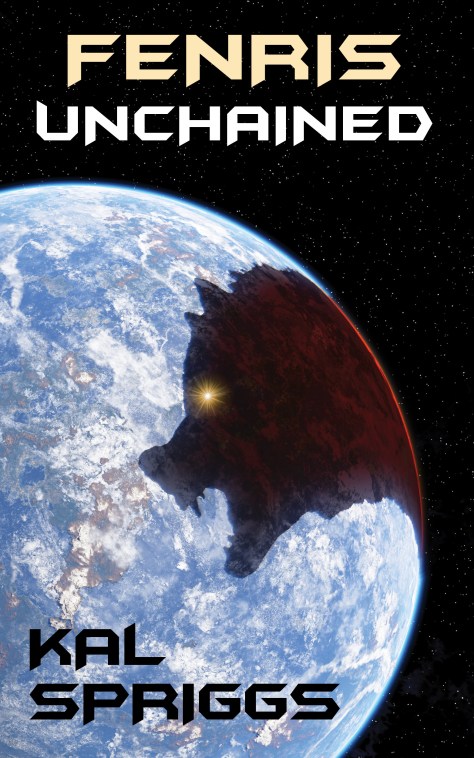
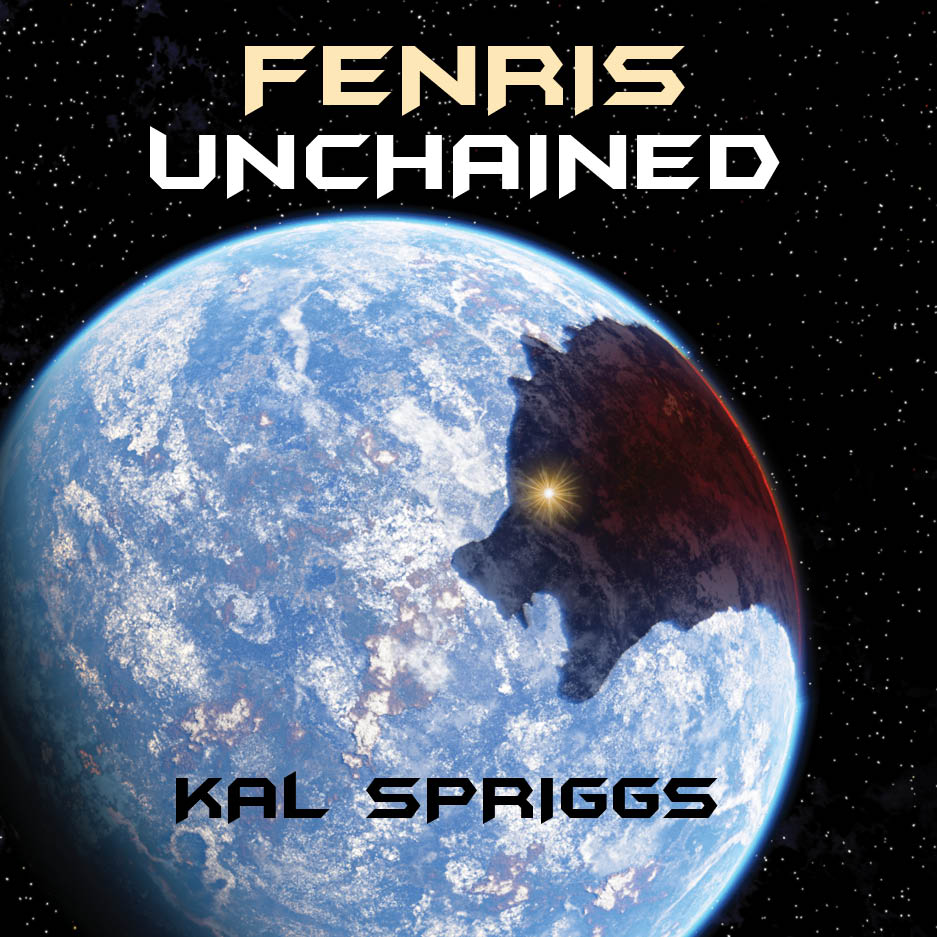
Fenris Unchained by Kal Spriggs

Unchained are very good and I’m excited to say that I’ll be doing more books with Henchman Press as a result, starting with the previously mentioned sequel to Fenris Unchained.  If you haven’t bought Fenris Unchained, you can find it here on Amazon, here on Smashwords, and coming soon to Barnes and Noble.  Fenris Unchained is currently on Amazon’s top 100 for Military SF and also for Space Opera, it’s a fast, exciting story and writing it was a lot of fun for me.

March is also my last month drawing pay in the US Army as an active duty officer and as yet, I’m still looking for a day job.  So, if you’re thinking: “How can I make certain this nice author keeps a roof over his head and putting food on the table so he can write more books?” The answer is: please tell your friends about my books.  The money I earn from writing definitely helps to keep a roof over my family’s heads, so if you’ve been putting off writing a review or telling a friend, please get the word out.  Reviews help and word of mouth really helps.  For that matter, leave reviews for all your favorite authors on Amazon, Goodreads, Barnes and Noble or wherever you read.  Every review helps, believe me, it’s become essential to reaching new readers.  I don’t write for the money, but right now, the money makes it possible for me to write.

Fenris Unchained

Fenris Unchained


The Wolf is Loose.

Ten years ago, after her parents’ deaths in a terrorist attack, Melanie Armstrong walked away from a military officer’s career to raise her orphaned brother.

Since then she’s been captain of a tramp freighter – shuffling from world to world, scraping to barely get by, but content that she’s made the right decision.

But when her ship crashes, authorities make her an offer: take a fifteen-year sentence on a prison world where the average lifespan is a third of that… or stop an ancient and until-now forgotten robotic warship, the Fenris, from completing its hundred-year-old mission to kill millions of people and destroy a planet.


My latest novel, Fenris Unchained, is now available on Amazon and Smashwords.

Fenris Unchained First Snippet!

FU Trial Cover

Here’s the first sample section from Fenris Unchained.

CHAPTER I

Time: 0815 Local, 01 June 291 G.D.

Location: Dakota, Dakota System

A yellow light began to flash on the control board.

That was nothing new, not aboard the Kip Thorne. Warning lights lit up half the panel. It was a Christmas display of yellow caution lights, flashing priority lights, and red danger lights that gave the board an aspect of impending doom.

The pilot didn’t look over to the panel to see what was wrong. One of the red lights indicated a malfunction in the auto-pilot system. That meant that the tall, blond woman had to bring the Kip Thorne down by hand.

Not a difficult a task for an experienced pilot. She enjoyed flying, enjoyed it more than anything else, really. She didn’t enjoy thirty six hours of flight time spent awake on stimulants while flying a ship that needed far too many repairs.

She shot a glance at the panel, and then flipped on the intercom. “Rawn, take a look at the starboard thruster.” She shook her head. Tried to push thoughts through a mind that seemed turned to mud.

The intercom crackled and hissed, his voice difficult to make out. “Uh, Mel, we might have a problem.”

The light ceased flashing. She sighed in relief, “No, it cleared up here, good job whatever you did.”

The ship bucked. The alarm light flashed red. A moment later, so did six or seven other warning lights. “What the hell did you just do, Rawn?!”

Mel fought the control yoke, eyes wide, as she swore to herself:

Rawn, was that the starboard pod going out?”

The ship yawed over as she overcompensated and she fought it back under control.

Rawn, you’d better get that thruster back online.”

She heard a squeal from the hatch as it opened. It had always reminded her of a ground vehicle’s brakes screeching just before an accident.

She tried not to apply that metaphor as some sort of warning to her current flight. Her brother spoke from behind her: “I’m going to pack the escape pod. Anything you want me to throw in?” he asked.

What?” Mel craned her neck to look at him.

The ship spun sharply and threw her against her straps and tossed her brother into the wall hard. She bit off a curse and struggled with the controls for a moment. It seemed to take an eternity to fight the ship back under control.

The radio crackled, “Freighter Kip Thorne, this is Dakota Landing Control, you broke out of your landing queue, return immediately, over.”

We’re going to lose the other thruster. The port thruster is in worse shape. What do you want me to put in the pod?” her brother asked.

His calm voice made her clench her teeth.

We’re not abandoning ship,” she told him sharply. “I can land this thing.” It would be hard, though, with just one thruster. They couldn’t engage their warp drive in atmosphere, not without disengaging safeties that were there to prevent that. Even if we had time, she thought, it would be a stupid thing to do. The warp drive field would tear the atmosphere around them and if they hit anything in warp, the difference in relative velocity would not only kill them but quite possibly wipe out Dakota’s biosphere.

She forced her mind to focus. When she spoke, her voice had the calm tone that she emulated from her father: “Dakota Landing Control this is Freighter Kip Thorne, we just lost our starboard thruster and are requesting immediate assistance, over.”

Freighter Kip Thorne, is this some kind of joke?” The speaker’s nasal, officious tone suggested she wasn’t amused.

Rawn snorted. “I know the safe combo, I’ll grab our cash and some keepsakes. I’ll clear out your desk too.” He pushed his way back off the bridge.

Get back here—” Mel clamped her jaws shut. One thing at a time. “Negative Dakota Landing, this is no joke, our starboard thruster— ”

Her voice broke off as another yellow light began to flash, the warning light for load limit on the other thruster. “Our starboard thruster is out and we’re about to lose our port thruster, requesting assistance, over.”

Negative, Kip Thorne, you’ll have to break off your descent and return to orbit,” the nasal voice answered. “A repair craft can be sent to you there.”

Dakota Landing, this is an emergency. We lose our port thruster, there won’t be anything keeping us up here.” Mel snapped. “We don’t have enough thrust to get back into orbit, and you don’t have time to—”

Kip Thorne, break off your descent or you will be intercepted by our customs cutter. Over.”

Dakota, I hope they got a tractor,” answered. “Because—” The ship shuddered and the other thruster went dead. “We just lost our other thruster. Kip Thorne, out.”

She turned off the radio and sat in the chair for a long moment as the small freighter bounced. Soon it would begin to tumble, she knew, without the guidance from the thrusters.

Six years, six years I kept her goin’. Dad, I did my best.”

She wiped her eyes; now was not the time to cry.

The ship fell now, without anything to slow its descent besides atmospheric friction. Superheated air flashed across the hull and cast glowing flames across the cockpit glass.

Mel sighed. She kissed her finger tips and touched the control yoke one last time, then unbuckled and left the bridge. She didn’t look back.

***


Fenris Unchained will be available tomorrow at noon (CST) from Amazon and Smashwords.

The Wolf is Loose.

Ten years ago, after her parents’ deaths in a terrorist attack, Melanie Armstrong walked away from a military officer’s career to raise her orphaned brother.

Since then she’s been captain of a tramp freighter – shuffling from world to world, scraping to barely get by, but content that she’s made the right decision.

But when her ship crashes, authorities make her an offer: take a fifteen-year sentence on a prison world where the average lifespan is a third of that… or stop an ancient and until-now forgotten robotic warship, the Fenris, from completing its hundred-year-old mission to kill millions of people and destroy a planet.

Upcoming: Fenris Unchained

I’m proud to announce that my deal with Henchman Press to release my science fiction novel, Fenris Unchained, is official.   Fenris Unchained is set in a new universe and starts a new series of character-driven space opera.

The Wolf is Loose.

Ten years ago, after her parents’ deaths in a terrorist attack, Melanie Armstrong walked away from a military officer’s career to raise her orphaned brother.

Since then she’s been captain of a tramp freighter – shuffling from world to world, scraping to barely get by, but content that she’s made the right decision.

But when her ship crashes, authorities make her an offer: take a fifteen-year sentence on a prison world where the average lifespan is a third of that.. or stop an ancient and until-now forgotten robotic warship, the Fenris, from completing its hundred-year-old mission to kill millions of people and destroy a planet.

Fenris Unchained will be coming near the end of February 2015.  Check here soon for samples, cover art and more!

Mila Kunis Falls A Lot (Jupiter Ascending Movie Review, Part 2 Spoilers)

Jupiter Ascending
Jupiter Ascending

With part 1 of this review, I kept it as spoiler free as I could.  However, I think the movie warrants a bit deeper look, both from the perspective of what they did right and also from all the stuff they got very, very wrong.

Starting off… the plot was about as easy to follow as a bucket of marbles thrown into the air.  The basic premise was easy enough: Jupiter is the heir to vast wealth to include the Earth and all its inhabitants.  The people who want that wealth want to either kill her or control her.  Simple, right?  But Jupiter isn’t just the heir, she is the person who wrote up that will.  According to the (twisted) logic that genetics make someone royal, since she has the same genetics as the royal who wrote the will, she is that person.  Which bogs down in any number of ways, to include the basic premise that they seeded Earth to produce genetic variance (IE, to prevent the same genetics from coming up and causing the problems they had with clones).  On top of that, several characters comment how her actions, behaviors, even word choices, are so similar to the person that they knew some endless centuries ago.  It seems like they wanted some  pseudoscience way to say reincarnate or reborn without, well, you know, actually saying something like that.  Saying that someone’s behavior, attitude, word choice (conveniently these super-advanced humans all speak english and have had no lingual drift over millennium), and all the rest are all entirely dependent upon genetics is not only doing a disservice to the concept of free will, but is patiently false.

Going on from there, the original heirs, Jupiter’s children, but not this Jupiter, it’s the other one who died long ago, all have their own plots going.  We see early on with Balem (best villain in the movie, probably some of the best acting in general), wants to kill his mother (again!), to prevent her from ascending and claiming Earth.  Titus pretends to want to stop the trade in the anti-aging drugs, but actually wants to marry Jupiter (his mother, ew), and then kill her to take her claim to Earth.  Kalique the lone daughter, has some rather more bizarre plot wherein she subverts Balem’s bounty hunters, imprisons Jupiter, tells her how she wants to be friends, and then promptly disappears from the story.  You’re left not knowing if Caine (Jupiter’s protector/love interest) really blindsided her and caused her to bow out or if she really wanted to help her.  Basically no resolution there.

In the process we have Jupiter who starts out with a miserable life of scrubbing toilets and dreaming of something better, who finds out she can have something better.  This kind of cinderella story can definitely work, so long as the protagonist seizes this opportunity and moves on from there.  As characters go, however, Jupiter seems to spend a lot of time being confused and then standing around waiting to be rescued.  The one point in the movie where she actually stands up for herself and takes action should have been a triumph… but instead it was just a brief pause in her falling from high places.

And as far as that goes… good lord.  I know they have a neat technology/doohickey, but seriously, this felt like a situation where the only tool they had was a hammer so they had the main character fighting a lot of nails.  The fall sequences were all gorgeous, (the whole movie was, for that matter), but once or twice is more than enough to showcase that Caine could swoop along on his gravity boots and save her.  I’ve seen analysis of the movie where someone clocked in a total of 25 minutes of footage of her falling.  That is almost a quarter of the movie spent with her in free-fall.

Characterization was done sort of well with some of the characters.  We had this nice little bit about Caine (Channing Tatum) being a lone-wolf outcast, a genetically engineered soldier, who has every reason to hate the royals but still protects Jupiter.  We also had a nice little subplot where it mentions he ripped ones throat out and so was court-martialed.  A wide opening they had here and that I think they were going to use was with the villain Balem, who all movie talked hoarsely and had his throat covered by his costumes.  Whatever the reason they didn’t use it, it was there and would have made for a nice connection or at least some initial link to why Caine would oppose him.

Balem and Titus both seemed to have their weird love (sick, sick love) and hate relationships with their mother, personified by her reincarnation as Jupiter.  Titus wanted to marry and then kill her, and then Balem admitted to having killed her before.  The general attitude here being he didn’t really want to and has been tormented by the fact that he did, because his mother apparently abhorred her life and begged him to end it.  Balem, who seems to be the main antagonist, at one point says he would harvest the entire planet of Earth before he lets her take it from him, yet we have no sign as to why he feels so strongly… and then at the end of the movie, he’s apparently let her ascend and has yet to make his move, instead trying to manipulate her into signing Earth over in return for her family (and not even bothering to suggest that he’ll let any of them live, only that he’ll kill her family in front of her if she doesn’t sign right now).

This brings us to what was presumably supposed to be one of the main themes with the movie: the harvests.  We are given to believe that human life is of such little value that entire worlds are seeded with populations who then, thousands of years later, are harvested and rendered down into rejuvenating drugs.  Okay, sure, I’ll bite.  This allows the elite in this universe to live essentially forever and they justify this survival basically in that the people on these harvested planets didn’t live very nice lives anyway.  Excuse me, but what?  We get introductions to a number of law enforcing people in the movie both in the form or the Aegis and at a step removed in the Legion through Stinger and Caine.  These people seem to uphold morality codes that suggest that they value individual lives, they go out of their way to protect one another, and they live for duty and to uphold the law.  If their rulers survive from the consumption of billions of people on hundreds of planets, that basically turns them into some of the worst villains in the universe.  If they’re upholding a system that murders countless people for the survival of a few then they can be chalked up in the ranks of genocidal types like Hitler, Stalin, and Pol Pot.

This precious commodity that is required to extend/improve lives has been done so much better in such a less heavy-handed fashion.  Just off hand I can mention Frank Herbert’s Spice, which requires an entire planet’s resources to harvest and costs the lives of many of those who harvest it, is incredibly addictive, and has severe long term effects.  On the other hand, Frank Herbert’s Spice allows for travel throughout the galaxy, extends the lives of those who consume it, and in large enough quantities provides for telepathy and such.   That’s complex, it allows for some conflicts of morality about it’s benefits and costs.

In requiring that this elixir of the Abraxis family murder a hundred people and render them down for one liter is a little absurd.  Basically it’s a plot point that this process needs to be horrible enough that Jupiter will reject it off hand and that even the most cynical movie-goer will have no choice but to agree.  More than that, it becomes a side note in the rest of the movie.  It doesn’t matter what Balem wants with the Earth if he is willing to brutally murder people to get it, that in itself is a sign that he’s the bad guy.  Making him a genocidal nut with a god complex doesn’t make him any more impactful as a character… it actually makes him painfully one dimensional as all he cares about is his own wealth and profit.  It robs us of the why of how he could so hate his mother and the Earth is so important to him and turns it into a sort of “because mine.”  That level of petulance reduces him from terrifying to a mere childish bully with too much power.

On top of that was the conspiracy fodder that was thrown around.  It ranged from the midly irritating such as when Caine says that the powers that be would wipe everyone’s memories, “They won’t get everyone, but no one believes the few they miss.” To the downright immersion-breaking, such as when the ship takes off from the corn-field and leaves crop circles.  Seriously?  Was it meant as a gag or what?  The former implies that people will forget not just the missing day but the hundreds, perhaps thousands of people killed, all with a quick memory wipe.  Let’s not even go into the dinosaur extinction and the rest that they spend precious minutes explaining to no real purpose.

These flaws are all to the worse for the few moments of genuine enjoyment.  I could gush about the visuals and about how the sets and costumes felt interesting… but that would be pointless.  You can watch a trailer and see how good it all looked.  The characters that stuck well were often the side characters, the Aegis (police) who went out of their way to protect Jupiter.  The entire scene with the bureaucracy with Jupiter trying to do her whole ascension thing was not only hilarious but utterly fitting in an empire several million years old.  Jupiter’s manipulative family members provided some of the best comedy “Your cousin is not a chicken, you do not sell her eggs!” Some of the one-liners thrown out by Channing Tatum, Mila Kunis, and others were excellent.  The red herring of having Sean Bean not die was excellent although slightly immersion breaking as the audience kept waiting for it to happen anyway.  There were some brilliant scenes throughout the movie… which just didn’t connect to make anything.  Was it worth watching?  Absolutely.  But it was incredibly frustrating as we would get moments of brief humor and originality which were then buried by rehashed themes from previous movies, painfully heavy-handed exposition, and a mix of heavy editing and a bad script that meant the whole couldn’t fit together into anything remotely coherent.  I really wanted to enjoy this movie, but at the end of the day, it came across as a popcorn flick rather than anything deeper.

Mila Kunis Falls A Lot (Jupiter Ascending Movie Review, Part 1 Spoiler Free)

Jupiter Ascending
Jupiter Ascending

I went into Jupiter Ascending with somewhat mixed expectations.  On the one hand, I already knew that the movie had been delayed for reshoots, re-edits, and stuck in post production for the past six months to a year (thus the delay in release).  I already knew that the protagonist looked a little silly (I think I counted three different occasions of her plummeting to her doom in just the standard trailer).  At the same time, the visual effects, artwork, and some of the concepts just looked stunning.  The action from the trailers also looked pretty solid, with less of the shaky-cam that means you can’t take any time to enjoy the pretty stuff.

After watching the movie I came away with many of my expectations met.  The story is disjointed, the protagonist often seems more like a passenger along for the ride than any kind of influence upon the story, many of the themes were recycled from previous Wachowski movies, and some of the background stuff is pure conspiracy theory fodder that breaks immersion.  On the other hand, the scenery was gorgeous, the technology was suitably advanced and impressive, and there were a lot of great individual scenes (even if they didn’t necessarily connect into some greater whole).  Oh, and yes, Jupiter (Mila Kunis) fell a lot.  I counted at least seven times, though sometimes it’s hard to tell where one falling scene overlaps up with another.

I was absolutely floored by some of the designs.  Some of the side characters felt strong and solid, with back stories and fully fleshed motiviations… while some of the main characters motivations and even actions seemed to have little to do with the overall movie.  I could tell that we were missing scenes and even parts of the plot arc, with characters who appeared and disappeared with no seeming purpose.  There were several sub-plots, too where you could see connections that they almost made… but either they ended up on the cutting room floor or just never fully materialized and I’m not sure which.

Gravity boots, personal shield generators, complex and varied species, and a gruesome (but heavily foreshadowed and easily predictable) secret all made the movie both fascinating and at the same time somewhat frustrating.  There were scenes that were absolutely brilliant and others that just felt like they put them there to explain things to the idiot in the room.  Most frustrating of all, I think, was the parts that were actually very interesting received either a generic explanation (The Aegis, the Legion, what it means to be Entitled and Royal) or no explanation at all (Who the Aegis and the Legion normally fight, what exactly certain powerful people’s motivations are, why certain illegal/criminal actions aren’t punished or investigated, etc).

All in all, it was a fun movie, but I still walked away not quite satisfied.  There was a lot of potential… but also a lot of scenes where they went for flash without substance: something impressive to draw the attention away from the fact that they really hadn’t figured out how they wanted it to really work.  I enjoyed it, but I’m frustrated because there was just enough there to tell me that I could have enjoyed it much more.  The obvious comparison is the movie it was supposed to be released near in 2014: Guardians of the Galaxy.  Both movies feature an Earthling drawn into a space opera where the stakes are billions of lives… and Guardians succeeded with brilliant characterization, a solid plot, and the confidence to poke fun at itself.  Jupiter Ascending’s characters just weren’t on that level, the writing didn’t quite have the chops, and it felt like the Wachoskis were trying to tell the same stories they told before… albeit on a much larger canvas.

Check back for Part II for a more in depth (and spoiler-laden) plot.

Second Star to the Right: Interstellar Movie Review (Spoilers)

From Interstellar: A black hole eating a star

I’ll preface this by saying that Interstellar is the best movie of 2014 that I nearly didn’t see.  Why did I nearly decide to discount it?  Well, the trailers did a terrible job of telling me what the movie was about.  The trailers made it out (with me reading between the lines) that the movie was about how terrible mankind was that we had destroyed our only home and had to go to space to survive.  Heavy on a message of doom and gloom and without any real ounce of hope, with the thought being we were destined to repeat the process as celestial locusts.  This was not the type of movie I wanted to watch.  Luckily, it wasn’t the movie I got to see.

You see, Interstellar is nothing less than a movie about discovery, adventure, and exploration.  The crew that goes to the stars in this movie are people chosen to do that most dangerous exercise: go someplace new and come back to tell everyone all about it.  They are also the last, best hope for humanity’s survival, so no pressure.  The movie has a slow, building pace where weight is added to every decision and the protagonists are struggling against that most certain enemy: time.

The science of the movie is excellent as well.  Yes, there are liberties taken, but there are also elements and plot twists taken from science and enough ‘what if’ that any science nerds will probably be on the edge of their seats.  Visit a planet in close orbit around a black hole and have time dilation wipe out twenty three years in an hour.  Also, get to see the tidal effects upon that lovely ocean planet, and that the woman sent ahead ten years ago died only minutes before your arrival, and just right after her own arrival.  Playing with time is something this movie does incredibly well, along with hints and peeks not only at the movie’s plot, but also at the great potential to be found in humanity.

Some of the best lines in the movie are about human nature and nature itself.  At one point, the characters in space argue about what they might find being more or less dangerous than what they bring with them.  Later on, they are both proven correct when one man is killed by the waves on the first planet they find and another is killed by a human scout sent ahead, who was willing to do anything necessary to ensure his own survival, even if it meant dooming billions of people back on Earth.  The movie manages to capture the stark beauty of space, with apparently scientifically accurate depictions of both black holes and wormholes (see this interesting article).

And too, this movie does very well in capturing the spirit of exploration.  The characters pause in wonder at the sights, caught up in the wonder and excitement of doing and seeing new things, and while they’ll take the time to mention the why or the how, that doesn’t rob the moment of it’s beauty.  The characters are very much explorers, having little idea of what they’re going to discover, building upon what they learn and finding ways to use that knowledge to survive.  They are forced to make decisions based off of their supplies and equipment as well as their limited amount of time.  The weight of those decisions is upon them all and each choice they make is one that comes with a cost.

The movie does have its faults, I’ll admit, and several of them are in the plot-driven variety.  The voyage to the wormhole takes a meager two months, which is incredibly impressive given chemical-powered rockets.  My assumption was that they used a nuclear powered drive and just didn’t want to discuss it in the movie.  The ‘blight’ that seems to be affecting the crops is more of a mysterious force than anything else, though depictions of it as breathing nitrogen suggests either a very odd metabolism or just hand-wavium.  Why this terrible stuff doesn’t follow the evacuees from Earth is another question I asked myself.  Contamination is sort of a given for colonization and transportation.  I mean, we can’t even stop rats from getting to remote islands, how can we stop an apparent super-microorganism that has adapted to attack all manner of food crops?  Also, what did people eat if it killed everything else while they were waiting for their star ships over fifty-plus years?

What the movie does very well is to get it’s point and message across with painful brutality.  The ‘teacher’ at the beginning criticizing the pilot about believing in the moon landings.  The quotes: “Man was born on Earth.  It was never meant to die here.” and “We used to look up and wonder at our place in the stars, now we just look down and worry about our place in the dirt.”  These are statements that paint a bleak (and unfortunately accurate) picture.  We don’t look up at the stars with hope.  Too many people are far more concerned with ‘fixing’ problems here rather than expanding out there.  There will come a day that we are forced to choose between staying here and dying and going out to the stars and surviving.

Overall, I thoroughly enjoyed the movie and I highly recommend it.  It’s a great movie, with gorgeous effects, a powerful theme, and a spirit of wonder that still gets me excited thinking about it.

Kal’s January 2015 Forecast

2015 is here, and boy is it busy already.  Production continues on the audiobooks for The Shattered Empire and Renegades: Origins.  I’m continuing work on Wrath of the Usurper and plan to have it done and the first version out to my alpha readers by the end of the month.  I’ve got The Prodigal Emperor outlined and I’m outlining Renegades: Out of the Cold in my free time.

If everything goes to plan, I’ll begin samples/snippets of Wrath of the Usurper sometime in February, followed by samples of The Prodigal Emperor.  I’m really excited to be working on both books and I can’t wait to get them ready and finished for publishing.  I can tell already that 2015 has the potential to be a great year and I’m starting it off with lots of projects.

I’ll be attending Cosine here in Colorado Springs from 23-25 January.  I’m excited to be participating in another local convention and this one looks like it’ll be a lot of fun.  Check here for the website.

That’s all for now, check back soon for reviews on some movies and some other content!