Kal Spriggs’ June Update

For those of you who visit regularly, this blog seems rather quiet.  And there’s a reason for that.  My wife gave birth to our firstborn last week and both he and she had a bit of a rough time.  Thankfully, things are better now, for both of them.  As you might imagine, my priority was and will remain focused with them.  Now that things are easing up a bit, I should be able to post again a bit more regularly.  That said, writing remains priority number three, after my wife & son.  The blog posts are on the list somewhere after work.

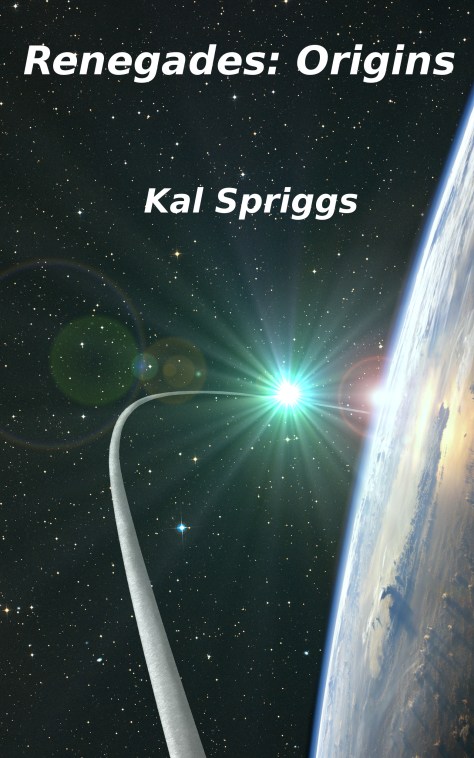
As far as writing goes, I’m mid-way through The Shattered Empire and have completed the final edits of Echo of the High Kings.  I’m waiting on a cover and some maps/artwork for Echo of the High Kings and have to do a thorough copy-edit/formatting edit to prep it for publishing.  As I’ve stated previously, my goal is to have The Shattered Empire out in fall of 2014.  Echo of the High Kings is on track for August 2014.  My next writing project after The Shattered Empire will be Renegades: Out of the Cold, which will be a compendium of novellas and short stories much like Renegades: Origins.

That’s all the updates, for now.  Check back for new stuff over the next few days.  Assuming anyone’s interested, I could even post (rough) samples of The Shattered Empire.

Edge of Tomorrow Review (Or Killing Tom Cruise A Lot)

Edge of Tomorrow

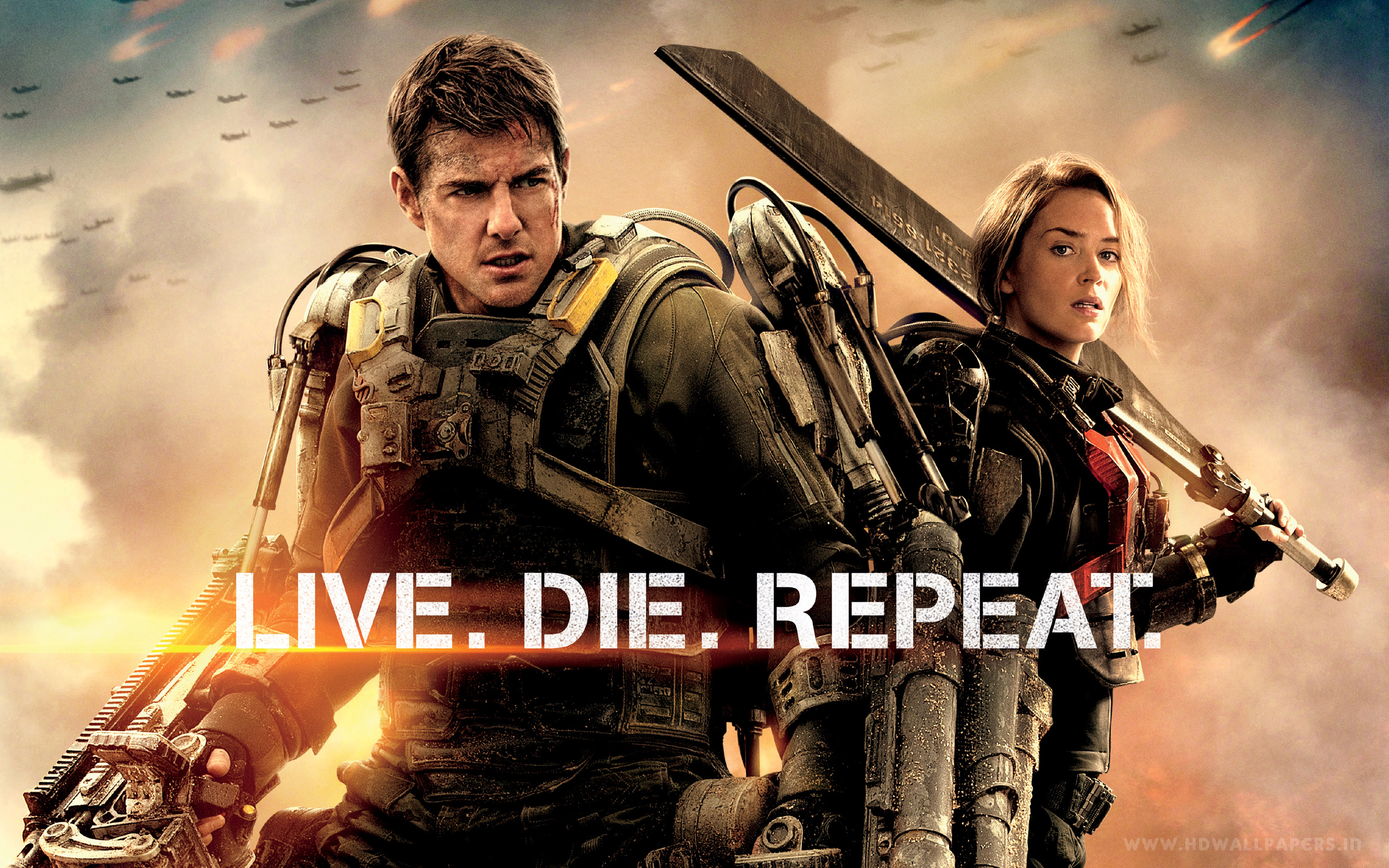
There once was a movie called Groundhog’s Day. Edge of Tomorrow is sort of like if you took that movie, combined it with Starship Troopers (the book, not the movie) and put Tom Cruise in there to get murdered. (I don’t think that’s a spoiler, it’s revealed in the trailers and posters). It makes for an interesting movie, to say the least. The basic premise is established, the characters are real enough to be entertaining, and, by the end, we’re left with enough tension that victory does not seem assured.

The movie had some good special effects and some fantastic conceptual items. I would probably complain that the powered suits don’t have better armor (or even armor that stops anything) and that most of them seem to be armed with light caliber weapons that don’t really do much (if anything) to the enemy. Then again, being armed with a pathetic weapon against an almost unstoppable enemy makes for an underdog you can root for.

As for characterization, much as in Groundhog Day, there is a transition for the main character over each iteration of the terrible day. I particularly liked this transition, but I’ll avoid giving spoilers as far as the movie at this point. I will say that the most entertaining part of this movie, at the start, was watching Tom Cruise die. In fact, some of the best parts of the movie were him dying, not the action scenes, but the humorous (and often painful) demises he received.

The story wasn’t terribly original, but it was at least coherent, with a specific goal and actual stakes for the hero to struggle for. I will say there were a couple times in the movie where they did good in reversing what the audience expected. On the bad, there were a couple sequences where things were a bit repetitive.

As far as actors, Bill Paxton had a great role and was highly entertaining. Tom Cruise made for a fun transition and character arc. The other actors did well, but most of their characters had rather shallow character development. Some of the characters refusing to adapt/change as the movie went on was somewhat irritating. Then again, it’s an action movie, the hero is supposed to do the heavy lifting.

The comedic elements were some of the most memorable sequences, for me. I highly recommend watching it. Also, keep an eye out for the duct tape, they made excellent use of it.

emily_blunt_in_edge_of_tomorrow-wide

Building an Epic Fantasy World: Modern History, Trade, and Society

So up until this point, I’ve developed my world, Eoria, configured what technology is available, what magic works, and even what people populate it. See the last post, on the history and cultures here. Today I’ll design the modern history, talk a bit about trade & industry, and design the societies that make up Eoria.

First off, when I left off, the lowlands civilizations were disparate, which didn’t allow them to unify and push the highland barbarians or northern barbarians back. This was exacerbated by the southern jungle civilization, which I’ve named Vendakar, who prefers the other civilizations weak and uses the slave trade produced by the barbarian raiders for their own ends.

Now, into this, I want to introduce the start of modern times, the notion of a central authority or leadership. I could map out the rise of some great conquerer… but I want to give them more of a feeling of legitimacy, rather than someone who just beat everyone else down. I also want to show, again, that this world is part of a greater universe… and that mankind didn’t originate here. So, I’ll introduce a new people, the Starborn. The Starborn arrive at Eoria during a period of heavy raiding by the barbarians. They come to Eoria aboard their ship, and they intially seek little contact with the natives, establishing a secure colony on their own. However, as their technology begins to fail, they are drawn into the local politics. As a contrast here, some of the Starborn seek to remain apart, others think that they should use their weapons and technology to seize power and rule, and a third group wants to work with the natives. The three groups have a short but brutal civil war in which the group that wants to work with the natives is victorious, while the conquistadors are exiled, sent north, where they found their own nation, called Darkstar. The isolationists are discouraged by both groups and head off on their own, to try and preserve ‘pure’ technology, rather than the magic and mysticism they see elsewhere. The majority of the Starborn begin to work with the locals. In particular, they are drawn to help in the fights against the barbarians. The leader of this faction, from the previous civil war, helps to unify the smaller nations, so that they work together against their common enemies. In the process, he steps into the role as the overall leader of their alliance… eventually coming to become their High King as things solidify. The five lowlands civilizations become the Five Duchies, each independent in their own lands but unified under the High King’s leadership.

The Starborn also bring ideas of sanitation, crop rotation, fertilizers, rule of law, and other low-tech but still important elements of civilization. With the assistance of the starborn, the five civilized nations defeat the rising tide of barbarism. They also experience a population boom from the increased hygiene, improved economy, and higher food yields. The Starborn, partnered with the nobility of these lands, slowly move into leadership positions, often intermarrying with the locals. Some prefer to remain in isolation, living separately, but many become the leaders of these other nations over generations.

The reign of the Starborn High Kings is a time of peace and prosperity. The Starborn value individual freedoms and personal responsibility as well, so there remains some upward mobility in most of their lands. They also approach magic from a scientific stance, so they push the boundaries of magical theory.

Going into each of the Five Duchies, I can decide what their strengths and weaknesses are, what they trade for and produce, and what the defining characteristics are. I’ve named them: Marovingia, Asador, Taral, Boir, and Masov, roughly from west to east.

Marovingia is the furthest south, along the equator, and blessed with plenty of rainfall and good weather. It acts as the breadbasket for the rest of the Five Duchies, with huge farms that produce food over multiple growing seasons during the year. The Marovingians, unlike most of the Five Duchies, do not venerate spirits of places or ancestors… they worship their gods. Their gods are physical beings, men and women who are born with a natural connection to the spirit world, and who are able to manifest powers. Marovingians are the closest to the Vendakar Kingdom, so they are bitter rivals. Marovingia’s large population and large percentage of land ownership gives rise to citizen soldiers who fight in their legions.

Asador is a volcanic highland, of rolling plains and towering cinder cones. The people of Asador are as volatile as their lands, being known for fiery tempers and ancestral grudges. While they are likely to engage in bickering or feuds, they will work together against common foes. Asador’s plains give rise to herds of cattle and sheep and the people are split between the small towns, built like fortresses on the volcanic peaks and the roaming peoples who raise livestock and live on horseback. The volcanoes in Asador’s highlands provide power sources for their wizards, allowing them to harness that energy to power their magical inventions. Asador’s cavalry, both heavy and light, are their military strength.

Taral is another highland area. Taral, unlike the other Duchies, is much closer to barbarism. The people of Taral experience some of the strongest and fiercest winters on Eoriel, with snow depths reaching forty or fifty feet. Taral lies between two mountain ranges and the lake effect off the Boir sea buries the Duchy every winter in snow. The heavy run-off in the spring erodes Taral into steep gullies and ravines, floods fields, and feeds the multiple rivers and lakes. Due to the harshness of winter, Taral has developed expertise in enchanting, crafting sunwells which gather light all through the spring, summer and fall to allow them to grow crops underground to withstand the winter months. They’ve adapted their enchanting skills to other areas since, but each village and town is built around a sunwell and the sunwells are of extreme importance to them. The people of Taral are in constant skirmishes with the mountain barbarians as the two people feud over highland valleys to grow crops and run livestock.

Boir rests along the inland Boir Sea. The people of Boir are industrious and are often drawn to trade and exploration. They build the best ships and their shipmasters travel everywhere. Most cargoes in Eoriel travel in a ship from Boir. The shorter growing seasons mean they are dependent upon food imports to maintain their population, but they spend the long winters working and laboring, providing goods and items for export and trade. Boir’s naval forces are their primary military strength, designed primarily around defeating the northern barbarians sea raiders, who plague their coastlines.

The last of the Five Duchies is Masov. Masov is the largest and is separated from the rest of Eoriel by the Boir Sea and the Ryft, connected by land only at the Ryft Guard, a massive fortress which spans the Ryft at its narrowest point. Masov’s people are as varied as it’s terrain. In the northern lowlands, trade and industry are more important to the people, while in the southern highlands, farming and logging are what people do to live. Masov’s central area is thin, hedged on one side by the Eastwood and on the other by the ocean. Masov, however, is the oldest of the Duchies, and one of the first to support the Starborn High Kings and is seen as the cultural center for the Five Duchies. The main focus of magic in Masov is blood magic and the mages who practice their arts are the best healers in Eoriel. As a counter to this, those who stray into perversions of blood magic, sorcerers, are also more common here. The southern deserts and high mountain valleys are host to more of the barbarians in the south, while the northern lowlands are raided by the northern sea raiders, which gives the Duchy a unique perspective on threats.

With that baseline established, coming into more recent times, the High Kingdom has fallen into disrepair. The High Kings are extinct, brought down by betrayal. In the process, the Five Duchies have created their own feuds and have fought one another, setting the stage for no one Duchy quite trusting the other to have their backs. As a consequence, the barbarians and the Vendakar have been able to raid and attack more successfully. In particular, Taral is brought low by the mountain barbarians, with many of its towns and villages destroyed and its people surviving only in isolated mountain villages, small pockets of civilization against the barbarians. Since Taral lay central to the Five Duchies, it’s loss makes travel and communications between the others difficult, at best. Boir maintains travel by sea, but the increase in northern sea raiders makes that dangerous too.

The general decline of civilization means that knowledge and information are lost. The Starborn families that survived the fall of the High Kings associate less with the other people of Eoria. Lack of communication and trust means that civilization declines still more. The volatile people of Asador’s feuds erupt into full blown civil war when their Duke dies without a clear heir. Each of the Duchies is isolated and alone and the barbarians threaten to overwhelm them.

This, then, is the perfect place for my story to start. I have a rich history (which I populated with names, dates, and other fun historical stuff), I know what people are where and what motivates them. I know what magic works, what science and technology work, and how the different people can apply them. Civilization, on Eoria, is at the brink of collapse. Into this, then, I populate the characters, men and women who either want to give civilization that last push towards collapse or who want to bring it back from the brink.

That concludes my world building series, hopefully it helps other writers and, if not, then at least it proved interesting.

Building an Epic Fantasy World: Culture, Ancient History, and Societies

In my previous post, I went into detail on how I designed magic and technology levels of Eoria and before that I designed the geography and physical make-up of the world. Now I’m going to discuss the social geography a bit. See the last post here.

First off, unless you’re writing some kind of utopian fantasy world, there’s going to be some conflict. Conflict is what makes things interesting, whether it is a conflict of words and discussion or one of hacking swords and bloodshed. That conflict can be over resources, philosophies, ideologies, or even just a continuation of previous feuds. Why does that matter for culture? Because few cultures grow up in isolation and it is inevitable that cultures will disagree about things.

First off, I wanted the main continent to have a rich cultural history and background. Just as our world has a history of empires rise and fall, so too would Eoria. The first human colonists landed on the far side of the world, and most expansion has occurred from there. So the first people who came to Eoriel, the main continent, were scattered tribes. Over time, they were unified, united as one people, though they still retained their original heritage. Their leader then formed them into a nation, the first real civilization on Eoriel. They would be similar to the ancient Egyptians of Earth, leaving monuments and ruins that other people would marvel over. These ancient people viewed the use of magic, in all its forms, as an art, and they slowly improved themselves, becoming a very static society, with little change. What happens in a static society without external threats is that they develop their own internal downfalls, which is what happened here. I didn’t want these folks around still, so I went with the old story: the nephew of their leader, tired of living in his shadow, assassinated him and broke their nation up into a civil war. In the process, he imported tribes from the other continent to serve as his troops, which he used to savage his opponents. These tribes were left standing over the ashes and ruins and revert to their previous barbarism. The surviving factions from the initial empire hole up in isolation and nurse their grudges.

This then sets the stage for another wave of migration. Other humans come to the (mostly) depopulated continent. They are builders of towns and cities and they gradually push the more barbaric tribals out of the good land, either shifting them north or pushing them into the high mountains.   They have some limited interaction with the survivors of the previous empire, but mostly they just established their small cities and towns. These are pragmatic types, explorers and colonists, people eager to build a place for themselves. They, however, are not ready when the barbarians push back, in an organized attack. The builders would form nations, developed around the geology I developed earlier, coalescing to unite against the barbarian threats, but each nation might not work with one another, leaving them unable to resolve the conflict.

This conflict between the two societies, the builders and the barbarians, sets the stage for uniting the builders against the common threat, while instilling in the barbarians a sense of grudges and unsettled disputes. The barbarians, especially if they are forced into the frigid north, have to live in harsh conditions. Since they were brought in by the old empire, they probably value themselves, as a culture, as warriors. Given the harsh conditions, they probably would lose much of their history, reverting to oral traditions and legends, perhaps even coming to venerate the general who brought them here to fight. Their hard lives will make them more pragmatic about what costs they’ll pay for survival, perhaps even coming to view the survival of the tribe or clan over individual lives and even developing a caste structure, in which warriors who go out and secure new sources of labor and food would be more valuable than those who produce that labor and food. They would be split, culturally, between those who moved north and those who lingered in the mountains and forests of the southern continent. The ones in the south would be even more desperate, being able to see the builders cities, farms and towns flourish while they barely scrape by in the mountains. These southern barbarians would be driven to even more savage acts, angry at how they’ve lost what they see as their legacy from the old empire.

This sets the stage for me to develop all three cultures in a conflict that, in turn, sets the stage of history. The mountain barbarians are savage, vicious people, driven by hardship to turn to allies and masters which most people would find unthinkable. The barbarians of the north would develop a raider culture, one which idolizes their warriors. This leads to the builder civilization focusing on their defenses and dehumanizing the two barbarian cultures, as well as being rather bitter over the previous empire which set the ground for this before. The three cultures would be in a sort of stasis, locked in battles where at one time or another, one side gains the upper hand, but the more numerous civilized groups can’t compete with the savagery and violence of the barbarians, nor can they stay united long enough to get through to the mountain strongholds and northern camps of their enemies to conquer and civilize them

Yet, at the same time, it’s missing something. I want these various cultures at odds with one another, but the mountain barbarians are at a severe disadvantage. They’re very likely to be worn down over time, their best fighters dying and their population declining and going extinct. While they might ally with the northern barbarians, they wouldn’t have communication. Also, they need some source of magical might to combat the civilized lands, to overwhelm their defenses. In short, there must be someone helping them. But why? Well, what about an ancient kingdom, in the south, who came over with the first wave. They bowed out of the ancient empire and remained independent. They follow their own gods, beings of evil and depravity. A wicked and ancient society, with an insatiable desire for slave labor and sacrifice. They’d view the mountain tribes as sources for both, and would likely facilitate a thriving slave for weapons trade, encouraging the mountain tribes and giving them aide against the newer peoples. This culture will have a dread approach to various forms of magic, using it as a method to reward and exalt their elite while their masses live in abject poverty, in fear that their wretched lives will end as sacrifice should the lines of slaves grow short.

I’ve now developed a system which would be relatively stable, allowing for conflict and a historical background that could maintain a history. Into this, I can then begin building a more recent history, with names and events that modern people in the setting will know.   In my next post I’ll talk about setting the stage for modern times.

Another Fallen Race Review and Quick Update

There’s a new review of The Fallen Race available at Shiny Book Review from author Jason Cordova.  Check it out here.

As far as my own writing, I’m complete with edits and rewrites of Echo of the High Kings and currently working on The Shattered Empire, the sequel to The Fallen Race.  As I work I’ll post my writing progress on my FB page, so if you’d like to see my progress you can follow me there.  Link should be down on the left side of the page, or here.  The Shattered Empire picks up where The Fallen Race left off and it will be available in fall of 2014.

That’s all, for now, but check back over the next few days and I’ll continue with the world-building notes, for those of you interested.


Building an Epic Fantasy World: Magic, Science, Art, Scientific Method, and Technology

In my previous post, I went into detail on how I designed the physical geography of the world and what considerations I had towards the setting. See the last post here. This time, I’ll go into what makes a fantasy setting, well, fantasy. Strapping men with bare chests and scantily clad women… er, no not that kind of fantasy. Magic, we’re talking about magic. Because that scene where the hero(ine) is about to cut loose and slay their foe is so much more impressive when they do so swinging a magic sword, right?

I’ll pause here and mention that I essentially shelved my entire writing project for years while I designed a magic system for it. This is not me tooting my horn, this is me warning you, as a reader, that it can be a process that takes over, that there are hazards in world building.

Like anything else in writing, magic should not be the end-all-be-all of the story. I spent years developing the rules of my magic systems and what it all boils down to is that it works best if it’s in the background of the story rather than front and center. The reader doesn’t want a ten page explanation of how the conjuring functions. Nor do they want the down on their luck adventurers to have the day saved at the end of the story because… well, it’s magic! Establishing rules for it is a good way to avoid the latter, while the former is something to avoid through improving your writing craft. Personally, I’m of the mindset that it’s better to have details that the reader doesn’t need than to leave the reader feeling that they were ‘robbed’ by the ending of your story.

All that said, what do you want to accomplish with the magic in your world? For me, I’m irritated by magic in books and movies that has no price. I’m an engineer by both education and trade, I know that energy has to come from somewhere… so when the wizard cuts loose with beam of purest light… where’s he getting the juice? Matter can neither be created or destroyed (energy too, they’re exchangeable). The answer, for my world, is that there are tons of power sources. Heat and light are the most common, and obvious, sources of power. Those are what our current technology relies upon to produce electricity. So, creatures and people who use arcane power do so from stores of energy they converted from heat or light… or other ‘free’ sources of energy.

This then led me to categorize what forms of magic we’ve heard of and to develop practical methods for them. I won’t go exhaustively into detail, but I developed rules for wizards, witches, gods, demons, priests, mages, and sorcerers, all based off of different methods of transfer, storage, and usage of that available energy. From here, I also applied different methods of each. Some wizards would approach the use of their magic in a scientific method, exploring the capabilities and potential through experiments and gradually refining it over time. Others, in turn, would approach it like an art form, eschewing crude or clumsy spells for ones that serve multiple purposes or accomplish a task with greater subtlety. Lastly, as far as magic, I figured knowledge would be powerful. Knowing about thermodynamic processes would give a spellcaster advantages. Understanding complex geometry when drawing a rune would improve their efficiency. Wizards, therefore, would need to be both well educated and smart enough to apply their knowledge of science. Mages and Sorcerers, whose magic is focused on biological constructs and modifying living creatures, would need to know exhaustive details of biology, chemistry, botany, and medicine, to better practice their arts. This in turn, also applied to the cultures of the world. Some cultures would approach magic in scientific measures, experimenting and pushing the boundaries, while others would develop it to an art form. Still others would encourage the use of horrific biological experiments and creating monsters, while others would use the same forms of magic to prevent the spread of disease and heal.

The next step, for me, was why did humanity utilize magic instead of technology? At its simplest level, technology is sharply distinct from magic. There is a sharp cause and effect split. Praying to a spirit to put out a fire is far different than filling a bucket with water and dousing it. Some levels of technology would have to function or else the world wouldn’t make much sense. Muscle powered things such as weapons, tools, and the like would need to work. But why wouldn’t more complex things, like gunpowder, steam power, or even clockwork devices?

My solution to this issue was twofold. First, I’d already established that power had to come from somewhere. What if beings seeking power could take it from available sources? Steam power requires a heat source, and if an educated wizard can drain the heat out without the use of a steam engine, why would he want to build one? Furthermore, if there are energy beings in search of sources of power, items like steam engines would be targets. Energy beings would feed off of them, passing the heat to the outside air and gaining power in the energy transfer. The same would work for combustion engines. The same effect would work for chemicals such as nitroglycerin and gunpowder. Energy beings would see the potential energy in such items, and for a slight cost (a spark) they could harness the latent energy in one jolt… having catastrophic results for anyone in the area.

The second part, for me, was what would stop more advanced technology? In my planned background, the people of Eoria were descendents of multiple colonization waves. They lost their technology as it failed over time. The answer for me was a low grade electromagnetic field generated by the magnetic field of the star. This would cause electrical differences that would cause sparks, static welding, and other issues that would slowly cause failure on most technology. Everything from circuit boards to metal gears would be affected over time, gradually failing. Combined with the voracious energy beings of the planet, any high tech civilization which visited would have power cells drain rapidly, parts break, and would generally see a systematic failure of their equipment. Would there be a work-around? Of course, but the easiest method would be to adopt the local magic forms and once the transfer was made, then why try to rebuild a technology base when the infrastructure for magic is already in place?

That’s my method of designing magic and technology in my world. As you can see, I focused on what I wanted and then set the circumstances that would create that. Along the way, I established rules for the magic system, to limit the capabilities and explain what would work and what wouldn’t. Next post I’ll talk a bit about how I designed the cultures and societies of Eoria.

Building a Fantasy World: Geography, Climate, Weather, and Time

I thought I’d do a bit of discussion about world-building, especially with a focus on fantasy genre world building. I’ll be using the setting of Echo of the High Kings for this, my upcoming epic fantasy novel. First, one thing I feel is valuable is taking the time to establish a world, culture, history, and all that goes with it. There are fantasy stories and novels where this is all kept very vague or even mutable. I would point out, however, that some of the most successful fantasy authors are the ones who have taken the time to build the world in which their characters live. It isn’t just about knowing what lies beyond the hills the characters are climbing, it’s also about knowing why the character’s culture and background might drive his decisions.

For my science fiction and fantasy novels, I like to do extensive world building. There are a million details that I like to know. The place I started, with my epic fantasy, was the world. I drew the original map as the first bit. Maps are a staple of epic fantasy, but that’s not why I drew mine. I drew it because I wanted to know where things were in relation to one another, long before I even started writing. I started with a large, central continent, which I gave a large inland sea. This sea both split the continent, and allowed for trade along its coastlines. I wanted trade to be well established, so that communications and travel are also established. Also, while I wanted each area to have its own background and culture, I wanted them speaking a common language in most of the areas, which basically required that they have constant communications and travel, else over generations their languages would shift. I also crafted a natural channel or rift that connected the inner sea to the southern ocean, and left the top of the sea open to the northern ocean. This meant that the natural trade facilitated by the inner sea could easily spread to the rest of the world. From there, I wanted to establish natural boundaries that would separate some of the more distinct cultures and empires. Mountains and rivers often act as the natural boundaries with nations, so that’s where I started. Also, with the large geological rift splitting the continent, I figured there would be some extreme tectonic upheaval. This served another purpose because I wanted a strong presence and threat of barbarians, so I established high mountain ranges, with deep, secluded valleys which could act as the refuges for these barbarians as they attacked the lowland civilizations. I also wanted an ‘evil’ empire, based in the south, so I crafted a deep jungle region for them to live in and follow their bloody and violent gods.

Map drawn, I wanted to know where this was in relation to other places. I made my decision, early on, that I wanted this world to be part of a greater universe. So I expanded it. The continent was joined by four others, which make up the world of Eoria. Eoria, I decided, has a severe axial tilt, which basically means that the seasons are very extreme, making for scorching hot summers and bitterly cold, dark winters. In addition, it has a much longer orbit than Earth, a total orbit that lasts six hundred and ninety nine days, which are twenty six hours long. I divided this up into twenty four months of twenty nine days, along with three non-month holy days. In addition, each month would have four weeks of seven days along with a single feast day. Why is that important? Well, it means that those scorching summers last for six months… and the winters the same. It means that a campaign or fighting season could last as long as eighteen months, depending on weather. It means that extreme snow-fall in the winter will lead to particular designs for buildings and that spring flooding will be a huge issue, as will drought control in the summer. This is a setting where survival of civilization requires work, hard work at that. Surviving winter is an endeavor that requires preparation and forethought and a certain level of pragmatism, especially in the far north where the growing season relative to the rest of the year is so short. With only a six month growing season, it makes sense that many northerners would turn to raiding to augment their supplies for eighteen months of cold and darkness. It makes even more sense that they might make pacts with beings or creatures that others might find unfathomable, in order to prevent death by starvation or freezing.

What about tides? And also, with that severe axial tilt, how is that maintained? Earth has a moon, a large one at that, which maintains our axial tilt and provides us with ocean tides. Here I came back to the fact that Eoria is going to be part of a larger universe. Maybe not at first, but they need to be able to adapt to the idea that there are other people out there. How better than another world, just as blue and green as our own? Thus, Eoria has a twin world, Aoria, also a life bearing world. In addition, it has cities and towns and people of its own. More, there has, at times, been contact back and forth. Thus, people know it is there, and the underlying assumption is that of course there are other worlds, other people. Eoria and Aoria are locked in orbit together, a dance that has lasted several billion years. They are distant enough that the tides are not extreme, though they are higher than what we are used to here on Earth. Why does that matter? This will make harbors and channels more important, for both tactical and strategic considerations. Deeper harbors will prevent ships from being stranded on low tide, while deep channels will remain navigable.

Moving outwards, there’s the star that both worlds orbit. I could call it ‘the sun’ but I’ve already established that this isn’t Earth. Nor is it some almost Earth. This is Eoria. In Eoria, they call their star Auir. Now with the orbit for Eoriel being so long and therefore so far out, Auir needs to be a bit warmer than our sun. Therefore, Auir burns a bit hotter and has a faint greenish cast to its light.

At this point, I’ve developed the world, its climate, its weather, and even a calendar. That allows me to link things not just to a timeline but also to peg down when characters might celebrate a holiday and when they might shutter their windows and hunker down in fear of dark or wicked spirits. The weather and geography allow me to design the cultures of the people that live in certain places and to justify some of the actions they may take as a result.

Godzilla 2014 Movie analysis: Characterization & Plot (spoilers)

Okay, so as promised, here’s my more indepth analysis of Godzilla (2014). Spoiler alert: I’m going to discuss in detail some of the scenes and events of the movie, so if you don’t want some of the twists and turns spoiled, watch the movie then read this. Why analyze Godzilla when there are plenty of other movies, presumably with better plots and characterization? Because I can, and because it contains a lot of excellent examples.

Because elements of the plot and characters are intertwined, I’ll jump around a bit. The movie begins with Monarch exploring an open pit mine in the Phillipines. They discover the bones of some ancient, long deceased primordial beast, along with two spores, one of which has opened and ripped its way out of the mountain, leaving a trail of destruction to the sea. The movie then jumps to Japan, where engineer Joe Brody is a distracted man worried about seismic anomalies. The movie does a good job here showing him as a workaholic who is both very concerned about the safety of the power plant and doing his job well, even if that may inadvertently cause issues with his family.

The scene establishes him as a somewhat-absent-minded type who is nevertheless well loved by his wife and son and also sets the ground for friction with his son later on in the movie. It is well done, particularly for the set-up later in the movie, as early on his son has made him a happy birthday banner, which his mother promises to show to Joe later on.

The action then comes quickly, as the seismic anomally cracks the nuclear containment and floods the lower levels of the facility with radioactive coolant in vapor form, forcing Joe to choose between waiting in the hopes that his wife can get clear or saving the entire population of the city to include his son. It’s a well-done scene where he gets a last moment with his wife, though I think it would have had more emotional impact if it hadn’t been given away in most of the trailers.

Up to this point, we still haven’t seen the titular Godzilla. One might expect the seismic anomally to reveal itself as the beast… but you’d be wrong. The power plant collapses, and the young son to Joe watches from school… but there’s still no monster(s) to be seen.

Revert to fifteen years later. Joe’s son, Ford, is now a US Navy EOD officer, just returned from a long (really long, 14 months, holy cow) tour. This is a moment, plot wise, which gave me a bit of a headache, but only from dealing with EOD types, who most often had six or nine month tours, even during the Iraq Surge. Anyway, I digress. He disembarks the plane, links up with wife and his own son, and has a bit of a party with them. Then, before there’s any solid characterization between wife, son, and Ford, there’s a phone call that his father (Joe) was arrested in Japan.

The characterization here was very bland. It basically makes Ford into generic military man, his wife into generic spouse (we find out later she’s a nurse), and his son into generic military son. They are entirely bland, with nothing of note beyond the fact that fourteen months made them both miss Ford. There was no development of the relationships, nothing beyond the fact that they are obviously very close, because it shows them being close and saying how close they are.

The movie then goes to Japan, where Ford is now reunited with his father, takes him back to his father’s apartment, and we see that Joe has developed an unhealthy fascination with the ‘accident’ that claimed his wife’s life. At this point, we get some great characterization on the part of Joe. He’s furious and frustrated, and we see that the absent-minded engineer has descended into obsession.

What we don’t get here is any more development with Ford, who feels like a secondary character. We see that he doesn’t agree/approve of what his father is doing, yet he is easily swayed to sneak into the restricted area after an impassioned plea. I felt like this scene had a lot of potential, perhaps to have Ford accuse his father of killing his mother (which he did) or lay out some angst about how he has made something of his life. Instead, he just sort of makes some filler dialogue and we move on to the restricted area.

In the restricted area, we get some more opportunities for anticipatory scene destruction (beautiful overgrown city falling slowly into ruin) followed by plot revelations that despite the collapse of the power plant, the evacuation, and the restricted area… there’s no radiation. The father and son duo rush to their old house, where Joe recovers his data and then sees the Happy Birthday banner his son made for him and his wife hung up in their office for his return, fifteen years ago. It’s a good scene which shows some emotional catharsis for Joe, and establishes that he is tormented by his past and must find some resolution.

Ford, on the other hand, goes back to his room and picks up a toy soldier. Not so much of an impact. The best part was the little terrarium with a cocoon and a label “Mothra” as a nice little implication of what is coming.

Not long later, they get arrested, and then dragged into a military style base built on the site of the power plant. Inside we finally get our first look at the monster… but it’s not Godzilla. It’s a chrysalis, inside of which something has absorbed the radiation of the reactors. (Yes, the science gives me headaches, but it’s a Big Stupid Monster movie, so leave your knowledge of science and physics at the door)

The plot thickens as Joe shows that his knowledge of the attack implies that another attack is immenant. No sooner is this revealed than the chrysalis begins to become much more active and the order is given to terminate it.

Me, personally, I’d probably try something more… final than electricity, particularly when the creature is shown to have an as yet unknown effect on electromagnetic fields. Nevertheless, they try. The creature then explodes out of it’s chrysalis… and it is definitely not Godzilla. The movie has done a great job to this point of amping up the anticipation. We know that we’re going to see him sooner or later, but for now, we get plenty of carnage as the monster smashes the entire facility, sprouts wings, and flies away. Oh, and it has a nifty EMP attack that disables vehicles and the electrical cage they held it in.

We’re back to the Monarch guys, scientist A and B who really don’t have much character at all. They’re essentially cardboard cutouts, with A being the one to announce events and explain things and B being the one who warns everyone that they can’t possibly do what they’re about to do. Scientist B is all the more annoying because she never says why we shouldn’t do things, just that we shouldn’t.

Unfortunately, Joe was wounded in the monster’s escape. Not long after this, on a helicopter ride to an aircraft carrier, he warns his son Ford to take care of his family. Shortly after that, he dies. Now, in my opinion, this was either an attempt to evoke sadness or a desire to save money and have Brian Cranston appear less in the movie. Having him die at this point basically transferred all the burdens of being an interesting character onto Ford… who we’ve already seen very little interesting about. I’m not saying they couldn’t have made him interesting, but they expended that effort on Joe, who is now dead.

Ford doesn’t take up a vow of revenge against the monster that has killed both his parents. He doesn’t seem to care, just wants to move on. So he catches a helicopter to Hawaii, tries to call his wife, and that’s pretty much all the emotional response we get.

Cut to Scientists A & B, who now reveal that Godzilla is back. There was some mention in the reveals earlier that they thought they killed him, but nothing about where he might have been. We see big scary fins as the monster swims along. Scientist A says that Godzilla is a Primordial Alpha, a predator which will hunt down the flying monster and put things back in balance. The US Navy seems unable to take action, unable to track the flying monster, and clueless as to where it is going. Right up until a Russian nuclear sub disappears and then reappears somewhere on Oahu.

Teams sent to investigate locate the monster. Godzilla then rages into the city to attack. We get our first look as Godzilla attacks. There’s a rather cool fight sequence wherein a whole lot of folks in Oahu get drowned by a tidal wave generated by Godzilla, trampled by said monster, or smashed by the flying monster. Right away, however, we see that Godzilla is at a disadvantage by the other monster’s speed and ability to fly. Unbelievably, they manage to make Godzilla both strong and powerful (witness his destruction) and incredibly weak.

My complaints in this sequence is first that the military is painted as both ineffective and unable to take even the most simple precautions. They already know that the flying monster has an EMP attack. What do they do? Send in helicopters to attack it up close and then attack with jets… also up close. Beyond that, Ford has a nice little series of scenes where he saves a kid… but then there’s no resolution, he reunites the boy with his parents, but there’s no feeling of accomplishment, the boy goes on his way and Ford continues trying to get back home.

At this point, Scientist A and B realize what Joe figured out on his own, that the monster was using echolocation to call to another of its kind. They can’t possibly think of who it might be talking to, certainly not Godzilla… until Scientist A says that it is absolutely not possible that it was talking to the other spore, because they dissected it and put it in… you guessed it, the radioactive waste storage facility. Because, since it feeds off radiation, that’s the safest place to put it. *sigh* This is where the plot begins to give me a headache.

Flip to a team which races down an open highway. Visually, a very cool scene, with helicopters and humvees and all kinds of military awesomeness. They pull up, begin to check the site, and then… wow, there happens to be a gigantic, three hundred foot hole in the mountain that absolutely no one noticed. That’s right, it ripped the side of the mountain away and was already halfway to Vegas. Which it quite impressively demolishes, the devastation being shown in a sequence of cool scenes.

The second monster and the first are now expounded to be male and female, and that they’re trying to breed. The military now announces their best plan to date: lure all three monsters (Godzilla too) twenty miles out in the ocean away from San Francisco, the apparent target with nukes, detonate them upon arrival. And, because they know that the monsters use EMP, they install mechanical triggers. But wait, there’s more… lets move the nuke(s) on a slow-moving train (subject to the EMP attack) with the final plan being to put it on a barge (also subject to the EMP attack) and oh, yeah, start the count-down before the nuke even manages to get out of the harbor. Oh, that fancy new trigger can’t be remotely stopped either… so no way is that going to end badly, right?

Possibly the worst, most fallible plan given the situation. Inevitably the land-bound monster number two eats all but one of the nukes. Not long after that, the flying monster snatches the remaining one (after the mechanical timer is engaged) and the two establish a nest in the middle of San Francisco, with eggs, armed nuke, and incoming Godzilla Alpha Predator.

This then comes to some of the best scenes in the movie. Someone apparently does the math and realizes that if you fly high enough you can avoid the EMP (would have been useful to move said nukes, maybe even in a B-2 or B-52 or something designed for that rather than a train). So there’s a HALO (High Altitude Low Opening) jump into San Francisco just as Godzilla makes landfall and starts a fight. Not much sense in it, but it does look very cool. The fight sequence here is both visually impressive and evokes emotion. At this point, they’ve basically established that the military can’t stop these monsters, humanity’s only hope appears to be that Godzilla will destroy them and then go back to doing whatever a three hundred foot tall lizard does in his spare time.

But it’s quickly obvious that Godzilla is over-matched. The flying creature is faster and more nimble and works in concert with monster number two, which is almost as big and tough as the titular monster. The fight sequence here manages to establish Godzilla as an underdog, which automatically is a positive. The intrepid special forces (I think, they don’t make it clear, but why would they carry M4’s against giant monsters? You would think they’d swap out for some bigger weapons, maybe a few more AT4’s, some grenade launchers like M320’s or M203s, or hey even ) team manages to get to the nuke, but there’s a problem, the lid is stuck shut. Apparently they’re in an alternate universe where no one has invented crow-bars, hack-saws, or other useful tools, so the decision is, with thirty minutes left, to carry the warhead across town to the waterfont, put it on a boat, and drive it away to a safe distance. Again, I’m left scratching my head, because it really doesn’t make much sense. And our main character is an EOD guy, right? He should know all about cracking the thing open and getting it to work. But nope, he’s onboard with the plan. We do have a moment of brilliance, then, when, seeing the eggs, he uses a handy fuel truck to blow the nest sky-high.

This then triggers big monster number two to leave the apparently defeated Godzilla, come back, find the nest destroyed, and identify Ford as the culprit. Before it can take action, you see a brilliant light, and from my experience, the crowd goes wild as Godzilla unleashes his radioactive breath attack. It was a visually impressive scene and was brilliantly done to make Godzilla seem the protector. Unfortunately, the flying monster intervenes, and big monster number two runs after the folks with the nuke. It kills off most of them without apparent effort. Thankfully, Godzilla has a reprieve of only fighting one opponent smash the flying monster, but then he’s buried by rubble. Again, a good scene, you see the underdog (underlizard?) finally get in a solid blow, but it amps up the tension of the fight sequence.

Ford tries to do what the others did, starts the boat, which is handily hooked up to some kind of Iphone touch pad, and the collapses, only to have the boat putter out as big monster number two unleashes its EMP attack, and then prepares to kill him. Godzilla saves the day (again) ripping back the monster’s head, breathing radioactive fire down the creature’s throat, and then ripping the head off in a finishing move. The boat starts up again, Ford is rescued, and Godzilla collapses, later to rise again to the cheers of the humans he saved. (Despite being named a predator, he did not actually eat the two monsters he killed, which also bugged me)

I will note that I enjoyed the movie, despite (or perhaps because of) the fact that the character I most related to was a three hundred foot tall radioactive lizard. It definitely could have been a better movie, with stronger characterization of the people in it. The science and physics were so far beyond real that you basically needed to ignore reality. Those at least remained consistent throughout. The plot was unnecessarily convoluted, with apparently a great deal of effort spent to ensure that Ford’s wife was downtown giving him reason to try to stop the nuke (as if saving everyone else wasn’t good enough) and also in making sure that said nuke was there to be stopped. I feel like they could have accomplished this in a less… well, stupid fashion, rather than having generals and admirals craft a plan that a five year old could poke holes in. But it worked despite those flaws, because the overall building tension throughout the movie until Godzilla himself is finally revealed, followed by continuing to pay out for what the audience wanted to see: a giant radioactive lizard causing havoc and smashing monsters in the middle of a major city.

Godzilla Movie Review

Here’s my quick (spoiler free) review of the new Godzilla movie (2014).   I’ll do a full review, later this week when I’ve got more time, where I’ll pick apart some of the plot, characterization, and such.

First off, I enjoyed it. The overall design of the movie was well done. The story was revealed in such a way to build anticipation and the action scenes were over the top and involved lots of smashing. It was a Big Dumb Monster movie, which didn’t require a lot of thinking. There were a couple scenes which brought some good quality emotional highs and lows into the movie. So I recommend it from the perspective that it does get you emotionally engaged, especially with the titular monster.

On the other hand, the characterization throughout was very weak. Particularly on the ‘main’ character, who seems more like just an observer rather than a real part of the story for most of the movie. It’s a Kaiju movie, which means the science/physics isn’t going to be stellar… but there were a couple moments where I had some serious issues, mostly where the ‘rules’ they established changed, sometimes from one scene to the next. My last irritation was that the plans to stop the rampage basically had about the same level of thought put into it as a scene on Looney Toons with Wile E. Coyote.

Overall, I thought it was a fun, fast movie, and I’d recommend seeing it in 3D (unlike most action films) where you can see every moment of glorious destruction.


Her Majesty’s Western Service by Leo Champion

Here’s a sample section from Leo Champion’s Her Majesty’s Western Service, available at Amazon here.
Unlikely partners…

In a steam-driven alternate 1963, the British Empire faces off against neo-Tsarist Russia in cold war over a divided former USA.
Pirate captain Karen Ahle is an upper-class Southern exile with a vendetta against the mercenaries who’d butchered her family nineteen years earlier.
Imperial Vice-Commodore Marcus Perry is a duty-focused, by-the-book career officer sworn to uphold the law.
They’d been on a collision course until Theron Marko, Luddite anarchist and Russian agent, showed up with his own agenda.
Now they have to work together. If they succeed, Perry’s name will be cleared and Ahle’s crew will live. If they fail, North America’s map will be redrawn… by the Tsar.


http://www.amazon.com/Her-Majestys-Western-Service-Champion-ebook/dp/B00K276N84


Chapter Three


Like James Curley, Joseph Kennedy and his sons came out of Boston, and in a more peaceful world they might have been only bootleggers – maybe to legitimize in high finance, perhaps even to follow Curley, with his acknowledged early-career mob ties, into politics. Instead of becoming the most notorious raiders to originate in Boston since the time of John-Paul Jones.”


From The Last Hurrah: President Curley’s Third Term. Edwin O’Connor; Little, Brown, 1956.


The pirates came at a quarter past five, out of nowhere and from an abandoned township on the Nebraska side of the old Kansas state line.

Sir! We have four – no, five, six, eight, nine, shit, a whole lot of blacks rising in front of us!” Swarovski cried out from the bridge of Imperial Air Service airship DN 4-106.

Late afternoon, dark lines of clouds in the west. Clouds above them, too, at about three through five thousand feet relative.

Turn to engage,” Perry said calmly from his command chair of black leather. He’d have been more shocked if this weren’t the optimal time for pirates to attack: it’d be dark in half an hour. For the last half-hour he’d been expecting something. And he’d known, from the more-alert bearings of Swarovski and Martindale – and Halversen, when he’d visited aft again a few minutes ago – that the others did, too.

If it was going to come, it was most likely going to come during the last hour of daylight; time to engage, and much more time in which to run.

Signals, hit squadron general quarters. Now, please.”

Aye, sir.”

Sir. We have more coming from the north. Little hills, they’re rising out,” Specialist Second Vidkowski reported. “Sir! We have ten, fifteen, twenty, and sir, I strongly suspect there’s some up above.”

Ahead of them, the convoy was reacting. Increasing steam, turning to bolt.

In these situations, the captains tended to react like sheep: every man for himself, and the hell with formation or safety. Irrational – he’d audited a hundred lectures where civilian captains had been told not to outrun their escorts, to stay where they could be protected or, if need be, recovered – but a universally-human panic reaction anyhow.

I have to remember that my weapons are stripped for airworthiness, Perry told himself, looking at the ship plot. There was a fully-functional pressure-gun right below him, a fully-functional one aft. There were a nominal twelve missile batteries, of which only two were actually manned.

The missile batteries are not to be considered applicable in this engagement.

They’re ignoring flashes, sir. Definitely hostile,” Kent reported.

For the first time, Perry actually looked up to see the enemy – or rather, looked away from his consoles and through the window. Little birds, tiny ones, that had been hidden in the township. From the north, to the left, they were powering in on an intercept course to the convoy.

Signals. Rockets and guns may feel free to engage. Repeat: Free fire is authorized.”

Fire at will is authorized, confirm, sir?”

Fire at will is authorized, confirmed,” Perry said.

The instinctive response, as it always did, calmed him. This was combat; people were going to die. But it was also known and familiar; the protocol, the confirms, the etiquette. Every man on 4-106 had a job to do; every man was doing it. It reduced the visceral, random chaos of combat down to something known and manageable.

Pfung! Pfung! came from down below, the fore pressure-gun battery. Then, irregularly: Pfung! Pfung!… Pfung!

Sir! Fore One reports confirmed hit, one of the fucking bastards is going down in flames!” Swarovski exalted.

Very good,” said Perry. “But Weapons, I did remind you about your language earlier. Please do remember that we are officers on one of Her Majesty’s ships, not pirate trash.”

Yessir.”

And my compliments to Fore One. Specialist Bronson was ready for his own gun, I’d say?”

Very much, sir.”

Sir, more coming from the northeast,” Martindale snapped.

Looking around. Yes – more shapes. A lot of them.

This just turned serious, Perry thought. The number of confirmed bandits was pushing forty. We have a real fight on our hands.


General Quarters,” Airshipman Second Gilford said. “We got action! Pirates!”

Yeah,” Rafferty said. “Time to kick ass and chew bubblegum.” He pulled a stick from his hip pocket. “Want a piece? Strawberry, it’s good.”

The comm buzzed. Rafferty picked up his handset. “Rocket Three. Yessir. Yessir, understood.”

What’s he say, boss?”

Just got fire at will clearance. See hostiles, take `em down. So put a shrapnel rocket in there.”

Got it,” said Gilford, reaching for the ammo feed.

Pirates didn’t figure on us having a ship like this,” Rafferty said. “Lot of `em aren’t gonna make another mistake like that; not for a while. Maybe not ever.”

Gilford hefted the missile into its breech. Rafferty sighted down the bore – there was one, a tiny little scout-class, probably spring-powered and held together with glue and frayed rope. Barely a hundred feet long, only semi-rigid; typical expendable piece-of-trash pirate riser.

Range three hundred fifty,” he said, mostly for Gilford’s education. “Cut like this” – with a blade, he released the cord that held the stabilizing fins; now, when the missile came out of its tube, the fins would pop up on their springs – “set to three fifty, that’s twelve and two, so the fourteenth notch here, hit the timer there – and yank the cap; missile is now live.”

Missile is now live,” Gilford repeated.

Crosswind, relative speed, relative height, possible intervening objects during flight time? Rafferty did the math quickly. He’d been a missileer for twelve years, and this had become second nature to him. He understood the variables at an instinctive level, made careful adjustments to the tube in a way that looked like no more than casual fidgeting.

And, we point it, we sight, we see that he’s moving vaguely towards us at a rate that don’t count for shit, but where’s the little punk gonna be in twenty seconds? Looks about the same, maybe a little ahead. Cone clear!”

Cone clear!” Gilford echoed, shouting, as Rafferty fired. The nine-inch-wide, two-and-a-half-foot-long missile exploded out of its tube, its backblast flaming in a cone through the bay behind the launcher. Gilford and Rafferty were out of its way, but the shout – and a warning light outside – was for the benefit of anyone walking through the corridor.

Trailing fire, the missile streaked toward Rafferty’s target. He watched it with a monocular scope as it struck the pirate high-amidships and blew.

Shrapnel ripped through the pirate’s gondola, shredding sacs and releasing hydrogen that the explosion’s fire set alight.

Within seconds, the pirate ship was a floating, directionless inferno. Men were bailing from the cabin, throwing themselves loose before they or their parachutes could burn. Flaming debris fell like rain as bits of the gondola detached.

High explosive, the next,” Rafferty said. “Sure you don’t want a bit of gum?”


Three thousand feet above, on the lower edge of the mile-up clouds, a pirate named Karen Ahle looked down at the melee.

That’s it,” she said, pointing at 4-106. The line-class airship was heading through the center of the brawl, jinking every so-often, guns and rockets firing intermittently.

Go, cap’n?” asked her henchman, a big man in his forties named Ronalds. He chewed on a straw as he looked down.

Go,” Ahle said. “Stagger across – left to aft. You know the plan. Go!”

One after the other, Ahle, Ronalds and six of their crew launched from the airship, paraglider chutes opening as they steered for the long bulk of 4-106.


Missileers to starboard,” Perry directed. “Helm, increase speed and take us into that cluster.”

Sir!” Swarovski replied, keying a control and reaching for his mike.

Going in, sir,” Martindale said.

A burning hydrogen sac floated past, just below them, attached to a large, thin section of gondola-plate. The air was full of debris, especially the hydrogen sacs. Almost all civilian dirigibles had crude fire-detachment systems; if a sac caught on fire, it could be released – with part of the nets or plating – before the fire could spread. You lost that sac, but you saved the ship.

Of course, you then had to re-inflate a new sac, and you often had to ditch cargo to make up the weight in the meantime. The usual pirate tactic was to force a cargo ship down, land themselves, get the crew off at gunpoint – an unwritten understanding was that the downed crew wouldn’t resist, and the pirates in turn wouldn’t use any more force than they had to – then re-inflate the dirigible with their own compressed-hydrogen cylinders and fly it off.

That was what most of these trash were attempting to do. Barely-airworthy ships, makeshift contraptions with just enough hydrogen – or, in a couple of cases that Perry had seen, simple hot air – to get aloft and take a stab at something with missiles or crude cannon. This was just a matter of killing them before they could; the pirate ships were easy targets, except that there were so damned many of them, and all mixed amidst the bolting, un-coordinated ships of the convoy.

Loose fire – and it was all too easy to hit something you didn’t want to, from a swaying airship in an irregular wind – was a bad risk. Airships had a lot of hit points, but nine-inch missiles were designed to inflict real damage. Stray shots into civilian freighters would be doing the pirates’ own work for them.

4-106 sped up. The fore guns chuddered, blazing shot and tracers into a larger pirate dirigible, something actually airworthy. The pirate tried to evade, and Perry saw a pair of riggers on the tail, physically forcing it. Another rigger worked with a wrench on a stuck panel, which as Perry watched was released, a burning-from-tracers hydrogen sac lifting out. Two more had caught while that panel was stuck, and those two sacs released a moment later, navigational hazards for the next few minutes.

Martindale turned slightly, so that the starboard missileers and the aft guns could have a chance at that dirigible. Two missiles fired, one of them missing but the second, a high explosive round, blasting the rudder – and the two men working it, unless they’d jumped clear at the last moment – into fragments, along with the aft fifth of the ship. Both of 4-106’s batteries opened up on the burning wreckage, pounding three-inch rounds along the length of the gondola, down into the cabin. Men jumped, parachutes opening behind them as they fell.

Good kill. Excellent job, Swarovski.”

If we only had more men, sir.”

Ifs and buts, Weapons. We’re doing entirely adequately for what we do have. How about that hot-air job over–”

The aft battery opened up at the hot-air balloon Perry was pointing at, shredding its loose air sac in seconds. Three men jumped from the basket as the thing began to fall from the sky.

Ensign Hastings is doing quite well, don’t you think?” Perry asked. “Pass that on to him, please.”

Will do, sir.”

And Helm, keep going in. Weapons, put one missileer back to a port battery, if you will.”

Sir.”


Four of the Imperial line-class ship’s riggers were on the outside, maintaining the steering vanes and keeping them clear of debris. One of them was spraying foam onto a place near the nose where a burning sac had been blown into the gondola.

Ahle steered her paraglider onto that man – no, a woman, her hair in a tight bun. She looked up in shock and found herself facing a long pistol.

Detach and depart. If you’d be so kind.”

What – who are you?”

Captain Karen Ahle, at your service. Now, if you’d please detach and depart? Your crew will be following you shortly, Senior Airshipwoman.”

A quick glance back showed that Ronalds, Herrick and the others were kicking off the other riggers the same way. One of them had already jumped, his parachute opening.

You’re pirates? Boarding us?”

We’re not the Air Marines your ship, quite conveniently, is presently without. Now, if you would please?”

The woman detached – her rig from the safety cable – and looked, again, uncomprehendingly at Ahle. Then she checked the bracings on her parachute, ran to the side and took a flying leap from the airship.

The top of the gondola was corrugated aluminum, broken up by the big steering vanes. Ahle ran hunched along them, her rubber-soled boots gripping the surface well, despite the thirty-mile-an-hour backwind and a crosswind. You learned, after a while.

Ronalds and Klefton had already found a hatch; Klefton, a lean man with an assault rifle and a number of ropes, watched as Ronalds jimmied it open.

Drink, boss?” he asked, pulling a silver hip flask.

Don’t mind if I do,” Ahle said, and took a swig of the rum. She passed it to Ronalds, who took a swig and returned the flask to Klefton.

Time, boss?” Ronalds asked.

Ahle checked the chronometer on her left arm. The clock was ticking up to the minute. “At the sixty.”

Hooked in,” Ronalds said. “I’ll go first?”

I’ll go first, Ronalds,” said Ahle, and connected the rope.

Below, a pair of missiles streaked out at a ship a couple of hundred yards away, less than 4-106’s own length. One missed, and the other exploded near its aft.

Sixty. Go!” Ahle said, and leapt down into the gondola.

Inside were structural braces and vast helium sacs. The thing was seventy-five yards in diameter; seventy-five yards down, the height of a twenty-storey building to the cabin area. She rappelled in short bursts, dropping three or four yards at a time. Fore of her was a huge structural brace, a double-triangle shaped like a Jewish star, with big brown helium sacs on either side. A ladder ran through the center of it. Behind, secured in place with narrow girders, were more helium sacs.

Drop, pull, drop. The rope swayed hard, kicking her around as the dirigible accelerated, slowed, turned. Every so-often she caught hold of the ladder to steady herself; every so-often her swinging rope slammed her into the ladder, or into one of the sacs.

After one of the ladder’s rungs collided hard with the small of her back, she decided that she preferred the sacs.

A curse came from Klefton, as something like that happened to him. Well within the minute, their footing was stable. A passageway; a door marked ‘Medic Bay.’

Ahle un-hooked herself and drew her pistols. One long revolver, in her – dominant – left hand; in her right hand was a pressure-pistol with special ammunition.

We go in. Klefton, you come with me to the bridge. Ronalds, go through the gondola and link up with Mackinaw at the stern. Boyle’s team will be in the engine room. Kick out anyone you see along here. Understood?”

Got it, boss,” said Klefton. Ronalds touched two fingers to his temple.

This is a beautiful ship,” said Ahle, as she kicked open the door to the medical bay. Her guns covered the place, but – as she’d expected – there was nobody inside. She turned back to Ronalds. “Let’s make her ours, shall we?”


See that one over there? The one firing pressure-guns into that Allied Freighting bird? Helm, take us closer. Weapons, missileers to port and we’ll show the gentleman what real gunnery looks like. That should put fear of the law into the last of his friends, too.”

Sir,” said Martindale and Swarovski.

Belay that order, please, Vice-Commodore,” came a female voice. The accent reminded Perry of upper-class Southern, although terser and less-twangy than the usual drawl.

He turned. As did Swarovski and Martindale, and the others on the bridge.

A woman in brown, with a complex rig, was standing at the entrance, a pistol in each hand. Brown hair tied in a ponytail, a face that was a little too square to be beautiful, green eyes with a pair of lifted goggles above them. Behind her stood a yellow-haired man with an eyepatch and a submachinegun.

What the hell?”

Vice-Commodore, I’m afraid I’m going to have to ask you and your bridge officers to abandon ship. Klefton, clear out that fore gun.”

You’re pirates?” Perry asked. Complete, absurd, disbelief. A pirate was pointing a gun at him here, on the bridge of 4-106? Was this a–

Tell Ricks that this is not an appropriate joke to pull in the middle of a battle. Ma’am, please find an unoccupied cabin; I don’t think you realize how serious this is.”

No, Vice-Commodore. I’m afraid you don’t realize how serious this is,” the woman said. “This is not one of your friends’ pranks, and these guns are both loaded. I want all of you to put your hands in the air and go to the starboard side. Including you, Vice-Commodore.”

You’re hijacking my ship.” My ship!

The yellow-haired man – Klefton – had opened the bridge access hatch to the fore pressure-guns, was shouting something down. He twitched his gun to the side and fired a shot.

That broke the unreality. A gunshot. Here. On my bridge.

One of the female pirate’s guns was pointed squarely at Perry’s chest. The other, a revolver in her left hand, was sweeping across the bridge crew, covering them.

Slowly, Martindale, Kent and the others were moving to the starboard side.

I trust that you are all wearing standard Imperial parachutes,” said the woman. “You may take backups from their locker, if you see fit.” The tone of her voice lowered. “But please don’t attempt to reach for weapons. I would be very upset if I had to shoot somebody.”

You’re taking my ship?

All three of those gunners jumped, Cap,” said the man called Klefton.

You’re taking my ship?” Perry repeated.

That’s rather the point of this operation, Vice-Commodore. Now, if you’d please put your hands up and move to starboard?”

They’re taking my ship and nobody has even fired a shot and I cannot believe this is happening–

Suddenly Perry’s right hand went for his sidearm, an automatic pistol in its holster at his hip. It was covered by a flap, and the double-barrelled pressure gun in the female pirate’s right hand went blurp, once, twice, and Perry’s hand was stuck.

White goo, sticky white goo, all over the top of the holster and Perry’s right hand. Sticky and hardening, and Perry found himself looking down the muzzle of the pirate’s other gun, the long revolver.

Klefton muttered something, covering the rest of the crew with his submachinegun.

Vice-Commodore, I do not appreciate that,” the woman said. “Those are gel rounds. That gun is now empty. I will have to use more harmful ammunition if that should happen again. Now, please, put on a parachute and jump.”

You can’t do this.” Perry glared at the woman. Confident, almost smirky, not even bothering to shoot him with real bullets. Not even bothering to disarm him, or the others! Just walking onto the bridge and telling them to jump.

He looked again at his pistol. The whole top flap was covered with the gel; for that matter, it was hardening on his own right hand, becoming a solid crust. The gun wasn’t accessible, but she can’t just take my ship!

It’s getting dark,” the pirate said. “I imagine it will be easier for your crew to rendezvous on the ground while there’s still light. In any case, I’m going to request that you and your people kindly vacate what is now my bridge.”

Some of them – Kent, Vidkowski, Singh – had strapped on parachutes. Others were doing so. Service uniforms did have small backup parachutes sewn into the backs of them, and riggers of course wore proper ones, but nobody really wanted to trust the in-shirt ones if there was an alternative.

Very well,” Perry said. He glared at the woman. “You’ll hang for this, you know. You might take my ship, but you won’t live to keep it.”

I don’t expect to live forever, Vice-Commodore.”

What the hell do you want with a line-class warship? Nobody’s going to buy it!” Except the Russians. Or the Franco-Spaniards. Or the Sonorans. Or… but I won’t suggest that.

The pirate’s gun tracked him as he put on a parachute.

That’s my own business,” she replied. “If it helps, I can give you my word that I will not be selling it to the Russians or the Romantics.”

The word of a thieving pirate. I can take that to the bank. You’ll hang, bitch. We will pursue you, and we will find you, and we will try you. And we will hang you.”

She smiled – she’s laughing at me, the bitch!

You’ll have to succeed in the first of those two before I swing, Vice-Commodore. Now, my apologies, but you really must be going. Specialist Second, open the starboard-side door and depart. Now, please.”


You two,” came a hard voice.

Rafferty turned to see a large, begoggled man with an automatic rifle, standing in the entrance of his missile bay.

Who the hell are you?” he demanded, although it was obvious: pirates have boarded us.

The rifle was pointed at himself and Gilford.

None of your business who we fuckin’ are. Get away from that tube, open a hatch and jump out. Now.”

You’re pirates?” Gilford asked. “You’re pirates attacking 4-106?”

Taking it over, kid,” said the man. “Bridge, engine room, you lot. Now, out with you. Cap Ahle said not to kill anyone, but you sons of bitches just give me an excuse and I will. You bastard Imperials been busy right now killing my friends.”

Rafferty looked at the assault rifle, which was primarily pointed at him and not Gilford. He was standing in the door, fifteen feet away; too far to rush easily. And the only things in immediate reach of Rafferty were missile-setting tools, which wouldn’t throw well.

OK. Gilford, go to the locker and take out two parachutes. He’s got a gun pointed at us; do not make sudden moves and do not give him an excuse to shoot us.”

The Airshipman Second nodded hard, reached down into the locker.

Rafferty hit the missile trigger and threw himself to the left.

The missile exploded out, in a direction Rafferty really didn’t know or care about. The flaming backblast went over Gilford’s head, past Rafferty and into the pirate, who turned just fast enough to avoid taking the brunt of it in the face.

Then Rafferty was on him, shouldering aside the gun, wrestling the pirate into the ground.

The man had been in his own share of brawls, moved quickly himself. Rafferty reached for a knife in his boot, but the man saw the movement and an iron-strong wrist closed around Rafferty’s forearm.

As good as me, and half again my weight, Rafferty thought, and blew a chewing-gum bubble into the man’s face, onto his goggles. It popped and the pirate cursed, orange residue blocking his sight. Rafferty head-butted him in the mouth, hard, then kneed him in the crotch. Pounded his head into the deck several times, punched him in the stomach, and banged his head into the deck a couple more times for good measure.

Gilford, go over the son of a bitch and find the pistol he’ll have somewhere,” Rafferty ordered, reaching for the man’s assault rifle.

Click.

A one-eyed, yellow-haired man with a submachinegun was pointing that gun at Rafferty, a booted foot on the rifle.

You’re lucky I don’t like Cooper very much,” he said to Rafferty.

A thug, a boor and he stank,” Rafferty agreed.

Dumb, too. I’m not. Get the hell hands in the air and jump. Junior man, throw senior man one of the parachutes and then the two of you get out now.”

Bastards hit me,” groaned the other pirate.

You deserved it. Now, two of you, get the hell out. Chutes on and jump, now. From the catwalk.”

Rafferty caught the parachute that Gilford threw to him. Shook his head slightly in response to Gilford’s ‘do we do anything now?’ look.

OK, OK. We’re leaving,” Rafferty said.


Their personal property,” Ahle said to Klefton. “In the cabins; gather it up and throw it out with a parachute.”

Their personal shit?” Klefton asked. “Why the hell do we care about that? Some of those guys are gonna have good stuff there. Always a few bucks you can get for spare uniforms and shit.”

We’re pirates, not thieves. And that was an order.”

Harvey says we’ve got the engine room,” said a woman named Guildford, coming in. “Thing’s firmly under our control. No trouble except the missileers who beat up Cooper.”

Like I said, ass had it coming,” said Klefton. He took another swig of the rum and tossed the bottle to Ahle, who took a long drag. “Teach him some humility.”

Guildford, Klefton, gather up the crew’s property and throw it out. We’re going to need every hand to get this thing to the rendezvous.” And – she took another swig of the rum; traditional and I could use a stiff one – “good job, everyone. We’ve taken us a hell of a warship here!”


Perry seethed, hard, as he swung from the parachute in the growing darkness. Furious.

That smirking bitch. That fucking goddamned smirking bitch. Taking his ship.

Oh, I’m going to kill you. You’ll hang, or I’ll shoot you personally,” he muttered. “Give me an excuse. I. Will. Shoot. You. Personally. You bitch.”

The ground loomed; it was almost completely dark. Around him, the other bridge crew were landing. They, and the civilian crews, would have to find their own way back; the rest of the squadron, and the rest of the convoy, would go on to Chicago. He’d meet them there, or at Hugoton or Denver.

Practical considerations had to take priority.

The ground hit him, hard, and he rolled instinctively, began to disengage from the `chute. Flat grass; a cattle herd had been through here not long ago, from how it was cropped. Nearby, Martindale was cutting his parachute loose. Someone – Kent, it turned out – helped Perry up.

4-106 to us!” somebody shouted. “4-106!”

Not far away – maybe half a mile – a group of pirates were shoving hydrogen into a downed ship, a makeshift airbag.

If we can go after them, get that ship back, re-board 4-106 and take it back…

No. The pirates there would have rifles, and they did have a completely clean field of fire. It would be suicide, even with darkness to cover most of their approach.

As he watched, the captured ship lifted anyhow, discarding boxes of cargo to get off the ground.

4-106? Captain, that you?” came a man. Four missileers; in the darkness, Perry recognized Rafferty as one of them. “4-106!”

That’s us, Specialist Third.”

4-106 to us!”

A freighter, a huge one, came over their heads, fifty or sixty feet up. The same that had lifted half a mile away. Someone threw a couple more boxes down; a hissing sound was coming from it, more hydrogen inflation.

Martindale went to one of the boxes, opened it up. Slabs of beef, packed in somewhat-melted ice.

Well, we’ve got food,” the first officer said.

4-106? You 4-106?” came a voice from a couple of hundred yards away. Someone with a speaking cone.

Bring them back, Kent,” Perry ordered.

That group – with two dozen civilians – was larger, the engine and rear-gunnery crews, under Vescard. Senior Warrant Halvorsen was the man with the speaking cone.

Where were our Marines?” the old warrant muttered. “Vice, why the hell did St. John’s give us a ship without basic force protection?”

Their responsibility,” Perry growled. “But our problem and the pirates’ fault. They stole my ship, and Every. Last. One. Of. Those. Bastards. Will. Hang.”

Hey, you 4-106?” asked a civilian coming up. “Some bags for you, strung to a parachute. Marked your number.”

Bags?”

Yeah, personal shit or something. `bout a mile that way.”

I’ll take care of it,” Martindale said. “Holt, Lieberman, Jeppesen, and you two, come along.”

The indicated crew followed Martindale in the direction the civilian had pointed.

Any other injuries? Vescard, do a count. We missing anyone?”

What’s the plan, captain?” someone asked.

We gather all our crew, and any civilians who want to come. Swarovski, do you have our location?”

The weapons officer shook his head. “No, sir. Somewhere in north Kansas?”

Try Nebraska,” said Perry. “About three and a half miles south of us is the Platte River. The nearest town is a place called Kearney, eighteen or twenty miles to the east.”

Everyone’s here, sir,” said Vescard. “Allowing for the XO and the party he took.”

We’ll rest if needed, then march to Kearney. With any luck we’ll be able to get transportation from there.”

Martindale and his group came back, four of them dragging a parachute that turned out to be full of duffel bags.

Our shit. They threw down our shit,” said Vescard. “What the fuck?”

That patronizing bitch,” said Perry. “She’s returning our personal effects. Because they’re not good enough, no doubt. To rub it in further.”

There was a pause, as people went for their bags. Swarovski grinned as he loaded a magazine into a semi-automatic carbine.

More civilians were trickling in, gathering around the Air Service crew.

The town of Kearney, Nebraska is about eighteen to twenty miles to the east,” said Perry. “We’re going to go there, and get transport from that point. Civilians are welcome to come, under the protection of myself and my crew.”

What good’s that?” somebody sneered. “Couldn’t even protect your own selves, let alone my ship!”

Speak to the Vice with respect, mate,” said one of Perry’s men.

I am not going to punch that man. I am not going to shoot that man. Because it would be inappropriate to, and illegal. He is upset that he lost his ship.

God damn it.

You may feel free to not come along, if so desired,” Perry said coldly. “My crew and I are going.”

And when we get back to Chicago, or Hugoton, I am going to find that pirate, and I am going to see her hang.

He’d never been so humiliated in his life. He’d never been this mad.

That bitch is going to pay.

I will track you down, recover 4-106 and put you on the gallows.


The news and opinions of Kal Spriggs