All posts by ka1spriggs

Kal Spriggs is a science fiction and fantasy author. His website is kalspriggs.com He is an avid reader of books, enjoys gaming, and lives in Colorado.

Taking a Knee

No, this isn’t about spoiled rich idiots kneeling for the national anthem, I’m using the term in the military sense, in that when you’re dealing with a lot of sh– stuff, you have to just take a knee and catch your breath.

My father-in-law passed away last week, after losing a 2 year struggle with cancer.  Combined with the new job I’m working, some health issues of my dad, and some other things, I’m behind on writing, behind on editing, and generally, needing to get my bearings.

So I’m taking a knee, for a bit.  I need to be there for my wife and I need to have the emotional and mental time that my family needs right now.  I’ve still got blog posts scheduled, I’m still writing, I’m still editing, I’m still here, but I need to focus on my family just now.

Unfortunately, that means that Valor’s Cost is going to be delayed.  I just don’t have the time to get the edits done before the 31st, as much as I wanted to get it done.  The nature of the story is such that I really want to deliver the best story to my readers, and I can’t do that without being able to devote more time and effort to it than I’ve had.  Valor’s Cost will come out in September, date to be determined (hopefully by the 14th, but let’s see how life goes, right?).


Worldbuilding in SF Part 3: Those Little Details

Wordbuilding is an important tool for any writer, particularly for science fiction.  It adds depth to a book, it helps to develop character backgrounds, and it provides a pallate on which to paint your story.  In Part 1 (link), I talked about the foundations of building your universe.  In Part 2 (link) I talked about building worlds and star systems.  Here in Part 3, I’m going to talk about those little details that really contribute to the story.

Where Does It Come From?

One of the questions I find myself asking as I read a book is where things come from.  Who made the flying car, was it a fully automated factory or the hand-crafted work of a mad-genius inventor?  All the “stuff” that your characters use and interact with has to come from somewhere, whether it’s the weapons they use to mow down the bad guys, the starship they use to travel from one world to another, or the hand-distilled gasoline they use to roam the wastelands.  As an author, knowing who made it and how the character acquired it can be important.  Maybe that ship was made by a renegade faction and they want it back, or the fuel is a rare and precious resource that people will kill over.  These are world-building elements that can tie directly into plot points for your story.  Knowing where it was made, who made it, and how it got into the characters hands can give you a lot of material to work with in your story.

Who Are The Big Players?

Knowing who the big players are in the universe is a key part of worldbuilding and crosses over into plotting out your novel.  Knowing that the antagonist for the main character in your first novel is the henchman of a greater villain that your characters will have to fight further on down the line is a perfect example.  Knowing that the ally of a player is the child of a world leader sets up some potential help or conflicts of interest down the road.  Putting names in your book isn’t necessary, but it does add some depth.  Knowing how those people interact and whether or not they get along also adds some depth and can help you to write your story.  The main characters getting caught up in familial disputes is part of the driving element of my Children of Valor series, and its something that most people can easily relate to, in that family can often be as much a hindrance as help.

Putting It All Together

At this point, you’ve gone from the big questions all the way down to the characters that fill your universe.  Hopefully you have a good grasp on how it all ties together.  That’s all great news, but right now you don’t have a novel, you have a setting.  Putting it all together, making things happen, requires characters.

Creating interesting and dynamic characters is much easier when you draw them from the backgrounds of the worlds they live in.  A renegade heir to a corporate empire who has forsaken his family’s ill-gotten gains can be all the more real when you know that his parent’s company utilizes the equivalent of slave labor in their factories.  The never-do-well mercenary with a heart of gold makes for a more dynamic and realistic character when you know that he once served in the military and was a decorated war-hero, before everything went south.

Your setting, the world you built, comes to life with characters.  They bring with them all their experiences, all their background, and they are the paintbrushes with which you tell your story.   Remember, also, that you’re here to tell a story, not to show every detail of the world you created.  Sprinkle in those details throughout, but treat them like spices when you cook, a little bit can go a long way.

Thanks for reading, and feel free to check out my other posts on world-building.  I’ve got one on Steampunk and one on Fantasy.


Worldbuilding in Science Fiction: Part 2 Worlds Upon Worlds

Worldbuilding Part 2: Worlds Upon Worlds

It may seem a little backwards, but my second post on world-building is actually going to talk about worlds.  (See the first post here)  While geography / celestial cartography is important, I don’t think it’s the foundation of building your universe in SF.  Why is that?  Well, you need to know how easy or hard it is to get there through technology, know how people will react when they do get there through culture, and who the players are by knowing the people.

The rest, as to what’s actually there?  That’s going to influence those things in return, but it’s still not quite as central.  The earlier post was about preparing the conditions to tell the story you want.  This one is more focused on developing the actual setting.

Worlds

Writing science fiction gives an author an amazing set of possibilities.  As writers, we can explore distant worlds that can be whatever we think up.  Those can be desolate waste-lands like Tatooine or thriving paradise planets and everything in between.

This is all about determining the setting and this is where a lot of the Science Fiction greats did things really, really right.  Frank Herbert’s Dune is a book where the planet itself is a character, which at various times tries to kill or save the people in the story.  On Heinlein’s The Moon is a Harsh Mistress, the Moonis every bit as central to the story as anyone else.

Whether your worlds are arid, airless rocks or a lush tropical planets, you need to determine what your story needs.  A survival story set on a paradise planet might not be nearly so interesting as one on a world where literally everything is trying to kill you.  The Martian is a great example of a science fiction survival story where the writer makes the planet’s conditions central to his story.

If course, the conditions of the planet may tie into other things…

Star Systems

The system’s star or stars can be a huge element of a planet’s habitability.  The movie Pitch Black explored this in a pretty interesting fashion, creating a star system where a planet existed in continued light… right up until it got dark for a very long time.

Asteroids, comets, moons, other planets, all these can be important to your story.  Maybe the system has not just one but two or three inhabitable planets, maybe they’re claimed by different nations, maybe one of those worlds is undergoing a cataclysm of some kind.  The Dragonriders of Pern series had a rogue planet that brought terror with it’s return every few hundred years.   David Weber’s Honor Harrington series has a set of wormholes that made Manticore an economic powerhouse due to their central positioning for trade.

The physical world and setting is going to directly impact your characters.  Society, technology, and people will indirectly shape them, but the physical world is what they’ll see, taste, touch, hear, and feel.  If a planet is a garbage world, does it smell?  Do people from there lack a sense of smell because it has been burned out?

Beliefs and Themes

Lastly, we come to one of the non-physical elements of setting: beliefs.  This is a product of the physical and societal elements and it in turn shapes both.  What do the various cultures and sub-cultures believe in?

Has humanity spread out with a manifest destiny?  Do they shove aside non-Earth life, terraforming worlds in their own image?  Or is there a fundamentalist religion that has taken over a culture, instilling them with a reverence of all life, prohibiting violence for any reason?  Has faith in science driven a group to pursue all manner of otherwise unethical experiments, delving into human modification and genetic engineering upon their prisoners?  You decide, you shape it based upon the history and setting you’ve built, and then decide what you need to tell the story you want to tell.

Conclusion

While developing the technology level, cultures, and people of your setting was the foundation, this is like the basement.  This is the structure that supports your book. It’s there, its visible and the characters will interact with it all the time.  Building stuff here gives you the tangibles that readers will notice and that will ground them in the worlds.  Fill out these details for the story you want to tell.  Next week, we’ll tie it all together in Part 3!

Coming Soon: Valor’s Cost

I’m happy to announce that Valor’s Cost, the 4th book of the Children of Valor series, is coming at the end of the month!  You can expect it on August 31st.

“In valor there is hope.” – Publius Cornelius Tacitus 

Jiden Armstrong has seen death and destruction, visited upon people around her.  She has spent the past three years attending the Century Military Academy in the hopes that she can protect her people.  Now, though, she has lost those most dear to her.  Worst of all, the people who did it were coming after Jiden.
She’s going to have to rebuild her life.  Jiden will have to fall back on her friends and her family to recover.  She’s going to have to find a new reason to live and come to terms with her losses… and her enemies haven’t given up.  To them, Jiden Armstrong is another pawn in the game… one that is inconveniently placed.  They’re going to keep coming after her so long as she stands in their way and if Jiden can’t stop them, then the people paying the cost of Jiden’s valor may well be those closest to her.

Worldbuilding in Science Fiction: Part 1 Foundations

Worldbuilding Part 1: Foundation

When building your planet, be certain to select a good solid base to begin your construction…  Oh, wait.   Too literal, huh?

Jokes aside, this is going to be the first of three posts about world-building / universe-building in science fiction.  This isn’t a be-all-end-all guide, this is a process I follow while I develop the world in which I’m writing.

And yes, I’m starting with the foundations of the universe you plan to write in: technology, cultures, and people.

Technology

The tech of your setting is a determining factor for what’s available in your writing kit.  One of the first questions I ask is how advanced is this setting?  Is it near-future, far-future, post-apocalyptic, tech-retro… what is it?  Science Fiction draws a lot of its inspiration from possibilities.  What is possible in your universe?  Most of my SF universes have the possibility of Faster Than Light travel being not only a possibility, but being relatively “easy” given readily available technology.  But look at a lot of science fiction and that’s not the case.  FTL Travel opens up a broader canvas: more worlds, more star systems, more potential species and cultures to encounter.   On the other hand, if you want to limit your canvas to a smaller scale to focus on the characters or story in one location, then FTL may not add much to your story.  Or maybe the discovery of FTL, those first intrepid explorers going out is what you want to use for your story.  Whichever it is, establish the rules so you know what they are.  Hard, Easy, or Impossible, and try to determine how long it’s been that way.

The mode and method of FTL travel can be important, too.  In my Shadow Space Chronicles series, FTL travel is possible by entering a non-euclidean parallel dimension, one with multiple layers of which only certain talented people can even perceive.  In my Star Portal universe, FTL travel is achieved through development of advanced warp-drives as closely based off current physics models as I can manage.  Both of these methods have their own rules and using those rules in the stories and future ‘histories’ of those universes helps me to build a richer universe, one where characters can use their technology to solve problems.

There’s a variety of other technologies that can be important to the story you want to tell.  Artificial intelligence, Genetic Engineering and Cloning, Cybernetics, Faster than Light communications, and even psionic abilities, these are just a few of the things you may want to consider.  A lot of this, too, comes to genre.  Dystopian Cyberpunk stories may be focused on Earth where humanity never made it out to the stars, whereas military science fiction novel may involve vast fleets clashing in interstellar space.  You should already know what kind of story you’re wanting to write, this is about establishing what’s possible and why.

Cultures

What cultures are dominant and which ones are important to your story?  In my Shadow Space Chronicles series, the Chinese and Russians got out and colonized the first extra-solar planets and therefore reaped the benefit in cultural and technological advancement.  A second wave of colonists to thousands of other worlds had to travel further at greater expense or to colonize marginally inhabitable planets, which meant they were often more poorly equipped and often were economically exploited by wealthy corporations or powerful individuals.  They were also easily dominated by a coalition of the core worlds, what became known as Amalgamated Worlds.  This led to a lot of hate between the outer colonies and the inner ones, not only did they have different cultural backgrounds, but the disparity of wealth and technology made for flash-points of revolution.

See how technology and culture fed together to give me some story fodder?  Conflict between haves and have-nots is a pretty easy idea that most people can easily relate to, it also can provide conflict for characters within a story or a good background to set a story against.  Developing cultures isn’t just for humanity.  If your story is going to involve alien races, then this is also where you can plot cultures.  Try to avoid making them too monolithic.  Every society has its outliers, every nation has its internal divisions.  Developing those internal cultures can give you ideas for your actual story and can help ground that story for a reader.

People

People are where you’re working toward with this foundation, they’re what your story will rest upon, they’re the meat and potatoes of your story.  Not in a Soylent Green way, either.  (Well, maybe, you write it how you want)

Societies and cultures are made up of people.  Individuals stand out as the representatives of your worlds.  Developing a cast of people, past, present, and even future, can help you to build out your world.  These aren’t necessarily characters that your POV characters will meet, see, or interact with.  These are important people that shape the worlds and that you may mention.  People like the inventor of the FTL drive, or the person who built Skynet, or the traitor to humanity who gave away our defense codes, or the first genetically engineered person.   They’re names that you can drop into the story as you’re writing and just knowing a little about who they were and why they were important lets you keep writing and develops the world that much more.

Knowing what cultures they came from, what shaped them, and what pressures they were under to make those decisions can be a tremendous benefit.  Maybe the guy who gave away Earth’s defense codes was in it for the money or maybe Earth’s dictatorial rulers had just had his family purged.  You decide, and then you can use that to build your story.

Conclusion

Knocking out these three things will let you focus on the next steps, building out your universe so that you can then write that great SF story you want to tell.  Remember, though, this isn’t the final product, you world-build so that you can write a story.  Don’t get too caught up in world-building that you don’t actually do the part of putting words on page for your story!  Next week I’ll dive in with Part 2.

For other posts on worldbuilding, check out my steampunk and fantasy worldbuilding posts.

Kal’s August 2018 Forecast

Hey everyone, it’s August.  Just last Friday I had my latest book, The Colchis Job, come out.  It’s already at 21 reviews (as of a few minutes ago, anyway) and I’m stoked by the feedback.  If you haven’t checked it out, give it a look!  https://amzn.to/2AIUnBM

What else am I working on?  Well, I’m getting the fourth Children of Valor book ready for publishing at the end of the month.  Valor’s Cost has been a lot of fun to write and I think my readers are really going to enjoy it.  I’m going to be releasing it during Dragon Con and I’m even going to do my best to have copies of the paperback with me when I get there.

I’ve finished outlining a couple of books as well, including the first book of the spin-off YA series.  Since it ties into Valor’s Cost, I want it ready to go by the end of September, which means I have to have it done by the end of this month.

My next project after that is completing my zombie series so I’ll have a full trilogy for release starting in October.  Those books have been intense to write and if you’re a fan of the zombie genre (or for that matter if you think most people in zombie stories are morons) then you’ll like this series.  I already have the first book done and I’ve outlined books 2 & 3, so come September I’ll start cranking out the words.  I’ve also started the outline for the next Argonauts book for Chris Kennedy Publishing.  So as you can imagine, I’ve got a lot on my plate!

Way out on the horizon I’ve got quite a few other projects.  The fifth Children of Valor book I aim to have out in November, with the second YA spin-off due in December.   As I get more time, I’m also going to finish the 7th Shadow Space Chronicles book and return to the Renegades, Fenris Unchained, and the Eoriel Saga.

That’s all for now, and thanks for reading!

The Colchis Job Now Available!

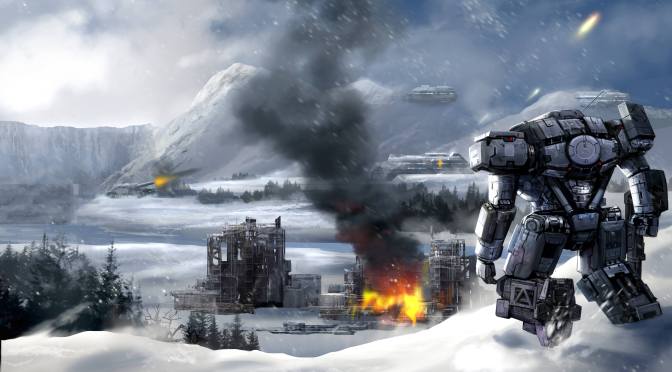
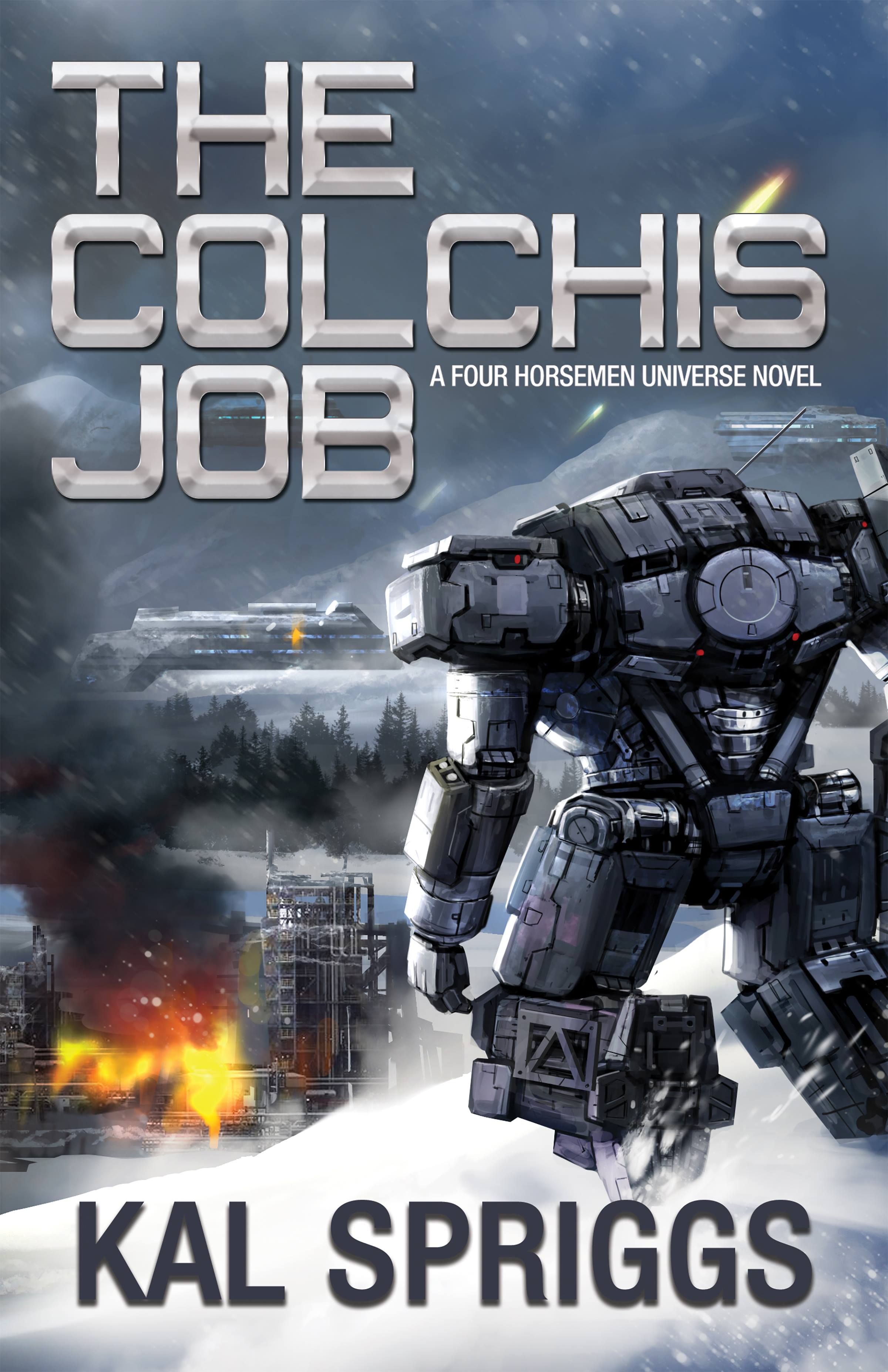
The Colchis Job, a Four Hoursemen Universe novel is now available on Amazon!  https://amzn.to/2AIUnBM

Colonel Jason Azoros is having a bad year. Having taken over the Argonauts’ mercenary company when its previous owner was killed, he has arrived back at Karma to find that no one will deal with him. Blacklisted by his father, Jason is forced to do a job for him to clear his name.

The early days of humanity’s expansion into space was an exciting time, as the best of the race went to the stars. Unfortunately, some of the worst went, as well, and the Argonauts must hunt down and destroy the worst of the worst, Colchis Industries.

Colchis has powerful friends, though, and its coffers are overflowing with credits, allowing it to hire mercenaries and buy equipment beyond what the Argonauts can afford. They also meddle in genetics, and their creations range from…interesting…to unstoppable.

Outmanned and outgunned, Jason and his crew embark on their voyage short on equipment but long on attitude. One thing is for sure—win, lose, or draw, they’re going to go out in style!


The Colchis Job Snippet Four

Here is the final snippet of The Colchis Job, available today on Amazon.   (link: https://amzn.to/2AIUnBM) The Colchis Job is a military science fiction novel set in the Four Horsemen Universe.  For the first three snippets, follow the links: Snippet One, Snippet Two, Snippet Three.


A few hours later, as we closed to orbit over Anauros, my plan had come together. Ruel had been giving me nervous looks ever since I’d come up on the bridge. Whether that was because he knew that Mulcahy had come forward or because he’d heard about the guard on the armory, I wasn’t certain. Either way, it shouldn’t matter.

“Stable orbit achieved, Colonel,” Heather Valsaint reported, “Anauros landing control wants to know our intentions and if we have any cargo to send down.”

“Miss Valsaint,” I replied, “Let them know we had a run-in with some pirates in their outer system. Inform them that we’re going to bring down the survivors and let them deal with them. Tell them we’ll send down a sample of some of the equipment and weapons we’re here to sell, too.” I didn’t look at Ruel but I heard a muffled hiss, “I think I’ll take our shuttle down with them myself, there’s some questions I’d like to ask them.”

Ruel spoke up then, “Colonel, how about I take care of that, for you?”
I looked over at him, an expression of practiced surprise on my face. I hoped I wasn’t over-doing it. “Are you certain?”

“I know some people down there,” Ruel smirked. “I’ll make sure those pirates get what’s coming to them.”

I grinned back, smiling for an entirely different reason now. “That could work. I’m not sure I trust these people, though. Better take a team of people you trust.” I couldn’t help but fiddle with the watch on my wrist, feeling the cool metal against the warm palm of my hand. It was a nervous habit of mine and I hoped it wasn’t too much of a tell.

Ruel’s expression went blank and I wasn’t sure if I’d overdone it or if he was having trouble changing his plans. I was offering him a chance to hit the ground with some of his chosen people, with trade goods, weapons, and a chance for him to link up with some of his criminal contacts. It is either the best or stupidest plan I’ve made since taking control of the ship. He could pack our shuttle full of well-armed pirates and go for attempt number two to seize the Argos.

He gave me a friendly grin as he thought it through himself, “Sure, thing, sir. I’ll take Schottler, Obradavic, and Cadrun.”

I frowned as I considered it. I knew that Cadrun and Ruel were close. I hadn’t figured Obradavic and Schottler were in whatever Ruel had planned, neither of them were from Third Platoon originally, which meant he’d done some recruiting behind my back. Still, those were the four who I’d ordered Reedie to take with him to secure the armory when the pirates had attacked. If Ruel had subverted them, then he’d want them with him on the ground, preparing to attack the ship.

He would also want someone on the ship to open the airlock and prevent us from blowing it like we had with the pirates.

“How about you take Mulcahy and Scott, too?” I asked. “I think four might not be enough to handle the prisoners and to deal with any kind of customs and such they’ll have here.”

Ruel’s expression flickered. I could see him trying to figure out whether he could deal with two marginally honest mercenaries and still keep someone on the ship to help him take it over on his return. I could see Valsaint and Reedie looking on, both of them clearly confused by the interaction. They knew I didn’t trust Ruel, and they didn’t know why I would send him to the planet alone.

“How about La Voie and Rice?” Ruel asked, almost gritting his teeth.
There we are… Rice had been the one to “find” the dead Lieutenant Bohannan after the firefight on Bedarine Seven. Which meant that Ruel had probably ordered him to kill his platoon leader. La Voie, on the other hand, wasn’t on my radar, other than the fact that he’d fallen asleep during the firefight back on Bedarine Seven. I wasn’t sure if he was on drugs or if he was narcoleptic, but the fact that Ruel wanted him along was a down-check in my book.

“If you think those two will be useful…” I trailed off, not wanting to sound too eager. I could see Reedie’s eyes bulging behind Ruel and he looked like he was holding his breath and starting to turn purple.
“Probably the best ones for this job,” Ruel gave me another friendly smile, though I could tell he was frustrated and trying to stay in control.

“Fine,” I nodded. “Professor, have you loaded those crates?” I asked over the radio. I’d given him the assignment as a punishment for having let the pirates aboard in the first place.

“Yeah, uh, sir, but are you sure about this–”

I interrupted him before he could go on. “Great. Go ahead and clear the shuttle airlock. Sergeant First Class Ruel is going to be bringing the prisoners down there.”

“Roger,” Grimes sighed. I could tell from his tone that he thought I was insane or stupid, but that was normal. I looked at Ruel, “Better get moving, right?”

“Yeah,” Ruel grinned at me and I could almost read his mind. He was already seeing himself commanding the Argos.

“Lots of luck,” I said as he stepped off the bridge. All of it bad, I hope…

***

“Staff Sergeant, uh, I mean Colonel,” Grimes asked as he came onto the bridge, “I still don’t understand why…”

“Not now,” I waved a hand and looked over at Valsaint. “They’re landing?”

“Yes, sir.”

“Bring up the audio,” I said crossing my arms. I’d had Grimes conceal a radio in the shuttle’s passenger area.

“…remember, get those crates open and get the weapons out. I’ve already radioed ahead. A friend of mine will be waiting. Arm up and start passing out weapons. I want to blow out of this spaceport before the authorities even know we were here. Once we hit the ship, Schottler and Obradovic, you head for the armory, Rice and La Voie, you take a team to engineering, and the rest of you will follow me to the bridge…”

“I think that establishes their criminal intent,” I smirked. “Please forward that recording to the local authorities as a statement of conspiracy, intent to mutiny, and piracy.”

“What about the crates of weapons?” Valsaint asked nervously.

“But I didn’t load any weapons,” Grimes protested, wiping his hands on his pants. “He had me load four crates with sewage from the backed-up sewage processor. The really nasty, chunky stuff, too… God that was gross.”

I heard laughter across the bridge and my smile broadened. A moment later, disgusted shouts came over the radio and I felt a warm, pleasant feeling wash over me.

“That was a shitty job, sir,” Grimes noted looking disgruntled.
I snorted, “Well worth the effort, I’m certain. I only wish I could see Ruel’s expression as we break orbit.” I nodded at Valsaint. “Miss Valsaint, break orbit, if you would. Tell landing control that we’ve dropped off some refuse in need of processing… and tell them they can bill us for disposal if needs be.”

I sat back in the command chair and took a deep, satisfied breath. My satisfaction didn’t last long, though. I cursed and pressed the button to do another radio call, “Reedie, please send for the cleaning crew, the bridge still smells like fish.”

***

Movie Review: Ant Man and the Wasp

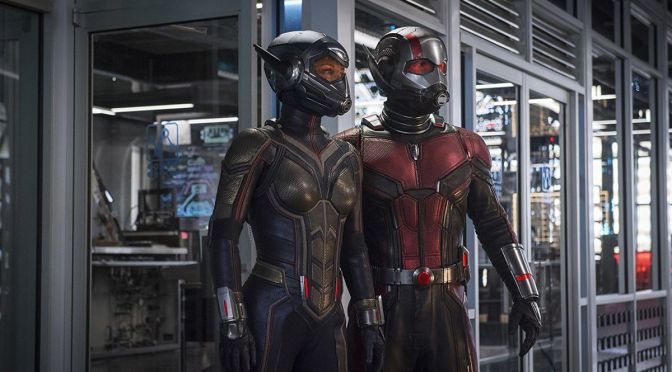
As things go, Ant Man and the Wasp was exactly the movie I needed to see.   If you’re a fan of the Marvel movies, or even if you aren’t, it’s fun, fast paced, and humorous.  The risks are dire and personal, this isn’t a movie where they’re fighting an alien of ridiculous power and strength.  These are people dealing with problems that make sense (even if some of those problems involve quantum mechanics).

It’s a movie that doesn’t hesitate to use humor to diffuse a tense situation and where the nonsensical is an acceptable route for problem-solving.  It rewards the audience for paying attention.  It also does a great job of showing that super-powers don’t necessarily solve problems and often times makes things more complicated.  It does all that without being preachy or boring, while still giving you enough time to process everything that’s happened.

And yeah, it ties into the rest of the Marvel Cinematic Universe, including Captain America Civil War and Infinity War.  At this point, I’m having a difficult time thinking of a movie they haven’t done well enough to be entertaining.  Ant Man and the Wasp is fun, engaging, and there’s enough interesting emotional and “real” world problems that I really found myself on the edge of my seat.  So if you haven’t already seen it, go watch it already.

The Colchis Job Snippet Three

Here is the third snippet of The Colchis Job, coming on August 3rd to Amazon.  The Colchis Job is a military science fiction novel, set in Mark Wandrey’s and Chris Kennedy’s Four Horsemen Universe.  For snippet one, go here: (Link) and snippet two go here (link).

“Sir,” Grimes called as I came down the corridor, heading to my quarters. I’d just confirmed with Reedie that Ruel had taken his radio away when he’d been trying to report up during the gunfight with the pirates near the armory. I wasn’t too happy about that, but I hoped that I’d settled things with the display on the bridge. “Private Mulcahy wanted a word with you.” The tall, brown haired young man had an earnest expression on his face. Then again, Grimes always looked earnest. I almost wished I had a face like that, people would have believed any lie I told them.
I looked at the private behind him. Mulcahy was one of the surviving CASPer pilots, if I remembered right, and shown some good promise. I planned to keep him on. He was a tall, lanky redhead, who normally kept his mouth shut and did as he was told. Even better, he’d fought like a demon back on Bedarine Seven. “What’s up?” I asked.
“Could we talk, uh, privately?” He looked around nervously. He was from Third Platoon, which meant he worked under Ruel
I shot Grimes a glance. He’d just let pirates aboard the ship. I wasn’t sure if he’d even contemplate that someone in the company might try to off me to take over. If Ruel sent Mulcahy…
“What is this about?” I demanded and my hand fell to my slung MAC.
Mulcahy gulped and he reached out an arm to a stanchion, like he was going to pull himself away in the micro-gravity. He seemed to realize that he couldn’t get away and he brought his hands up, “Christ!” He swallowed, “Sir, I just, look…” He took a deep breath, “I saw Sergeant Ruel gack a couple of the pirates after they laid down their weapons.”
“Oh,” my hand flexed against my weapon, “is that all?” I asked, not particularly concerned. They’d been caught in the act of piracy. Most mercenaries wouldn’t even give them a trial, they’d be vented out an airlock before lunchtime to not ruin the rest of the day. Some mercs I’d dealt with would sell them into indentured work on one of the frontier mining worlds.
A Peacemaker might care, but only if Ruel had gotten creative in his killing of them. Pirates were scum, worse than scum, for they clogged up the traffic between star systems, the very lifeblood of the Galactic Union.
“N- no,” he looked around, as if trying to be certain no one else was nearby. Since the corridor was deserted, I thought it was somewhat humorous. He leaned closer and spoke softly, “They recognized him, spoke to him by name.”
“Huh,” I said. Ruel had been the one to suggest coming here to Anauros to sell some of the equipment. What if that was his plan, from the beginning? Get us here, have his pirate buddies kill me, take the ship, and then sell the equipment for himself or just keep a nice cut… The system did have something of a rough reputation, the locals probably wouldn’t even care, especially if he sold all of our gear here.
“Interesting,” I nodded keeping my expression neutral. “Thanks for telling me.”
“That’s it?” Mulcahy seemed outraged, “That’s all you’re going to do?” His freckled face grew flushed and his eyes bulged in anger. Behind him, Grimes reached forward and caught his shoulder, restraining him.
“I didn’t say what I was going to do about it, private,” I snapped. He blanched at my tone. “I realize you stuck your neck out by telling me. Now, I could transfer you over to another section, but then it would be obvious that you’d done something and Ruel is either going to figure out what it was or assume the worst. He killed two of his pirate associates because they could finger him as a pirate, what do you think he’d do to you if he thought you ratted on him?”
Mulcahy shuddered.
“Right,” I nodded at him, “so keep your head down, don’t stick out, and let me handle this.” I waited until the private nodded and then I pushed myself past him. Grimes followed behind me, but I stopped him at my quarters. “Professor, I want a two-man team on guard at the armory. Do up a roster, but I want First Platoon people on it the first rotation, Second and Third Platoons not until after we break orbit.”
“Sir?” Grimes licked his lips nervously. All this intrigue and backstabbing was out of his league. Still, at least I knew I could trust him to do as he was told.
“Ruel might try to seize the ship. I don’t want anyone from his platoon in position to do it. Brief Reedie and… hmm I think Miss Valsaint, tell them the threat. One of you is to be on each shift until we make it to Karma.” That should keep Ruel from being able to stage mutiny.
I opened the hatch to my quarters and a warm, wet, stink washed over me. I wrinkled my nose at the fishy stench. “And for God’s sake, get someone over here to clean my quarters again. Stupid mollusks…”

***