Review: Larry Correia’s Son of the Black Sword

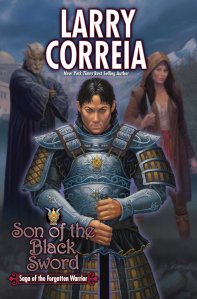
Son of the Black Sword by Larry Correia

I’m a big fan of Larry Correia’s books in general, so when I had the opportunity to snag his upcoming epic fantasy book, the first of a new series, I bought it with little hesitation.

I’ll note here that I read an electronic Advanced Reader Copy (eARC) through Baen’s website. So I’m not going to comment on grammar or editing issues, I’m just going to talk the story.

This is a solid book. Larry Correia has created a deep world with complex issues. I’ll say right here that it is not a world I would want to live in. It is a world filled with petty tyrants, a caste system restrictive enough to get violators killed, and an overreaching bureaucracy that tries to control everything and only seems to succeed in making peoples lives miserable.

Into this world are cast a number of characters. Some good, some bad, some heroic with tragic flaws and others self-interested yet still willing to help others out. The main character is very remenicent of Agent Franks from Larry Correia’s Monster Hunter series and even more so of his Clan Crab character from his Legend of the Five Rings RPG write-up. Ashok Vadal is as much of a weapon as the sword he carries. Yet underneath that, something troubles him, dreams and visions of things that make no sense to him. He fights evil unquestioningly, until something forces him to reexamine what evil really means.

The entire book is a great read. Lots of action and adventure and just enough world-building spread in so that you get the grasp of a full, living world, without getting bogged down in the details. I highly recommend it.

Publisher’s Blurb: After the War of the Gods, the demons were cast out and fell to the world. Mankind was nearly eradicated by the seemingly unstoppable beasts, until the gods sent the great hero, Ramrowan, to save them. He united the tribes, gave them magic, and drove the demons into the sea. Yet as centuries passed, Gods and demons became myth and legend, and the people no longer believed. The Age of Law began.

Ashok Vadal has been chosen by a powerful ancient weapon to be its bearer. He is a Protector, the elite militant order of roving law enforcers. No one is more merciless in rooting out those who secretly practice the old ways. Everything is black or white, good or evil, until he discovers his entire life is a fraud. Ashok isn’t who he thinks he is, and when he finds himself on the wrong side of the law, the consequences lead to rebellion, war—and destruction.

Links:

Son of the Black Sword (Amazon)

Son of the Black Sword (Baen ebook)

Review: David Weber’s Sword of the South

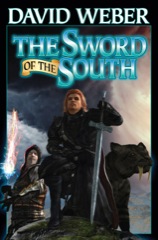
David Weber's The Sword of the South.
David Weber’s The Sword of the South.

David Weber’s new Epic Fantasy novel, Sword of the South, is up on Baen’s websubscriptions and I picked it up last week for some ‘light’ reading.  I thought that I’d do a review of it, to give my impressions.  I’ll preface this by saying that I read an eARC of this book.  It’s not the complete version and it still has some editing to be done.   Therefore I’m not going to nitpick grammar and such.

I’ve been a long time fan of David Weber’s fantasy series, starting with Oath of Swords and then leading into The War God’s Own, Windrider’s Oath, and culminating in War Maid’s Choice.    If you haven’t read the series, you should.  It’s excellent.  The stories are, much like most of Weber’s, rich and interesting with detail, well orchestrated, and while the good guys don’t always get a happy ending, the bad guys generally come to bad ends.

The Sword of the South is, as far as I am aware, the start of his main epic.  The other four books were designed to be the opening act, as it were, much like Tolkien’s The Hobbit was to Lord of the Rings.  The clash between the powers of Light and Darkness is begun.  From the very first pages, you get the feeling that the stakes are higher and that the costs may be far higher than the previous books.  Since the previous books saw the deaths of beloved characters, this generally means that no one is safe.  The Sword of the South is also written so that a new reader, someone unfamiliar with the series, can start here without issue, while still rewarding long-time readers with inside jokes and references to events in humorous fashion.

The premise of the book is simple enough, retrieve a powerful weapon from an evil sorceress and defeat her minions along the way.  In execution, there are a number of complications, with master assassins, arch-wizards, demons, and dragons all getting involved.  This book gives a much broader picture of the world in some ways, filling out some of the details that the reader might have been interested in from the other books.  In some ways, though, this book feels… incomplete.  Almost as if this were a sideshow in the larger overall events that David Weber has scripted to come later.  The mission is, without a doubt, essential, in more ways than one.  Indeed, in many ways the journey seems as important as the mission, but while I came away eager to read the next installment, I also came away at the end with a feeling that a little too much remained unresolved.

Characterization is excellent.  Several characters from the other books are here, to lesser or greater extent.  Some time has passed (I won’t say how much, because that’s part of the plot, actually), and it is good to see how characters have grown or matured from their experiences.  As a reader, I found it wonderful to see the payoff of how characters had progressed and grown (and also to see some guesses confirmed).  The new characters held their weight, none of them overshadowed by the stories and personalities of the others.  David Weber did an excellent job of making even some of the villain’s motives and motivations understandable… even while showing that they had gone too far.

Later on in the book, however, I did have a few issues with changes of perspective.  At times the perspective in a scene will change from one character to another from one paragraph to the next and then back.  This left me with a sense of whiplash, trying to figure out who was thinking what.  This might be something they’ll edit before the final release, but in one particular case it was not only hard to follow, but left me feeling as if I had missed something.  Very slight spoiler: In some scenes there is a character who is under another guise.  The other characters knew this character by a different name, but in the changes of perspective it would go from the disguised character’s actual name and thoughts, to another character who didn’t know the character’s true identity, and back, sometimes multiple times in a scene.

In all, I enjoyed the book and I’m eager to read the next.  It was excellent to get to see some of the promises made in the earlier books finally fulfilled and I can’t wait to see how the further books in the series progress.  If you haven’t read any of David Weber’s fantasy series, you should get started!

Here’s the publisher summary:

A#1 in a NEW EPIC FANTASY SERIES by 28-times New York Times and international best seller David Weber, set within his Bahzell Bahnakson/War God universe. A swordsman who has been robbed of his past must confront an evil wizard with a world at stake.

Know thyself. Its always good to know who you are, but sometimes thats a little difficult.

Kenhodan has no last name, because he has no past . . . or not one he remembers, anyway. What he does have are a lot of scars and a lot of skills some exhilarating and some terrifying and a purpose. Now if he only knew where he’d gotten them and what that purpose was . . . .

Wencit of Rūm, the most powerful wizard in the world, knows the answers to Kenhodan’s questions, but he can’t or won’t share them with him. Except to inform him that he’s a critical part of Wencit’s millennium-long battle to protect Norfressa from conquest by dark sorcery.

Bahzell Bahnakson, champion of Tomank, doesn’t know those answers and the War God isn’t sharing them with him. Except to inform Bahzell that the final confrontation with the Dark Lords of fallen Kontovar is about to begin, and that somehow Kenhodan is one of the keys to its final outcome.

Wulfra of Torfo doesn’t know those answers, either, but she does know Wencit of Rūm is her implacable foe and that somehow Kenhodan is one of the weapons he intends to use against her . . . assuming she can’t kill both of them first.

But in the far northern port city of Belhadan, an eleven-year-old girl with a heart of harp music knows the answers to all of Kenhodan’s questions. . . and dares not share them with anyone, even the ancient wild wizard who loves her more dearly than life itself.

It’s not easy to face the future when you can’t even remember your own past, but if saving an entire world from evil sorcerers, demons, devils, and dark gods was easy, anyone could do it.

For those of you wanting to find the other books in the series or the book itself I’ve listed them in order with links:

Oath of Swords

The War God’s Own

Wind Rider’s Oath

War Maid’s Choice

The Sword of the South

The Sword of the South eArc

Kal’s Liberty Con 2016 Schedule

For those of you going to LibertyCon, I’ve got my schedule.  This will be my first year attending and I’m really excited to be there.

Day Time Name of Event
Fri 04:00PM What’s new in Space Opera?
Fri 05:00PM Opening Ceremonies
Fri 10:00PM Author’s Alley
Sat 02:00PM Author’s Alley
Sat 08:00PM Reading: Thomas Mays & Kal Spriggs
Sat 09:00PM What’s New in Epic Fantasy?
Sun 10:00AM Kaffeeklatsch
Sun 01:00PM Author’s Alley


Hopefully this will only be the first of many years in attendance.  I’m not sure yet what I’ll bring to the reading, but if anyone has any requests, feel free to comment here or on my FB page.  I’ll also have copies of my books on me for signing for those of you who prefer paper to ebooks.  I’m told that they’re almost sold out of memberships for LibertyCon, so if you haven’t got your tickets yet and you plan to attend, hurry and get your membership.

Renegades: Origins Audiobook Is Now Live!

Renegades: Origins is now live as an audiobook on Amazon, Itunes, and Audible.

In times of chaos, there are those who fight for money, for power, or just to survive. In feudal Japan they were ronin. In the US post-Civil War, they were desperadoes or hired guns. In the chaotic times of the collapse of human civilization, they are men, women, and aliens without shelter or succor. When no one else will take a stand, they stand for themselves. They are deserters, murderers, pirates, and worse; they are the Renegades.

Renegades: Origins contains the novellas Deserter’s Redemption, The Gentle One, Declaration, Ghost Story, and A Murder of Crowes. It also contains six short stories: “Research Notes”, “Runner”, “Fool’s Gold”, “System Failure”, “Dishonored”, and “Crossed Stars”.

Available at Audible.com here.

Available at Amazon here.


50 Shades of Polychrome

PolychromePolychrome by Ryk Spoor is now live, you can read the review from Capitol Cat Editing below and follow this link to find it on Amazon.

capitolcatediting's avatarKal Spriggs

This is a guest blog from Amanda at Capitol Cat Editing in for Kal this week.

My latest read has been Polychrome by Ryk E. Spoor.  This book is a combination of fantasy, fanfic, romance, and action.  The author does several things well; like capturing the rhythm and syntax style of L. Frank Baum, the imagination and magic of Oz, and paying homage to the characters Ozites have come to adore.  Spoor also references many other cult classics and will inspire many geek moments for his readers.  His vocabulary is also delightfully versatile and refreshing.  My chief complaints are more matters of opinion versus any grievous errors in plot, theme, or overall ability — with one exception: sexuality.  The theme of redemption is very well done and definitely contributed to some of the best parts of the book.

Spoor is clearly a hardcore Ozite.  He references details from most of…

View original post 564 more words

Who’s This Hugo Guy Who Made Everyone Angry?

As a number of people have been religiously watching, posting, counter-posting, fisking, counterfisking, and generally stirring the pot, I thought I’d give a broad strokes overview of what’s going on for those of you who haven’t been watching this unfold from early on.  I won’t use the acronyms which seem to have pervaded everything (SMOF, CHORF, etc), mostly because as a vet, I hate acronyms.  If you were like I was, when I first heard about Sad Puppies 1, then your first response to it all might well be: “Hugo Award, they’re still giving those out?  I thought they stopped that decades ago.”  If you’ve read some of what people are posting, they seem to think that we’re all madmen (probably emphasis on ‘men’ and some statement about racism, misogyny, and general bigotry), who have seized the controls of the Starship Hugo and are taking us off to who knows where.

That response is a product of how the award had become a treasured prize given between a relatively small group or one might even say ‘cabal’ of friends, associates, and those who quietly maneuvered to make certain that the ‘right’ people were the winners for some time now.  Sadly, as a result, the Hugo has gone from a treasured award to a rubber stamp of approval from the cabal of group-think.  The last Hugo award winning book I remember reading (and only because it had seals all over it) was Orson Scott Card’s Ender’s Game.  Looking at the past winners over the last 30 years, you start to notice a pattern (here’s a convenient list of the Best Novel winners/nominees, courtesy of Wikipedia) and that pattern becomes pretty clear from about 2005 onwards.  There’s occasionally a very popular book/author that makes it onto the final nominations and sometimes even wins.  George RR Martin, Lois McMaster Bujold, and JK Rowling all fall under these parameters… as authors who are talented and popular, but they’re the exceptions rather than the rule.  Very thorough people have gone through and noted where other authors have been blocked out in years past, seemingly by the same group of people who have passed the award around for the past decade or more.

Then there’s a slew of other authors who I have to scratch my head at.  No wonder I didn’t hear about the Hugo when some of these fellows won, I’ve never seen their books or if I did, they were so utterly unmemorable that I didn’t bother to even remember seeing them.  Then again, if you’re like how I was, it’s easiest to shrug.  I mean, who cares about the award, then, if it’s going to people who don’t write very entertaining or interesting stuff?  Well, you see, the problem is that the Hugo Award, purports itself to be the award for the “Best” science fiction.  Not only that, but by general decree, it is open to all members of Worldcon… This makes it a bit awkward when the award becomes the prize of a small, select group.  I mean, the convention has been going on since 1939 and it claims to exist for science fiction in general… so why is it that a relatively small group of people have control over it?  Certainly it wasn’t talked about or discussed, these people, the cabal, operated from behind the scenes.  They likened themselves to puppet masters with terms like “Secret Masters of Fandom” and they quietly considered themselves the kingmakers.  These people were driving the Hugo Awards into the ground.  When general fandom can’t even recognize the names on the final ballot… what is the point of voting?   When the victorious works are either so abstract as to be obtuse or so message laden that they have no story, no pull, then what is the point of reading them?  Worse, when they became a token of popularity and group-think within the cabal which controlled it, then what prestige does that have to general fandom?

Why does this matter?  Well, way back in Sad Puppies 1, you can see that some people thought it was kind of bullshit that authors who had written some excellent stuff had not only never even made the ballot, but had pretty much been told by those in the know that they never would make the ballot.  They didn’t write the the ‘right’ kinds of stories, they weren’t published by the ‘right’ kinds of people.  This kind of thing irritated a number of people and so Larry Correia, the International Lord of Hate, stepped up and started the campaign.  His goal wasn’t to win, his goal was to show that there was a bias, that some people did quietly have the controls, and that it was possible for non-cabal authors and fans to organize as well.

The backlash from Sad Puppies in 2013 drew quite a bit of attention.  Larry Correia is possible one of the nicest authors I’ve had the pleasure of meeting.  He’s a big, friendly, teddy-bear of a guy… until you start throwing names at him, accusing him of being a wife-beater, etc.  Larry became target number one for these people and that has continued to this day.  Attacks on his character have gone well beyond the point of criticism and have devolved into accusations and profanity.  There’s enough general hatred of him from the people who controlled the Hugos that if you could generate electricity from it we would no longer need oil, gas, or coal.  See, Larry supports sustainability, he’s just trying to create energy from all the exploding heads.

Sad Puppies 2 was born out of that backlash, as a number of other authors and fans saw how Larry was treated as a result.  Sad Puppies 2 successfully got several people onto the ballot for the Hugo… and people lost their goddamned minds.   This is when the media stepped in, and terms like ‘libel’ and ‘slander’ started getting brought up.  The people who had control had been challenged and their control slipped enough that it was perilously close to failing.  So they started getting angry.  The masks came off and it became a tide of angry, nasty, abuse that they threw at those who had dared to defy them.  In doing so, they made the people they attacked angry enough to speak out.  They also showed that they think the award is for them and the ‘right’ people that it wasn’t about the quality of writing or work.

So here in 2015 Sad Puppies 3 is the result.  General fans organized and weighed in on who and what should win.  The end result is that the voting block came into the open.  Fans really care enough about what is ‘best’ in writing to weigh in on the award for the Best in Science Fiction.  The Hugo, in the process, has come back to having some value and meaning.  Where this all became so nasty, though, was when the people who the cabal expected to see on the final nominee list didn’t get their notifications ahead of the public announcement.  As a result, before it even went public we had people raving about how the Sad Puppies and Rabid Puppies (more on them later) had hijacked the ballot and the world was ending.  Not long after it went public we had people such as John Scalzi stating that they would rather vote “no Award” than give the award to people (not works, mind you ‘people’) that didn’t merit the award.  Voting “No Award” is their attempt to ensure that if their  people can’t get the award then no one can.

And then there’s “Rabid Puppies” which is run by Vox Day.  The “Rabid Puppies” movement has it’s inspiration in Sad Puppies, but is not connected.   I’m not going to weigh in on his politics, religion, outlook, or philosophy.  None of that really matters in this, right?  It’s about the quality of the work, or at least that’s what everyone used to say about the Hugos.  Vox Day, just with his own fans and followers, managed to snag quite a big chunk of nominations.  Clearly his fans cared enough to shell out the membership fees for Worldcon to get him on the ballot, what this says about his writing, I’ll leave to others to say.  I haven’t read his stuff, so I am not qualified to say.

Who I have read is Jim Butcher, Tom Kratman, Brad Torgerson, Ceder Sanderson, Amanda Green, Jim Minz, and Toni Weisskoph.  I’ve enjoyed their posts, stories, and editing.  I was excited to hear about their successes and I’m just as excited to hear who gets the award… because these are real people who have written or edited things worth reading.  For the first time in a while I actually care who gets the award and just seeing the chatter on various outlets, I can tell that lots of other people feel the same way.  This is the end result of people caring about the award again.  And for all the filth that people are saying about those who have supported Sad Puppies… it just shows that they don’t like to be challenged.  Why is that?  Probably because they know that they can’t win in a fair fight, so they resort to nasty rumors, awful accusations, and emotional declarations that have little base in reality.

We haven’t hijacked the Hugo Awards… we’ve just seized the controls from the madmen who were diving us towards the ground.


Kal’s April 2015 Forecast

I thought about putting this up for the first, but I didn’t feel that was auspicious given the day.  April is finally here and I’ve already begun writing The Prodigal Emperor.  Here in April I’ve got a busy schedule for writing: I’ve got to finish The Prodigal Emperor (Book 3 of The Shadow Space Chronicles), I’ve got to finish the outline for two books due to publishers later this year, outline and do a cover for Renegades: Out of the Cold, and hopefully get some writing done on that as well.

I’m starting to hear back from my alpha readers about Wrath of the Usurper (Eoriel Saga Book II) and while I’ve got some editing to do, it is looking to be on track for release in early June.    I hope to have the cover for Wrath of the Usurper from the artist later this month as well.

In other news, I’ll be at Starfest in Denver, Colorado on April 17-19, moderating a couple panels with more details to come.  That’s all for now and thanks for reading.

Taxes for Writers, part 2

Here is part 2 of my Taxes for Writers section, reblogged for those who may not have seen it last year.

ka1spriggs's avatarKal Spriggs

In my last bit on taxes, I went into what I’ve learned as far as tax deductions.  Now comes the less fun parts.

Writers, God(s) help us, are considered self employed.  This has a number of effects upon the money we earn and the taxes we have to pay.  As far as the US tax system and the IRS, being self employed puts most of the burden upon the writer.

There’s three types of tax that all US Citizens pay.  There’s Social Security, Medicare, and then income tax.  Normally, you only have to pay a net 7.65 percent of your income to social security and medicare.  The problem is, your employer is paying the other 7.65 percent.  As a writer, your employer is you (regardless of whether you publish with a big company or not, they push the onus of paying that to you), so you have to pay all…

View original post 357 more words

Taxes for Writers, Part 1

Since Tax Time is here again, I thought I’d share this once again for all those writers and prospective writers out there who might need the advice.

ka1spriggs's avatarKal Spriggs

In writing, as in many things, there is no getting away from the absolutes: Death and Taxes. The good news, such as it is, is that writing can have a number of perks, chief among them is making you a bit of money.  The bad news, of course, is that you’ll have to pay taxes on that money.

Even if you’re not earning money on writing just yet, your writing can save you a bit come tax season.  Writing, so long as you are making a sincere effort at publishing or getting published, is a business.  As a business, you can take deductions from expenses common both to general writing and genre fiction.  Those deductions can really start to add up and can be a real benefit when you go to file your taxes, hoping to get a little bit more money back.

If, like me, you’ve earned money writing…

View original post 469 more words

Snippet # 2 from Leo Champion’s Highway West

Here’s another snippet from Leo Champion’s Highway West, coming soon to Amazon, Smashwords and other ebook vendors near you!


Chapter Two

It was mostly dark when Najif woke Ashford, shaking his shoulders hard. He’d been sleeping – was lying down, now – on a rough straw mattress in a corner of Najif’s room, in an apartment in the fisherman’s district.

You need to change,” was the first thing Najif said to him. His tone implied heavy urgency. Ashford got to a sitting position.

Why?”

Najif held out some clothing.

Change. Now. Later I will explain.”

It’s got to be something bad.

Ashford got to his feet, stripped out of his white uniform and down to his briefs. He wished he could shower or something first. He changed into the clothing Najif gave him – grey linen trousers, a once-white sleeveless shirt, black leather belt, leather sandals. As he pulled his socks off and stepped into the sandals, worry went through him. The clothes, his uniform, were the last connection he’d had to civilization after his ship had been destroyed and his men had deserted.

In the first moments after waking, Ashford had hoped all of that might have been a bad dream, a nightmare. The cool morning air and Najif’s terse urgency, the coarse linen on his skin over the mild sunburn and the slowly-starting-to-heal wounds, dispelled that hard.

The pants were loose. He buckled the belt tight.

Your skin is white. There are not many things we can do about that. Some men have white skin, and the sunburn can help. Hmm.”

Najif turned around. He’d packed two rucksacks the night before. He rummaged in one and came up with a black kerchief.

You have fair hair. Put this on. Less men have blond hair than white skin.”

Ashford took the kerchief. He’d never worn one in his life, and for good reason. Bandannas were what laborers, dockside workers and common sailors wore. Ashford’s family was upper-middle-class and proud of it in a class-conscious society.

There’s danger. There’s obviously danger, Ashford thought. He put it on and inexpertly tied it behind his head.

The uniform is worth some money. Good cotton has a price,” said Najif. “Rosa will say she found it in the street. If someone speaks to you, say nothing. You know some Greek, but your accent gives you away. The talking, I will do.”

Najif picked up one of the rucksacks and handed it to Ashford.

Put this on. It’s time to go.”

Why? What’s the urgency? Why are we hiding?”

There could be a million reasons. Ashford didn’t doubt Najif’s sincerity. But why?

Najif scraped his hands along a corner of the room,where boarded floor met stucco wall and a lot of dirt had been swept. Then he carefully daubed Ashford’s face with it.

Do not move,” he said. Smearing a little more of the dirt on his face, spreading it thinner.

This should be adequate. Take a look and go to the window. Tell me what it is that you see.”

Gut in his throat, Ashford went to the window. It was open and glassless and looked out from the third storey directly onto the harbor. Some of the morning fishermen were already out, and there was a buzz of activity on the fishermen’s docks.

And in the mouth of the harbor, surrounded by a wide margin of empty water because the early fishermen had heard all about yesterday’s devastation, was the battleship. Eight hundred feet long, brutally wide, dark steel and heavy batteries of massive guns. Men moved around on it, but there was not a single flag to be seen on her grey-black shape.

Ashford ducked instinctively, staggered back to where Najif was.

She arrived in the night. Men have landed. There is a rumor out that they are looking for Americans. That they will pay a price for live ones.”

Oh shit.

Do you know who they are?”

The rumor did not say,” said Najif. “Do you want to find out by asking them? Or should we leave before one of my apartment-sharers hears the same rumor?”

There were noises outside. Najif shared this place with two other unmarried fishermen.

Oh, shit.”

You understand the urgency now. Put some more dirt on you. Not a lot. It does not do for a fisherman to appear muddy. But enough to darken the skin a little.”

Ashford didn’t think. He took more dirt from the ground, dusted it across his arms, his neck and his ankles.

Najif nodded.

Come on.”

Wait – do we have money? What about your boat? Where are we going?”

Captain Enos is a good man; he has had a standing offer for my share since I bought it some years ago. He was not able to raise the full price, not at a few hours notice. He was able to raise a sizable amount of it. Do you have any more urgent questions or shall we hurry? Ask, because we might not be able to talk easily once we leave here.”

Can I trust you? came immediately to mind, but he shot that down immediately. Where are we going? might take a while to answer, and Ashford completely understood Najif’s urgency now. He himself wanted to run, run, run as fast as he could away from that ship.

Can you give me a weapon?” he surprised himself by asking.

A gun, I do not own. Needless violence is against my religion; I am a true follower of Mohammed.. But we may need to defend ourselves. In the countryside there are sometimes bandits. For what little good it may do, I can give you a fish knife.”

It was a six-inch gutting knife. A thin steel blade, slightly curved, set into a short wooden handle.

In there,” said Najif, gesturing to a short loop on Ashford’s belt that he hadn’t noticed before. He put it in and drew the loop closed; the blade hung by his side. There was a similar loop with a slightly longer knife on Najif’s belt.

Let’s go.”

* * *

Ashford kept his head down as they hurried down the stairs and out of the apartment. The fishing district here was as bustlingly busy as the one in Provincetown had been, this time of morning. They passed fishermen checking their nets, wives doing last-minute repairs or carefully threading hooks onto lines. Vendors sold clay jugs of wine and kebabs of smoked fish and vegetables.

The traffic grew a little quieter as they transitioned from the fishing district to the area around the commercial docks. Kids and old men slept in doorways. A teenaged boy sold booklet-like newspapers from a small wooden barrow, crying out in fast Greek that Ashford barely understood the gist of. The big item of the day’s news was, of course, the Wilson’s destruction.

Ashford wanted to buy a paper – he could read Greek well enough – but he didn’t have any money. Besides, Najif wasn’t about to stop.

They hurried on past, staying a couple of streets away from the docks. A gasoline-powered truck was being unloaded in front of one warehouse by half a dozen muscular men in brightly-colored bandannas. A man on horseback trotted past in the opposite direction. In front of a surprisingly elegant building that had to be some prosperous merchant’s dockside offices, an electric light shone onto the street.

At a market square, stallholders were starting to unpack their wares. Fish, fruit, meat, eggs and a hundred other things. Another newspaper vendor was yelling shrilly. This time Najif stopped. He handed over a couple of coppers.

The kid nodded thanks and gave him a paper. It was thin, only four pages, and badly-typeset; the Boston papers were much better but Ashford was surprised there was one at all in a place like this.

Well, the city bosses probably needed some way to get the word out about new taxes, or to criticize their rivals. There were a lot of crudely-woodcut pictures, which made sense. Probably not too many literate people around here.

This way,” Najif said. They took a right turn, heading uphill on a road that steadily got steeper. Past shuttered-up shops and through a small slum. Tenement buildings gave way to nicer apartments and, as they ascended further, the fortified houses of the upper class. They crested the top of the hill, past more warehouses and another slum on the downslope, and then they were at the city walls.

A hundred and seventy years ago, of course, Kyrenia had been a lot bigger; everywhere had been. Deaths, sickness, violence and food-seeking migrations to the countryside, had shrunken Cyprus’s northern port from forty thousand to – well, probably almost nothing for a while like most of the towns and cities, but it’d only recovered now to maybe a fifth of that. Most of the stone from the abandoned buildings had been rebuilt into these twenty-foot-high walls.

A line of people and vehicles were slowly shuffling uphill toward the gate. Early farmers coming back from delivering their goods to the city. A few merchants. A good number of individuals on their own errands. Individuals on foot mixed with donkeys, carts, wheelbarrows and a single gasoline-driven car that flew a complex flag from a low pole on the center of its roof.

Guards with bolt-action rifles were looking over the people as they left, but not interfering too much. The people coming into the city got more attention, and most had to pay a toll. The outgoing line moved pretty quickly.

Ashford expected something to happen when they passed the guard, but he did nothing; he barely even moved his head to motion them forwards.

Rusty coils of barbed wire were strung here and there amongst the dirt on the hundred yards or so between the city walls and the nearest construction, a couple of buildings that smelled vile. Tannery or something. A steep downhill slope looked across a narrow valley.

Najif had slowed down when they approached the gate. To Ashford’s relief, because the effort of walking so fast had opened up the cut on his chest, he didn’t resume the earlier pace when they were out.

Instead, they headed along the badly-maintained tarmac road at a slow walk. A few hundred yards out, as they were climbing the facing slope, he stopped a man with a donkey coming towards the city. There was brief haggling, before Najif handed over a couple of coins in return for a double-handful of large black olives.

Breakfast,” he said to Ashford. “There’s a stream on the other side.”

***

Where the hell are going?” Ashford asked about half an hour later. They were sitting down by the stream in the next valley, where there was fresh water to go with the olives they’d eaten.

Overland,” Najif said, replying in English to Ashford’s Greek.

I thought we were going by sea.”

I thought so too,” said Najif. “Then the ship came. Do you know anything about Kyrenia politics?”

Nothing. Don’t they usually just obey whoever controls Constantinople this week?”

That indicates their character. Not their allegiance,” said Najif. “Governor Kosmas is a greedy coward who would sell his province to the Greeks in ten minutes if they’d offer him enough. And if he thought they were any more honest than he is – if he really believed they’d let him keep the money. If the people on that battleship want to offer money for American survivors, they won’t just put a reward on the streets. If they understood Cyprus they’d go to the Governor directly and offer him money.”

Ashford nodded. He’d been turning that idea over in his mind all yesterday afternoon.

There might be ships bigger than that battleship in the Mediterranean, but you wouldn’t need all the fingers of one hand to count them.

He’d spent most of his career handling logisticals, finance, those numbers swayed for political purposes and budget wrangling; he knew exactly what it cost to build and run a ship like that. You had to be a nation and probably a large one. Or you had to be an independent with so much money and power that functionally you were a nation.

US intelligence this far east was almost nonexistent. Until the Wilson had arrived in the area a couple of weeks ago, it had been completely nonexistent. And that might have been the motivation: somebody wanted to keep it that way.

Without more information, there was no point in trying to guess who that was. He wanted to find out, but speculating on it now was insane. The fact was that these people had resources, and if they’d gone to the trouble of killing a cruiser of the United States Navy, they probably had good reason to want absolutely no survivors from that cruiser.

He’d pushed that concern to the back of his mind until that ship had arrived in harbor now. This morning, less than an hour ago, the battleship had again become a pressing threat.

Yes,” said Najif. “And Kosmas is a coward. When there is a ship in his harbor that outguns his shore batteries by ten to one, he probably does not need bribes to obey its captain. The Governor has customs inspectors. He relies on them for a good part of his taxes. He can inspect any ship that leaves. He can have it boarded and searched.”

Which kills the idea you were talking about last night,” said Ashford. “Of just getting on a freighter for Athens via Crete. Shit.”

Yes. They might have searched it. And then your mission, and my green card, go. Look on the bright side; perhaps they will catch your mutineers and save you the trouble of hanging them.”

Ashford hadn’t thought about that, but he disliked the idea a lot more than was rational.

Briggs is going to face a Navy court and he’s going to hang for mutiny, desertion, grand larceny and the attempted murder of an officer,” he said coldly. “He’s not going to die at the hands of some foreign power for the crime of being an American. I’m going to get him or the Navy will. Nobody else.”

Until yesterday, Ashford had never seriously imagined himself killing anybody; not up close and personal. Now, he thought he’d enjoy shooting Briggs and his traitors. Knew he would.

To his surprise, Najif nodded.

I can understand that. Well, hope they escape and we run into them again. When we have friends, and guns. We can arrest them and see them face a court.”

We need both of those,” Ashford agreed. “Guns especially.”

We won’t find them here and last night I didn’t have time to look for them. Not since we wanted to wake in time for the morning outgoing tide.”

How far is it to the Greek port?”

To Paphos? Sixty miles,” Najif said. “Perhaps four days, if it was flat and our course was straight. It’s not, and it won’t be. We’ll be going over mountains and we have to cross a border. The border means we might need to take detours. It could take a week if we’re lucky. Perhaps longer.”

Right.”

Ashford closed his eyes. A week’s travel, just to the next port.

Before the Pulses, when there had been cars and good roads, it would have been a half-day or less. Except that there had been aircraft then, commonly available and flying everywhere. There had been satellite phones to make the trip unnecessary. There had been a lot of other things; computers and computer networks, microchips and cars everywhere; wishing for them now was stupid.

Just as pointless as wishing for fifty stars on the US flag, instead of twenty. That motivation was why Ashford had joined the Navy – his nation had been glorious once, and perhaps he could help rebuild it. The Pulses had only been a hundred and seventy years ago; his grandparents’ parents had probably heard stories of the old world first-hand.

The motivation had survived four years at the Annapolis academy, narrowly outside the safe-radioactivity line around what had been Washington DC. It had survived six years of glorified clerking and unglamorous errand-boying in the capital, in Charlestown and Beacon Hill; it had survived a pretty-boy assignment as the naval liaison for a Philadelphian traders’ combine run by a politically-connected family friend, and somehow it had survived the last couple of days.

Been strengthened by the last couple of days, in fact, because this was meaningful. For the first time in his life, there was something critical, something important, that only he could do.

He was surprised that he felt this way; this wasn’t supposed to invigorate you, it was supposed to break and terrify you. Especially someone like him; he’d always seen the Navy as a stepping-stone to eventual political office, from which he’d do his truly meaningful work. The line officers on the Wilson had perhaps guessed that, or perhaps they’d simply had the fighting man’s contempt for a career staff officer whose first ship duty had come after his first promotion.

Their put-downs had led Ashford to think even more that he’d break under pressure, and driven him to spend his off-hours with other staff types, engineers and technical officers, who seemed to have decided in childhood that they were not going to be any more than parts of a machine, that heroics were for the men with the balls connections. He’d come to empathize with that viewpoint.

Especially since Susannah’s letter, ending what he’d hoped would become an engagement when he returned. The worst part about her stinging criticisms of his courage and his character, the really painful part, was that he knew at gut level that they had been right.

That thought made him get to his feet.

We’ve been killing time long enough,” he said. “Gibraltar is still a thousand miles away, and Athens isn’t much closer. The sooner we get moving and the faster we walk, the sooner they’ll know.”

***

It was slow going; the ground was rough and steep and there wasn’t much of a road; it was badly-maintained and usually not much more than a dirt track, large parts of it turned to drying mud by the spring rains. Grapes and olives grew on the steep slopes, and thin sheep grazed in other areas, perhaps competing with chickens for the rugged grass and moss. There were rock ledges, too, and occasional drops; these were somewhere between high hills and low mountains.

You went down one hill, perhaps a few hundred yards through an extremely narrow valley, then up another hill. Wheat and some other crops that Ashford didn’t recognize grew in ordered little farms in the valleys, tended by stocky peasants.

Here and there they passed other traffic; donkey carts laden with farm produce for the most part, a horseman here and there, a few pedestrians. Two heavy carts pulled by teams of oxen, carrying barrels that might have held rock oil, or olive oil, and copper ingots from the mines in these mountains. Once they were overtaken by three open-backed motor trucks loaded with soldiers, the last of them towing an artillery piece. The trucks’ engines were loud and the exhaust pipes left a thick trail of foul-smelling black smoke.

By evening they’d only made seven miles on Najif’s map. They stopped, with the sun setting, at an inn in a medium-sized village. Najif haggled briefly with the proprietor, shook hands and gave him a large piece of copper.

It was a small private room. Closing his eyes, Ashford collapsed onto a filthy straw mattress. Najif said something about food and departed.

God, he hurt. The map said seven miles, but that was as the plane flew. In practice, the road zigged and zagged to make the slopes easier, and to route away from the steeper hills. They might have walked eighteen or twenty in the hot sun.

His chest hurt, and so did his throat. He stripped to the waist and examined the cut that he could see; he wished he had some more of that ointment.

Only seven fucking miles. At this rate it’ll be almost a week and a half until we get to Paphos, and that’s just the first step.

It was logical; he understood that. Trying to get out through Kyrenia, past the battleship, wouldn’t have been safe; they had to go to Paphos and hope the battleship wasn’t there. Maybe there was some small fishing village they could leave from instead. Najif had also raised the possibility of getting a ride by sea to Paphos.

They’d get there. And his wound hadn’t been agitated so badly; it wasn’t much worse now, he thought, than it had been this morning. His feet hurt worse; my soul for a good pair of boots. For any pair.

Najif came back with a tray of food, bread and goat cheese and olives and dried meat, and a jug of wine. He set the tray down on the small table between the room’s two mattresses. Ashford poured himself a cup of the wine and gulped it down, it was the sourest thing he’d ever tasteed but that didn’t matter right now. He poured another cup and reached for one of the pieces of meat.

Tell me about where we are going,” said Najif, sitting down and cutting off a slice of goat cheese with the belt knife. “Tell me about the United States.”

Later,” said Ashford. “For now; do you think we’re safe here? We’re only seven miles away from the port.”

We’re a day’s walk,” Najif said. “Distance is different here than on the sea; seven miles is further because it takes longer. It should be smooth until we reach the border. I think the border is quiet right now, but sometimes it flares up. Constantinople is massing for another war, you know. We’ll be out of the mountains by tomorrow midday, I think. We can go faster then.”

Any chance we can buy some transport?”

Najif shook his head.

Not if we also want to buy our ship tickets for a thousand miles. Perhaps we can get a ride, if we’re lucky.”

The further we are from those bastards, the luckier we are,” said Ashford. “And preferably the sooner we’re out of Turkish territory and into Greek. I know from ship Intelligence that some of these local militaries have radio communications.”

I think you might be starting to be becoming overly paranoid in that,” said Najif. “The Governor’s customs men are one group; the Army is another; they’re less corrupt and they answer directly to Constantinople. We’re out of Kyrenia; I don’t think we have a great deal more to worry about than the usual dangers, unless we’re unlucky.”

Two days ago I didn’t think my ship had a great deal more to worry about than the usual dangers,” said Ashford. “And she got unlucky, remember? The same bad luck is still hanging around, and you told me the rumor that they were looking for Americans. I’ll feel safe at Gibraltar and not before.”

You’re becoming overly paranoid in that,” said Najif again, but this time he didn’t seem to mean it as much.

***

The ship was called the Woodrow Wilson?”

Yes.” Gasping, the prisoner let some blood drool through the smashed wreckage of what had been his front teeth. “I said. Heavy cruiser. Peacemaker-class. Twelve thousand tons. Outta Charleston, Carolina.”

You told me all that earlier. I’m bored.”

A knife descended, made its cut with a surgeon’s precision. Screams. A wet thud in the aluminum trash bin. Alcohol splashed on the injury.

You have another eye remaining. You may yet see Charleston, South Carolina with it. How was she armed?”

Gasping, panting. He tried to hold back screams and say what the man wanted to hear. Say the truth; maybe he’d keep his other nut if he didn’t lie again.

The knife descended again.

Three batteries; fore was two six-inch guns and two four-inchers. Aft was triple four-inchers. Twelve twenty-millimeter boatsinkers on deck mounts.”

He gasped. Heavily. The knife stayed where it was. For a few seconds. Then descended towards his right hand, which was manacled in place. Three fingernails and four fingertips remained.

Some of the boatkillers could be used for anti-air if needed. Had two thirty-foot cutters, capable of short-range independent operations, each had two twenty-mms. No rockets or torpedoes.”

Not much of a heavy cruiser,” said an observer.

The man remained silent. Thank God they’d only got him. No; not thank God. Maybe if he hadn’t been the only stupid one, they’d be leaving him alone a little. No; they’d be torturing them in front of each other.

He was already telling them what they wanted! They didn’t need to hurt him any more! He’d learned!

The knife moved towards his hand.

The officer asked you a question,” said the man who held it.

Oh! Oh! I’m sorry!” He restrained the urge to blubber. That would mean pain. Talk. Not much of a heavy cruiser. Talk about that, then. Elaborate on that and keep the rest of his fingers.

Not meant as one. Armed like a light cruiser, yes. The extra tonnage goes to ammo storage, fuel storage, provisions. Trade off firepower for more range. Can operate on extended tours of duty without external support. That’s what they’re for. But they’ve got the tonnage. Classed as heavy. Really only more of a light. They use the cutters for chasing stuff. Cutters were the fast ones.”

The Atlantic United States Navy has four Peacemaker-class heavy cruisers in service,” said a second observer. “Two more are being built, we understand. They have a crew of six hundred and thirty, including a forty-five man Marine complement. How many crewmen does the unlamented ship have now?”

Seven, goddamn it! Seven! I said seven!”

You said there were eight, earlier.” The knife descended. Screams. Scraping bone. Blood. Louder screams. Something thick and rubber was shoved between the man’s teeth and he hyperventilated briefly. The cutting board tilted and the top joint of a ring finger slid into the trash. The hyperventilation came to a ragged conclusion when the knife began to slowly draw blood on the second joint.

Seven! Seven of us and the lieutenant but I don’t know where he is!”

A lieutenant,” said the first observer to the second.

A lieutenant,” the man with the knife said.

His name’s Ashfour; no, Ashford! Ashford, Ashford. Peter or Paul Ashford. Ship’s assistant purser. They put him in charge of the buying party. Mid twenties. This’s his first cruise. Brown-blond hair, not a big guy, not a smart guy, just a pretty boy doing his time `cause he saw the flag and had an urge. He was a Beacon Hill staff puke until this cruise. Lieutenant junior-grade; junior, not senior. Annapolis. He was assistant to the purser. REMF. From Beacon—”

A gesture told the man to shut up. He forced himself to.

Very good,” said the first observer. “I think that calls for some anaesthetic.”

The man smiled. The injection went into his right hand, a fairly strong local. Pain, less pain. He still hurt, but less pain. Thank God.

You have other organs, remember. Why didn’t you know where the lieutenant is?”

The man tried to be calm. It was easier, with his right hand numb. Not easy. Other parts of his body hurt, terribly. If he was good, perhaps they would not.

We ditched him. He didn’t want to split the cash from what we’d bought; he wanted to use it all to go to Gibraltar. To tell about it. About the attack. We were going to take it and go independent. So we drugged him and ditched him.”

You let him go?”

Briggs didn’t wanna kill him. Said nature’d do that without getting on his conscience; we just ditched him without his braid or his shit.”

A fisherman reported that his boat’s assistant captain had an injured man aboard their boat yesterday,” said the second observer to the first observer. “Wearing a white uniform and speaking English.”

What did this Lieutenant Ashford look like?” asked the first observer. “If you describe him, and describe him well, you will only have a few more questions. Then you will have anaesthetic and food.”

The description took some time; the man with the knife had an assistant who was an artist. He produced a sketch of the man, erasing bits and modifying them, down to small details. Presently he held up a draft that the prisoner nodded enthusiastically at.

That’s him. That’s just him. He looks like that. It’s like a photo. I’d recognize him from that.”

We can verify. We have other men who may have seen him,” said the man with the knife.

He’s real. I swear, that’s what he looks like; it’s good, I’d recognize him. I swear I would!”

Very well,” said the man with the knife, coldly. “Finally. You said that you were three months out of the joint US-British base at Gibraltar. Now tell us what you know about Gibraltar. Tell us about Gibraltar, her garrison, and her defenses.”

The news and opinions of Kal Spriggs