The Sacred Stars, book four of the Shadow Space Chronicles, is coming soon! You can expect it in early September (probably just after labor day).
You can never go home.
Alannis Giovanni has followed in her family’s footsteps and joined the United Colonies Fleet. As a bare Ensign, she’s been assigned to the Fleet’s newest, most powerful cruiser, the Constellation, on it’s maiden voyage: a simple show-the-flag mission that should be good for her to learn what it is to be an officer.
But things are never simple. At their most distant port, they come across allies in need. The Ghornath species are in search of their origins and an array of enemies are trying to stop them. The crew of the Constellation will have to face pirates, aliens, and uncover a ten thousand-year-old secret in order not just to save their allies, but to thwart a threat that might well catch the rest of the Fleet off-guard.
These battles will test Alannis, force her to grow and become the officer that her position and blood demand of her… yet the greatest threat may be one she is the least prepared to face.
It’s commonly said: write what you love. Yet at the same time, there’s still a strong push (not as strong as it once was, but still present), to write what is “marketable”.
That kind of thing presents a bit of a conundrum. Do you write to what you think the market is or do you write to your personal preferences? The short answer is: yes.
This is actually a tremendously complicated question and the real answer comes back to what you want out of writing. You can be successful writing purely for market and you can be successful writing what you love. Most people don’t get into writing unless they really love it and when you’re gauging your success, it comes back to your feelings about writing.
Writing to market is when an author knows something is selling so they write that. This happens for new authors and it happens for well established authors. With new authors, they often see “X” is selling really well, so they set out to write their version of “X” and make lots of money. Most often what happens for the established authors is that one series sells really well or receives critical acclaim, so they write more of that. It’s human nature to seek approval for our work, and writing to market is a way to seek “guaranteed” results. The problem, of course, is that if you don’t enjoy what you’re writing (or worse, if you view it as a chore or even painful exercise), then that emotion carries over into what you write. At best, you end up with a sort of generic result that is devoid of much of anything, at worst… well, you end up with a disaster. The key to writing to market is blending in the things you love about writing. Take that hot-selling genre and put your own spin on it, make it interesting and into something you are passionate about.
Writing to preference is the flip side of the coin. You may have this really great idea that you can’t wait to get down on the page. Oftentimes it isn’t even hard to write this stuff… but when you go to sell it things get a bit problematic. Publishers like stories that can be summed up in a few words. For self-publishing, if you have to take ten minutes to explain it all, you run the risk of potential readers shutting the door or moving on before they give it a look. Writing to preference is often innovative and exciting, but it’s a hard slog on gaining readers. You have to work hard, build up a readership, and it only works if you get people to be as passionate about it as you are. The problem is that readers as a whole are very conservative. They like the familiar. Most readers want to know, going in, the genre, topic, characters, etc of the book. When you go to write your idea, if it doesn’t fit into one of those easily defined categories (or even if it just isn’t what you normally write), you risk turning away readers before they even open your book.
At the end of the day, you need to identify why you write. Do you want big sales? Are you writing for yourself or for others? Do you have a message or story you want to share? These things shape whether you should write more creatively or more focused. In a perfect world you can blend the two and finding a good balance point is always something you should work on. The worst possible thing, of course, is getting burned out, writing things you don’t want to be writing.
Writing is hard. Make it easier on yourself and understand your own motivations for writing. Then you can decide whether you’re really writing that Kaiju Paranormal Romance Noir story because you want to or because you think it will make you money.
August is here. I’m excited because I’m doing edits on The Sacred Stars, the fourth book of the Shadow Space Chronicles. I’m also outlining and starting an as-yet untitled urban fantasy story that’s destined to be sent off to a publisher. My next book after that is the third Renegades book, which I’ll write in September.
This month is Myths and Legends Con (MALCON) in Denver, 12-14 August. I’ll be there with a busy schedule (7 panels, yikes!), but I’ll also have an author table. So if you get time and you’re here in Colorado, swing by and see me.
The Sacred Stars will be released in early September, but if you really want to start reading it, I’ll be giving a sample of the first five chapters in my monthly newsletter. I’m also doing a drawing for undetermined free swag which includes stuff from my store and maybe a signed book. So if you haven’t signed up yet, now’s your chance!
So you’ve got this great idea, right? A book series that’s going to be the next Robert Jordan, George RR Martin, and Terry Brooks all rolled into one. It’s going to span a dozen books, with an epic cast of characters and complex themes hidden throughout.
Which is great until you consider that a half a million (or a million) words in, things have grown a little fuzzy. It’s hard enough to write a book, oftentimes people feel like they’ve bitten off more than they can chew and writing a series is an even bigger bite.
Writing a book is a very organic process. Your characters grow and evolve over the course of a novel. They develop, sometimes in ways you didn’t foresee. Now put them in a series and this process is amplified (at least, characters should change as the story progresses, that’s the point, right?).
You should go into a series with at least some idea of where you’ll end up. Otherwise the results can be… not good. Just how much planning you need to do varies by the type of author you are. Some discovery authors don’t want to know the details of how their book is going to end up. The problem there being that it’s easy to write yourself into a corner. That’s a bad enough position to be in while writing a book, where you have to go back and edit things to fix the problem. With a series, your earlier books may already be published. You can’t go back and rewrite.
Outlining and having a good mental grasp of your story and characters is a good place to start. For me, I like to break a series down into manageable chunks, typically trilogies since that’s the style of western literature, the three part act. Each of these sections are defined by a goal, sometimes that goal is pretty simple. (IE, the evil Chxor Empire has captured Nova Roma, the main character sets out to free his homeworld)
Knowing how that part of the series will end gives me some rules to follow in the writing of it. Knowing my cast of characters and the situation (having done world building and character creation), I can develop the story from there, breaking it down into books and then chapters and scenes. It sounds a lot more organized than it feels, trust me. It involves a lot of scraps of paper, irritation, and seeing how I can fit which cool scenes into which books. It can also lead to some panicked thought as I reach an outlined section which basically says: “Insert cool space battle here.”
I’ve found that it’s best to do a detailed breakdown of chapters and scenes only as I get close to writing the book. If I do it too early, I don’t have the excitement about the scenes when I finally set down to write. So I’ll have an overall idea and concept for the series, but the books will be labeled boxes where I know “stuff” will happen but I haven’t gone into exhaustive detail yet.
I know authors that feel what I do takes away the spark entirely. They may only have a loose concept for their book and no idea where their series is headed at all. This allows them to be more creative in their writing, but I think it also puts them at risk as they draw closer to the end of their series. When you build up a conflict over a series, the readers want to see a properly epic catharisis. They want the showdown and if the writer doesn’t know how it’s going to end, sometimes that showdown can be a letdown.
On the other end there are people who exhaustively outline every chapter and scene. This takes a tremendous amount of work up front, but it pays off as I’ve seen such authors deliver books in rapid sequence and with amazing connectivity throughout the series.
I’d make a case that planning a series out gives you that ability. You’ll know how to plant the seeds for follow-on books, you’ll know what subplots you want told and where characters are going. When you get writing on book three or five, you’ll already have the seeds planted that Moral Blackheart is too driven and that he’s come to see anyone standing in his way as a threat, so his sudden but inevitable fall to evil will fit the story.
Planning ahead also saves you from potential headaches like: “What the hell do I do now? My main character is the leader of a nation, he can’t go gallivanting off on a mission by himself.” You’ll already have another character ready to step up, to be on the front lines.
Now as a caveat to all this: don’t get too stuck on the plan. If you’re halfway through writing the book and you realize that everything has to change because the characters/setting/story doesn’t want to go that way, don’t be afraid to change the plan. This is often a sign that you’ve developed good characters and a “real” world.
Next week I’ll go more into the actual writing process. Thanks for reading!
One of the first bits of professional advice I found confusing was regarding my “voice”. At the time, I figured I’d just write a story, how I wrote it was my voice… right?
Well, sort of. You see, a writer has a certain tone that they use when they write. It’s a mix of word-choice, plot choices, pacing, and characterization that not only singles out who you are as a writer, but it also has effects upon your readers.
Some authors have a frenetic tone that writes a book fast and also makes for a quick read. Such styles lend themselves well to fast, action-oriented stories.
Other authors are driven by the details. Sections of dense, complex prose is there to lay out the world in a clear, enriched fashion.
There’s no one “right” way to do this, just what works for you as an author. I find that I have a different voice when I write military science fiction than from my epic fantasy series. Some of that is necessary in that you don’t want “modern” terms and comparisons in a fantasy setting (at least, not without good reason). Some of that is simply that I’m writing with a different goal in mind.
Voice plays into reader expectations as well. As you develop readers and fans, they come to expect a certain voice. If you don’t write that way, it can lead to confusion. They may not be able to pick up on what’s wrong, but they’ll feel it.
So how do you develop your voice? Well, in a big part, it’s simply how you write. The words you chose and the way you shape your story. The central piece of this is understanding your voice. It comes back to your central ideas and your unique perspective. The details that you pick out to put into your writing, the way that your characters react to events, even the colors you take the time to mention.
There are dozens of books on finding your voice. The central part that I’ve found is writing more. As you become more comfortable with writing, as you relax and enjoy it, you infuse what you write with more and more of yourself. The things that get you excited, the scenes that you love, that will speak with your voice.
Writers are a lot like cats, they just hate people, especially their characters!
I had to take a step away from my computer yesterday when I saw a question. “WIP has trans character and autistic character. Adding POC because the world feels way white. Do writers people their books other ways?”
My short answer… yes. In fact, if you pause to consider the racial/ethnic/cultural/religious/sexual makeup of your cast, it should be in terms of the story and the world setting. Worse, in my opinion, is calling attention to it. You aren’t being “diverse” or “inclusive” you are checking boxes, you are making an outward display and nothing more than that.
Think of it this way: you shouldn’t be making friends in order to check off boxes, why should you write your characters that way? If the first thing that identifies a character for you is something beyond his/her central defining characteristics, then you are literally only going skin deep on your characterization.
Any of these characteristics that are hot-button topics in today’s media are literally secondary to the story you’re telling. If you’re writing some deep, societal-driven message fiction where this is central to the story… sure, go for it. If you’re writing epic fantasy with heroes fighting to save the world… that stuff needs to take a secondary role.
Yes, a character dealing with internal or external conflict about his racial/ethnic/cultural/religious/sexual differences can be a subplot… but it’s a very trite one. Friends or family or strangers not accepting the character for who he is? That comes across as the standard coming of age story, regardless of whether that’s because he wants to be a hero and or because he is a black, dwarf, worshiper of Hel who secretly wants to be a princess.
Sorry to break it to you, but that comes across as lazy. Worse than that, it’s insulting to readers. If you’re waving a flag in the air, going so far as to post to public forums about how “inclusive” you’re being, what you’re really doing is showing that you think your readers need to be beat over the head with how great you are.
It shouldn’t matter if your character is gay, black, or worships the purple goddess of night. If your characterization is weak enough that these are the only things that your readers can identify them from… then you’re not really writing very deeply at all. You should strive to make your characters vivid, realistic, and above all, entertaining (that’s why readers are reading, right?) People aren’t made up of their outward appearances; they’re made up of the morals and ethics they follow, the things they value, and the choices they make. Measuring against that, the secondary things that identify them such as physical characteristics, religious preferences, sexual preferences, and the like are simplistic. They really don’t have much of a place in the story, unless they’re a central feature to the character.
A religious fanatic bent upon forcing the world to convert or die is a very tired trope. It’s often used because a writer is lazy and doesn’t want to go through the effort to characterize or define the motivations of his villain, he just needs a bad guy to fill the role. If you don’t go beyond that, you’re doing a disservice to the reader, no matter how well developed your other characters may be.
Similarly, having a character who is a “victim” category is just as insulting. Not only do you rob those “victims” of being real people, setting them up as cardboard cutouts of “good” because of some outward physical characteristic, but you do your readers a disservice by forcing them to relate to your character by those outward characteristics.
In short, write the characters that your story needs… but don’t feel the need to put someone of a “special” category into your story just to check a box. The characters should be defined by the choices they make, not because of some outward characteristics that they have little or no control over.
There’s a power in names. It’s oddly one of the hardest and one of the easiest decisions to make. Oftentimes when I select a name for a character it’s not a simple decision.
How you name your characters and what meaning those names have will set the tone of your story. It establishes from the very beginning some of your intentions. While you can write a serious epic fantasy where the main hero’s name is Dave… you probably shouldn’t. When a reader sees a name for a character, it sets up some expectations. You can invert those expectations for humor… but not much else. If you have Draggor the Daggerlord, Warlord of the Seven Steppes, he probably shouldn’t be a friendly, cheerful sort who isn’t into fighting (except for humor, and even then, only if that’s the kind of story you’re writing).
You should have some basic idea of culture and societal make-up when you go to pick a name as well. Yes, you can have Han Li Qan in a European-style medieval setting, but should you? If he’s that out of place, it’s going to be jarring to the reader. When you do something like that, you need to have everyone comment on his outlandish name and demeanor or else you’re setting yourself up for difficulties.
Picking names that fit your setting and society is only the first part. Readers have developed certain expectations. Impressive titles generally go to important (or at least arrogant) people. Similarly, most illiterate peasants get by with a single name. They generally don’t need more growing up in a community where everyone knows them.
In a similar vein, names with meaning or using words as names (such as Craven, Malice, etc) should be done in a way that isn’t too heavy-handed. If you have a scum-sucking cowardly backstabber who gets named Craven, well, you might be signalling to your reader a bit too much. Oddly, it’s even worse if you’ve based the character after a real person (yes, I have known a Craven, why do you ask?) You can use such names to signal things to a reader, particularly if such names are “nom de guerres” and the character has some other name, just don’t do it too often to the point that it stands out.
Use of names from mythology or with religious connotations can similarly be a bit heavy handed. If a reader sees Thor, Zeus, or Moses, they’re probably going to roll their eyes a bit if they’re not reading book whose basis is those legends or religions. A show like Supernatural or book series like Dresden Files can get away with some level of this because it draws so heavily from mythology. Doing so in a fantasy setting not related to Earth can be problematic… especially if you don’t have a culture equivalent to the myths you are pulling from. You can use names from mythology, but I’d recommend sticking to more obscure figures rather than central ones.
There’s a variety of useful ways to find appropriate names. One of the most popular is also fairly simple. Draw from baby books. It works well enough for real parents, so it should work for your imaginary babies, too. Most baby books (or websites such as Behind the Name) provide not just hundreds of names, but also origins of names and their meaning. This is an invaluable resource, particularly if you want to set up an underlying theme.
Another resource is random name generators, but this can be extremely problematic. You’re going to get a lot of really odd names, often having no central features that tie together to your background. Pulling from name generators that use a list of existing names would be a better bet. You can find a variety of those just by searching.
Lastly, a name can be used as a point of contention for your characters. If someone has been saddled with a name that practically demands they go forth and do battle, you can set up underlying resentment and angst over this. You can add to this with titles like “The Chosen One” or “The Boy Who Lived.” These are things that demand a greater destiny… and here’s where inverting expectations can work in your favor. Maybe that character is a Chosen One… but so are fifty others and they all have to fight it out cage-match style to determine the final Chosen One. Maybe that prophesy about “Dave” doesn’t mean what the characters think it means.
Using names to set expectations, to build reader immersion is a good thing. Just as you write, be certain you are using those names to good effect. Don’t agonize for an hour over the name of the bartender, unless that bartender is going to have a bigger role. You can just call him the bartender and move on.
On the flip side, if you want to plant red herrings, that’s a good way to go. Having Dave the Chosen One and Hero meet Dave the Bartender, knowing about the Prophesy of Dave can be a great way to counteract the reader’s automatic assumption that Dave the Hero is going to win out. It’s also a good way to show that the world is much bigger than the characters you’re writing, that other important things are happening beyond the cast the reader gets to follow.
Lastly, don’t ever let finding the “right” name sidetrack your writing. You can always use a placeholder (Dave32) that you can come back later and replace. The most important thing is to finish, then you can come back and fix things.
The good news I guess is that I’m elbow deep in The Sacred Stars and I hope to have it out to my alpha readers soon. The fourth book of the Shadow Space Chronicles will continue the military science fiction series as we delve a bit into the Ghornath and just what has been going on with them. Its a step back from the massive battles of the last book, but with plenty of desperate odds, exploding space ships, treachery, romance, and everyone’s favorite pair of engineers.
I’ve got the final cover for Fate of the Tyrant, and I’ll be pushing that as well as the blurb out here soon, also starting snippets as I lead up to the release later this month.
As I said last week, I’ve been sick so I’ve fallen a bit behind on my writing schedule. I hope to get caught up this month, which means putting lots of words to page. My next project is an urban fantasy work, which I’ll be submitting to publishers (if that doesn’t work, I’ll self publish, but either way, it’ll be a while before it sees the light of day).
I hope to have it done by the end of the month or early July at the latest. My next project after that is the third Renegades book. I’ll be adopting a more standard novel format for that one, so it’ll have a more linear reading style rather than the collection of short stories and novellas like the previous two books.
We’ve all been there, you’ve got all these grand ideas and images, you’re certain you have the best story, best thing ever. You’re going to write it and awards, accolades and money are going to shower down from the heavens…
And then as you sit there in front of the computer, you feel that your writing is crap, that no one wants to read this drivel. You try to write, but you’re too busy, you fall behind on your writing goals,
This is sort of how your loved ones feel when you’re cranky about your writing.
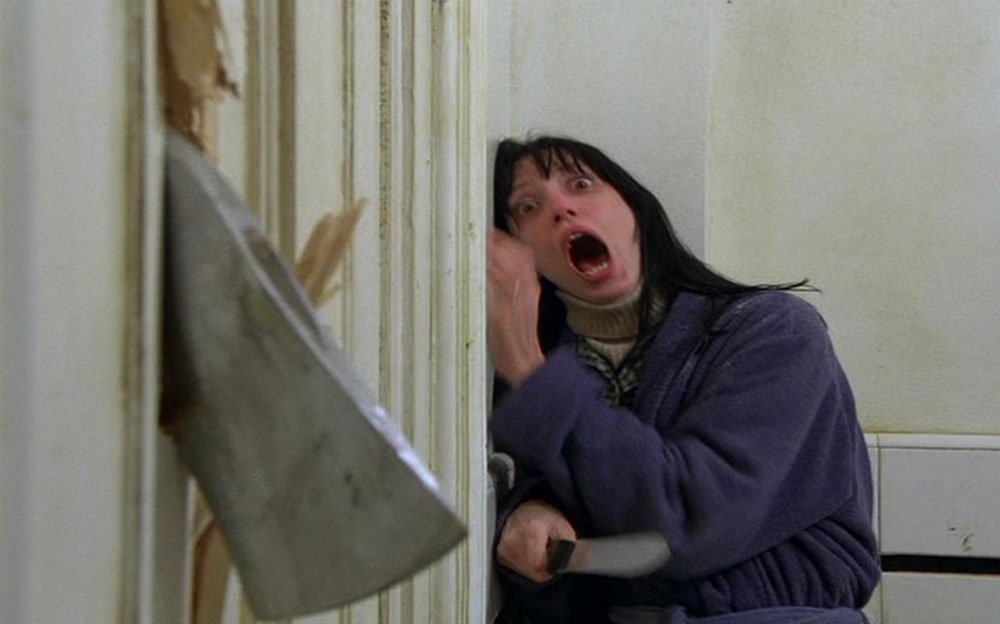
you come to hate writing, even come to hate the people who said you should write. Then the next thing you know you’re hacking a door down with a fire ax.
Okay, that last part might be a bit of an exaggeration.
The point is, you need to have some realistic expectations about your writing, your sales, and things in general. Don’t expect things to be like the movies. You aren’t going to write the perfect manuscript on the first try, send it off to a publisher (or self publish), and then be overwhelmed with money, awards, and film options.
Writing is hard. This is something that all writers realize. Most of us hit points in writing each book where we severely question what we’re doing. The “Dreaded Middle”, writing humps, writer’s block… everyone runs into parts where they sit down in front of their work and feel like they can’t go on, that what they’re producing is terrible.
What happens with me is that I’ll want to do something else. Anything else. My wife realizes I’m hating what I’m writing when I’m asking for the third time if the trash needs to go out or sorting my socks. Sometimes this leads to me writing on other projects or
The key thing here is that words on the page are what will get you through. It doesn’t matter at the time if everything you write feels like crap. That’s what editing is for. And trust me, some of the “worst” scenes I’ve written when I come back and look at them with fresh eyes have been much better than I thought.
Don’t view writing as a complete process. Never assume that what you write is final (not until you publish it). There’s always editing, tweaking, and perfecting. The goal of writing a novel, novella, or short story is to get it done. Once you’ve written the whole thing, you can worry about rewrites.
Also, don’t think that your first novel is going to be the best. Writing is a continuous effort towards improvement. You always have room to improve, to challenge yourself. I’m not talking about gimmicks like writing a certain number of words a day, I’m talking about improving your craft. Writing better characters, crafting a better story, a tighter plot. Acknowledge that what you’ve written has room for improvement and move on.
I’ll take a moment to mention sales. Sales (and reviews) will always be frustrating. When you sell a huge number of books for no apparent reason one day only to have zero sales (or one, which can be more frustrating) the next. Sometimes you’ll have a dozen reviews for your book pop up over a week… other times you’ll fight to get even one review for a book which has sold a thousand copies.
You have to just accept your sales for what they are. Promotion, self promotion, advertising, these are all tools, but at the end of the day, it all comes down to individual reader preference. People being people, they’ll buy your book if they want… or not. Don’t get wrapped around sales, especially if they’re not where you want them to be. Religiously hitting the update button on KDP or your publishing platform of choice to see if you’ve sold a book is not only OCD, but it uses up time you should be using for writing your next story.
The key part to all of this is to set realistic goals. Don’t tell yourself you’ve got to write the entire novel in a week if you’ve only managed a few pages over the past month. Don’t get too wrapped up in the quality of your writing, especially not for your first (or second or third) novel, especially not on the first draft. Cut yourself a little slack. Writing is hard.
In the end, writing is emotionally taxing. If you can manage your expectations, if you can set realistic goals, you can manage the emotional and mental cost of writing. You can be more productive (and happier with yourself) if you go into it with a clear understanding of what you expect to get out of it. At the end of the day, that’s what you want, right, to be happy?
May is here! I’m excited for a variety of reasons, not least of which is that I’ve started work on The Sacred Stars, the next book of the Shadow Space Chronicles. This one takes a step back from the huge battles of The Shattered Empire and The Prodigal Emperor and has a smaller cast as well. If all goes well, I’ll have it done by the end of the month, which means out to my alpha readers in June and published in early July.
In other news, Fate of the Tyrant is almost ready. It wraps up the initial trilogy of the Eoriel Saga and paves the way for the rest of the series. I’ll do a final round of edits and then I just need to wait to hear back from my alpha and beta readers. Look for a blurb and snippets as well as the cover to appear over the next few weeks.
In other news, I’m finishing the final setup for a store here on the website as well as coordinating things with Sutek Press to start selling signed copies of my books there. I’ll post more when it’s all ready to go.
Next month I start work on an urban fantasy book I’ve had knocking around in my head for a while. It’s another book I’m going to send to publishers, so don’t expect to hear much about it right away.
Oh, yeah, and a little movie called Captain America: Civil War comes out this weekend. I’m going to see that. Maybe twice if it lives up to the hype. Expect a review on Monday.




 Kal Spriggs