Category Archives: Writing

Echo of the High Kings Second Sample

Here’s the second sample from Echo of the High Kings.  Once again, Echo of the High Kings will be published on 1 August 2014.  For the first sample, check here.

Lord Hector

Town of East Reach, Longhaven Barony, Duchy of Masov

Twenty-Ninth of Idran, Cycle 993 Post Sundering


Lord Hector pulled his cloak tighter against the damp air of the tavern as he read through the scout’s report. He wasn’t certain if the cool, damp fall air or the dire news laid out in the precise handwriting on the parchment that made the gooseflesh rise on his arms.

“You need to kill him tonight,” his spy said, his voice tight with strain.

Hector’s head snapped up and he met the blue eyed gaze of the source of the reports. “You seem eager for me to commit treason based on the Armen threat.” For a moment, he almost forgot that the dusky-skinned man across from him wasn’t one of the barbarians from the north. He had seen many such faces, often marked with ritual tattoos or brands, often blood-spattered from their work. Most of what he saw at little better than arms reach as they tried to take his life and he theirs.

Hector didn’t realize that his hand had dropped to his sword until the other man reached out and put his hand atop Hector’s, “I do not seek to drive you to treason… I seek to save these lands from the savagery that we both know awaits. You raised me to be your spy amongst the Armen and your scout on campaign. Believe me, father, the Armen will come with the spring.”

Hector failed to hide a wince. It wasn’t that he didn’t have pride, of a sort, in his bastard son’s accomplishments. Yet, the truth remained, his boy was a halfblood… and while half his blood came from Hector, the other half of that blood came from the enemy. Hector shot a glance around the all-but-empty tavern, but it looked like the old drunks at the bar had little interest in their conversation. Hector’s eyes lingered on a hooded man in the corner, but the hunched figure in the shadows looked to be too far away to overhear their conversation. Even so, Hector pitched his voice low so it would not carry, “I sent you to gather information. You brought back rumors and vague warnings, talk of sorcerers and the mutterings of Armen holy men. I can’t bypass Baron Estrel and go to the Duke with this, not without hard numbers.”

“Do not allow your hate for me to blind you to the truth, father,” his son said. For a second, he looked so much like is mother that Hector had to look away. His chest ached with a long-remembered pain and Hector’s left hand stroked a scar that ran along his left thigh.

“I don’t hate you,” Hector managed to mutter. “But as you said, if this is all I have, then I am left one option: kill the rightful Baron of Longhaven and take his place. Otherwise, there isn’t time to prevent his next tribute shipment.”

Hector’s son nodded, “You can’t go to the Duke without solid proof, or Baron Estrel will undercut anything you say. The barony will fall without a strong leader. Your cousin has whored away his father’s gains. The talk amongst the Armen is that his lands are ripe for raiding.”

Hector nodded despite himself. He had arrived two cycles earlier, sent by the Duke with direction to try to repair some of the damage Baron Estrel had done to his defenses. What he had found had made the most pessimistic reports of the Barony’s readiness look far understated. Little remained of Baron Estrel’s forces. Most of his soldiers were unfit for duty, and his Master of Arms was an old drunk. Hector had done what he could, but the truth remained that the Barony was in a state of disarray… a fact that the Armen raiders knew quite well. Estrel had held them off until now with bribes and tribute, but even the Armen knew that soon he couldn’t afford any more. Soon the Armen would descend along the coast. They would rape, enslave, pillage and burn, and Hector had seen what they left behind often enough to feel sick at the thought.

Hector’s mouth twisted in a grimace, “I know what I have to do, yes… and I know the cost. If even a whisper of this gets out, the Duke will demand justice. My head will be the one that rolls for this.” Hector looked down and noticed that his wine sat untouched. He took a sip of his wine and the liquid burned in his throat. He shook his head as his vision flared for a moment. His head felt a little light.

“You need not face that,” his son shook his head. “Have me do it, father. It will look like an Armen raid, I’ll even hire a few Armen to launch a distraction. Even if I fail, the worst anyone will think is that I’ve betrayed you.”

Hector heard the words as if through a tunnel. He shook his head again, and he heard his own response as if it came from someone else, “You think I lack the stomach for it, do you?” He hadn’t realized that he stood until he heard his chair hit the floor behind him. Some part of him wondered at his own reaction, yet it was a disconnected thought, one he barely noticed.

His son stretched out an arm, “No! I merely think that this is the best way to do this! Please, sit. I did not mean to anger you, father–”

Hector seemed to rush back into himself and his head cleared. Forgotten was the lightheaded feeling, replaced by a spike of rage, “Do not dare to try to placate me!” Hector shouted. “You think me too cowardly to do the business myself, you seek to make me skulk behind you and then you seek to insinuate that I’m unreasonable?!” Incandescent rage filled him, and only the shreds of his self control allowed him to rip his hand away from the hilt of his sword. “Begone,” Hector snarled.

He saw his son’s face go slack with shock and then firm with rage of his own. Even so, he tried to reason with him, “Please, do not do this. You need some cut out or this will all be for naught–”

Hector saw some movement behind his son, the cloaked man in the corner. For a moment, Hector met the other man’s dark eyes. Hector thought he saw the slightest twist of a smile on the other man’s shadowed face. He laughs at me, just as my son always has… The smile was the last straw, the catalyst that sent his rage to boil over.

Hector leaned across the table and struck his son twice, once across each cheek. “You are no son of mine. You’ve done your task, now begone, and let a man of honor do his duty.”

Hector righted his chair as his son turned away without a word. He saw that the drunks had given him their attention, but a glare from him sent them back to their drinks. Hector sat and stared down at the reports and ignored the sound of the inn’s door as his son walked out into the cold fall rain. Hector pushed the wine goblet away and stared down at the reports. A part of him wanted to get up, to go after his son.

Yet his pride and his anger kept him in his chair and his duty forced him to examine what he had to do. He knew how to do it and he knew exactly what it would cost him to do it right. He was right to tell his son that he must do the deed himself. Hector was sent by the Duke to fix things, and so it fell to him to make it right. If nothing else, he owed it to his cousin to kill him in person.

Hector rolled up the parchment report and his gaze went distant as he began to make plans. He went past the immediate deed and had begun to plan his campaign against the Armen for the spring within a few minutes. He never noticed the hooded man from the corner as he slipped out of the tavern, just as the tavern maid hadn’t noticed when he slipped a vial of amber liquid in Hector’s wine when he’d entered.

***

Blurb

In Eoriel, the High Kings are legend: rulers who once stood against the darkness and ruled the world for two thousand turns of peace and prosperity. In the long turns since their fall during the Sundering, Eoriel’s civilization has faded. Dark men and darker beings have torn down and destroyed the old works. While some have held out against the grind of history, other places have been reduced to primitive tribes of savages, worshiping dark spirits and demons as their gods.

Yet, a spark of hope remains: some still believe in the old legends, some still fight to restore the old ways, and some will stand against the darkness, in an echo of the High Kings.

Echo of the High Kings will be published on 1 August 2014

Echo of the High Kings First Sample

This section is the opening scene in Echo of the High Kings.  Echo of the High Kings will be released on 1 August 2014.


Lady Katarina Emberhill

Castle Emberhill (Ducal Seat) Duchy of Masov

Twenty Seventh of Idran, Cycle 993 Post Sundering


Katarina ducked under the swing of her opponent and swung wildly in return. Her hit connected with his shield, but he grabbed her arm, lifted, and threw her flat on her back to the cold, muddy ground of the stable yard. Katarina felt the air woosh out of her lungs and for a moment, stars danced before her eyes. She caught her breath with a gasp and scowled up at Jarek, “You cheated.”

He smiled down at her, his brown eyes merry. “I’m sorry, I didn’t realize you wanted me to train you the prim and proper methods of fighting. It’s not like you’re going to duel someone.”

Katarina groaned and sat up. She felt the chill mud of the stable yard through her leather riding clothes and as she ran a hand through her raven black hair, she realized that she had more there… in addition to the sweat from the past hour of impromptu ‘training’ from Jarek.

Jarek looked behind her and his face went pale. Katarina saw him snap to attention, his wooden practice sword discarded, “My lord.”

Katarina felt her heart drop. She stood as quickly as she could manage and turned. As she’d feared, Lord Peter, Duke of Masov, sat on his horse at the stable yard entrance. Her father had no expression on his face, but she could see the irritation and disappointment in his eyes. Worse, she saw a half dozen mounted men behind him, many of them dressed in fine furs and robes on the blustery fall day. Their expressions ranged from amusement to disgust.

Katarina gave the best curtsey she could manage, “Father.”

The slight pinched expression he showed then suggested that he almost didn’t want to admit his connection to her. Katarina bit the inside of her lip at that realization. It wouldn’t be the first time, she thought, although finding me in this state, breaking my promise not to try to train in fighting is sure to reach a new level.

“Jarek, I will speak to Lord Elaisz about this, you may go,” Duke Peter said as he dismounted. Katarina winced at that. Lord Eliasz was the Baron of Zielona Gora, Jarek’s father, and her own father’s closest adviser. One of the stable boys ran out to catch the reins of his horse. Duke Peter walked forward to stand in front of Katarina. She was almost his height, a fact that did not instill any confidence in her. “Katarina, we will discuss this later. Get yourself cleaned up and come to my study.” The lack of emotion in his voice hurt even more than the cold look in his gray eyes.

Katarina managed a curtsey to her father and a polite nod at the noblemen and then hurried away from the scene as her eyes welled up. I just wanted to learn, she thought, angrily. Her brother, Peter, had already begun training. She had heard that women in other nations, even Marovingia, learned at least some weapons training. Her father had denied it to her, with multiple reminders that proper women did not find interest in such things.

Half in tears, she almost ran into her little brother as she raced through the corridors of the keep. He blinked at her, “What’s wrong? How’d you get so muddy, you better get changed before someone sees you.” Behind him she saw his armsman, Zeno.

Katarina pushed past him and rushed to her room. She heard him behind her, “Kati, what’s wrong?”

Katarina turned, “Father’s back. I’m sure he’ll be glad to see you.” She couldn’t help the vitriol in her voice. With Father, Peter can do no wrong, she thought, while I can do nothing right.

She saw the look of shock on his face. Katarina wiped at the tears on her face and sighed. She miserably spoke, “I talked Jarek into teaching me how to fight, in the stable yard because we thought it would be mostly deserted. Father showed up right after Jarek dumped me in the mud.”

Peter winced, “I told you I could train you what I’m learning…”

“No,” Katarina said. She looked around the hallway and dropped her voice. “Peter, you’re the heir. You can’t be seen disobeying father, or there will be half a dozen people who will spread rumors about you.” Katarina sighed, “I’m his too strong-willed daughter, who rides horses and reads books.” She didn’t know if Peter understood. People didn’t talk as freely around him as they did her. In some ways, being considered the outcast meant she heard much more of the gossip and talk, in part because people didn’t care what she overheard.

“Look, just trust me, it was better that I do it that way. Besides, I’m five foot tall, you’re only three feet tall. Jarek’s a better match for me.”

Peter scowled, “I bet he’s in trouble, huh?”

Katarina winced again, “Yeah, Father said he’s going to tell Lord Eliasz.”

“Well, if you don’t want Mother to see you like that, you should probably head down the back stairs, she’s on her way up to make sure that the guest wing is prepared for the guests,” Peter said. He still looked confused and a little hurt that she hadn’t involved him. But the things she’d heard some of the noblewomen talk about… she didn’t want to make things more difficult for her family. She had intended her little training session to be a secret. Next time, I’ll do it in some of the hidden passages, she thought, assuming there is a next time.

Whatever trouble Jarek got into, she was certain she could talk him around. Though she had the feeling he wouldn’t be too fond of her for the next week or two until his father forgave him. Like Peter’s relationship with their father, Jarek and Lord Eliasz were close and Katarina felt certain that whatever punishment Jarek received, he’d be more upset by his father’s disappointment in him than anything else.

Katarina gave Peter a nod, “Thanks, Peter. Father will no doubt tell her soon enough, but I’d rather not have the confrontation right now.” She turned away and rushed to her room. She felt more than a little grateful that her father hadn’t moved her out of the children’s wing yet. Really, at her age, it was customary that she be moved to adult quarters in Estera Tower. But Estera Tower’s bathing rooms were designed around proper adult women who never got muddy or dirty at all. The children’s suites all had access to the larger bathing chamber, because even noble children got messy.

Katarina bathed quickly and then rushed back to her room. She frowned when she found two of her father’s armsmen outside her door. The older one, Tomek gave her a nod and a slight smile, “Lord Peter wanted someone down here to keep watch.”

Katarina managed a nod and continued past them into her room. Tomek was one of her father’s oldest armsmen, he had served her grandfather, from what she’d heard. She thought, briefly, to ask what had happened to her last armsman, Covle. She thought better of it though. Neither looked comfortable down here, away from their main charge. For that matter, Covle had disappeared so suddenly and without any fanfare that Katarina felt certain it meant he’d done something dreadful.

His disappearance had made her more recent adventures possible. Without an armsman to follow her around, she had been able to explore the hidden passages within Emberhill Castle for hours and even had time to convince Jarek to train her a bit on fighting. Combined with the fact that Armsman Covle Darkbit always made her feel uncomfortable, she hadn’t asked many questions about his departure. He would always get those weird smiles on his face when he thought no one was looking, Katarina remembered, like he knew some secret that no one else did.

She found her maid, Linsey, awaiting her, a disapproving frown on her face. “My lady, I warned you that you’d get in trouble.” Katarina pinched her lips together against a retort. She didn’t know why her mother had assigned the skinny woman to her. Linsey was the keep’s most poisonous gossip. Katarina had little doubt that half the castle would know about the incident before evening.

“Not a proper thing for a Lady to do, you ask me,” Linsey said. “For that matter, riding isn’t even proper, not unless you’ve some place to go, and then a carriage or palanquin is far more proper…” the woman continued her tirade and Katarina made polite noises as Linsey helped her into a dress. Katarina was tall and thin for her age, at six cycles, though she wouldn’t be considered of age until nine cycles. Katarina still had a ways to grow for that matter, a fact which quite vexed Linsey. This newest dress was already too short, and in another few weeks Katarina wouldn’t fit into it at all.

As she stared into the mirror, Katarina realized that she looked more and more like her mother. She had the same curly black hair, the same pale skin, and her thin face with sharp nose and arched eyebrows. She was fast catching up with height, for her mother towered over most people in the Duchy of Masov. Perhaps, she thought enviously, I’ll even grow into her curves.

As if on cue, the door to her room opened and her mother swept in. Katarina rose and curtseyed, and her mother gave her a slight sniff and a nod. She glared at Linsey, “I told you to ensure she was presentable to our guests. I’m holding you responsible for that incident in the stables.”

Katarina winced. Linsey would take that out on her. The maid had a joy of using a brush to dig into her scalp and yank at her dark hair when she was angry. Besides, it wasn’t as if Linsey had known the Duke would be back so soon. Even for her dislike of the maid, she spoke up, “Mother, Linsey didn’t know that the Duke would be back, she couldn’t have warned me.”

“She did, indeed, know that,” her mother said. Lady Alexia scowled at Linsey, “I told her that Duke Peter would return this morning.” Anger cut sharp lines into her mother’s face, and Katarina realized with a shock that her mother had aged much in the past few years. Lines of gray worked through the dark curls of her hair. “And I specifically told her not to let you go out riding, much less get into this kind of mischief.”

Linsey looked away, “My lady…”

“We will speak of this later,” Lady Alexia snapped. “You are dismissed.” She waited as the maid left, then turned her blue eyed gaze on Katarina. “You look much more presentable, though I doubt anyone will look at you now and see aught besides the mud spattered girl they first laid eyes on.”

Katarina lowered her head, “I’m sorry, Mother.”

“I can’t be angry at you, my dear,” Lady Alexia said. “I might as well be angry at water for being wet, the Viani for being mysterious, or Auir for shining.” She gave a sigh. “But you do try my patience.” Lady Alexia took a deep breath. “Your father wished to keep this… quiet, but the purpose of this event tonight was to show you off… for potential betrothal.”

“What?” Katarina asked in shock. She had known, theoretically, that she would be betrothed and married someday… but that day had seemed a distant thing.

“Half the Duchy’s nobles have come, along with their heirs. We’ve even a couple noblemen from Boir, Lord Hennings and Lord Anhalt,” Lady Alexia said. She saw the expression of shock on Katarina’s face and sighed. “Child, I know that this is a rude awakening, but it is… was, a good thing. Things are, uncertain right now, and growing more so. A betrothal could prevent bloodshed, could stabilize things somewhat.”

Katarina nodded. She’d heard some of the rumors and she knew her duty, yet she had hoped for greater freedom. For a brief moment, she wished she’d been born a boy, so that she could learn to fight, so that she’d have her father’s love and respect. So that she wouldn’t be some prize to be sold off to build a political alliance. “Very well.”

“Look,” her mother sighed, “You know that… your Father and I, our arranged marriage has not been the best example.” The two almost never spoke, Katarina knew. Though how much of that was due to the fact that her father was Starborn and so would still be youthful and young long after her mother died of old age was uncertain. Katarina had never heard them argue, yet there seemed some underlying bitterness that meant that they barely spoke in private.

Even so, they were publicly a team, a strong marriage. Though Katarina knew that her mother’s place of birth was something that many noblewomen held against her. Lady Alexia came from Marovingia, so she was seen as an outsider. Would Katarina face the same fate, she wondered? Would she go to some distant land in order to build an alliance?

Katarina gave her a nod. Her mother smiled slightly, “My dear, it will be alright, I promise you.” A distant look went over her face, “I will do everything I can to make certain that you and young Peter will be cared for, no matter what it might cost me.”

Katarina frowned at that in confusion. Her mother sighed at the expression on her face, “Katarina, we’ve wasted enough time. Your father is in his study. Go see him, accept whatever punishment, and do not further aggravate him. He has enough worries, now.”

Katarina left. Her footsteps carried her out of the children’s wing and down the lone access corridor that led to the Duke’s quarters. Her father’s two armsmen followed her, their faces somber. She paused outside the library door. The library had always been her favorite room in the keep, even before she found the hidden passages that connected to it. She used to spend hours of her childhood, seated in one of her father’s oversized chairs and reading the history books. She’d particularly liked the stories of the times when her father’s people, the Starborn, had arrived to Eoria. She was fascinated by the thoughts that other worlds awaited beyond her own and of the brave men and women who had shaped this world and had raised the banners of civilization and brought an end to the generations of war. The Starborn had established their Codes to prevent disease and outbreak, introduced concepts of crop rotation and fertilization, and and established their Laws which applied to all, noble and peasant alike. In the two thousand cycle reign of the Starborn High Kings, their civilization had spread across the Five Duchies and even to the distant continent of Aoriel. They had even, briefly, maintained outposts on Eoria’s twin world, Aoria.

If the High Kings still ruled, I’d be free to pursue my own dreams, Katarina thought bitterly. But then she buried that thought. The High Kings had been gone for almost a thousand cycles, brought down by betrayal and bloodshed on a scale that had nearly eradicated civilization entirely. She couldn’t call on their justice, they were dead and gone, so long ago that even their spirits were silent. Katarina took a deep breath and worked up the courage to pushed the library door open. The two armsmen took up positions outside. Inside she saw that the study door was partially open, and she heard raised voice from within. She recognized Lord Eliasz’s voice first. “…Baron Oltsztyn is willing to use that to his advantage. Particularly after you embarrassed him by releasing his bastard son from the Ducal Guard.”

“Can you blame me?” Duke Peter asked, his voice harsh. “Darkbit came to me and insisted that I give him my daughter’s hand, in exchange for his ‘services.’ He all but said it was a bribe to keep his mouth shut.”

Katarina felt a chill as she realized what that meant. Her stomach twisted with revulsion at the thought. Covle Darkbit wanted to marry me, she thought. All of the man’s odd smirks and arrogance took on a new light. No wonder her father had dismissed him.

“Still, it’s a good thing he’s estranged from Oltsztyn, otherwise he might try to make some deal with him,” Lord Eliasz said. “Worse, he might try to take this to Lord Estrel of Longhaven.”

“Doubtful,” Duke Peter said, his tone bitter. Katarina didn’t have to wonder at that. She had heard the rumors of how poorly mismanaged Longhaven was. Lord Estrel was her cousin, the eldest son of her grandfather’s youngest brother, and after Peter and herself, he was the next in line for the inheritance. “Estrel would love the opportunity, but he hasn’t the money to tempt Covle Darkbit. Besides that, don’t forget Lord Hector is his military commander, with orders to try and set things right with their defenses.”

“Hector?” Lord Elias asked. “Your bastard nephew?”

“The same,” her father said. “Though Estrel has him on a tight rein from what I hear. I just hope it’s enough to stabilize Longhaven. A cycle or two is all we need to fix some of this,” Duke Peter said, his voice tired. She moved closer to the door, though she gave a nervous glance over her shoulder at the library door. It would be… awkward to be caught eavesdropping on her father and his chief adviser, especially after the earlier events of the day. “You’ll have to punish Jarek,” he said, his voice sad. The change of topic confused her. With the discussion of politics she’d almost forgotten about her own misadventure.

“I know,” Lord Eliasz said. “I’m thinking I’ll send him back home. Ancestors know I need someone to look after things. My other boy… well you know, he’s not fit to rule. Jarek can get some experience looking after things and keep Rodik out of trouble, hopefully.”

“I thought it was good at first at how well they go along, but they’re both too demon-spawned eager to get into mischief,” her father said. “I can’t blame Jarek, not really. Katarina though…” Her father sighed. “Well, there’s nothing for it. She’s basically upset the entire betrothal discussion in one act. I’ll have to bend over backwards now, to get the concessions we’ll need… which might well give up more than we can afford. Thank the High Kings she wasn’t born a boy or she would be a disaster.”

Katarina felt tears well up in her eyes. She stumbled back from the door and went as far away from the study as she could go. She found herself at the back corner of the library, next to the thick history books which she’d so enjoyed. I’d be a disaster, would I? She looked at the books and her fingers traced the spines. She had disappointed her father, caused him pain, and she didn’t know if there would ever be a way to earn his trust back… she could see that now.

She wouldn’t bother, then. If he so hated her, if she was this disaster, then she would live life her way… and to hell with the consequences.

***

Blurb:

In Eoriel, the High Kings are legend: rulers who once stood against the darkness and ruled the world for two thousand turns of peace and prosperity. In the long turns since their fall during the Sundering, Eoriel’s civilization has faded. Dark men and darker beings have torn down and destroyed the old works. While some have held out against the grind of history, other places have been reduced to primitive tribes of savages, worshiping dark spirits and demons as their gods.

Yet a spark of hope remains. Some still believe in the old legends, some still fight to restore the old ways, and some will stand against the darkness, in an echo of the High Kings.

Echo of the High Kings will be released on 1 August 2014

Kal’s July Writing Updates

I’m pleased to announce that Echo of the High Kings is on schedule to be released on 1 August 2014.  Echo of the High Kings is an epic fantasy novel that I’ve been working on, through multiple iterations, for a long while.  It is the first book of the Eoriel Saga, which will be a long series.  In the next couple weeks leading up to it’s release, I’ll have sample sections and other goodies.  It will be exclusive to Amazon and will be part of their Amazon Select program.

I’ll be working on Wrath of the Usurper, the sequel to Echo of the High Kings, in August and September, with a goal to release it in the winter.

In other news, work on The Shattered Empire continues.  I’m doing some of the final bits on it and will have it out to my alpha readers in the next couple weeks.  If all goes well and I feel that the final product is ready for it, I’ll try to have it out in early to mid September.

For fans of The Renegades series, I’ll be working on Renegades: Out of the Cold during the fall.  Renegades: Out of the Cold will follow the crew of the Gebnyr as they reach human civilization once again.  The release date for Renegades: Out of the Cold will probably be in the December/November timeframe.

Lastly, it’s not writing news, but I’ll be at Myths and Legends Con in Denver on 8-10 August 2014.  I will be on at least one panel and for those who want a book signed or want to get a (discounted) print copy, feel free to talk with me after a panel or in the halls.

Independent Author’s Toolbag: Alpha and Beta Readers

One of the biggest fears that I face as an author is the dread of wondering what people will think. The reaction of family and friends is one thing… but what about people you don’t know who are going to pick up the book in a store or glance at it on kindle? For that matter, how do you go through and make certain that the plot, characters, and other issues are iron-tight?

My solution, and what many authors do, is make use of alpha and beta readers. It’s a common use in the gaming industry, though I’m certain authors have used the technique long before they borrowed (okay, stole) the term from the gamers.

Basically, your first readable copy (or maybe second or third, depends on how you feel about it) goes to your alpha readers. This is normally a small number of people. These people should be picked from people you know as filling several key catagories: Critical Thinking/Reading Skills, Honesty, and Timeliness. You may laugh at some of them… until you’re trying to get that nerdy friend of yours to explain why the opening scene feels ‘a little funky’ after they’ve had the book in their hands for over a year. Critical Thinking/Reading is essential in an Alpha, they have to understand what you wrote and they have to be able to think about what you’re doing and then tell you what they thought about it. If you’re interested in Independent Publishing, time is a serious factor here. Traditional Authors have years to get books out, independent authors need to feed the voracious appetite of their readers… else be forgotten as those readers go elsewhere. You don’t need an alpha reader who sugarcoats their opinions or, worse, is too afraid to hurt your feelings to tell you the truth. One of my favorite alpha readers has straight up told me before when he thought what I wrote was crap. I disagreed, but I’ll admit he had good points and his comments made me reevaluate what I was doing as a writer. I’m grateful that I have alphas like him who can tell me when they don’t like something.

After I get all my feedback from the alphas, that’s when I go back through and do the serious edits. Often I’ll spend hours discussing some of the changes I’ve thought about… sometimes I’ll be talked out of some of those edits, other times, I’ll do them in spite of what the feedback says. There have been times where I’ll write two or three versions of a scene and run them past certain readers trying to get it just right.

Beta readers are the next step. Once you have the final draft, you send it out to a larger audience. These, for me, are often friends or acquaintances that I trust to give me overall opinions on the work as a whole and maybe some more focused opinions on individual items or characters. If I’m featuring some science/technical aspect that I’m not certain about and one of my betas is an expert (or at least knows more than me) I’ll run it past them during the alpha stage. Beta readers are a spectrum of a general audience. They can include genre readers, but also out-of-genre readers. If I’ve written something with a target audience, those beta readers from that audience are the main voices I want to hear. The responses from all my beta readers are often used to make final tweaks. If a scene didn’t have the emotional draw that I wanted or if a character wasn’t memorable enough, then I go back and tweak a bit more.

The key thing you get from your beta readers is an overall evaluation of the quality of your work. Ideally, your work is publishable by the time it gets to them, but their reactions to it are the key to understanding how ready it really is… and how great a story it is. If you get frantic phone calls at 2 AM because a reader couldn’t put it down, that’s a good sign. If you have to prod, nudge, and heckle your beta readers to get so much as a thumbs up or down, that’s a bad sign.  I’ve had both happen (on the same novel no less).  The big thing is to get an honest appreciation of your story and to adapt it and improve it as a result.

Independent Author’s Toolbag: Writing Groups

Hi there, my name is Kal and I write stuff.

It sounds a bit like an introduction from an Alcoholics Anonymous meeting… because that’s what some writing groups feel like. And in a way, that can be good or bad. Writing groups are, at their root, about support. Writers, get together and read one another’s stuff, critique it, discuss where they’re going or improving their craft, and then they arrange to meet again. The pattern is hopefully one where the individuals within the group gradually improve upon their work. It also provides a variety of backgrounds for new and inexperienced writers to draw upon for both the business and writing sides of the craft. Writing groups have a number of advantages, not least of which is you get someone to read your manuscript besides your mother/best friend. This can be invaluable just in the knowledge of whether or not someone was able to finish reading it. Feedback about characters, plot, and plot devices can also be invaluable, letting you know if you fooled someone with a clever bait and switch, if your humor fell flat, or even if you accidentally wrote fan fiction. Writing groups also, however, come with some hazards.

One hazard, I think, is that as a writer grows, they may outgrow the writers in their group or the group itself may shift as new people come in and others leave. A writer who is actively seeking publishing, in a group that is about completing works, is quickly going to become frustrated. The reverse is true, as well, an author who just wants to finish their first book is going to find the critiques of more experienced and even published authors daunting enough that they may give up. I’ve seen a little bit of both, myself, just in one group. The group had a central core of attendees focused on writing and publishing. It also had a ‘floating’ population of people who would attend every now and then. Some of them would become very disheartened at the progress they had made versus the progress of others. I myself would often become frustrated because some members would show up with the fourth or fifth (or tenth) revision of their first chapter. These are writers who don’t really want to grow, they’re comfortable retelling the same bit of a story. A good group can coach them along towards growth, but it isn’t something you can force and a group with more chysallis authors than mature ones is not the place to improve your own craft.

The other hazard is ‘toxic’ groups. These are writing groups where, somewhere, somehow, there is a dominant individual who attempts to turn it into a social hierarchy, where other authors must kowtow to his or her principles and/or writing style. I haven’t personally encountered this, yet I have friends who have completely soured on any kind of writing group as a result. The worse of these types of groups are ones where new authors are ridiculed or belittled for their work in some kind of cult-indoctrination method to get them to then believe that only through emulation is success possible.

Another hazard of writing groups is that the writers there are going to have their own perspectives and interpretations of how stories should be told. Sometimes, for the best of reasons, they’ll give you feedback that you are doing something wrong and they might even talk you around to it. With the best of intentions, they can give you a feeling of inadequacy that can leave your manuscript half finished with notes of broad plot and character changes to be made. The thing to remember here is that you are the author. Whatever story you are telling, you tell it your way. In the end, when it is finished, if the group says they still don’t like it, then you can think about revisions and changes. But if it goes against the grain, if you feel your story is better/stronger/greater without those changes… don’t do it. Write what you want.

So, basically, the lesson is to first do some research on a group and then to test the waters a bit. Be sure they write/read in your genre. If authors have no interest in what you write, they’re not going to be as attentive and they’re not going to know the style.  Writing groups where some or all of the members gush about one central figure should generally be avoided. Writing to cater to the interests and desires of the group is also to be avoided.

Writing Achievement Unlocked

Well, it’s not much of a post, but I’ve unlocked a new parenting/writing achievement.  This seems to be the only position the little fellow was comfortable enough to sleep.  Something tells me he’s going to be a handful.

My attempts at multitasking...
My attempts at multitasking…

In other news, progress is continuing on writing of The Shattered Empire, the second book of the Shadow Space Chronicles, and it’s still on track for release in the fall. Echo of the High Kings is looking good to be released at the start of August. If all goes to plan (or at least relatively close to plan) I should have the third book of the Shadow Space Chronicles available by early 2015 and the sequel to Echo of the High Kings around the same time.

Characterization: Victimhood & Active vs Passive Characters

Sarah Hoyt wrote an interesting post on victimhood and the cultural imperitive in the West which makes us root for the underdog, yet many writers confuse being the underdog with being the good guy.  She has a lot of great info/background, so I’d recommend you give it a look, you can find it here.  I thought I’d write a bit on the craft of writing characters from my own perspective.

First off, it’s something I’ve seen, even in mainstream media.  It is a cultural tendency, especially in America, for us to see someone worse off (or just apparently worse off) than us and to feel empathy.  Yet when you go this route as a writer, you automatically face an uphill battle for the character to grow.  Indeed, the first part of their growth will, by necessity, being to stop feeling sorry for themselves and get out of the rut… or else they’re not a fully fleshed character… they’re a trope.

If you are going to start someone out as the victim in order to garner reader sympathy, well, there’s lots of hazards.  The typical revenge story has the murder of the family or friends that sets the hero out on their journey… yet at the heart of a revenge story is the tale of destruction upon the character themselves.  They can’t let go of their hate/anger and so end up destroying themselves in their effort to destroy their enemy.  Hamlet is an excellent example of this, as the titular character literally destroys himself and everyone around him… because he’s a victim and he wants justice.  Hamlet is an intelligent and presumably capable character who brings down the lives of dozens through his own indecision and self-pity.  But it’s a tragedy, so I suppose we’re supposed to see that all coming…

A character who identifies with this type of event is automatically crippling their own growth… until they let go of that.  And if they grow as a character to release their own pity for themselves then why should a reader then feel sympathy for their plight?  An example of this is the John Milus movie: Conan the Barbarian.  The titular character sees his entire village put to the sword, his father ripped limb from limb by dogs and his mother beheaded.  He’s sold as a slave as a child and dehumanized into a gladiator who fights for his survival and little else.  Conan, however, is a survivor.  This is established throughout the beginning of the movie as he not only meets every challenge, he excells.  Conan is a character who doesn’t identify as a passive character, he seeks out ways to excell and succeed.  Also, it’s a fun movie with lots of violence and bloodshed, but I digress.

Too, when you destroy the character to make him a ‘victim’ you automatically make the character a reactive character.  They aren’t going out on their own to do stuff, they were forced to do so.  This takes the initiative away.  A character without initiative, who is spun along by the efforts and actions of others is not a strong character.  It gives a starting place and it allows growth, yes, but I would argue that it makes a character less interesting.  Stories are, at their root, about people going places and doing things.  I would say that if your character is continually affected by the actions of others… perhaps you are writing from the perspective of the wrong character.

Active characters get out and do things.  They slay the dragon or lead the insurrection or marry the prince(ss).  When they encounter an obstacle or downturn in life, they don’t set on their hands and whine, they pick themselves up and they face it or find a way around.  JRR Tolkiens Lord of the Rings would have ended quite differently if Frodo just gave up at the first sign of hardship.  Yes, characters are allowed to have times of moral terpitude or uncertainty.  That is often where secondary characters shine, such as Sam, who whenever Frodo couldn’t go on, stepped in to cheer him up or get him moving.  The point is, that even the most unhappy, put upon heroes have to take action… and the writers who identify their characters as miserable put-upon underdogs need to think cautiously about just what mentality they’re designing their characters towards.  Hardship is a part of the story, a character can’t succeed at everything or there is no risk… but it’s how the character reacts to that hardship, what values they have and what their responses are that defines them.

An author could quite easily write a ‘hero’ who rises from wretched and abject misery to preeminant success… with little or no effort on their part, beyond the suffering they endure knowing they’ll get their just desserts on those who opposed them.  Granted, I don’t know that I could finish reading the story, especially if the self-proclaimed hero does nothing to further themselves.  Worse, in a way, is if the ‘hero’ could find success through their own actions, yet they waited or endured instead.  This smacks of self-satisfied feel-good nonsense: that enduring hardship makes us grow or is admirable.  That is complete drivel.  The man living on the streets collecting donations for himself isn’t growing… he’s static, he is unchanging.  Hard work makes us grow.  Reacting to those events, digging down inside ourselves and finding an inner strength to not only go on, but to improve our conditions is admirable.  The woman who puts herself through college working as a janitor, refusing loans and handouts, is admirable.  A character who has pride in him or herself is one who we want to read about… pride in accomplishments and capabilities.

Character growth is the essential part of a story and while I’ve seen the victim mentality as a starting point (here’s looking at you Edge of Tomorrow), it can never be the end point for a strong, central character… not unless you want to turn them into a narcissitic villain (which is an option, that bitterness that comes from victimhood is the perfect fodder for turning good men into monsters).  Even then, though, a victim’s mentality only goes so far… and itself must be replaced, else the character would remain too passive to accomplish anything.


Independent Author’s Toolbag: Publishing an Audiobook pt 3

This is the final post I’ll have as far as building an audiobook with Amazon’s ACX system.   In the first two installments, I talked about the process, first enrolling/selecting your book, then choosing a narrator and finally proofing the narrated sections.  You can see those two sections here and here.

It was a time-consuming process.  It was also fairly exhausting for someone who works full time, writes, is married, and has something of a social life.  I would estimate that it was at least forty hours of work even after selecting a narrator.  There were multiple edits that had to take place to meet ACX’s guidelines on things like the pauses between chapters (too long, who knew?) and the silence during a pause (apparently it has to be very quiet).  All that aside, this post is going to look at the end results: the royalty process and profits.

Now, going into this, I had the option to split royalties or pay the narrator in a lump sum.  I’m not a split royalties type of person.  For one thing, I put tens of thousands of hours in writing.  Why do I want to share that much effort with someone else if I don’t have to?  For another, long term, I figured it would pay better to do a lump sum.  This meant instead of 25% of the profits as royalties I’d receive 50%.  Roughly twice as much.

Now the ACX program has a couple issues that I’ll comment on.  For one, they’re not like Kindle Direct Publishing with hourly updates on sales and a running estimate of royalties earned.  With ACX, you get a tracker updated around midnight PST with total sales by type.  These types roughly tell you how much you’ll earn, but only roughly, because, remember, you don’t set the price, Audible, Amazon, and iTunes set the price of your audiobook.  That price also varies by method of purchase.  From initial reading through my royalty statement, it looks like subscribers using their Audible credits paid roughly $12 a copy, subscribers purchasing paid around $15, and everyone else paid around $25 for my book The Fallen Race.  That daily update shows the breakdown between the three types of purchasers.  It doesn’t show the royalty rate or the price paid or any of that, just the number of sales in each category.  Where this becomes an issue, is, if you’re like me and you paid out of your own pocket to fund the narration.  You’re biting your nails hoping that this thing will pay for itself.  There’s a mortgage to pay and food to put on the table, and it’s very hard to estimate earnings when you don’t have all the information.

When you get the information is very similar to KDP.  Thirty days after the last calendar day of the month, they send you a royalty statement.  Unlike KDP, ACX mails it to you (at least for those in the US, for elsewhere, I understand it is every quarter rather than every month).  That’s right, you have to check your mail.  On the other hand, checking the mail is rather exciting when you’re expecting your royalty check in it.  This is where ACX really shines, though.  They break down royalty percentage, sales of each type and all the information you could really want in a readable format.  Plus, they give you the matching check with whole package, which really gives you a nice feeling of completeness.

The other issue that I’m on the fence about is transparency with iTunes.  Amazon and Audible are owned by the same company, so the sales are pretty similar.  The iTunes sales of my book, however, I have no earthly idea how to monitor or even really how I’ll receive royalties.  They could be rolled up in my other sales or it could be a separate royalty statement entirely.  That leads me to my last complaint about  the process.  The FAQ’s and information provided by ACX without going directly to their customer support is either inaccurate or very thin, particularly on the things that really matter once the audiobook is completed.  The royalties are listed as 40% there on their information, but I receive 50%, according to my statement (I’ll gladly accept more, but it was something of a surprise, is all).  They say they’ll mail royalty statements every month.  They don’t mention it will be 30 days after each month.  That’s what I expected, but still, they need to get in there and clarify.  Those are the ones that mattered to me, but there’s a lot of other inaccuracies in there or just places where you can’t find the information you want without sending an email.

On the positive side, I’m very pleased with how the system as a whole works.  Publishing my books in audio format allows me to reach a much broader audience.  That in turn means more money and reaching a larger reader/listener base.  For that matter, from a moderately risky endeavor it has proven itself as a method which I’ll definitely use in the future.  I’m already planning on doing two more audiobooks: Renegades: Origins and the upcoming epic fantasy Echo of the High Kings.  I also plan to do an audiobook of The Shattered Empire when it’s finished.  In the first month of sales I already earned back my initial investment and it looks to be a solid method of sales for independent authors… just a large up front investment of time and money.

Paperback Copies of Renegades: Origins


Books 1-5 of the Renegades Series

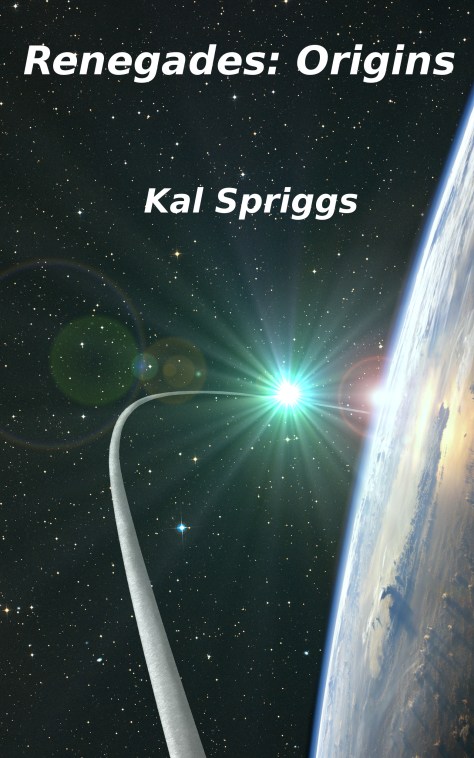
Renegades: Origins is now available as a paperback!  So for those of you who want to read all of the Renegades novellas (plus some extra short story goodness), here you go!  Renegades: Origins contains five novellas and six short stories.  The blurb is below.

In times of chaos, there are those who fight for money, for power, or just to survive. In feudal Japan, they were Ronin. In the post US Civil War, they were desperadoes or hired guns. In the chaotic times of the collapse of human civilization, they are men, women, and aliens without shelter or succor. When no one else will take a stand, they stand for themselves. They are deserters, murderers, pirates, and worse… they are the Renegades. 

Renegades: Origins contains the novellas Deserter’s Redemption, The Gentle One, Declaration, Ghost Story, and A Murder of Crowes. It also contains six short stories: Research Notes, Runner, Fool’s Gold, System Failure, Dishonored, and Crossed Stars.

It’s around $18 from Amazon and will be available soon at other booksellers, to include Barnes and Noble, Createspace, and a few others.  From Amazon, you can get it here.

Building an Epic Fantasy World: Modern History, Trade, and Society

So up until this point, I’ve developed my world, Eoria, configured what technology is available, what magic works, and even what people populate it. See the last post, on the history and cultures here. Today I’ll design the modern history, talk a bit about trade & industry, and design the societies that make up Eoria.

First off, when I left off, the lowlands civilizations were disparate, which didn’t allow them to unify and push the highland barbarians or northern barbarians back. This was exacerbated by the southern jungle civilization, which I’ve named Vendakar, who prefers the other civilizations weak and uses the slave trade produced by the barbarian raiders for their own ends.

Now, into this, I want to introduce the start of modern times, the notion of a central authority or leadership. I could map out the rise of some great conquerer… but I want to give them more of a feeling of legitimacy, rather than someone who just beat everyone else down. I also want to show, again, that this world is part of a greater universe… and that mankind didn’t originate here. So, I’ll introduce a new people, the Starborn. The Starborn arrive at Eoria during a period of heavy raiding by the barbarians. They come to Eoria aboard their ship, and they intially seek little contact with the natives, establishing a secure colony on their own. However, as their technology begins to fail, they are drawn into the local politics. As a contrast here, some of the Starborn seek to remain apart, others think that they should use their weapons and technology to seize power and rule, and a third group wants to work with the natives. The three groups have a short but brutal civil war in which the group that wants to work with the natives is victorious, while the conquistadors are exiled, sent north, where they found their own nation, called Darkstar. The isolationists are discouraged by both groups and head off on their own, to try and preserve ‘pure’ technology, rather than the magic and mysticism they see elsewhere. The majority of the Starborn begin to work with the locals. In particular, they are drawn to help in the fights against the barbarians. The leader of this faction, from the previous civil war, helps to unify the smaller nations, so that they work together against their common enemies. In the process, he steps into the role as the overall leader of their alliance… eventually coming to become their High King as things solidify. The five lowlands civilizations become the Five Duchies, each independent in their own lands but unified under the High King’s leadership.

The Starborn also bring ideas of sanitation, crop rotation, fertilizers, rule of law, and other low-tech but still important elements of civilization. With the assistance of the starborn, the five civilized nations defeat the rising tide of barbarism. They also experience a population boom from the increased hygiene, improved economy, and higher food yields. The Starborn, partnered with the nobility of these lands, slowly move into leadership positions, often intermarrying with the locals. Some prefer to remain in isolation, living separately, but many become the leaders of these other nations over generations.

The reign of the Starborn High Kings is a time of peace and prosperity. The Starborn value individual freedoms and personal responsibility as well, so there remains some upward mobility in most of their lands. They also approach magic from a scientific stance, so they push the boundaries of magical theory.

Going into each of the Five Duchies, I can decide what their strengths and weaknesses are, what they trade for and produce, and what the defining characteristics are. I’ve named them: Marovingia, Asador, Taral, Boir, and Masov, roughly from west to east.

Marovingia is the furthest south, along the equator, and blessed with plenty of rainfall and good weather. It acts as the breadbasket for the rest of the Five Duchies, with huge farms that produce food over multiple growing seasons during the year. The Marovingians, unlike most of the Five Duchies, do not venerate spirits of places or ancestors… they worship their gods. Their gods are physical beings, men and women who are born with a natural connection to the spirit world, and who are able to manifest powers. Marovingians are the closest to the Vendakar Kingdom, so they are bitter rivals. Marovingia’s large population and large percentage of land ownership gives rise to citizen soldiers who fight in their legions.

Asador is a volcanic highland, of rolling plains and towering cinder cones. The people of Asador are as volatile as their lands, being known for fiery tempers and ancestral grudges. While they are likely to engage in bickering or feuds, they will work together against common foes. Asador’s plains give rise to herds of cattle and sheep and the people are split between the small towns, built like fortresses on the volcanic peaks and the roaming peoples who raise livestock and live on horseback. The volcanoes in Asador’s highlands provide power sources for their wizards, allowing them to harness that energy to power their magical inventions. Asador’s cavalry, both heavy and light, are their military strength.

Taral is another highland area. Taral, unlike the other Duchies, is much closer to barbarism. The people of Taral experience some of the strongest and fiercest winters on Eoriel, with snow depths reaching forty or fifty feet. Taral lies between two mountain ranges and the lake effect off the Boir sea buries the Duchy every winter in snow. The heavy run-off in the spring erodes Taral into steep gullies and ravines, floods fields, and feeds the multiple rivers and lakes. Due to the harshness of winter, Taral has developed expertise in enchanting, crafting sunwells which gather light all through the spring, summer and fall to allow them to grow crops underground to withstand the winter months. They’ve adapted their enchanting skills to other areas since, but each village and town is built around a sunwell and the sunwells are of extreme importance to them. The people of Taral are in constant skirmishes with the mountain barbarians as the two people feud over highland valleys to grow crops and run livestock.

Boir rests along the inland Boir Sea. The people of Boir are industrious and are often drawn to trade and exploration. They build the best ships and their shipmasters travel everywhere. Most cargoes in Eoriel travel in a ship from Boir. The shorter growing seasons mean they are dependent upon food imports to maintain their population, but they spend the long winters working and laboring, providing goods and items for export and trade. Boir’s naval forces are their primary military strength, designed primarily around defeating the northern barbarians sea raiders, who plague their coastlines.

The last of the Five Duchies is Masov. Masov is the largest and is separated from the rest of Eoriel by the Boir Sea and the Ryft, connected by land only at the Ryft Guard, a massive fortress which spans the Ryft at its narrowest point. Masov’s people are as varied as it’s terrain. In the northern lowlands, trade and industry are more important to the people, while in the southern highlands, farming and logging are what people do to live. Masov’s central area is thin, hedged on one side by the Eastwood and on the other by the ocean. Masov, however, is the oldest of the Duchies, and one of the first to support the Starborn High Kings and is seen as the cultural center for the Five Duchies. The main focus of magic in Masov is blood magic and the mages who practice their arts are the best healers in Eoriel. As a counter to this, those who stray into perversions of blood magic, sorcerers, are also more common here. The southern deserts and high mountain valleys are host to more of the barbarians in the south, while the northern lowlands are raided by the northern sea raiders, which gives the Duchy a unique perspective on threats.

With that baseline established, coming into more recent times, the High Kingdom has fallen into disrepair. The High Kings are extinct, brought down by betrayal. In the process, the Five Duchies have created their own feuds and have fought one another, setting the stage for no one Duchy quite trusting the other to have their backs. As a consequence, the barbarians and the Vendakar have been able to raid and attack more successfully. In particular, Taral is brought low by the mountain barbarians, with many of its towns and villages destroyed and its people surviving only in isolated mountain villages, small pockets of civilization against the barbarians. Since Taral lay central to the Five Duchies, it’s loss makes travel and communications between the others difficult, at best. Boir maintains travel by sea, but the increase in northern sea raiders makes that dangerous too.

The general decline of civilization means that knowledge and information are lost. The Starborn families that survived the fall of the High Kings associate less with the other people of Eoria. Lack of communication and trust means that civilization declines still more. The volatile people of Asador’s feuds erupt into full blown civil war when their Duke dies without a clear heir. Each of the Duchies is isolated and alone and the barbarians threaten to overwhelm them.

This, then, is the perfect place for my story to start. I have a rich history (which I populated with names, dates, and other fun historical stuff), I know what people are where and what motivates them. I know what magic works, what science and technology work, and how the different people can apply them. Civilization, on Eoria, is at the brink of collapse. Into this, then, I populate the characters, men and women who either want to give civilization that last push towards collapse or who want to bring it back from the brink.

That concludes my world building series, hopefully it helps other writers and, if not, then at least it proved interesting.