All posts by ka1spriggs

Kal Spriggs is a science fiction and fantasy author. His website is kalspriggs.com He is an avid reader of books, enjoys gaming, and lives in Colorado.

Writing Tools: Lore and History

Lore and History are part and parcel of world-building as a writer.  Knowing what happened (and why) allows a writer to project what will happen (and why).  History gives your characters roots… all the more so when the details are debatable.  Was one man a hero or a villian… well it depends on who you ask.

What are these things for a writer?  In many cases, History and Lore are never published.  They are notes or sometimes just ideas that the author has and are something that they base their world upon.  History is easy enough: this is the major events that have happened in this world.  I’ve personally used everything from a chronological timeline to a hundred-plus page document.  This is the stuff that you know has already gone before.  This is the cold hard facts.  Births, deaths, wars, all the framework for what has gone before.

Lore, on the other hand, is what the characters and readers know and feel.  This is the story about the valiant rebel who stood up to the bloody-handed tyrant or the murderous brigand who accosted the king’s lawmen.  Where history is what the author knows is the truth, lore gives the feeling of real-life.  Lore is made up of the urban myths, the rumors, the stories, and the legends.  As the author, you may know that the great hero who overthrew the King was actually an ambitious poser, who wanted to take the throne for himself… but your characters might still respect or venerate him because they don’t know that.

History is dry, dusty, and often boring… but Lore, that’s where you can get some interesting character conflicts.  Longstanding feuds, cases of mistaken identity, and tensions between clans or nations are all great fodder for writing some interesting character conflict.  Exploring how a character deals with such prejudices and overcomes them (or not) can make for interesting reading and fun writing.  Granted, this is secondary to making the characters themselves interesting, but it does give you excellent levers on character motivation.

So how do you go about designing history and lore?  Well, much of that comes back to what kind of story you want to tell.  If you want a story about betrayal, revenge, and star-crossed lovers, then a history of murders and assassinations, with a lore of each family blaming the other, makes for a great setting.   Your characters will have a history of violence to draw upon, where such solutions are expected by both sides.

That said, it is easy to go overboard in world-building a history.  You don’t necessarily need to know everything.  I know fellow authors who do seem to know everything.  They have page after page of notes.  They know why one group hates another group, why the first group likes the third group, who married who, who killed who… but they haven’t got beyond page ten of their actual manuscript.

The other area to go wrong is the (in)famous infodump.  This is where the plot stops and the reader is confronted by a wall of text about why this all matters.  Some readers love this, others… not so much.  The history and lore you’ve spent so much time on should be there in the background as a framework and as character motivation, but it shouldn’t step up front and stop the action of your story.  There’s a balance to strike between the reader having some idea of what is going on versus destroying dramatic tension and pacing by throwing hurdles of text at your reader.

Of course, the other end of the spectrum is where an author has no idea or at best a vague understanding of what has come before.  When the reader doesn’t know what has happened and the author doesn’t bother explain why this all matter in the greater scheme of things.  An author can pull this off if they have a strong, character-driven story… but it’s a lot easier to have that framework to build upon.  If the author doesn’t have a strong story or characters and they have a history/lore that is basically nonexistant… well, then you get a sort of generic story that is at best, not memorable and at worst… pretty much unreadable.

There is a tremendous advantage in being an author of fantasy or science fiction in the ability to craft the lore and history of your world to fit the story you want to tell.  A few hours and some jotted notes can give you a universe for your characters to explore and a framework for you to write a more vibrant and alive setting.
 

Kal’s January 2016 Forecast

January is here and with it, a whole new year!  It’s hard to believe that 2015 is gone, but here’s to bigger and better things this next year, right?  December seemed to take forever to finally leave, though much of that was due to moving, on my end.

As far as my writing. I’m digging into Renegades: Out of the Cold and hope to have it done soon.  I’m getting Fate of the Tyrant ready for my beta readers and I’m hoping to have it out to them by the end of the month.  My writing process has been slowed a bit what with moving and all, but I’m starting to get back into the swing of things.  Still, I’ve a long way to go to finish five novels for the year.

In other news, I’ve decided to try out Kindle Scout for my young adult novel, Valor’s Child.  I’ll have more news about that later this month, but ideally I’ll have it up in February on Kindle Scout.  For those of you unfamiliar with the program, authors can post their works there for review by anyone with an Amazon account.  If they like what they read, they can “up” vote it.  Books with lots of votes may be selected by Kindle for publishing in their program, where they “guarantee” a good turnout and offer an advance, as well as promoting the book.  I’ll write more about the process (probably at least a couple blog posts) later on once I’ve officially submitted my manuscript.

That’s all for now, thanks for reading!


Book Review: The Hand of Mars by Glynn Stewart

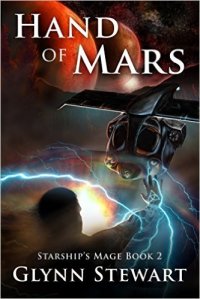
Glynn Stewart's Hand of Mars
Glynn Stewart’s Hand of Mars

Glynn Stewart’s Hand of Mars picks up a few years after his previous book (Starship’s Mage) left off.  The story remains focused upon Damien, who has grown in skills and abilities, but seems to be the same person we saw at the end of the last book.

The story revolves around a planet where a corrupt governor has ironclad control over a planet and has even subverted the Emperor’s appointed military officers.  Damien, sent to help one of the Emperor’s Hands of Mars, must investigate, find out the truth, and set things right.  What seems like a simple proposition goes rapidly sideways with drastic political and military repercussions.

Damien remains an interesting character, with a strong personal sense of responsibility and an overall sense of integrity.  His earnestness, his desire to do what is right, is put to the test… yet at the same time, he never truly has to make a difficult decision.  The bad guys in this novel are really, really bad, willing to wipe out tens of thousands or even millions of people, just to get their way.  When he confronts them, we have that sense of satisfaction as he brings them to justice… but there’s never any doubt over whether he’ll make the right choice.

I did enjoy watching Damien grow.  There was no doubt about where he was headed, growing in both experience and authority, and it was nice to see the character rise in that fashion.  Glynn Stewart handled it well, giving Damien time to shoulder more and more responsibility and letting the reader see the character develop.

The side characters in this novel don’t feel quite as engaging as in Starship’s Mage.  There it was easier, I think, due to the smaller cast, a single ship with a small(ish) crew.  I didn’t feel as much personal attachment to the characters in the sequel, which removed a lot of the dramatic tension regarding their survival.  They were interesting, from Hand Stealey to her Marine escort and many of the other characters… but they felt more like a backdrop.  This was Damien’s story, and they were here to support that.

Which is not to say that I didn’t enjoy the book.  It remained a fascinating read and as always, the magic system and the universe are engaging.  I read the book quickly and felt satisfied at the end.  It’s a quick, engaging read with good guys confronting the bad.  I’m definitely looking forward to the next book and I enjoyed watching Damien’s character grow.

ROGUE MAGE TURNED INTERPLANETARY ENVOY

Three years ago, as Ship’s Mage of the starship Blue Jay, Damien Montgomery was pursued to the edge of human space by both the agents and enemies of the Mage-King of Mars — before being brought in from the cold.

Now, trained in new skills by the Mage-King himself, Damien has been sent to the planet Ardennes alongside Alaura Stealey, Hand of the King. A rebel movement there has destroyed cities fighting a Governor seemingly lost to corruption.

But not all on Ardennes is as it seems. As allies becomes enemies and an entire world comes apart in chaos around him, Damien will find both his skills and integrity tested to the utter limit.

You can get it from Amazon.

Happy New Year 2016!

Happy New Year! 2016 is here. I’m ready to face the new year by reviewing what all has happened over the last year. I’ve come out with five novels in 2015 and I hope to match that again in 2016. In my personal life, I’ve left Active Duty in the US Army and transitioned to life as a Reservist, started a new civilian job, and managed a move to Denver.

I couldn’t have managed any of that without the support and love of my wife, who has shared with me in all the ups and downs throughout the year. Thanks, also, to all my readers who have made my success as a writer possible. Thanks for the great feedback, for enjoying my writing, and for posting reviews (those of you who do that, I’m especially grateful).

I’m excited to see what 2016 has in store for all of us.

2016 Website Updates, Round One!

In preparation for the new year, I’ll be bringing some updates to my blog and website.  The first round of updates will mostly be placeholders for upcoming content, however soon I’ll have pages for maps, character biographies, in universe lore (news articles, wanted posters, and some short fiction), and other things to spice up the different universe web pages.

As more pages come online, I’ll link them here.  If there’s enough interest, I’ll also link writing posts for easy viewing  (by enough interest, I mean people ask for it).

For now, here’s the first page to go live, albeit with limited overall content: Eoriel Maps.  As I get maps from the artist, I’ll post more there!

Review: Desert Strike by Leo Champion

Leo Champion's Desert Strike
Leo Champion’s Desert Strike

Leo Champion’s Desert Strike is a book.  Okay, review done.  No, seriously, it’s a book.  And it’s got things in it.  Go read it.

In all seriousness, there’s a lot going on in Desert Strike.  We see war on a global scale, with a Chamberlain-esque government determined to avoid it, a hyper-violent enemy determined to murder and/or enslave the good guys, and a strange semi-benevolent star-spanning nation which supports both sides in return for the resources they’re fighting over.

Mix into this massive landships up-to and including aircraft carriers, a mix of tech that feels gritty and at the same time cutting edge, and incompetent leaders within the good guy’s chain of command, and you have a very interesting setting for the story that unfolds.

The book has several characters, and what Leo Champion does best is making those central characters seem real with believable goals and ambitions.  You have a bad-ass, general, Jaeger, driven by anger and revenge.  You’ve got a young, rookie pilot, O’Conner, who wants to leave his mark.  These are the “Tropes” the “of course he has this person” but Leo goes further than that, he makes them real.  The side characters abound, with momentary glimpses at a bigger universe, then whipping back to the central plot.

And what a plot.  The enemy has been given free rein, and they use it.  This isn’t a book where the good guys have it easy, where victory is well within grasp if they only work hard for it.  If anything, I’d say the odds are too heavily stacked against them.   At times, you feel that the only victory left is a pyrric, one, where the planet is left a radioactive wasteland… yet somehow you still cling to hope that the good guys will turn the tide.

Desert Strike is a book which surprised me in a lot of ways.  I’ve enjoyed reading several of Leo’s books, but he writes in a certain tone, one which is instantly recognizable.  Desert Strike takes his normal tone and softens it a bit, ironic in a book about combat and war.  It has a fun edge to it, one which isn’t afraid to poke fun at itself, a bit of tongue in cheek even as a character’s life is in the balance.

The aerial combat feels like Vietnam Era, the ground war feels like something from the far future, and everything fits in a way that is hard to describe.  If you’re a fan of military science fiction, I think you’ll enjoy the solid characters and gripping combat.  If you just like exploding stuff, well, there’s plenty of that here for you too.

It’s about to go hot. 

On the dry world of Arkin, the Zinj are taking over. A technologically-competent strain of Islam that make ISIS look like the Amish, they’re challenged only by the nations of the West – and a divided West without much will to fight.

Among those who do have the will are fighter pilot Egan O’Connor, a working-class kid from a tough neighborhood, ready to test himself and serve his country. He’s a chivalrous rookie ready for an honorable battle.

Jimmy Newland’s a cavalry NCO who’s earned his spurs. He’s ready to fight but he doesn’t want to; he’s seen enough skirmishes to know how bad it can be. But he’ll do his job if the cold war gets nastier – as it’s about to.

And there’s nothing chivalrous at all about Air Marshal Elisabeth Jaeger, a career intelligence officer promoted to field command. Twenty-five years ago she saw her husband murdered by the Zinj; she’s spent the time since avenging him. As she’s about do on a scale just a little bit broader than spywork…

You can find it: here.

Merry Christmas 2015!

Merry Christmas to all my readers. Take this time to enjoy time with your families and friends, to read a good book, and to be thankful for the good things in your life.

If you’re not religious or celebrate a different religion, still, I hope you have a cheerful and happy time, preferably surrounded by books and good friends (which are often the same thing).

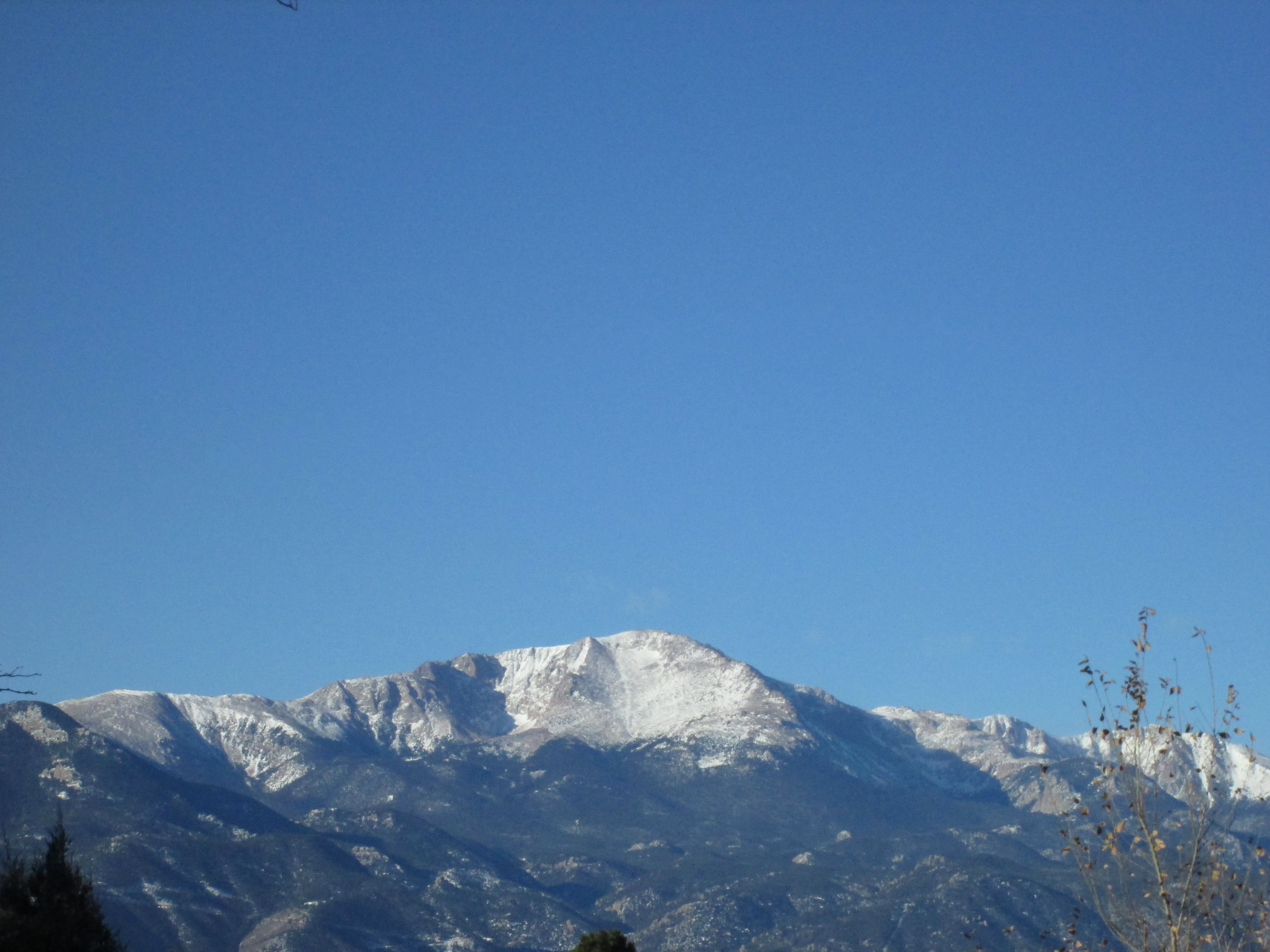
Pike's Peak in Colorado
Pike’s Peak in Colorado

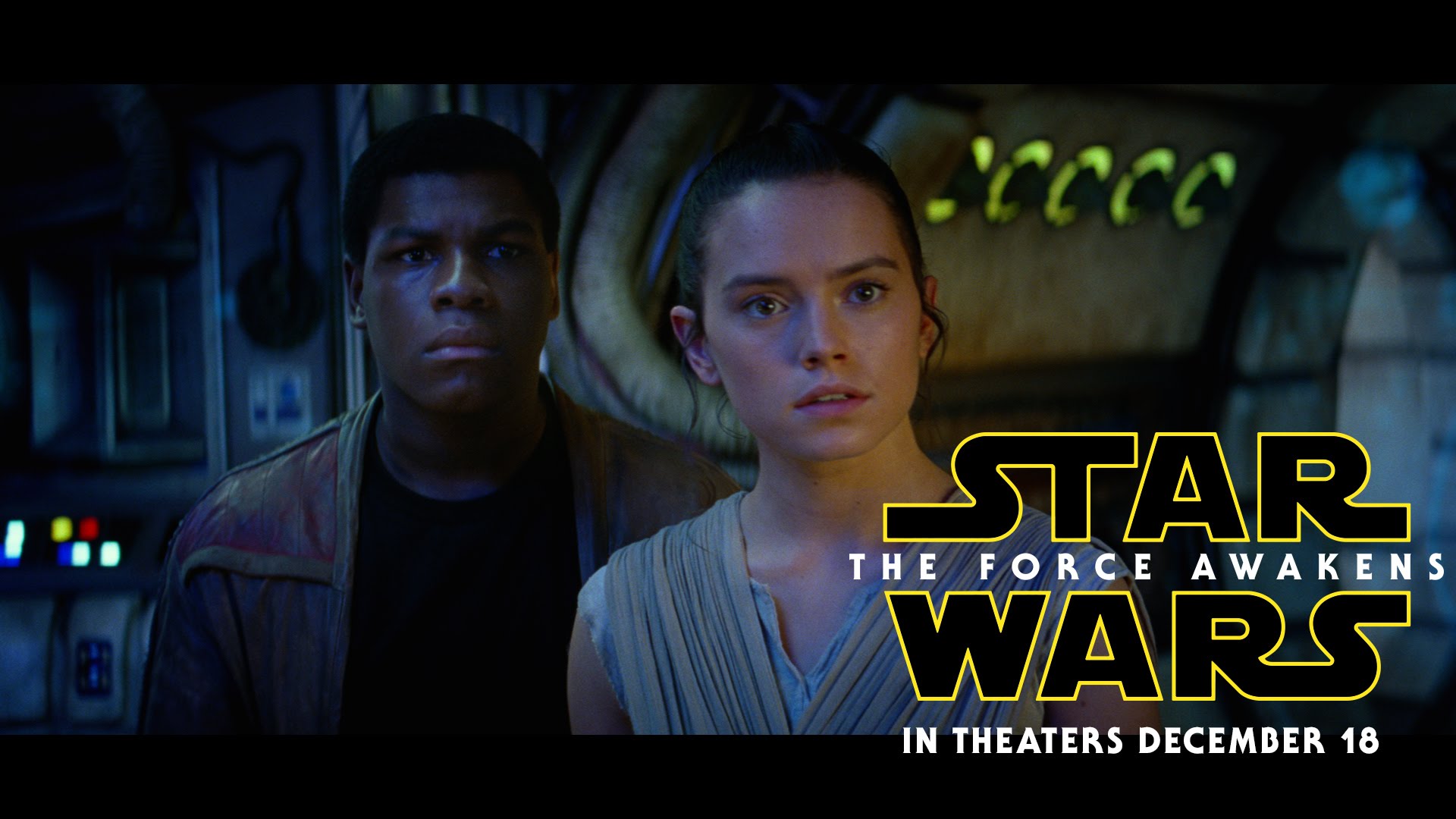
Review: Star Wars The Force Awakens (Spoiler Free)

maxresdefaultAfter seeing that Star Wars: The Force Awakens was coming out the same weekend as not only my anniversary but also my move, I was pretty certain I wouldn’t get to see it until the following week.  Fortunately for my sanity, my wife is also a fan and we managed to fit it into our insane schedule for the weekend.

Since the move revolves around surprises and plot twists, I’ll keep this review spoiler free and friendly to those who don’t want anything ruined.  I may, at a later time, discuss some of those things, but not here.

First off, it captures a lot of the spirit of the original.  This is, in no uncertain terms, an homage to the originals, albiet one written by a younger generation.  The themes, of good struggling against evil and of evil against good, are the same.  The idea of family legacies and of discovering ones full potential, are there as well.  There are many references, both direct and indirect, to places, people, and events of the previous movies, along with deliberate parallels written to make the audience go “Okay, this is Star Wars.”

I’ve seen a lot of discussion about the movie’s merits, but much of the disappointment (and there is some) is more from those who didn’t manage their expectations.  There is no way that JJ Abrams and Disney are going to recreate the Expanded Universe books, page by page.  For one thing, there’s too much there and for another, it would strip away all the pleasure of the mystery and wonder of discovery.  I loved Timothy Zahn’s Thrawn books and those of Michael Stackpole’s X Wing series, and other books of the expanded universe were fun, engaging, and exciting.  What they are not is a good way to write a new and exciting movie.   I’ve heard they’re writing new books, set in the new universe.  I’ll probably read some of them and I might introduce my children to them, someday.  For that matter, I’d love the opportunity to write some of them.

Where the movie succeeds is in capturing the excitement, from the very opening crawl to the last, emotional scene, you can feel that this is Star Wars, that the cast and crew poured love and excitement into its crafting, and that it is a movie that your children will want to share with theirs.  It did what I hoped it would and resurrected the franchise.

Is it a perfect movie?  Not in the least.  There’s a tone of pandering at times, of giving the audience what they want.  As an adult, there were many twists that I could guess at, ones that a child or someone new to the genre probably wouldn’t.  Some of the constraints of the good guys, as well, were maddening, but mostly, again, from my own perspective rather than the flow of the film.

Still, the movie is exceptional in that it breathed new life to the Star Wars franchise.  I’m excited to see the next one, thrilled to have spin-offs like Rogue One, and overall filled with questions.  I highly recommend the movie to all fans of the original Star Wars trilogy.

A Reblog and a Note on Moving

Cedar Sanderson has a post up on her blog about something very important: food.  More specifically, she contacted me for my favorite recipe.  While she did it a little differently than me, she’s posted my recipe for your reading (and eating) pleasure.  It’s a simple one, but what can I say, I like cooking with beer.

In other news, I’ve mostly completed my move to Denver (more specificially, Aurora).  Unfortunately, it has drastically impacted my writing time, the past week and a half has been nothing but prepping for the move and we’ll be unpacking for weeks.  It had to be done, since my new job is here in Denver, but I’ll be glad to be done with all of it and back to writing on a regular basis again.

The good news there, at least, is that my commute to and from work has gone from 3-5 hours a day to around 1 hour a day.  That added time means I can hopefully write more.

That’s all for now, thanks for reading.

Author’s Toolbag: Maps and Drawings

The number one job of an author is to tell a story.  In this sense, illustrations such as maps and drawings can be excellent tools for an author, particularly when they are used to immerse the reader more fully into the world.

I’m the type of reader who spends hours, sometimes days pouring over the maps, imagining myself in those worlds and feeling a bit of a thrill as I follow the characters along their journeys.  While I also enjoy the occasional drawing of a character, location, or item, seldom do these things resonate with me as well as a good map.

I’m also the type of author who is into world-building: creating a living, breathing world… and maps are a key part of that for me.  I’ve had the world layout for Eoriel mapped out for almost twenty years, tweaking details, changing names of cities and mountain ranges, altering coastlines slightly, but always with the same general layout.  The same can be said for the Shadow Space Chronicles, I’ve had the general layout of the universe in mind for years, and I’ve spent countless hours drawing out star systems, planet orbits, and the typical routes that ships travel.  I do this because I want to know what path the characters will take and why.  I want to know what language the locals will speak when the characters stop into a bar or tavern.

What does this have to do with the story?  A bit of nothing and a bit of everything.  It doesn’t matter in the slightest what language they speak in the bar… but the fact that they have a culture and language adds a level of richness, of reality to your writing.  So to, does having a map, of knowing that the characters can take the dangerous mountain pass in the dead of winter or divert two hundred miles to a  fortress held by enemies which is the only other way through.   Knowing that the characters will need three weeks (or three months) to travel to the next star system not only gives you a way to pace your story, but adds all kinds of fun plot developments and character arcs.  What do they do to pass that time?  How do they get along together on a tiny ship?  Which character(s) snap under the pressure?

Drawings, in the same way, not only help the reader to visualize the world, but it helps you as an author too.  Even a crude sketch can help you to develop what a character looks like in order to better describe them, or whether that city in the mountains is nestled in a valley or sprawls across a hilltop.  For a reader, a nice drawing can be an added bit, a way to fill in some of the details or even to add to the layer of mystery around something in your story.  As they say, a picture can be worth a thousand words.

How do I approach both of these?  Well, to be honest, with a map, I want there to be reasons for conflict.  Natural boundaries are frequently the dividing lines for nations… but sometimes those nations may disagree on which dividing line they are prepared to accept.  A nation that lives and thrives in the jungles may come into conflict with another nation which clearcuts the jungle to establish farmland.  Mountain tribes might raid lowlands where the growing season is longer and food is more plentiful… or lowlanders might send conquest parties to seize mineral rich valleys for mining.

Rivers, coastlines, bays, and lakes all serve as methods of transportation and as boundaries.  Mountains serve as boundaries and have profound effects upon rainfall and local climate.  Forests and jungle can act as barriers or havens, while swamps and marshes serve as foreboding locations and obstacles for characters or refuges for those who need to hide.  Deserts too, can serve as both obstacle and refuge, depending on the cultures of the people involved.

Drawings can hint at cultural themes, with stylistic emphasis in order to accentuate descriptions in your writing.   A well drawn illustration at the start of the book can set the mood or establish a theme for the reader, putting them in the right mindset.

Maps and drawings are both tools.  Learning to use them right is an excellent way to develop your novel and take it to the next level.