Tag Archives: Fantasy

Independent Author’s Toolbag: Publishing an Audiobook pt 2

This post is about the review processes and the work required to get it to the ‘finished’ stage.  Read the previous post here for information about getting the process started.

Any self-published author can tell you: self-publishing is hard.  It’s not just getting the novel ready, it is also doing the edits, getting the cover set, and even typesetting.  Then there’s the requirements for epubs, which makes it a severe pain for any images you have (such as maps or diagrams), inserting bookmarks and smartlinks… it is an additional quantity of time which most traditional authors don’t need to worry about.

Self publishing an audiobook is like that, only worse in a way.  First off, you have to do all the same stuff as above.  You need a cover, you need to prepare, edit and arrange the text.  After you select a narrator, you then have to discuss pronounciations, listen to the first fifteen minutes, and then, after they finish, you have to review the entire thing.  This is not as much fun as you might first imagine.

Don’t get me wrong, there is a sense of wonder when you hear the voices of your characters take life.  I can only imagine the feeling of excitement to have a book made into a movie (done well, at least).  Still, when you have to listen to twelve hours or so of narration, focused to hear errors, mistakes, and areas to make corrections… it’s work.  That’s twelve hours where I can’t write.  I have to be focused enough to listen for any issues.  I personally suck at multitasking, so during that time, I really can’t do much else besides listen.

Twelve hours doesn’t seem like much, until you factor in working a full time job.  I barely have time to write… finding time to review an audiobook is tough.  Then on top of that, I’ve got to find time to review the second version.  That said, the audiobook still won’t be perfect.  I’ll almost certainly miss a few things, in twelve hours of audio.  Also, some of the limitations are just that my novel has a huge cast of characters, set in a far future with aliens, people raised speaking strange dialects, and lots of odd names.  It won’t be perfect, not to what I pictured it, anyway.  But it will, hopefully, be good enough.

My whining about the hard work aside, producing an audiobook is a serious investment of time and money.  You can save money by narrating it yourself, but then you simply increase the time investment. My advice, be sure you have a market before you invest all this into it.  As far as hard data on earnings, I’ll give my analysis of that when I get enough data on that.  Of course, I have to finish the second review and have it go live first.

Anomaly Con Denver Review

IMAG0140

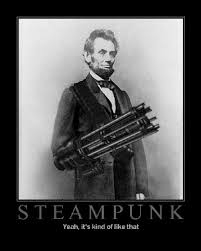
I went to Anomaly Con this past weekend.  It’s a smaller Fan Convention in Denver, Colorado.  The general theme is steampunk and alternate history, though there was certainly guests, panels, and events linked to science fiction, traditional fantasy, and even urban fantasy as well.  I’ll cover the highlights for those interested.

Tracy Hickman was there, talking about his new game Sojourner Tales, which looks to be a lot of fun, check it out here.  He also hosted his Killer Breakfast event, though that had a depressingly low turnout.  It was still a lot of fun, and I got to be slain multiple times..  For those who haven’t heard of it, typically several hundred people are killed in a 2 hour session, mostly whenever their characters cease to entertain.  My favorite part was when I used my long underwear as a parachute, then rolled a natural 20 as a success, leaving Tracy Hickman literally speechless.  It even has a website, apparently, find that here.

Author Carrie Vaughn was there.  Most famous for the Kitty Norville books, she is an excellent panelist, and she had a lot of good info, is always very organized, and she kept on topic as well as answering any questions from the audience.  All in all, she’s a friendly author, and seems to be a great person.  If you’re a fan of urban fantasy, you should check her out.  I’ve read a number of her books, and they are an excellent example of urban fantasy, and more original than most.  Check out her website here.

Also present was Quincy Allen.  He’s a ‘hybrid’ author, who started out self published and has since gotten involved in small press.  He’s a Colorado author, an all around interesting fellow, and fun to talk with.  His novel, Chemical Burn, will be re-released under Kevin J Anderson’s Word Fire Press.  Check it out here from Amazon, and Word Fire Press here.

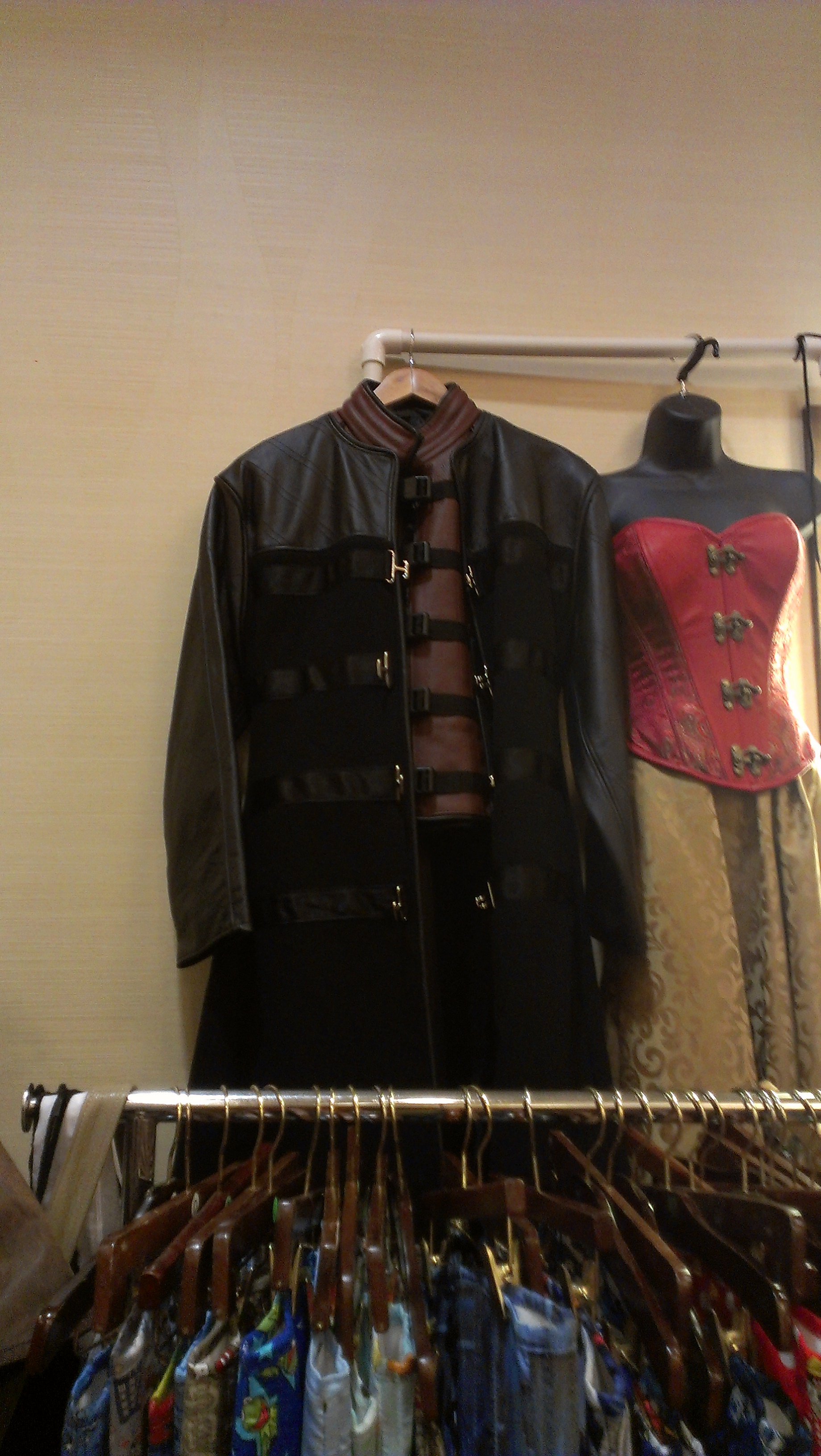
I didn’t have the opportunity to set on any panels, but I did have some fun conversations with a variety of folks there at the conference.  I also found a very cool John Crichton Farscape-style vest and jacket, just out of my price range at the moment.  Of course, if my book sales pick up a bit, I suppose I can work buying it in the future.  Check out their website here.  They’ve got a lot of cool stuff.

Just out of reach.  Monetarily and height-wise.... sometimes I hate being short.
Just out of reach. Monetarily and height-wise…. sometimes I hate being short.


All in all, it was an interesting weekend.  Anomaly Con is a quirky little convention.  I don’t know that I’ll attend next year, but it was an experience this year.

Taxes for Writers, Part 1

In writing, as in many things, there is no getting away from the absolutes: Death and Taxes. The good news, such as it is, is that writing can have a number of perks, chief among them is making you a bit of money.  The bad news, of course, is that you’ll have to pay taxes on that money.

Even if you’re not earning money on writing just yet, your writing can save you a bit come tax season.  Writing, so long as you are making a sincere effort at publishing or getting published, is a business.  As a business, you can take deductions from expenses common both to general writing and genre fiction.  Those deductions can really start to add up and can be a real benefit when you go to file your taxes, hoping to get a little bit more money back.

If, like me, you’ve earned money writing, those deductions can help you to keep a little bit more.  As a business, you need to keep track of receipts, invoices, and other expenses.  That part can be the most frustrating, particularly when you return from a convention tired, travel-lagged, and of course with a case of the con crud.  Still attention to detail here can save you a lot of money when it is time to file those taxes.

The big thing is to know is what you can and can’t deduct.  Remember, this is the fun part because deductions are expenses that drop your earnings so you pay fewer taxes.  There are a lot of viable areas for business expenses that you can deduct.  Attending conventions, both writing and genre is a networking and educational event.  The convention fees, hotel room charges, and even your meals are tax deductible.  If you’re attending conventions, you also probably have business cards or some other means of marketing, these too are tax deductible.

There’s more than that, though,  Your travel to and from the convention is deductible, both in whatever mileage you drive (keep a record of miles you drive in your car for such events), as well as airline, train, or bus tickets.  That new computer you had to buy, that’s deductible, though you may have to depreciate it because it’s something that should last more than a year.  If you’ve bought Microsoft Office, that’s a tax deduction too, as you need it to do your writing.  Most meals for business are only 50% deductible, however, that’s still 50% that comes out of your taxable income.

If you’re meeting with an editor or artist over lunch to do your cover design or illustrations, not only is the travel to the location a deduction, so is the meal.  So, in fact, is the expense of the editing and the artwork for the cover.  Any kind of entertainment meals are 100% deductible, so keep a log of what is just a business dinner and what is entertainment.  Any time you conduct business during the meal or the discussion is going to take place immediately before or after, you can consider it an ‘entertainment’ expense and you get the 100% deduction.

There’s also deductions you can take towards research that you do as a writer.  If crucial scenes in your book are set in a specific location, travel to that location as well as any expenses towards researching it are deductible, within reason, of course.

All these deductions can add up and that’s important because, as we’ll see later, as an author, you are self-employed and you’ll have to pay more taxes, the Self Employment Tax, on top of what you would normally pay.

So, save those receipts and try to save as much of that hard-earned writing money as you can!

SFWA, the Great SF/F Censoring, and WAFFLES

For those of you who aren’t really interested in the great hubub in the writing world, you can just skip this post.  For the rest of you, I’m sure it’s been highly entertaining and also somewhat like watching an avalanche or train wreck.  We’ve had the good, the bad, and the ugly.  The good comes in the form of various established authors who are standing up against what amounts to censoring.  Authors (from a variety of political perspectives) saying that the Science Fiction and Fantasy Writers of America (SFWA) are being unreasonable.  The organization designed to protect and support authors is, well, doing the opposite.  Attacking members, limiting their free speech and the topics they can discuss, and generally being very juvenile.  If you’ve been following it, I’m certain you have a good idea of what’s been going on.  If not, well, read Sarah Hoyt’s article, or Larry Correia, Kate Paulk, or Mike Williamson.  They delve into the depths plenty and they’ve far more patience for it than I do.  They also say it better than I could and often in ways to poke fun at the stupidity manifest in the organization of SFWA.

I’ll preface this next bit by saying that I’m not a member of SFWA.  I don’t qualify, as a self-published and independent author.  Even if I do become published… well, I don’t really see much point in joining the organization.  At it’s root, SFWA has become that most dreaded of institutions… it’s a clique.  It’s rather like the juvenile groups I saw in High School, groups which hung together from popularity and commited terrible actions against their own members and individuals in the interest of establishing a social heirarchy.  This is most ironic to me because, well, isn’t SF/F supposed to be made up of the free-thinkers and the outcasts, people who don’t go for the social heirarchies?  Oh, officially it is a professional organization… which spends far too much time worrying about hurting feelings and making sure that all the ‘qualified’ members feel good about themselves.  It feels more like a union or guild to me… complete with popularity contests and a party line.  Anyone who steps over that line is a ‘scab’ or worse.  Anyone who doesn’t stand ‘shoulder to shoulder’ with the collective is double-ungood.  What is SFWA, anyway?  How is one supposed to say such an acronym?  Try to say it with me “SFFFWUH?”  It sounds oddly like when I tried to catch a football with my stomach or that time I sneezed after the dentist had used local anesthesia.

But that’s just my perspective from the outside.  And like I said… I don’t even qualify as a member.  What gives me any ground to say such mean and derisive things?  Well, I’m someone who has something of a deep interest in the future of Science Fiction and Fantasy.  I’m a writer.  In my perspective, every piece of drivel that some yah00 writes right now, with some thinly veiled message resembling a steel bar mace coated with a thin layer of flowery paper, is a book that some poor unsuspecting sap will be forced to read in college or high school and told that it is “Great Literature!!!”  I don’t know about you, but when I go to relax at the end of the day, I don’t want to be beaten over the head repeatedly by a heavy chunk of metal.  I just want to relax and read a book.

So, I propose a new writer’s organization.  If nothing else, it needs to be something that has a name you can actually pronounce.  I’ve already brought it up in other forums: WAFFLES.  Writers, Authors, Fans of Fantasy literature and Excellent Science fiction.  Yes, it flows somewhat like the acryonym for the PATRIOT Act… but there’s a reason it passed the House and Senate, after all.  Who can oppose being Patriotic?  Who doesn’t like WAFFLES?  See where I’m going here?  WAFFLES is an organization for everyone… no rules or restrictions, no clique, no saying you aren’t good enough to participate.  I think part of where SFWA went wrong is that it didn’t allow readers a voice… so it’s become detached from the one group they really need to hear from: people buying their books.  WAFFLES is going to be part help-group and part discussion forum.  The biggest part is that you come to discuss, in a logical and non-emotional manner.  Leave your thin skin and easily bruised emotions at the door.  Lets talk about possibilities and This is something of a trial run, in part to see who is interested, in part to stick a thumb in the eye of SFWUH?, and mostly because I don’t like guilds, unions, popularity clubs, or cliques.  Why WAFFLES?  Well, it’s kind of hard to call someone a jack-booted thug for liking Waffles… kind of hard to get worked up in a frenzy in that fashion, eh?

So, if you like SF/F books and are an author, artist, or fan, join WAFFLES.

Steampunk World Building

imagesCA2ONS14

So, there I was… knee deep in dead vampires and choking on coal smoke when it hit me… what was the name of this country again?

Come to think of it, why was it named that, what was its history, and why are they still playing around with steam engines in the 1950’s???

I’ve something of a confession to make: I’m a world builder.  I love to put together a vibrant, expansive world, populated by people, organizations, nations, and machines that are interconnected and that make sense.  I’ll spend days, weeks, sometimes even months thinking about the economic systems, technology, and culture.  What does that get me?  In theory, it means I know what motivates characters and what has shaped them.

This gets a little more complicated when you’re writing alternate history… especially steampunk alternate history.  There’s a certain expectation in steampunk for larger than life characters along with odd, sometimes absurd, contrasts between our own world and the created one.  That requires a mix of attention to detail, quirky humor, and enjoyment for building that sort of structure.

So where do you start?  Well, it depends on you, really.  I tend to like to start with whatever big thing is different in that other world than here.  Was some genius born who developed air ships and steam engines?   Did some major event change the course of history?  Why is this so important… and what impact did that have on the world, from the bottom rungs of society to the mightiest nations?

For me, it’s important to explore those changes even before I really start writing.  There’s nothing more annoying to me than to be mid sentence and realize I don’t know why something isn’t possible or where something comes from.  If something is different in this other world, there should be a reason it is different… and sometimes ‘just cause it’s cool’ isn’t good enough.

So, in example, I’ll give a run down of how I started my world building.  In my universe, there was an inventor in England who discovered aetherium, a substance that, when heated with steam, produces power for use in weapons and aircraft.  This discovery came just before the outbreak of the American Civil War.. and the British Empire intervened in favor of their trade partners within the Confederacy.  After they conquered the North, the British appointed a Grand Duke to govern their wayward colonies and turned their attention to other lands.  The Confederacy has since split up into several independent nations, all of whom have abolished slavery, mostly from pressure from their allies, the British.  The Americas have become something of a back water, while Europe has remained the center of technology.  This has changed just recently, as some bright new minds have come up with new, refined aetherium powered weapons which threaten the balance of power yet again.

This gives me a rough basis of the world, in broad strokes.  It’s not perfect, but it gets me started.  From there, I’ll go into the details of what individual nations are up to, the societal pressures which have crafted the conflicts between characters, and the setting itself, from the technologies that they use commonly every day to the way they talk and interact.

For anyone else with steampunk on the mind, hopefully this helps out in making your story work.

47 Ronin Movie Review

Going with my decision to write up movie reviews for science fiction and fantasy movies, I feel I must review 47 Ronin. That said, while I enjoyed the movie, I feel a little conflicted. On the one hand, it was enjoyable, in and of itself (a popcorn movie, but fun), in a lot of ways I feel it didn’t do the original story justice.  While I’m not extremely knowledgable about it, I do have at least a passing familiarity with the history as well as the original fictionalization: the Chushingura.  The movie 47 Ronin is loosely based upon actual events that occured in the early 1700’s.  Notice, I said loosely, because in the original story, there is no halfbreed, trolls, monsters, or evil witches.

These things, I feel, were added to make the movie more flashy, and less of a historical drama.  That kind of thing can draw audiences, but the story of the Chushingura is one that, in many ways, can stand by itself without flash (ie, lots of special effects, huge explosions and weird pirate towns).

In 47 Ronin, they went for the flash and, in many ways, they succeeded.  It is a fun movie, with lots of amazing scenes.  There were a few times where I felt like they did a scene just to give it the feeling of a comic book, much like the movie 300.  47 Ronin has a solid story which sticks (mostly) to the original, other than the prementioned additions.  The reasons for those additions are extreme at times, but looking at them from the perspective of a writer, I can see why they made those additions, even if I don’t agree with them.  The additions, at least, are ones which are internally consistant and maintain the flow of the story.

The movie doesn’t pull any punches and doesn’t try for a happy ending, which I appreciate.  Though only lightly explained in the movie, the dedication and loyalty of the samurai is there to be seen.  Though I wish there were more characterization of them as individuals, as a whole, they come across as men who follow an iron-bound code of honor in an imperfect world… and they know that sometimes the right decisions are ones which will require sacrifices.  Their unflinching focus on duty that forced them to make those sacrifices is what makes the story so powerful.  Personally, I think it is a story that resonates very well with western cultures, the draw of duty, the necessity of revenge, and the idea of self sacrifice.

The movie captures this, often with small, yet poignant, scenes.  Sometimes those scenes are between the action and sometimes they are right in the middle of it all.  All in all, it was an enjoyable movie with several underlying themes which I appreciated, and it sparked an interesting discussion on the way home from the theater.

The Hobbit: Desolation of Smaug Review

This being a SF/Fantasy blog, I thought I should comment on The Hobbit: Desolation of Smaug.  I’ll preface the review with one minor note.  The Hobbit was the first Fantasy novel I ever read.  In many ways, it set me on my own unexpected journey, and it will always hold a special place for me.  That said, I’m not one of the types of people who requires a movie to be an exact replica of the book it was based upon, so that has also had some effect on how I viewed the movie.

The Hobbit: Desolation of Smaug manages to make a full length movie (very full at over 160 minutes) out of what was a relatively small section of The Hobbit.  They do this through the addition of scenes that were not in the book.  To make this clear, they weren’t in the book, but some of them are referenced in the book or in JRR Tolkien’s notes.  Some of these scenes and even characters are made up for the movie.

They do this to develop the film from an adventure set from Bilbo’s perspective into a much grander thing.  In the book, The Hobbit, we know there is this greater world, of which we only see the smallest portion, and then only through one character’s eyes.  The movie expands upon this, while staying true to Tolkien’s concept of Middle Earth.

All that aside, it was a lot of fun.  I’m not the type to see movies twice in theaters, but I did with this one.  I think that the character development and story arcs are what made the movie so great, for me.  The special effects were nice, and the story was good, but special effects seem to be easy enough, anymore and I already knew what was going to happen, seeing as I read the book and all.  The characters are where the movie makes its money.  The first stirrings of the One Ring’s pull on Bilbo.  Kili’s interaction with Tauriel.  Thorin’s internal conflict between ambition and responsiblity.  Even Gandalf has moments of character development as he is forced to weigh his duties to his companions versus his duties to all of Middle Earth.  These characters are those we come to care about, and makes them far more real, for their conflict, suffering, and hardships.

The big reveal on Smaug was excellent, though at times, with the vast scale of the dragon and his domain, it is difficult to put him to scale to a man, dwarf, or even hobbit.  I left knowing he was big, really big, but somewhat uncertain as to relative sizes.  My only complaint, about Smaug, is not the graphics, or the sound of his voice, or any of that.  Smaug seems a little to much the cliche villian, given to long, profound monologues while he lets heroes get away.  Maybe it’s just me, but he seemed far more clever and conniving when he and Bilbo had their battle of wits in the novel.

All in all, however, I thoroughly enjoyed the movie.

Kal’s New Year of Writing

So, this is more of an update on my current writing schedule than anything else.  I’m a bit behind on getting things out (for which I deeply apologize).  On the other hand, I have the minor disclaimer that life has been extremely busy, between me transitioning from one duty station to another in the Army, getting married, the honeymoon, and a variety of other things.  Frankly, I’ve had to prioritize, and since my wife is very well armed and knows how to handle knives, swords, guns, and other dangerous items, naturally, my priorities have focused on the wedding and honeymoon planning.

Thankfully, she also reads science fiction and fantasy, so she’s understanding and tolerant of my writing.

That said, here’s what I’m working on, and my best guess as to when I’ll have it out, as far as I can see over the next year.

Renegades: Ghost Story is the fourth novella of the Renegades series.  I should have that out in early January.  Right now I’m waiting on a cover from the awesome Robert Brockman, who somehow finds time for that kind of thing on top of his normal job.

Echo of the High Kings is an epic fantasy novel, set on the world of Eoriel.  I’m doing the final(ish) rewrites on it right now.  My goal is to release that in February.  As something of an experiment, I’ll enroll it in one of Amazon’s programs and do a free release, so if you’re looking for an epic fantasy to get your teeth into, well, it’s hard to beat free, right?

The Fallen Race is the science fiction novel set in the same universe as The Renegades.  I’ll be releasing it once I complete the final edits, hopefully in the next month, possibly as early as mid January.

I’m also working a compendium of the Renegades novellas, complete with some additional content which I’d like to release sometime in February.  This will include the first four Renegades Novellas as well as three new short stories (to include one set from the perspective of Anubus) and will be released as paperback and ebook.

The next novella in the series, currently titled “Renegades: A Murder of Crowe’s” will be out not long after that.

The next three Renegades Novellas after that aren’t written yet, but they are outlined as “Out of the Cold”, “Assassin”, and “Privateer” and will be arriving between March and August of 2014.

I’ve projected the novel Fenris Unchained for a summer release, though that may shift dependent upon the rewriting I’ve got to do on that.

The sequels for Echo of the High Kings and the Fallen Race will finish up the year, and if I find the time, some additional Renegades novellas.

So, that’s what I’m up to.  Along the way, I’ll be moving, transitioning to yet another job in the Army, and generally trying to balance everything.

Free stuff: Preview from Echo of the High Kings, part 2

And, to continue sections from Echo of the High Kings, here we have a brief piece with Katarina, daughter to Duke Peter of the Duchy of Masov.  This section comes a year after the events of the first preview section.

Katarina moved with quiet feet down the dusty passage.   She hiked up her dress as much as she could, even as she worried that the hem would catch the dust and suggest that she hadn’t spent the afternoon at her studies.

Not my fault that the scholar fell asleep, she thought, though she felt a twinge of remorse that she’d eluded her newly assigned Armsman.  Then again, as rare as free time had become, she felt far better for the opportunity to explore the hidden passages below the castle… and for the opportunity to slip into the nursery and apologize to her little brother.

As if on cue, she came to the intersection of the hidden passages.  One way led deeper into the maze of corridors and the other led up to a door that opened into the nursery.  “Best to talk to my brother, first,” Katarina muttered to herself.  She gave a slight sigh, though, before she started up the corridor.

She hadn’t meant to hurt his feelings.  She knew that, for some reason, he looked upon her with some envy.  As the eldest, she had some privileges that he must think marvelous.  In truth, however, she envied him.  At eight, he had already been introduced into the martial chamber.  The Master of Arms had already begun his training and as a boy, he would train every day until combat became something of reflex and muscle memory.  He had already begun to learn sufficient runic magic to operate various relics and weapons of the Ducal House.

As a girl, even a nobly born girl of thirteen years, the Duke allowed her only the basic arts of self defense and studies of runic magic sufficient to operate only the most basic runic items.  I’m the heir, but I’m still only a female, and little Peter doesn’t realize how much I envy him.

That still didn’t excuse her mistreatment of him earlier in the day.  She’d no cause for her words, despite her frustration.  She dearly loved her little brother, and her recent movement from the nursery had only made her realize how much.  Her father, always so distant, spoke with her only in passing.  Her mother had seemed to withdraw into herself even more after her old armsman was sent away… and had ceased to take any visitors not long after Katarina moved into the woman’s quarters of the castle.

Little Peter was the only one who cared for her and she knew that her angry words had hurt him more than his childish petulance deserved.  So Katarina would make it right.

She reached the hidden door and paused a moment to listen.  This one opened into the small storage room at the end of the corridor, she knew.  Katarina had discovered it first, when she’d needed some place to hide from her tutors.  Her explorations had led her deep beneath Castle Emberhill in the five years since.

She paused as she heard what sounded like a muffled cry.  Katarina frowned, and her fingers dropped to the two wands tucked inside her dress skirts.  Technically, they were her mother’s, but Katarina had learned to use the two wands last year, and her mother had never realized that Katarina had kept them rather than putting them back.

She’d practiced with them too, though she’d had to find a quiet spot out in the countryside to do so, and timed it with thunderstorms so that it didn’t attract attention.  Well, other than the time I missed, she thought sheepishly, and it’s not like the entire forest would have burned down.

She shook her head and pushed the concealed door open.  Whatever the noise she’d heard, she didn’t hear anything else.  She set her lantern to the side and moved through the small storage room.  She paused again at the heavy wooden door.  She opened it just a bit, and then froze when she saw movement.

Her fear at discovery turned to something else as she felt the blood freeze in her veins.  A tall man stood with drawn blade just down the corridor, his back to her.  At his feet lay Maran, the old nurse who had changed her diapers and brought her her meals.  Her mouth and eyes were wide and she lay still in death, her face twisted into an experssion of pain.  The broad spill of bright red blood and the red stains across her simple dress made it clear how she’d died.

Two of her father’s armsmen lay further down the corridor.  Katarina bit into her knuckle to hold back a shriek when she saw several more armed men.  All of them wore strange scale armor, and the cut of their clothes seemed odd to her, as did their golden skin and strangely curved blades.

And then she saw one of the men step out of the open door to her brother’s room.  He grunted something in an odd language even as he wiped blood from his sword with what looked like a stained boy’s tunic.

The cold ice in her blood flashed into white hot heat in a heartbeat.  Her light thirteen year old body could not have kicked the heavy wooden door hard enough to knock down the warrior beyond.  Yet a moment later she stood over his prone body and leveled her wand with a scream.

A wave of fire and destruction swept down the narrow corridor.  For a moment, the image lay seared into her brain, burned into the back of her eyelids as her brother’s murderers burned to ash.

The moment passed and Katarina blinked away tears as her eyes tried to adjust.

She felt an iron-hard hand clamp around her mouth.  Her hand went to her second wand, but her attacker’s other hand grasped it and held her still.  The man I knocked down, he must have captured me, she thought.  Still, she struggled, she would not let this assassin kill her, not without a fight.

“Hold still, damn you, girl,” a gravelly voice spoke.  “I’m not one of them, I’m here to help!”  The voice teased at her memory, until she recognized it as her new armsman.  She hadn’t heard Bulmor speak more than twice in the past week, but it sounded like him.

She froze and when she ceased to fight, the hands pulled her back into the storage room.  The hand over her mouth let go long enough to pull the door closed.

“What’s happening?  Is… Is my brother dead?” Katarina asked.  She hated how her voice broke, yet in her mind she saw Peter still and cold in a pool of blood like poor old Maran.

“I think so, lass,” Bulmor grated.  He released her and she turned to face him.  “Those were Vendakar, probably paid mercenaries.”  His face, when she looked at him in the small dark room, looked to have been carved of stone.  “Do you know a passage that leads out?”  He took up her lantern in one hand.

“Yes…” Katarina frowned.  “Shouldn’t we head up, though?  Find my father… my mother!”  She turned back towards the door, ready to run to warn her mother, but his iron strong hands locked on her shoulders.  “Let me go!  I have to warn them!”

“Stop and think, lass- my Lady, I beg you, think!” For a moment his voice broke from the gravel strength and some raw emotion leaked through.  Katarina realized then that Bulmor feared for her.  All of a week on the job, and her new armsman already viewed her survival as essential.

That realization bored through her and forced her to stop and consider.  The nursery lay at the center of the keep itself.  It was the most heavily defended area and any attackers would have to fight their way through the other living areas to get here first.  Any warriors who had arrived here must have already fought through her father’s armsmen…

“No…”  Katarina froze.  “That can’t be, it’s not possible.”

“My lady, until we know more, we have to assume they’ve already overrun the entire castle.  We must leave.  You seem to know these passages… how do we exit?”

Katarina felt an icy hand clench on her heart.  Her brother was dead… and her last words to him had been cruel and childish.  Her parents were dead… everyone she had ever known, Erik, her father’s armsman, Tomus, her mother’s armsman… had the old scholar Mattews been murdered as well?  Had they killed him as he dozed in the library, surrounded by his old scrolls?

Why had they died… and why did she still live?

Independent Author’s Toolbag: Self Promotion

So, I’ll preface this by saying that I hate self-promotion and I’ve got a long way to go to be good at it.  That said, it is an essential part of being successful as an author.  There are two important things to remember, however.  The first is that you will only ever sell books to your mom and your best friend if you don’t find some way to reach a larger audience.  The second is that if you alienate that larger audience, you’ll still only sell books to your mom and your best friend.

Successful authors, both independent and those who write for a big publishing house, have to self promote.  The publishing houses can put some effort into it, but it falls back to an author to make time to push their book, and to do it in a fashion that doesn’t come across as crass or whiny.

Self promotion is an art as much as writing.  Successful authors do it well, and the job of any aspiring author is to sell themselves as much as they sell their books.  What I’ve seen, however is two extremes.  Some authors hesitate to even mention that they write, to name their books, or tell you anything about their characters or stories.  This makes it hard for someone to take them seriously as a professional.  If you’re going to write, you have to have a sense of self confidence about that.

Then there’s the other end of the spectrum.  The desperate, pleading, buy-my-book barragers.  You sometimes see them at conventions, when they step out of the audience to ask the panel a ‘question’ which comes across as a shameless whine for attention.  These authors are online as well, and let me confess, when I’m bombarded by nothing but demands to buy their book or accolades of how wonderful one of their friends think their writing is… well, I either tune them out or shut them off.

So where does that leave an independant author?  There’s a variety of ways to get attention without being, well, annoying.  Establish yourself, write interesting articles, do interviews, go to conventions and get on panels (do not attempt to hijack panels from the audience, please).  Network, get to know other authors, editors, agents, and publishers.   Talk to people, not about your book, necessarily, but normal talk.  As people get to know who you are, they start to care that you wrote a book.  They might not be the target audience, but they’ll remember your name.  Word of mouth sells more books than flash banners on a website or advertising flyers in mailboxes.  Build your audience of readers, maintain your writing standards, and be sure that your writing is professional enough that you feel confident in promoting it.

Self promotion is a lot of work.  At the end of the day, whether that work pays off is as much down to you, the author, as it is to luck, or fate, or what have you.  Still, since the only other option is to establish world domination and to force people to read your books, you probably better get after it, eh?