Something I often forget to mention is what resources I use to both continue to improve my craft and to keep on track. Improving is a process and you should never feel that you are “done.” Authors who think their writing is perfect are lying to themselves. There is always room to improve.
One of the most invaluable resources for me is podcasts. I used to spend a lot of time on the road (I still do actually) and since I haven’t yet found a way to write while I drive, I listen to podcasts.
Writing Excuses is an amazing resource for that. Their podcasts are short enough that you can finish several over even a moderate commute, which is great for getting your brain thinking about things like plot, character, and story arc. (Their byline, by the way, is “Fifteen Minutes Long, because you’re in a hurry and we’re not that smart”) They’re also great because not only are they fantastically intelligent writers, but they’re fun to listen to and they won’t put you to sleep.
The Secrets is another fantastic resource. Micheal A. Stackpole is not just a great writer, but he spends a lot of time helping other people to become great writers. (I also wish I had his voice, I’d do my own book narration then and save myself a bundle of cash) His podcasts are a bit longer and far more methodical, but they’re a good listen and if you aren’t really sure what you’re doing or feeling overwhelmed by the story you’re trying to tell, it’s a good place to start.
The best part about both of these is: they’re free! Yes, I know, amazing right? You can listen to hours of great advice, some of which is guaranteed to cause you to want to go write something right now. and you don’t have to pay a thing.
Next week I’ll go into some other resources I use to improve my writing craft.
Anyone who has ever tried to write a story or poem knows the most terrifying thing in the world is a blank page. You can spend hours, days, weeks, months, even years paging through books, reading online, checking facebook… all to avoid that dreaded first page.
For those of you who have written that first page, there are many more obstacles. There’s the dreaded middle, where you know where you need to end up but there is all this “stuff” in the way that has to be done first. For me, there’s the hundred page blues, where I hit one hundred pages and I just start wondering, is any of this good? There are points where you feel like you’re writing the best story ever and then suddenly you are stuck, everything has gone horribly wrong and you don’t know what to do.
The good news is: the answer is simple. Sit your butt down in front of the computer (or typewriter or pen and paper, etc) and write. If you’re stuck on your current story, write something else. Put words to page.
Sounds easy, right? Well, if you’re like me, finding that time to sit in front of the computer is the hard part. So how can you best prepare yourself so that you ensure the time isn’t wasted?
Seek inspiration. I commute to my day job, which eats up around two hours a day (even after having moved closer, traffic in Denver is absurd). I spend a good portion of that time thinking and I try to spend it thinking about plot, characters, and writing structure for works-in-progress and upcoming stories. I also listen to music, which helps getting the creative juices flowing.
Getting outside is another source of inspiration for me. Seeing the sun is always good. Walking/hiking in a scenic setting is great for wrapping my head around a fantasy setting, especially with the mountains here in Colorado. Going for a run and doing a morning workout is also good for me, since I generally get so bored running that I have to think about something. Exercise is also cathartic, it helps you to relieve stress and releases all kinds of good chemicals in your body and brain. What that means in layman speak is if you do some physical exercise, you might be a little less stressed out when you sit down to write. If you have a busy life, it can clear your head so that you focus on what you want to do.
On the other hand, sleeping on it is a viable technique. If I can get a short nap in before I write, I generally find I write better. (It is a rare occasion with a very active toddler in the house. Waking up to being hit in the head with a metal tractor is not a good way to start writing your novel). A nap can act as a sort of reset, letting you get into things after letting your subconscious sort things out and quiet itself a bit.
These are all techniques I use, but everyone is different. Writing is a personal experience, what inspires you to write is also going to be personal. I know a writer who can only write in absolutely quiet conditions, distant music, a conversation in another room, these all make it so she can’t put words to page. I know another writer who cranks up loud music and still another one who prefers to write while listening to the TV. These are all viable tactics, I suppose, though some are easier than others to achieve. In short: find what works for you and do it!
In Part One I talked about a general overview of what gaming provides a writer, while in Part Two I went into a bit more detail about how roleplaying games can help a writer develop his plots, characters, and worlds.
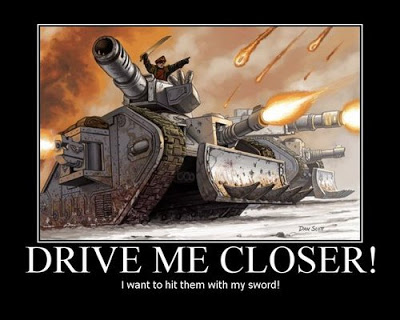
Here in Part Three, I’ll talk a bit about how wargaming can help you craft and design more realistic scenes for your books. Obviously this advice holds a bit more true to those of you writing military or combat themes in science fiction or fantasy, although if you have even a small fight scene in what you write, it may behoove you to pay attention.
So, what does wargaming offer? Well, it gives you some basic understanding of tactics and planning. This, in and of itself, can show in your writing as your characters refer to flanking an enemy or massing fires. Knowing even just the basics of how a fight would play out can really help when you go to write up that fight scene.
It can also help you to visualize where characters are and what kinds of odds they face. Knowing that Throk the barbarian has to face a hundred orcs is one thing, putting a hundred markers out to show just how insane that would look is something else entirely. Where this plays out is that it allows you to keep your fight scenes somewhat grounded. It makes no sense for one person to hold out against hundreds without some huge advantages… unless you’re writing manga or some kung-fu movie type scenes.
Also, wargaming gives you a sense of the scale of a fight. If your characters are taking part in a huge battlefront where tens of thousands of warriors are clashing, seeing that scale can help you to write scenes that feel more epic and with high stakes to increase the tension. Whereas if you have a small skirmish deep underground or with a handful of people in a forest, that close, intimate description can set the tone and the immediate consequences for characters can set the tone.
Where do you get started then? Well, there are a variety of games and a variety of methods, but the easiest is to probably go to your local gaming store on a Friday night and just ask around. Most gamers are pretty welcoming and would love to talk about what they play. If you tell them you’re an author and you’re researching for a novel, you’ll probably have several eager gamers willing to talk about the basics.
In general, games like Warmachine and Hordes are small skirmish games with a handful of fighters per side (squad and platoon size), games like Warhammer 40k and Warhammer Fantasy are larger, small armies (company size or larger), while games like Flames of War are for larger scale battles (company and battalion). There are a variety of ship-combat games, ranging from fighter level to capital ships (X Wing, Star Wars Armada, Battlefleet Gothic, and more). Game rules range from very complex to absurdly simple and most give you at least a decent approximation of how a fight might play out.
One thing to remember as you go about converting what you learn with what you’re writing: don’t get too caught up in the technical details. Writing is about characters, so spending a long time discussing the technology, tactics, and advantages of one side or the other is a good way to put your reader to sleep. Slip that kind of thing in here or there, but focus on the characters, the stakes, and anything else to drive up tension. A fight scene (whether between hundreds of capital ships in a distant galaxy or just two characters locked in a grapple with knives), is there to show conflict, increase tension, and to make the reader excited. Dry, technical dialogue is a good way to ruin an otherwise perfectly good scene. Don’t take pages to get to the point, do it quickly, establish the stakes, show the danger, and complete the scene in a manner to accomplish your plot goals.
Another point: the main character doesn’t always need to win. In fact, oftentimes it is far better for the story if they don’t. They might be defeated ingloriously and either left for dead or taken prisoner. They might be forced to withdraw in the face of overwhelming odds. There are lots of options for you, as a writer, to use conflict to batter your character, to force them to grow and into introduce themes and plots that you couldn’t explore otherwise.
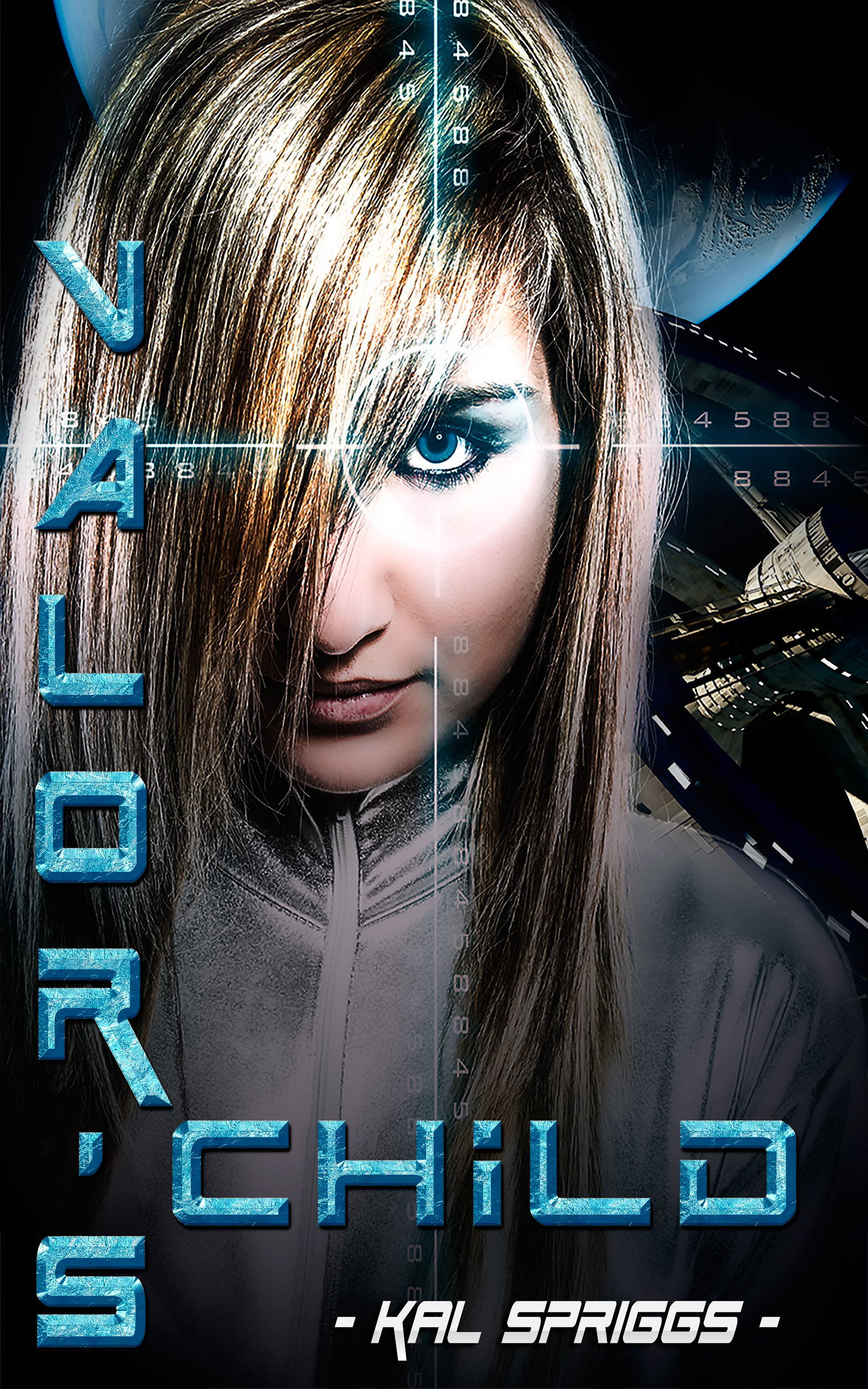
Hello everyone! Valor’s Child is now on Kindle Scout. The excerpt there contains the first five thousand words. Those of you who nominate it (if it gets selected for publishing), will then receive the entire novel for free.
The planet Century lies at the very verge of human space. It is a frontier world, where hard work is not only essential to survival, it is a way of life. Jiden knows all about hard work, and she’s ready to buckle down and fulfill her dreams, to rise above her parent’s modest background and to stake her claim and be successful on her own merit.
Yet there’s one hurdle she has to face, her grandmother insists she attend the Century Military Academy’s Prep School. She plans to keep her head down, to get past this last obstacle, and then to pursue her dreams. Yet nothing goes to plan: she becomes the center of controversy, she finds herself drawn into infighting among the other candidates, and worst of all… she finds a resonance within her heart at the ideals of duty and service.
Remember: your support is what will get this book published. Please take the time to go to Kindle Scout and nominate it. Here is the direct link: Valor’s Child on Kindle Scout
Hello everyone! I’m happy to announce that Valor’s Child, my military science fiction/space opera young adult novel is coming to Kindle Scout. I’m really excited about this book, I’ve had some great feedback on it and I hope it will appeal to a broad audience. The general theme of this series is going to be a cross of Ender’s Game and Starship Troopers.
So what is Kindle Scout? I’m glad you asked! Kindle Scout is a publishing service within the umbrella of Kindle. Basically, Kindle has stepped up things and created their own in-house publisher. The way it works is actually quite novel: Authors upload their manuscripts to Kindle Scout, where anyone with an Amazon account can view their work. Those who like it can vote for it (you get up to three votes at a time). The best part for readers is that if the book they voted for gets selected for publishing, then they’ll receive a free copy when it is published. That’s right, just for participating you get a free copy. Pretty cool, huh?
In this way, Kindle Scout is crowd-sourcing books. What they provide for me as a writer is that they have all the assets of a publisher: they pay for copy-editing and they help to promote the book.
This is something of an experiment to me, so we’ll see how it works. Hopefully a lot of my readers will check it out. I’ll post the link on Friday when it goes live. (Edit: It will go live on Saturday 13 Feb)
In Part One, I talked about some general ways in which gaming can help a writer. Here in Part Two, I’ll go into more specifics of how running (or playing) a roleplaying game can help you, the author, in developing your world, improving your characters, and building your plot.
Roleplaying Games (RPGs) are a variety of games, ranging from complex (Rifts/Palladium) to very simple (Hero). What they all have in common is that they give you a framework for acting out the story of a character as he experiences adventure.
This is, at its root, the basis of storytelling. A game master or dungeon master puts together a story and the players, through their characters, experience that story. It is much like the pattern a writer takes to tell a story to his or her readers.
That’s not to say that I recommend writing a story based upon your RPG sessions. Most RPG sessions, however hilarious and exciting to the players, will come off as a boring blow-by-blow to readers. This is an incidence of a difference in audience, for one thing. A RPG session is focused on individuals who already have a stake in their characters (they’re playing them, after all). Readers won’t have that buy-in, so they won’t care as much about the incidentals. They also don’t have the perspective of being there and knowing the other players, after all, reading isn’t a group event.
So how does playing or running an RPG help you as a writer? Well, there’s different areas that it helps. For a developing writer, I highly recommend playing as a character. Spending a few hours developing a backstory, building in quirks, perks, and flaws into a character gives you some perspective on character design that is very valuable (even if you don’t use that character ever again, you learn a lot in the experience). Even more valuable than that is the ability to role-play that character in a group. A common flaw among new writers is that all of their characters sound, act, and feel the same. Playing a variety of player characters over a variety of games gives someone a chance to develop those character voices, to make them separate and distinct.
For a more experienced writer, I’d recommend taking this to the next level and running an RPG. Doing so in a world you write in not only challenges you to flesh out your world, but also to expand your cast of characters and to flesh out your plotting. There’s nothing quite as hard to control as a group of gamers as they rampage through your world. As long as you are doing your job as a game master, they’ll always be wanting to see what is beyond the next corner or over the next hill. You’ll quickly find yourself having to develop organizations, secret societies, and fleshing out details like what places look like and where all the ships sail after they leave the port. These things by themselves won’t make you a better writer, but the consideration that your characters live in a greater world does come through your writing.
Plus, trying out some prospective plots or themes within a gaming session is a fantastic way to experiment. If you think you’ve come up with a really clever idea, there’s nothing like having a bunch of players trample over or around it, either seeing right through it or being completely oblivious. That kind of thing can really help you to develop your abilities as far as foreshadowing, plotting, and generally developing your ability to tell a complex plot.
Now remember, all this doesn’t require a boxes of odd-shaped dice and reams of character sheets. Roleplaying to test some ideas could be as simple as you getting a couple friends together talking through a scene from your book, gauging responses and impressions, and then getting back to writing.
Now, a pitfall I’ve seen as far as using your gaming experience as a writer is becoming too oriented on the mechanics. Readers don’t want to see how you built your characters or how your character blocked an attack. They probably don’t want to read a blow-by-blow of a fight. You can put such things in, but they should never take over the story. Readers want to see the characters progress along their story arcs.
That’s all for now, next week I’ll talk about war-gaming and what it adds to your abilities as a writer.
Snow, snow, and more snow… Oh, wait, that’s the weather channel.
February is here and I’m pleased to say that my YA novel, Valor’s Child, will soon be available on Kindle Scout. I’ve had great feedback from beta readers on this one and I can’t wait to see what the rest of you think about it. I’ll be posting on Kindle Scout mid-month and it’ll run a 30 day campaign. What does that mean for you, dear reader? Well, it means you have a chance to read a big chunk of the book, to vote for it there on Kindle Scout, and if they pick up the book for publishing, you’ll receive a free copy from Kindle. I’ll post more about that later, but who doesn’t like free books, right?
In other news, I’m continuing work on Renegades: Origins and I’m beginning work on two additional projects which will be submitted to publishers upon completion. One of them is a steampunk novel (I did some worldbuilding for it here) and the other is an origin story on some of the most powerful psychics in the Shadow Space Universe. As soon as I finish off this Renegades novel, those are next on the plate.
Speaking of Renegades, I’m also considering doing an anthology for the universe with collected short stories from a variety of authors. I’ll post more about that at a later date, but right now it’s a strong possibility.
As an author, particularly a Science Fiction and Fantasy Author, there’s not a lot of ways to draw directly from real-world experience to determine what is “real” in my writing.
There are a number of methods to deal with that, to fill out a world, to get a feel for how things work. World-building, of course, is a massive part and I’ve written a series of blog posts on that which you can read elsewhere (History/Society, Magic and Science, Geography and Climate). Another great method is to base things off of real-world events and experience (since history oft repeats itself, such restructured events and outcomes will feel ‘real’).
What I’m going to talk about today, however, is gaming. Now, even as I say that I can mentally picture a number of people cringing. The potential critics thoughts range from someone who pictures a group of LARPers out beating each other with foam weapons to the guy with the full scale replica of the battle of Gettysburg to the computer nerd who has set up a simulation of the Romulans fighting the Borg (Romulans lose, sorry).
The truth is, though, that gaming at a variety of different levels is what you do anyway as you work through your plot and story. You think about what you want to happen and how you want it to happen and then what needs to happen for that to work out in the end. What I propose is to formalize that a bit to give you a more realistic idea of outcomes.
There’s a variety of different types of gaming that you can apply, all aimed at different goals. These goals can range from helping you to more fully develop your world to figuring out what it would take to win a desperate battle to finding out how difficult a puzzle or scenario would be for your characters to figure out.
That said, there’s a variety of games for you to apply and happily, most of them are fun too (see Science Fiction and Fantasy Gaming Overview for a breakdown of games). Roleplaying games provide a lot of positives for a writer. First off, being the DM or GM of a game gives you a lot of experience in coming up with ideas and storylines on the fly. Second, it forces you to really think about the worlds your players are exploring. Tabletop wargaming, whether on the skirmish level or all the way out to massive armies, can help you to visualize where characters are and just how stacked the odds are against them.
That’s all for now. Next week I’ll go into the process of applying gaming to your world-building, writing, and plotting. (Part Two here)
The Freeport Mutineers, a short story in the universe of the Eoriel Saga, is available now from Amazon. The best part is, like any good story about pirates, it’s absolutely free! (well, for today and tomorrow)
Troubled by the rumors spread throughout the Southern Fleet, the young officer turned to the Marines and Sailors under his command… yet he and they were betrayed, arrested, and convicted of mutiny, all under the orders of the ambitious Lord Admiral Hennings.
Faced with the prospect of not only his own death, but that of the men under his command, Wachter must somehow find a way to do the right thing. Yet there is little hope with he and his men jailed, weaponless, and condemned, while the town of Freeport lies under martial law and the threat of dark sorcery.
Only one course lays open to him, to break his oaths and to swear allegiance to the cause of another, to become exactly what his enemies have accused him of being: a mutineer.
I now have the draft cover for my soon-to-be-released short story: The Freeport Mutineers. This is an epic fantasy story set in the Eoriel Saga universe. The basic premise is simple, a young man, faced with true evil, must decide what to do.
Troubled by the rumors spread throughout the Southern Fleet, the young officer turned to the Marines and Sailors under his command… yet he and they were betrayed, arrested, and convicted of mutiny, all under the orders of the ambitious Lord Admiral Hennings.
Faced with the prospect of not only his own death, but that of the men under his command, Wachter must somehow find a way to do the right thing. Yet there is little hope with he and his men jailed, weaponless, and condemned, while the town of Freeport lies under martial law and the threat of dark sorcery.
Only one course lays open to him, to break his oaths and to swear allegiance to the cause of another, to become exactly what his enemies have accused him of being: a mutineer.
The Freeport Mutineers will be published on 23 January, 2016.




 Kal Spriggs