Category Archives: Fantasy

Independant Author’s Toolbag: Smashwords

As an independent author, I’m not setting in my basement cranking out books on a printing press.  That would be cool, but it’s not really feasible (Trust me, I crunched the numbers).  What I am doing is going through a variety of distributers to reach readers, mostly through ebooks.  The nice thing about ebooks is that they effectively cost nothing to distribute, and that the big publishing houses have still yet to really figure the whole thing out.

Everyone has heard about Amazon and kindle.  Amazon has their Kindle Direct Publishing, which works just fine.  Amazon is the common approach taken by most independant authors.  That said, it isn’t everything.  There are a number of ebook retailers out there, some are selective to their platforms and some have their own loyal customer bases.  How do you reach them?

I use Smashwords.  It’s not the be-all, end-all, but it does allow you to reach a number of booksellers who would otherwise be difficult to reach.  I use Smashwords to go through Smashword’s website, Barnes and Noble, Kobo, Sony’s ebook reader site, and even Apple’s iBooks.  I also distribute on Smashwords.  It is not the best platform, to be certain, but it does allow me to reach a much wider audience.

As far as pro’s and con’s… well, the positives are pretty obvious.  More platforms are reached, presumably it makes you open to a wider audience, and you can consolidate efforts spent on self-publishing (that non-trivial time spent formatting and checking for content errors).  The downsides are somewhat less obvious.  As a platform, Smashwords doesn’t seem to get sale data from the other outlets in any fashion, beyond actual payments, which you get once a quarter.  Also, if there are errors with formatting for one distributer (Apple is notorious for this), you may not find out for a month or two, while your book doesn’t get sold.  They also have issues with specific formatting errors, which if you aren’t tech-savy, can take a long time to fix.

Still… for an independant author, I think Smashwords is an excellent tool, and one that shouldn’t be ignored.  As a reader, I’ve found a very interesting selection of books there, and I’d recommend it to anyone who is looking for new authors to read.  The nicest thing about it?  Authors get 85% of the money from book sales, it seems to be the largest of any of the distributers I’ve found yet.

Oddball SF/F: Space Western

castpic

As you might imagine, the first time I heard the term ‘Space Western’ my first thought was Space What?!?!

I mean, who wants to see a cowboy ride around a rocket?  I like science in my science fiction, thank you.

Well, I’ve since been educated a bit.  You see, there was this little show called Firefly and this nifty follow-on movie called Serenity.  That’s when I realized, that, you know, Space Western isn’t so bad afterall.  Granted, really, some SF authors have been doing this for a while anyway.  The general concept, that a frontier is a frontier, whether it be on Earth or on some distant world, has circulated throughout science fiction.  Heinlein used it quite well in a number of his stories, for example.  To be certain, it is something of wish fulfillment, that the new frontiers of space will be similar to the American West.

Still, the basic idea of transposing a time of societal change, a sense of exploration, and the tough, independent individuals is one that captures the imagination.  This is not the sterile Wayland Corp of the Aliens movies.  This frontier is a place of wild adventure and excitement.  Prospectors, priests, whores, businessmen, doctors, robber-barons, and a dozen other types populate this frontier with people we can identify with, understand, love, and hate.  Western stories are popular because of the spirit of independence, the satisfaction of a hero driven by his or her own strength of purpose and convictions who succeeds on his or her own efforts.

And of course Space Western trades in some of the traditions of western for the trappings of space.  The horse and the six gun trade out for a space ship and a blaster, but it retains the sense of exploration and the spirit of independence.  Space Western is often about the people and their stories more than it is about the technology.  And, when it comes down to it, the best stories often are.

Some excellent examples of Space Western, both old and new:  Robert Heinlein’s Time Enough for Love, Joss Whedon’s TV Series Firefly, the original Star Wars Trilogy (Han Solo is basically a cowboy and the Millenium Falcon his horse), the John Carter books by Edgar Rice Borroughs are pretty much a cowboy directly transposed into space opera.  Robert Heinlein’s The Moon is a Harsh Mistress is probably borderline as to whether you could consider it Space Western or not, but the principles are there, I think.  In any case, that is a good selection to read… and if you want more, my short story: Look To The Stars, is Space Western and proud of it.

Oddball SF/F: Steampunk

imagesCA2ONS14

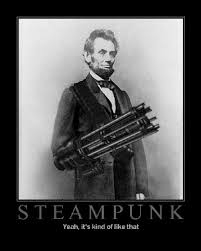
Seeing as I addressed cyberpunk, I figured I should turn a complete one hundred and eighty degrees and discuss Steampunk.

Steampunk is, at once, a narrow subgenre and also a broadly encompasing blended genre.   It has become massively popular in recent times due to its often fantastical elements and the broad spectrum of ideas and concepts that can be pulled in.  Steampunk is often used in alternate history, creating worlds of steam-powered airships and technology driven by steam, ingenuity, and lots and lots of gears.  Some steampunk now is focused on alternate history, while other authors create entirely new worlds.  Steampunk concepts such as airships, clockwork devices, and the like may sometimes appear in more traditional fantasy novels or series.

While the science behind a lot of the technology can be pure fancy, many steampunk stories have richly developed worlds.  Often the best steampunk is characterized by a thorough extrapolation of both culture, society, technology, and at least some grasp of history.  Steampunk characters tend to be larger than life, flamboyant, and yet gentlemen are gentlemen and ladies are ladies.  At the same time, many steampunk stories feature women who stand outside of societal norms and challenge the status quo.  The central core of steampunk, however, tends to be that it is complex, complicated, often larger than life, includes lots of ponderous and even dangerous machinery… and that it is fun.

Steampunk is often about adventure and exploration, and it is very much in tune with the founders of science fiction: Jules Verne and Arthur Conan Doyle.  Those authors used elements of the fantastic as well as scientific principles of their day to write stories of exploration, intrigue, and discovery.  In a way, steampunk can be seen as a tipped hat to these earlier authors, for whom the world still contained vast and unknown secrets, where maps required people to walk the ground and survey, and when the next horizon still held undiscovered riches.

Oddball SF/F: Cyberpunk

I was reading through various forums when I came across an interesting question… what is Cyberpunk.  Cyberpunk is a subgenre of Science Fiction and Fantasy that tends to be very singular, though in today’s markets, blending of Cyberpunk with other genres has occured.  As a subgenre of science fiction, it tends to be defined by a near-future semi-dystopian world, often with post-modern aesthetics.  The characters tend to be outcasts from society, often renegades, who are often antiheroes.  The latter is the ‘punk’ part, the main characters are often societal rejects, often by choice, who have rejected the system, much like Punk Rock.

Cyberpunk is odd because it often takes an anti-technology standpoint, almost to the point of suggesting that certain technology is inherently too dangerous.  Cyberpunk often utilizes cybernetic implants, hacking, cloning, and genetic engineering, all items that our society has serious ethical questions.  Most cyberpunk stories show deliberate missuses of these technologies, often by the companies or countries which should (in theory) protect their employees or citizens from such misuse.  Cyberpunk stories are often very dark, with characters who struggle for survival rather than to effect any real changes in society or the world at large.  An important theme to much of cyberpunk is the ethical delimmas posed by technology, and cyberpunk authors are sometimes unique in science fiction for questioning the advance of technology.

William Gibson is often considered the defining author of cyberpunk.  Many of Phillip K. Dick’s novels and short stories (to include a lot of them which have been made into movies such as Blade Runner and Minority Report) are very similar in themes and setting to standard cyberpunk.

A SF Writer’s Thanksgiving

It’s Thanksgiving, a purely US holiday. I was talking with a friend of mine, an immigrant, who told me that he really didn’t get the whole idea of Thanksgiving, so he mostly just ignored it. I’ll say this, everyone has their own take on it, but for me, it’s a time to reflect on all the good things in life, to appreciate what I have. As a writer, I’m appreciative of all the books and authors that have inspired me. I wouldn’t be the person I am if I couldn’t curl up around a good book on a chill fall day.

I’m very thankful that we’ve had the great authors who inspired so much. I’m grateful that those pioneers dared to think about the possibilities. I’m grateful for Jules Verne  and Edgar Rice Burroughs who wrote the first fantastical fiction.   I’m grateful for the writers they inspired such as Robert Howard, Doc Smith, and Robert A. Heinlein, and Issac Asimov.   And I’m grateful for the science fiction writers who followed, who continued to think big, and to dream of what lay beyond the horizon.

As a writer, the important part of Thanksgiving for me is the reflection, the time spent looking at where we are and where we’re going.  Take the time today, as a reader or a writer, to think about the stories you love, and to be grateful for the people who wrote them.

Thor: Dark World Review

I’ll preface this by commenting that I grew up on action and even a few comic book movies… but I never read comic books. So while I’m sure there are some diehard comic book fans who know far more about Thor than me, well, that’s fine. I’m reviewing this as a movie, and also as part of the series of movies that Marvel has done.

Disclaimer aside, I really enjoyed Thor: The Dark World. It was fun, exciting and adventurous. Better yet, the previews, for once, didn’t give the whole movie away. The movie had an irreverent sense of humor, epic scope and felt almost more like space opera than a comic book movie. Which is good, because I’m awful sick of the ‘dark gritty’ feel I’ve gotten from some comic book movies of late (Batman and Superman, I’m looking at you).

I’ll do a quick rundown of things I liked first, and I’ll do my best to avoid spoilers. First off, the characters. We got to see a different side of Thor, Loki, and the ‘mere’ mortals who run around in their circles. We got to see Thor planning and thinking, rather than just smashing. We saw Loki and some of his other motivations… and just how twisted his brain can be. There was some character development for Jane Foster, we got to see the long term effects of Loki’s mind control of Doctor Selvig, and we even got to see the indomitable Odin affected by events.

As far as the plot, things worked along at a pretty reasonable pace. There were plot twists, and changes and all manner of transitions. Thankfully, the movie didn’t try to overwhelm. I would say the best plot twists are those used in marketing. The trailers often suggested certain things to happen, yet they didn’t happen quite the way you might expect. In fact, some of the trailers set up false expectations which I really enjoyed during the movie, because when I got to those points, I had context and I realized that I didn’t know what was going to happen from the trailers. In fact, I had to figure things out during the movie.

As far as the actual effects and visuals… I found it interesting. I would not watch it in 3D if I saw it again (which I might). The 3D graphics were sort of meh. The overal visual effects were pretty good, though I would say that they made some parts of Asgard less grand in scale and other parts much bigger. I thought the overall looks of the movie were very impressive, and I never felt like the plot or any particular scenes happened just to show of some new special effect.

As far as the emotional impact, this movie managed to generate excitement, happiness, laughter, sadness, and even a sense of wonder. That’s pretty good for a superhero movie. In fact, they managed a couple scenes that were both beautiful and sad, which I found impressive. I’ve heard some complaints about the humor being buffonery of certain characters, but I’d disagree. In the context of how they presented the characters, it was at least internally consistant. Besides, they managed to produce the humor without undercutting the principle characteristics of those characters. The humor, the irreverence, kept this movie from feeling pretentious, and showed the audience that it wasn’t afraid to laugh at itself a little.

I continue to be impressed by how Marvel has both handled the individual movies of their series and also how they have continued to build the franchise. They’ve planned how these movies connect and yet managed to make them stand effectively alone. They’re big, blockbuster movies, but they’re fun, and they go into all of them with goals and plans of what they want to attain. It’s a refreshing change for movies, rather than how most sequels are “quick, milk the franchise for all the money we can!”

Writing habits and what I do in my off time

So, dear readers, the question arose in another setting as to what I do in my off time, and just how I recharge my mental capacitors in order to write more.  This in turn, came up as a result of an offhand comment that I wrote 5800 words in four hours last weekend.  It’s not uncommon for me to write a full novel in a couple weeks or a short story in a couple hours.  I typically hate writing about myself, it seems arrogant and all that.  Still, what works for me, as a writer, might help other people too, so I’ll give it a shot.  Also, it’s National Write a Novel Month, so this kind of thing might help someone to meet their writing goals.

First off, I’ll confess that I don’t have a lot of down-time.  Really, right now, I’ve got essentially zero.  I’m working twelve to fourteen hour days with the Army right now, so I do my writing during lunch or instead of sleep.  To make things more interesting, I’m getting married in December, so my fiance and I are doing all kinds of wedding planning and organization.  Then there’s this blog, self-publishing admin work, and a host of other fun things that keep me very, very busy.  All that aside, when I do get free time, how do I spend it?  Well, reading is probably one of my top things to do.  I own a lot of books.  Every time the Army moves me, the movers have no issues until they hit my study… then they freak out.  I’m slowly transitioning to ebooks, but some of my favorite authors are only available in paper format and every now and again I’ll make a nice discovery at a bookstore… and so the collection continues to grow.  I’ve already written a bit about my favorite authors, so I’ll just say that I love to read.  Mostly science fiction and fantasy, but also historical non-fiction, military non-fiction, some mysteries, a lot of the classics, and some random things that have caught my attention.

I’ve also got a lot of gaming hobbies.  I’ve played a number of roleplaying games to include D&D (3.5 is my personal favorite, though I’ve played since 2nd edition), Alternity, Rifts, L5R, and Pathfinder.  I love to play, but I often get roped into being the Gamemaster.  This, of course, leads to me having less available time.  I also play Warhammer 40k and Fantasy tabletop strategy games.  I’ve got an extensive collection and a lot of models to paint still.  I like games in general because they’re a good way to socialize with friends and to push the boundaries and explore possibilities.  I used to be more into computer/console games, to include shooters (Half Life, Counterstrike, CoD, MW3), MMORPGs (Eve, WoW, ToR), and strategy games (Homeworld, Civilization, Red Alert, Command and Conquer, Age of Empires) but I prefer to spend time with friends in person, without the electronic interface.  Also, I’m pretty short of time as I previously mentioned.  If you aren’t careful, computer games (especially MMO’s) are holes in which to dump time and money.

Outside activities are pretty important to me.  I grew up in Colorado and Texas, both great places to get out and do stuff.  I’m an avid skiier, I love hiking, camping, fishing, and shooting.  I have some favorite spots up in the mountains of Colorado, but I love the wilderness in general.  I also listen to music, everything from Puccini to Chevelle.  The right music at the write time is a great way to enjoy the moment or just to relax.  My favorite types of music are the ones that resonate with my current emotional state.  So yes, I’ll listen to opera if I’m in the mood.  I really enjoy classic rock, to include Fleetwood Mac, the Eagles, Foriegner, Charlie Daniels Band, Foghat, Pink Floyd and a few others.  I’ll also listen to a variety of modern bands, to include Cruxshadows, E Nomine, A Perfect Circle, Rage Against the Machine, Audioslave, Nickleback, Three Doors Down, Within Temptation, and a lot of other random stuff.  I really enjoy complexity, deep bass lines, and a variety.

Why is this stuff important?  I do that kind of thing to refresh my brain and help me put things into perspective so I can write.  I’ll be honest, I get the most productivity from writing if I’m in a windowless room without distractions.  No internet, no TV, no people, just me and a notebook or a computer.  I do most of my preparation to write while I’m in my down time.  And yes, I have had moments where I’ll be in the middle of a movie or out on a hike and suddenly something will click in my brain and I know exactly how I’m going to write that scene that has bothered me for the past three years.

Something I’ve found very true is that writing is a lot of work.  It is a constant thought process.  My fiance can tell when I’m thinking about writing, because I get a thousand yard stare and I’m only half paying attention to anything.  I’ve driven home during rush hour traffic, got lost in thought, and literally couldn’t remember the entire drive.  Recharging that capacity for thought is very necessary.  It prevents burn-out and it helps refresh ideas.  You can’t write if your brain hasn’t had time to process material.

When I do get writing, what habits to I utilize to maximize my output?  When I have time to really focus on writing, I typically set myself a schedule.  It goes a long way to forcing yourself to write, whether you feel like it or not.  And trust me, at a certain point, a schedule makes it so that you are ready for that time when it comes.  What I put on my schedule may not work for you, but some of the ideas of why I put them on there may help you out.  First off, I get up early and do something active.  Normally this is a workout, but it might just be a long walk.  Afterwards I’ll find something that gets my brain engaged and active, this could be work, a game, a puzzle, whatever.  Time-wise, I’d suggest at least an hour for each.  This makes me alert, but also gives me more energy for the day.  As an aside, don’t forget to eat, and eat healthy.  I’ve covered a lot of this in my “Finding Time to Write” post, and I realize I’m rehashing a bit, but it bears repeating.  In the afternoon I’ll work out again and then read through my notes and see what I need to accomplish.  Here’s the fun part for me: I’ll take a nap.  Maybe only forty minutes or so, but that gives my brain time to reset and think things through.

After that, I write.  Earphones in, internet unplugged, and in a comfortable position.  I’ll write everything that comes to me, it doesn’t matter if I scrap every word I write, later, for now, it is all about putting it on the page.  At this point, I’ve spent most of the morning thinking about what I was going to write, and it should come out easily.  If not, well, then I focus on getting things written anyway.  The most important writing habit is, well, writing.

How does this work, if, like me, you don’t have a lot of free time?  Well, again, a schedule helps.  Time management is the key, as is self discipline.  If you have ten hours of time when you’re not at work, well, you have my sympathies.  Allocate some time for sleep and and rest and all the fun stuff.  Put the rest towards writing.  I’ve functioned before on four hours of sleep or less each night for a four months.  It was miserable, but I managed to write not just one but two full length novels.  Why do that to myself?  Honestly, I had to.  I needed some outlet for all the stuff in my brain and I wanted to do something productive with it.  As my favorite writing joke goes: “What’s hell?  Spending all eternity hunched over a keyboard made out of razorblades.  What’s heaven?  You’re published.”  I write because I must, it is part of who I am.

So, my dear reader, if you wanted to know more about me, or if you just wanted my perspective on how to churn out some words, hopefully that helps.  If you didn’t, well, why’d you bother to read all this?

 

Urban Fantasy

It's easy to imagine the extraordinary when superimposed on the ordinary...
It’s easy to imagine the extraordinary when superimposed on the ordinary…

Urban fantasy is, at its root, a mishmash of a variety of genres.  The typical urban fantasy author often combines one or more genres of fiction with fantasy in their story.  The fun of urban fantasy stories often lies in the contrast between the ordinary and the extraordinary.  Wizards duke it out with magic and bullets, Police investigate supernatural crimes, and elves drink Miller Lite and watch Nascar.   The possibilites are limitless, especially when the stories can be told in so many ways.  Supernatural Romance, Paranormal Investigation, Zombie Apocalpyse, even Superpower Crime Noir novels are all under the broad catagory of Urban Fantasy.  As a market, the genre has been extremely successful, from the Harry Potter series to Twilight, there has been far more mainstream appeal to Urban Fantasy than other aspects of Science Fiction or Fantasy.

Why is that?  Well, there’s a number of reasons.  Honestly, one of the big ones is that it’s easier for the average person to get into.  They don’t have to try to memorize funny names for people or places, they don’t have to figure out some other world.  The setting is someplace they’ve heard of, maybe even lived in.  The events and history, while different in the particulars, are the same history that they learned in school.  Sure, magic might be a smaller or greater effect in that history, but these little changes often are part of the charm.  What if the Kaiser used necromancers in World War I to raise zombie hordes such as in Larry Correia’s Grimnoir Chronicles?  What if the Red Vampires secretly seduce and abduct thousands of people across the country as in Jim Butcher’s Dresden Files?  It doesn’t change how the main course of history went, and society, places, and events are still the same.  This makes it easy for the average person to pick up a book for casual reading.

Another reason that Urban Fantasy novels tend to be so popular is that they’ve gotten their hooks into this generation.  Many kids grew up with Harry Potter, and now that they’re adults, urban fantasy seems relatively mainstream.  They read these types of books, they’ve seen the movies, they are ready to suspend their disbelief that magic exists in secret.  The resurgence of general media such as Warehouse 13, Doctor Who, and others has also encouraged this.  These are shows that amplify the paranormal, and put out logical reasons for the existance of the supernatural.  These shows are also extremely popular because they encourage such imagination and questions of ‘what if.’

Another reason for the popularity, urban fantasy stories often provide characters that the readers can easily identify with.  A soccer mom makes an easy person to relate to, she drives a minivan, picks her kids up from school, films her daughter’s softball game, and happens to channel the powers of light to slay demons such as in John Ringo’s Princess of Wands.  It is an easy buy-in for a reader.  A private investigator who helps out the police now and again could be the character in almost any standard fiction story.  When that story’s character happens to be best friends with a twenty thousand year old vampire who is the lone survivor of Atlantis such as Ryk Spoor’s Digital Knight, the story becomes interesting to say the least.  Yet everyone has the odd friend or two, so this isn’t something that would totally confuse a new reader.

Of interest to me, both as an author and a reader, urban fantasy often acts as a gateway genre to more traditional fantasy books.  Readers sometimes really like the ideas and concepts and so they’ll dive a little deeper into the overall broader fantasy genre.  Also, writers who have made their break in urban fantasy often branch out into other areas, such as Jim Butcher with his Codex Alera series.  Sometimes it works the otherway, such as with John Ringo, who wrote Princess of Wands after he established an extensive science fiction bibliography.

Overall, there are a number of excellent books that I’d recommend.  Urban Fantasy is an exciting and fun genre of books to read, and there are plenty of books to check out.  Off hand, I recommend: Jim Butcher’s Dresden Files, Larry Correia’s Monster Hunter series, John Ringo’s Princess of Wands, and a few others in the Books I’d Recommend section.


Finding Time to Write

Quick disclaimer: this is a post about what works for me, a bit about my methodology of writing.  This stuff works for me and your mileage may vary and all of that.


So, working full time, self publishing, editing, and managing my private life all compete with my time for writing.  To top it off, I have a number of hobbies such as playing role-playing games, tabletop strategy games, skiing, hiking and lots of other outdoors stuff.   Oh, and now with the self publishing gig, I’ve got to do self promotion (which is another can of worms).  So how do I find time to write, and when I do find that time, how do I maximize my time?

A big key to that is establishing a rhythm or pattern.  Arrange some section of time every day where I always write.  A pattern or structure like that means that my brain settles into the process much more readily, essentially, I’m training myself to write.  Key to this, I can’t give into the “I’m not really in the mood” excuses.  Sometimes this means I’m writing stuff that I know is total crap, as I beat my head against the wall and try to get everything to click.  Sometimes, I never break through that wall and I just churn out crap that I dump into the bytes bucket.Sometimes, when I break through that wall, I find that I’m doing some of my best writing.

I do most of my writing late at night, when I’m really writing.  Three to four hours is essential, and when I can afford the lack of sleep, I’ll go five or six hours sometimes.  What do I get in that time?  Typically I write around 3000-5000 words in around four hours.  On a good night, when the stars are in alignment and things are really flowing… I can do 8000-10000 words.

Part of the essentials for writing like that lie in maximizing my use of time.  To get myself in the mood I’ll eliminate distractions: no Facebook, no emails, no Google Plus, and most importantly, no internet research.  Those things will go from, “let me just check” and quickly turn into “Where did my time go???”  Next up, I try to find either a quiet spot in the house (not always easy with multiple roommates, cats, dogs, and a fiance), or I just plug in the earbuds and crank the music.  Music is one of those things that work excellently for me.  The right songs, paused when I stopped writing, put me right back where I was when I left off.   The right music can act as a soundtrack to my writing and lets me focus on what’s important.

A comfortable position is also important.  I’ll spend three to four hours a night in the same spot.  At the end of it, if I’m hunched over a keyboard for that time, I’ll have to take breaks or I’ll end up with back issues.  A comfortable chair, brain food, and some drinks (Caffeine!!!) all are part of this.  All of this is to help focus though, and nothing should be enough to be a distraction.  I don’t want to do my writing lying down in bed, if I’m too comfortable I’ll be fighting sleep.  If I have a pile of snacks, or I’m eating a full meal, I won’t be focused on writing.

And what is brain food?  Brain food is stuff that stimulates your brain.  Chocolate, Mints, and stuff that stimulates my taste buds but doesn’t overpower them.  Eating healthy before hand (IE, eating a full meal that’s got everything I need to function) is a good thing too.

So, all in all, I do put a lot of thought into preparing for writing.   I have written out in the field, in flight (no fold down trays on a C-17), and various other places.  Even so, I get the most done when I properly prepare myself.