Tag Archives: writing

Writer’s Toolbag: Writing a Series Part I: Planning

So you’ve got this great idea, right?   A book series that’s going to be the next Robert Jordan, George RR Martin, and Terry Brooks all rolled into one.  It’s going to span a dozen books, with an epic cast of characters and complex themes hidden throughout.

Which is great until you consider that a half a million (or a million) words in, things have grown a little fuzzy.  It’s hard enough to write a book, oftentimes people feel like they’ve bitten off more than they can chew and writing a series is an even bigger bite.

Writing a book is a very organic process.  Your characters grow and evolve over the course of a novel.  They develop, sometimes in ways you didn’t foresee.  Now put them in a series and this process is amplified (at least, characters should change as the story progresses, that’s the point, right?).

You should go into a series with at least some idea of where you’ll end up.  Otherwise the results can be… not good.  Just how much planning you need to do varies by the type of author you are.  Some discovery authors don’t want to know the details of how their book is going to end up.  The problem there being that it’s easy to write yourself into a corner.  That’s a bad enough position to be in while writing a book, where you have to go back and edit things to fix the problem.  With a series, your earlier books may already be published.  You can’t go back and rewrite.

Outlining and having a good mental grasp of your story and characters is a good place to start.  For me, I like to break a series down into manageable chunks, typically trilogies since that’s the style of western literature, the three part act.  Each of these sections are defined by a goal, sometimes that goal is pretty simple.  (IE, the evil Chxor Empire has captured Nova Roma, the main character sets out to free his homeworld)

Knowing how that part of the series will end gives me some rules to follow in the writing of it.  Knowing my cast of characters and the situation (having done world building and character creation), I can develop the story from there, breaking it down into books and then chapters and scenes.   It sounds a lot more organized than it feels, trust me.  It involves a lot of scraps of paper, irritation, and seeing how I can fit which cool scenes into which books.  It can also lead to some panicked thought as I reach an outlined section which basically says: “Insert cool space battle here.”

I’ve found that it’s best to do a detailed breakdown of chapters and scenes only as I get close to writing the book.  If I do it too early, I don’t have the excitement about the scenes when I finally set down to write.   So I’ll have an overall idea and concept for the series, but the books will be labeled boxes where I know “stuff” will happen but I haven’t gone into exhaustive detail yet.

I know authors that feel what I do takes away the spark entirely.  They may only have a loose concept for their book and no idea where their series is headed at all.  This allows them to be more creative in their writing, but I think it also puts them at risk as they draw closer to the end of their series.  When you build up a conflict over a series, the readers want to see a properly epic catharisis.  They want the showdown and if the writer doesn’t know how it’s going to end, sometimes that showdown can be a letdown.

On the other end there are people who exhaustively outline every chapter and scene.  This takes a tremendous amount of work up front, but it pays off as I’ve seen such authors deliver books in rapid sequence and with amazing connectivity throughout the series.

I’d make a case that planning a series out gives you that ability.  You’ll know how to plant the seeds for follow-on books, you’ll know what subplots you want told and where characters are going.  When you get writing on book three or five, you’ll already have the seeds planted that Moral Blackheart is too driven and that he’s come to see anyone standing in his way as a threat, so his sudden but inevitable fall to evil will fit the story.

Planning ahead also saves you from potential headaches like: “What the hell do I do now?  My main character is the leader of a nation, he can’t go gallivanting off on a mission by himself.”  You’ll already have another character ready to step up, to be on the front lines.

Now as a caveat to all this: don’t get too stuck on the plan.  If you’re halfway through writing the book and you realize that everything has to change because the characters/setting/story doesn’t want to go that way, don’t be afraid to change the plan.  This is often a sign that you’ve developed good characters and a “real” world.

Next week I’ll go more into the actual writing process.  Thanks for reading!

Writer’s Toolbag: Finding Your Voice

Taxes Writer Image 2One of the first bits of professional advice I found confusing was regarding my “voice”.   At the time, I figured I’d just write a story, how I wrote it was my voice… right?

Well, sort of.  You see, a writer has a certain tone that they use when they write.  It’s a mix of word-choice, plot choices, pacing, and characterization that not only singles out who you are as a writer, but it also has effects upon your readers.

Some authors have a frenetic tone that writes a book fast and also makes for a quick read.  Such styles lend themselves well to fast, action-oriented stories.

Other authors are driven by the details.  Sections of dense, complex prose is there to lay out the world in a clear, enriched fashion.

There’s no one “right” way to do this, just what works for you as an author.  I find that I have a different voice when I write military science fiction than from my epic fantasy series.  Some of that is necessary in that you don’t want “modern” terms and comparisons in a fantasy setting (at least, not without good reason).  Some of that is simply that I’m writing with a different goal in mind.

Voice plays into reader expectations as well.  As you develop readers and fans, they come to expect a certain voice.  If you don’t write that way, it can lead to confusion.  They may not be able to pick up on what’s wrong, but they’ll feel it.

So how do you develop your voice?  Well, in a big part, it’s simply how you write.  The words you chose and the way you shape your story.  The central piece of this is understanding your voice.  It comes back to your central ideas and your unique perspective.  The details that you pick out to put into your writing, the way that your characters react to events, even the colors you take the time to mention.

There are dozens of books on finding your voice.  The central part that I’ve found is writing more.  As you become more comfortable with writing, as you relax and enjoy it, you infuse what you write with more and more of yourself.  The things that get you excited, the scenes that you love, that will speak with your voice.


2016 Liberty Con in Review

Liberty Con is here and gone, so fast that I only now realized I forgot to take pictures.  I took notes, but I’ll apologize in advance if I leave out someone’s name or forget who said what, as I said, it was a busy weekend.

The first day was a bit of a blur to me, meeting new people and seeing friends again.  I was on an excellent Fantasy panel with Rob Howell, Jeremy Hicks, S Andrew Swann, and Michael Ault.  While a lot of the focus was on what each author wrote, there was also a lot of discussion about what we like to read and the trends we’re seeing in Fantasy.  There were a lot of great perspectives, especially since we had a variety of writers there who write everything from humor to grim fantasy.  It was interesting to note that those authors focused more on humor don’t feel the need to “ground” their fantasy (sort of in a Prachett style of writing) versus those writing epic fantasy at least want a developed system of rules for internal consistency.

Saturday was a very busy day for me.  I was on a Military Science Fiction panel with Doug Dandridge, Charles Gannon, Peter Grant, and James Young.  We had a hard backstop of the Baen travelling slideshow, so we knew we’d be run over if we ran over on time.  It was a fun discussion, which started out on the topic of whether you need to be an actual combat veteran to write combat in books.  Peter Grant made a good point in that it’s essential to fully understand it, but I felt (and I still do), that it’s not necessary to write good military science fiction.   I think we have plenty of examples of excellent authors who don’t have that experience, but they do talk with those who do and they draw on research to do it well.

After that I had a Space Opera panel with Doug Dandridge, Julie Cochrane, Daniel Hoyt, and Mark Wandrey.  This was a panel that went off the rails a bit as we ended up discussing topics like Game of Thrones.  I’ve got to give props to Dan Hoyt because he did a fantastic job herding cats to try to keep us on topic (especially since he didn’t know he was moderator until he got there).  Special thanks goes to the audience, since we were scheduled opposite to the Baen Travelling Slideshow, thanks all of you for showing up!

I attended a couple of panels Saturday, one on the Noir genre with Larry Correia and several other authors.  I came in a bit late but it was a fun discussion, particularly as they went into cross-genre blending such as in Dresden Files and Grimnoir Chronicles.

The last part of Saturday I was at the Mad Scientist panel.  It was fun, though I think we needed a bit more mad science!  There were a few people there who seemed too limited in their scope, if you ask me.  Dream big, right?

Sunday I didn’t have any panels, but I got to meet several people, both readers and authors, and got a chance to pitch the idea for my YA novel to Toni Weisskopf (Much kudos to Toni, she’s an amazing woman with the patience of a saint and the business acumen of a railroad tycoon).  I was scheduled for a reading in the afternoon, but unfortunately with the time of my flight and the drive to Atlanta, I wasn’t able to do that.

All in all, it was a great convention.  I’m already missing it and I’m preregistered for it next year!


Checking Boxes

Writers are a lot like cats, they just hate people, especially their characters
Writers are a lot like cats, they just hate people, especially their characters!

I had to take a step away from my computer yesterday when I saw a question.   “WIP has trans character and autistic character. Adding POC because the world feels way white. Do writers people their books other ways?”

My short answer… yes.  In fact, if you pause to consider the racial/ethnic/cultural/religious/sexual makeup of your cast, it should be in terms of the story and the world setting.  Worse, in my opinion, is calling attention to it.  You aren’t being “diverse” or “inclusive” you are checking boxes, you are making an outward display and nothing more than that.

Think of it this way: you shouldn’t be making friends in order to check off boxes, why should you write your characters that way?  If the first thing that identifies a character for you is something beyond his/her central defining characteristics, then you are literally only going skin deep on your characterization.

Any of these characteristics that are hot-button topics in today’s media are literally secondary to the story you’re telling.  If you’re writing some deep, societal-driven message fiction where this is central to the story… sure, go for it.  If you’re writing epic fantasy with heroes fighting to save the world… that stuff needs to take a secondary role.

Yes, a character dealing with internal or external conflict about his racial/ethnic/cultural/religious/sexual differences can be a subplot… but it’s a very trite one.  Friends or family or strangers not accepting the character for who he is?  That comes across as the standard coming of age story, regardless of whether that’s because he wants to be a hero and or because he is a black, dwarf, worshiper of Hel who secretly wants to be a princess.

Sorry to break it to you, but that comes across as lazy.  Worse than that, it’s insulting to readers.  If you’re waving a flag in the air, going so far as to post to public forums about how “inclusive” you’re being, what you’re really doing is showing that you think your readers need to be beat over the head with how great you are.

It shouldn’t matter if your character is gay, black, or worships the purple goddess of night.  If your characterization is weak enough that these are the only things that your readers can identify them from… then you’re not really writing very deeply at all.  You should strive to make your characters vivid, realistic, and above all, entertaining (that’s why readers are reading, right?)  People aren’t made up of their outward appearances; they’re made up of the morals and ethics they follow, the things they value, and the choices they make.  Measuring against that, the secondary things that identify them such as physical characteristics, religious preferences, sexual preferences, and the like are simplistic.  They really don’t have much of a place in the story, unless they’re a central feature to the character.

A religious fanatic bent upon forcing the world to convert or die is a very tired trope.  It’s often used because a writer is lazy and doesn’t want to go through the effort to characterize or define the motivations of his villain, he just needs a bad guy to fill the role.  If you don’t go beyond that, you’re doing a disservice to the reader, no matter how well developed your other characters may be.

Similarly, having a character who is a “victim” category is just as insulting.  Not only do you rob those “victims” of being real people, setting them up as cardboard cutouts of “good” because of some outward physical characteristic, but you do your readers a disservice by forcing them to relate to your character by those outward characteristics.

In short, write the characters that your story needs… but don’t feel the need to put someone of a “special” category into your story just to check a box.  The characters should be defined by the choices they make, not because of some outward characteristics that they have little or no control over.


Writing Toolbag: Names

NameThere’s a power in names.  It’s oddly one of the hardest and one of the easiest decisions to make.  Oftentimes when I select a name for a character it’s not a simple decision.

How you name your characters and what meaning those names have will set the tone of your story.  It establishes from the very beginning some of your intentions.  While you can write a serious epic fantasy where the main hero’s name is Dave… you probably shouldn’t.  When a reader sees a name for a character, it sets up some expectations.  You can invert those expectations for humor… but not much else.  If you have Draggor the Daggerlord, Warlord of the Seven Steppes, he probably shouldn’t be a friendly, cheerful sort who isn’t into fighting (except for humor, and even then, only if that’s the kind of story you’re writing).

You should have some basic idea of culture and societal make-up when you go to pick a name as well.  Yes, you can have Han Li Qan in a European-style medieval setting, but should you?  If he’s that out of place, it’s going to be jarring to the reader.  When you do something like that, you need to have everyone comment on his outlandish name and demeanor or else you’re setting yourself up for difficulties.

Picking names that fit your setting and society is only the first part.  Readers have developed certain expectations.  Impressive titles generally go to important (or at least arrogant) people.  Similarly, most illiterate peasants get by with a single name.  They generally don’t need more growing up in a community where everyone knows them.

In a similar vein, names with meaning or using words as names (such as Craven, Malice, etc) should be done in a way that isn’t too heavy-handed.  If you have a scum-sucking cowardly backstabber who gets named Craven, well, you might be signalling to your reader a bit too much.  Oddly, it’s even worse if you’ve based the character after a real person (yes, I have known a Craven, why do you ask?)  You can use such names to signal things to a reader, particularly if such names are “nom de guerres” and the character has some other name, just don’t do it too often to the point that it stands out.

Use of names from mythology or with religious connotations can similarly be a bit heavy handed.  If a reader sees Thor, Zeus, or Moses, they’re probably going to roll their eyes a bit if they’re not reading book whose basis is those legends or religions.  A show like Supernatural or book series like Dresden Files can get away with some level of this because it draws so heavily from mythology.  Doing so in a fantasy setting not related to Earth can be problematic… especially if you don’t have a culture equivalent to the myths you are pulling from.  You can use names from mythology, but I’d recommend sticking to more obscure figures rather than central ones.

There’s a variety of useful ways to find appropriate names.  One of the most popular is also fairly simple.  Draw from baby books.  It works well enough for real parents, so it should work for your imaginary babies, too.   Most baby books (or websites such as Behind the Name) provide not just hundreds of names, but also origins of names and their meaning.  This is an invaluable resource, particularly if you want to set up an underlying theme.

Another resource is random name generators, but this can be extremely problematic.  You’re going to get a lot of really odd names, often having no central features that tie together to your background.  Pulling from name generators that use a list of existing names would be a better bet.  You can find a variety of those just by searching.

Lastly, a name can be used as a point of contention for your characters.  If someone has been saddled with a name that practically demands they go forth and do battle, you can set up underlying resentment and angst over this.  You can add to this with titles like “The Chosen One” or “The Boy Who Lived.”  These are things that demand a greater destiny… and here’s where inverting expectations can work in your favor.  Maybe that character is a Chosen One… but so are fifty others and they all have to fight it out cage-match style to determine the final Chosen One.  Maybe that prophesy about “Dave” doesn’t mean what the characters think it means.

Using names to set expectations, to build reader immersion is a good thing.  Just as you write, be certain you are using those names to good effect.  Don’t agonize for an hour over the name of the bartender, unless that bartender is going to have a bigger role.  You can just call him the bartender and move on.

On the flip side, if you want to plant red herrings, that’s a good way to go.  Having Dave the Chosen One and Hero meet Dave the Bartender, knowing about the Prophesy of Dave can be a great way to counteract the reader’s automatic assumption that Dave the Hero is going to win out.  It’s also a good way to show that the world is much bigger than the characters you’re writing, that other important things are happening beyond the cast the reader gets to follow.

Lastly, don’t ever let finding the “right” name sidetrack your writing.  You can always use a placeholder (Dave32) that you can come back later and replace.  The most important thing is to finish, then you can come back and fix things.

Writing Toolbag: Expectation Management

Sometimes your expectations can lead you astray...
Sometimes your expectations can lead you astray…

We’ve all been there, you’ve got all these grand ideas and images, you’re certain you have the best story, best thing ever.  You’re going to write it and awards, accolades and money are going to shower down from the heavens…

And then as you sit there in front of the computer, you feel that your writing is crap, that no one wants to read this drivel.  You try to write, but you’re too busy, you fall behind on your writing goals,

This is sort of how your loved ones feel when you're cranky about your writing.
This is sort of how your loved ones feel when you’re cranky about your writing.

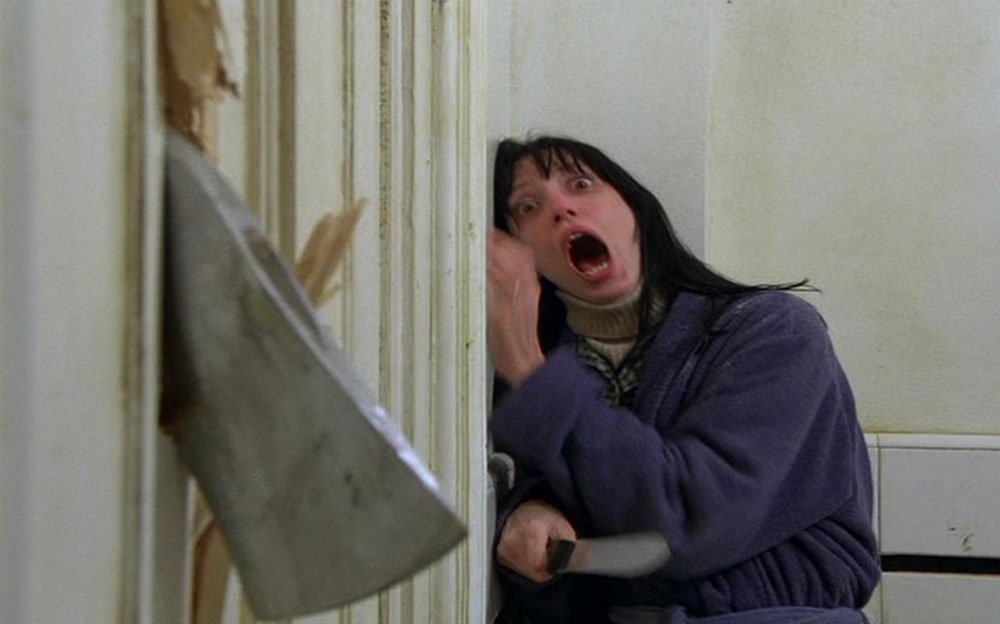
you come to hate writing, even come to hate the people who said you should write.  Then the next thing you know you’re hacking a door down with a fire ax.

Okay, that last part might be a bit of an exaggeration.

The point is, you need to have some realistic expectations about your writing, your sales, and things in general.  Don’t expect things to be like the movies.  You aren’t going to write the perfect manuscript on the first try, send it off to a publisher (or self publish), and then be overwhelmed with money, awards, and film options.

Writing is hard.  This is something that all writers realize.   Most of us hit points in writing each book where we severely question what we’re doing.  The “Dreaded Middle”, writing humps, writer’s block… everyone runs into parts where they sit down in front of their work and feel like they can’t go on, that what they’re producing is terrible.

What happens with me is that I’ll want to do something else.  Anything else.  My wife realizes I’m hating what I’m writing when I’m asking for the third time if the trash needs to go out or sorting my socks.  Sometimes this leads to me writing on other projects or

The key thing here is that words on the page are what will get you through.  It doesn’t matter at the time if everything you write feels like crap.  That’s what editing is for.  And trust me, some of the “worst” scenes I’ve written when I come back and look at them with fresh eyes have been much better than I thought.

Don’t view writing as a complete process.  Never assume that what you write is final (not until you publish it).  There’s always editing, tweaking, and perfecting.  The goal of writing a novel, novella, or short story is to  get it done.   Once you’ve written the whole thing, you can worry about rewrites.

Also, don’t think that your first novel is going to be the best.  Writing is a continuous effort towards improvement.  You always have room to improve, to challenge yourself.  I’m not talking about gimmicks like writing a certain number of words a day, I’m talking about improving your craft.  Writing better characters, crafting a better story, a tighter plot.  Acknowledge that what you’ve written has room for improvement and move on.

I’ll take a moment to mention sales.  Sales (and reviews) will always be frustrating.  When you sell a huge number of books for no apparent reason one day only to have zero sales (or one, which can be more frustrating) the next.  Sometimes you’ll have a dozen reviews for your book pop up over a week… other times you’ll fight to get even one review for a book which has sold a thousand copies.

You have to just accept your sales for what they are.  Promotion, self promotion, advertising, these are all tools, but at the end of the day, it all comes down to individual reader preference.  People being people, they’ll buy your book if they want… or not.  Don’t get wrapped around sales, especially if they’re not where you want them to be.  Religiously hitting the update button on KDP or your publishing platform of choice to see if you’ve sold a book is not only OCD, but it uses up time you should be using for writing your next story.

The key part to all of this is to set realistic goals.  Don’t tell yourself you’ve got to write the entire novel in a week if you’ve only managed a few pages over the past month.  Don’t get too wrapped up in the quality of your writing, especially not for your first (or second or third) novel, especially not on the first draft.  Cut yourself a little slack.  Writing is hard.

In the end, writing is emotionally taxing.  If you can manage your expectations, if you can set realistic goals, you can manage the emotional and mental cost of writing.  You can be more productive (and happier with yourself) if you go into it with a clear understanding of what you expect to get out of it.  At the end of the day, that’s what you want, right, to be happy?

the-shining-1
Writers just want to be happy people…

Writer’s Toolbag: Preparation

It has been said that preparation is the key to success.  I’ve found that’s true for writing as well.  Preparation, of course, can mean many different things.   Some writers like to come up with extremely detailed outlines while others merely want to have some vague idea of the setting and go from there.

The most important part of preparation, then, comes back to what you need as an author.  Do you need a full, detailed outline of every event and character arc?  Do you just need some quiet time before you sit down to write?  Do you need snacks in your writing area so that you can focus on writing without interruption?  Do you need to make sure other stuff (chores, work, whatever) is done first, so you don’t have to take care of it later?  You have to have a good level of introspection, to know what you need to get to the task at hand.

Trust me, the simple things are the ones that can interrupt the flow of words.  Writing is a purely mental exercise and if you have distractions or concerns about outside events, they can make it difficult or even impossible to write.  The same goes for your writing itself.  If a scene or plot device isn’t working, it might become a source of irritation or distraction that can impact the rest of your writing.  Take care of the things you need to do before you start writing.

That said, procrastination is also a factor of preparation.  I’ve wasted entire weeks and months before “getting things ready” for writing.  That could be outlining, world-building, or figuring out the mechanics of what I’m working on.  I’ve also seen authors who set aside a day to write who then think of all the other things they “should” be doing and end up doing those things instead.  Not because they have to be done right then, but because they’re afraid to try and fail at writing.

Writing is hard.  Set yourself up for success.  I find the preparation I need to work on different projects changes from story to story.  Some stories practically write themselves, with little or no preparation.  Others require a great deal of time spent focusing, outlining, and getting myself into the mindset.  Get to know your writing style, what kind of preparation you need, and take care of it.  Lastly, don’t use preparation as an excuse to procrastinate.  Getting words on the page is the goal and even if they aren’t the perfect words, they’re another step along the road to success.

Writing Tools: Philosophy

This will be a bit of an odd post.  I’m here to talk about how to use philosophy in your writing.  Now, I’m one of those odd types who values classical education (even if you had to do it yourself).  Knowledge of philosophy and humanity’s efforts to come to grips with fundamental problems is something I think everyone should spend some time considering.

Because at its root, most of our interpersonal and societal problems come down to differences in overall philosophies.  Understanding these, being able to work these differences into your writing can add depth that a reader may not overtly see, but they can feel in character motivations and in the cultures and societies you create.

At the lowest level, philosophy is about finding answers.  Whether it is Plato’s Values or Kant’s Moral Imperative, most philosophers try to find answers to not just the big questions, but to find answers about how people should live their lives.  They struggled to find what is “right” and some of them have left indelible marks upon our society centuries or even millennia later.

Now, this isn’t to say that you need to read and study philosophy to make use of it in your writing.  Most societies you design, however, will have struggled with the same truths and the same questions.  It is human nature to look for meaning, even where there is none.

Understanding the basic concepts, the ideas of individual versus community, of lesser and greater evils, and of fundamental truths, gives you some leverage to build a society that feels real.  Writing a society where firstborn boys are sacrificed to their dark goddess will strike many people as horrific.  Working into your writing that they do it to prevent the culmination of an ancient prophesy where a firstborn will bring about the end of the world establishes a conflict between the value of individual rights versus those of the general good (and also establishes why a firstborn who survives might well want to destroy that society).  Oh, hey, and throw in a pair of twins where the eldest is mistakenly allowed to live, but that the ghost of his brother haunts him.  There’s a great story hook for anyone who needs it.

In all, I very much recommend reading some of the classic philosophers as well as some of the more recent ones, particularly John Stuart Mill and John Locke.  Not only will that add some ability to develop morality into your worlds, but it provides you with a look at how we, as humans, reason.

Writer’s Toolbag: Opportunity Cost

75468d8a02375f27e89c5bf824422f4eToday I’m writing about the most difficult decision you’ll ever make as a writer.  No.  Not that decision, the other one.  No, the other one.

Okay, really, I’m writing about the tough decisions and how to make those.  These decisions are out there constantly for us as authors, but I’m talking about the big ones when it comes to writing your book.  When you have this great idea that you really love… but you realize it might not work.  Or when you’re halfway through writing a scene for a character and you realize that maybe it will work better if they don’t survive.

Recently for me, writing in my Renegades series, I ran into a tough call as far as the plot and story.  On the one hand, I wanted to set up a situation where a main character ended up in a dangerous situation.  I wanted to increase tension… and I wanted the reader to feel uncertainty about what would happen.

On the other hand, I worried that writing the scene the way that I had would confuse the reader.  It became a decision of what worked better for the story between tension and readability.  I chose to go with the more interesting route and we’ll see how that plays out (squints at the Amazon webpage… still no reviews posted).

So how do you make those decisions?  You weigh the pros and the cons… and then you make the decision and move on.  In economics it is called the opportunity cost.  Whichever way you chose, you give up following the other route.  As writers, we have a bit of flexibility intrinsic to the craft.  We can rewrite, edit, and tweak things.  In the end, though, once you hit publish, the decision has been made and there’s no going back.

To me, making these kinds of decisions (and recognizing when one has come up) is something that grows easier as I write more.  Deciding whether to kill a beloved (or hated) character is, well, not taken lightly, but it becomes a simpler decision to make.  Often times this can be something as simple as which perspective to use when you write a scene or just when to cut that scene.  It might be that you have a line that you love… but it just doesn’t fit the flow of your story.

At its most basic level, the question you should ask yourself is: will this make the story better?  If the answer is yes, then you know what you have to do.  Sometimes it means you can give a character a happy ending.  Sometimes it means you have a character who ends up dying alone.  All of it, all that weight is on your shoulders as a writer.

Books don’t get director’s editions with deleted scenes and outtakes.  No one will ever see that bit that you cut and few people will understand the hours that you spend thinking about it.  Then again, that’s where the skill in writing comes from, knowing how to craft your story better and making those hard decisions.  If writing were easy, everyone would do it, right?

Kal’s April 2016 Forecast

April is here and with it Book II of The Renegades (get it here).  It was great to write again in that universe and with those characters and the feedback I’ve heard back has been great.

I’m currently finishing work on a couple different projects, mostly editing and some rewrites.  I’ve finished outlining the next story of the Shadow Space Chronicles, The Sacred Stars, which follows up where The Prodigal Emperor left off.  The Sacred Stars  gets back into the combat/military science fiction in a big way, with all new toys for the characters to play with.  If I’m able to stick to my schedule, I’ll start writing it in May, which puts it on track for a release in July.

One of the projects I’m editing and rewriting is Fate of the Tyrant.   I’m doing my best to make certain it is every bit of the book that my fantasy fans deserve.  If the edits and rewrites go well, I’ll have it done at the end of April and that means a release in June.

Another project I’m working on is one with my main publisher, Sutek Press.  They’re interested in doing an anthology in my Shadow Space Universe.  I’ll announce more when the details are worked out.  But if you’re interested in writing in that universe, Sutek Press might be interested.

The next few months are light on conventions for me.  My next one is in July at Liberty Con, and from there I’ll have one a month for the remainder of the year.

For those of you who live in Colorado or might be in the area over the next few months, I’m trying to set up some book signings at various locations.  I’ll post details soon.  If you’d like me to do a signing in your area (and it isn’t too far away) message me here at the website or on Facebook.

Thanks for reading!