
Tag Archives: Science Fiction

Characterization Case Study: Gravity

originalThe best way to study characterization and plot is to look at examples, both good and bad, and to note what worked and what didn’t.  I’m going to do a quick case study of the recent movie Gravity.  It’s an interesting movie that (due to a very small cast and a rather linear plot) can be analyzed with relative ease.  As a quick disclaimer: this is not a movie review and it will hold some spoilers.  As a secondary disclaimer: I enjoyed the movie, the music, special effects, science and plot were all relatively well grounded and a lot of fun… but I’m going to dissect the characters in the movie as examples of good and bad characterization. 

First things first, a look at characterization.  There are really only two characters in the movie: Stone and Kowalski.  The movie does an excellent job right away to establish Kowalski as a cowboy, right down to his music selection as he bounces around the hubble telescope on his EMU (Extravehicular Mobility Unit).  He’s excited to be where he is, cocky, and clearly knows what he’s doing.  Throughout the rest of his (brief) stint in opening part of the movie, this is all we really see of Kowalski.  Stone on the other hand, is more difficult to characterize.  At first, she is totally focused on her work.  Later when things begin to go wrong, she panics.  We learn that she doesn’t want to die, that she is afraid, and that she really doesn’t seem to like space.

This last was the part that broke characterization for me.  The way things are now, if someone isn’t totally dedicated and driven to become an astronaut, they won’t even stand a chance.  It doesn’t matter what your background is or how important your mission, you can always train someone else.  There are millions of applicants and countless intelligent people willing to learn whatever skills it takes to go to space, they won’t want someone who doesn’t want to be there.

But then Kowalski shows up to save Stone.  The two learn that they are the only survivors from the shuttle and both deal with it in their own ways.  Kowalski becomes professional and reverts to an almost military mode.  From the perspective of characterization, this is excellent.  We see the other side of a character, and we see that his cowboy persona is just one facet of a more complex person.  Stone just sort of shuts down.  She says that she’s low on oxygen, she doesn’t volunteer any information, and at several points, tells Kowalski that he should leave her, that she’s slowing him down.  This, frankly, makes her character seem rather dull.  In the initial panic and worry of the disaster, we are immediately sympathetic to her character.  She is adrift and struggles to survive, we want to root for her.  Her giving up after being found and rescued by Kowalski gives away a lot of that initial viewer sympathy.  No one likes a quitter, and the apathy that she begins to show about her own death makes her character seem very bland and hard to identify with.

Then, in typical survival mode, Kowalski asks Stone about where she is from, if she has anyone who waits for her back home, if she likes her job and what she does after work.  This is the perfect moment in a book for the viewer to identify with a character.  You learn about the details of their life, the things that guided them and shaped them.  The scene could not have been framed better, with only the two characters, tethered by a single cable and with the entire Earth as a backdrop.  Literally, they’re the only two people who exist, with no other distractions… and Stone takes a right turn to depression.  Stone doesn’t have a family, she had a daughter who died in an accident.  She apparently doesn’t have parents, siblings, or any romantic interest at all either.  In fact she seems to have no reason to go on living.  She concludes her brief explanation with a statement that she ‘just drives.’  She seems to be a woman with no reason left to live… so why exactly is she in space?  Please, tell me that her device would prevent future falling accidents such as the one that killed her daughter or cure cancer or at least give her some goal or drive to base her life upon.  Give me something, I want to root for these characters.  They’re in a disaster with miniscule odds of survival, I want to think that their lives mean something.

The two characters reach their destination, but in true movie fashion, the EMU (rather like a jetpack) runs out of fuel in the last seconds.  The two tumble and scramble for a hold, and in the end, Stone is tangled in some line attached to the station and Kowalski is attached to Stone by the tether.  Of course, the cables are slipping and there is too much mass for the friction of the cables to overcome.  Kowalski says that he’s going to cut himself loose, and explains to Stone what she’ll have to do to survive.  This is a pivotal moment in both character’s story arcs.  The cowboy/professional mission commander sacrifices himself (showing yet another side of himself) while the frightened and confused Doctor Stone has to come out and shine, to find her internal strength and succeed despite the odds.  Frankly, I think it was a bit heavy-handed.  The scene could have played out more true to Kowalski’s character if done in a split-second decision, rather than as it played out… a long and agonizing moment for Stone.  They did it more for plot reasons than characterization, I think.  They set up Stone without the tools to survive so they wanted Kowalski to give her those.  Given the amount of time they had, and the way they established Kowalski’s character, I think it more likely he would have attempted something dramatic to save them both.  However, clearly the story they wanted to explore was Stone’s growth, even if Kowalski was the more interesting character.

Stone then follows Kowalski’s guidance.  As an added threat, besides the debris that moves faster than any Earth-bound bullet, the station catches fire.  Because, really, Stone needed something to get her to get moving again.  Stone begins step two of three towards her return to earth and then discovers that her ride to the next stop is out of fuel.  This would be a perfect time for her to show her internal strength and that drive to survive.  Instead, she tries to reach someone, anyone, for help.  In the end, after a tearful conversation with some chinese guy with a dog and a baby, she decides that she doesn’t want to wait another ninety minutes for the debris to hit her yet again, she’ll just turn down the air and go to sleep.

Okay, I’m sorry, but while the plot of the movie had me hooked, at this point I just stopped caring about the character of Doctor Stone.  She has no family, no goals, no dreams, no ambition… she’s survived to this point because she doesn’t want to die and because someone we did care about sacrificed himself so that she would have a chance.  Honestly, I come back to the whole question: why is Doctor Ryan Stone here in space and who chose the hardest person in the world to identify with to be the survivor?

Cue the return of Mission Commander Kowalski.  His snarky comments and upbeat words breathe some life into Stone just before the obvious reveal that he was a figment of her subconscious as her brain shut down from lack of oxygen.  Luckily, she realizes she does have a way to survive after all, and goes about it.  She seems to have decided to live because Kowalski wanted her to, which in itself is something, at least.  Do it for the dead guy, it works in sports movies for a reason, and it at least gives us a reason why the lone survivor doesn’t just die.

As far as characterization, that concludes the entire movie.  We get a brief moment at the end where Stone stands up on the beach, somewhere on Earth and walks away.  This seems more a statement of survival than anything more profound.  In fact, the character of Doctor Stone doesn’t really seem to draw any closure.  She survives, which closes out the plot, but we don’t have any way to see what she has become, or even if she has changed at all.  What will drive her, after her survival, what will she do and who will she become afterwards?  These question remain unanswered, which, as a viewer I would find supremely irritating… except I really didn’t care at that point.  Stone was just the point of view for the ride, and I could walk away without any of those questions being answered.

Hopefully my fellow writers can take away some lessons from this.  I know I did, the biggest being that if you create a character that doesn’t care about themselves… your audience wont either.  That doesn’t necessarily mean it will be a disaster, but the rest of your product, book, movie or game, will have to make up for that in other areas.

Guest Free Sample!

Everyone loves free stuff, right?  Author Leo Champion graces us with a sample from around the middle of his book Legion.  If you haven’t read it… it’s a hell of a book.  Check it out.

What the hell is this all about? Mullins thought, as Sergeant Alonzo led his group out of the passenger section of the terminal and into the truck-freight handling area. Past loading docks, swinging winches, a forklift. A couple of stevodores stood smoking on one loading dock.

A little bit later, they passed a crew busily moving grey plastic tote boxes from the back of a truck to a conveyor belt.

They weren’t going to help unload some freight shuttle. That was obvious.

This isn’t some shady black-market thing, is it?

It certainly seemed like it.

This seems shady as absolute hell. I don’t want to be sent to a Black Gang within a day of my first deployment!

Alonzo led them into an alley, where four covered five-ton trucks sat. They were grey, with dark-green covers over their cargo beds. ‘US Army’ was stenciled in black letters on each door, above a large five-pointed star. Army markings were on the covers, too.

“Alright, you boys,” Alonzo said. “By now you’ve figured – some of you have, anyhow – that what we’re doing is a little bit sketchy. Don’t worry – nobody’s going to wind up in a Black Gang because of this. If we get caught, the Army is going to whine and send us to Division HQ for discipline. Where a big noise will be made, and we’ll all get publicly chewed out, and then our officers will wink and tell us to look appropriately sad for a while. OK?”

“Sergeant,” said a man from Third Platoon called Johnson, “exactly what are we going to be doing?”

“Well, boys, I may as well give you the details. Officially, as far as you all are concerned, it’s a work detail. We’re going to be moving freight, just like I said to the LT.”

“And unofficially, sergeant?”

There were nods and murmurs from the rest of the group, including Mullins.

“Unofficially, we’re going to be moving freight between different branches of the US military. The Army just received a shipment of goodies. Techno-toys that they’re not going to put to use anyway. The Legion, as you may have heard, is under-funded and under-supplied. One way that we make up for this problem is by borrowing equipment from the other service branches.”

“So we’re going to be stealing Army stuff for the Legion,” said Andrews.

“‘Stealing’, Private, is such a prejudiced word. Yes.”

A more serious look came onto Alonzo’s face.

“I assure you men that not a penny’s worth of this stuff is going to wind up on the black market. I’m not, and none of you are, going to get anything personally out of this job. Army quartermasters sell shit to Buddy on the side, and don’t fucking get me started on the local CGs. Ninety percent of this stuff is going to Fourth Battalion’s S-4, and it might save some of your lives. The rest goes to Division G-4 in exchange for the loan of these trucks. Either way, it stays within the US military. It’s just going to the guys who’re going to get the most use out of it. Understood?”

There were nods and murmurs.

“Now, boys, in the back of the trucks you’ll find US Army PT uniforms. T-shirts and running pants. Change into them – we’re a loading party come to pick some of this stuff up.”

“Won’t they ask for paperwork or something?” asked a man from Fifth called Vai’id.

Alonzo produced what looked like a snub-nosed yellow pistol. A taser.

“This is our paperwork,” he said. “Any questions?”

“I have one,” said Andrews. “Sergeant, you picked a bunch of total fish for this. Why’d you pick us when there’s a division and a brigade HQ in this town?”

“Good one,” said Alonzo. “I took Fourth Battalion, Fourth Brigade men because this is a Fourth Battalion, Fourth Brigade operation. If I went to Division or First Brigade for bodies, they’d take most of the loot and only give One-Four-Four a piece of it. And not necessarily a big piece.”

“So why aren’t they doing it themselves?”

Alonzo smirked.

“This shipment just came in a few hours ago. Theydon’t know about it yet. By tomorrow, they’ll know. By tomorrow, we’ll be in Roanoke.”

“Surely the Army’s going to know we did it,” said another man.

“Sure they will,” said Alonzo. “Proving it’s another story. And getting it back is right out of the question. This happens all the damn time, and so far as I’m concerned it’s the Army’s fault for not guarding their shit properly.”


Mullins rode on the center seat of the lead truck’s cab. Alonzo, who wore a dress shirt with first lieutenant’s bars, rode shotgun. Andrews was driving.

This could get us into some serious trouble, he thought. It’s theft, by any other name.

No; Alonzo had justified it well. It was merely transferring property from one branch of the US military to another. And some of it might save their lives. Save his life.

And if we get caught…

He wasn’t sure he believed Alonzo on that. The Army would press hard for punishment and he might well wind up in a Black Gang.

Too damn late now. Besides, Alonzo’s a senior sergeant. He knows what he’s doing.

The trucks made their way around the edge of the shuttleport, bumping a few times as they crossed railroad tracks. Two or three times they heard sonic booms as freight shuttles blasted off, ascending at acceleration-rates that would have killed any passengers.

“Stop! Who goes there!” came a shout, as they entered the floodlit zone around the secure storage area.

Alonzo leaned out the window. Gesturing for Andrews to keep going forwards.

“What do we damn well look like, rebellious sepoys?” he snapped.

Mullins could see two soldiers standing in front of a double gate. They held rifles – heavy, multi-magazine weapons that he recognized as M-31s – but they were pointed at the ground.

“Gotta be sure,” said one of the soldiers. There was some kind of enlisted rank insignia on his arm, but in the shadow Mullins couldn’t tell what it was. “Here for a pickup?”

“Yeah,” said Alonzo. He opened his door and got out. When the soldiers noticed the silver bars on each arm, they saluted.

“You got the paperwork, sir?”

“Yeah,” said Alonzo. “You wanna open that gate? My last truck is blocking a rail track.”

That was probably true – they’d bumped over one not long ago.

“Hey, LT,” the man shouted. “You wanna open the gate? We’ve got a pickup here.”

“First I’ve heard about it,” said a voice from the other side. “He got paperwork?”

Alonzo had a black clipboard under his arm. He showed it to the two enlisted men, who glanced at it and nodded.

“Yeah, they’ve got paperwork,” the man said.

“OK, gate’s unlocked. You two pull `em open.”

“We’re going to reverse our trucks in, Lieutenant,” called Alonzo. “There room for four in there?”

“Yeah, go ahead.”

The gates, which like the walls were topped with razor wire, began to open outwards. The two enlisted men, helped by another two from the inside, pressed them flat against the wall.

“Three-point the truck and reverse it in,” Alonzo called.

“Yessir,” replied Andrews.

So far, thought Mullins, it’s all going according to plan. But how does Alonzo know how many guys the Army has?

A horrible thought struck him: if things go wrong, they might think we’re secessionists in disguise. They’ll shoot first and ask questions later.

The fourth truck backed through the open gate of the secure area, clumsily reverse-parking next to the other three. From where Mullins sat, he could see a guardhouse just inside the gate, with a couple of Army types standing just outside.

Sentries sat in the corner towers and paced along ramparts inside the fence. Those guys seemed intent on their jobs – they were looking, pretty attentively, at the floodlit area outside the holding area’s walls. What took place inside the area wasn’t their concern.

Unless someone raises the alarm. Then we’re fish in a barrel.

Alonzo didn’t seem worried.

“So you say you have paperwork, sir?” asked one of the men outside the guardhouse. There were gold bars on his shoulders; second lieutenant.

 “Yes, Lieutenant,” said Alonzo. Holding his clipboard, he went over to the lieutenant. The second man outside the guardhouse moved a respectable five or six feet back, holding his M-31 cautiously.

Oh, shit. They suspect something’s up. Whatever’s on Alonzo’s clipboard is bullshit.

Alonzo handed the clipboard to the lieutenant, who moved into the guardhouse to get a better look at it. From his vantage point in the truck’s cab, Mullins saw the Legion sergeant draw his taser from a hip pocket.

Saw him go over to the other man, who didn’t quite raise his rifle. Clearly he was wondering what this strange first lieutenant wanted, though.

He didn’t have time to say anything. Just as the lieutenant in the guardhouse threw the clipboard down and walked outside, Alonzo brought his taser up and in a single move lunged forwards, pressing it to the enlisted soldier’s chest. There was a blue flash and the man collapsed, quivering.

“What the–” the lieutenant began. One hand reached for his pistol.

Faster than Mullins could have imagined, Alonzo whirled and tased the lieutenant. The man collapsed in a quivering heap.

Alonzo gestured at the truck cabs – ‘come here.’

Mullins and the others climbed out and ran.

“Zag `em so they don’t wake?” one man whispered to Alonzo, finger twitching towards his sheathed combat knife.

Hell no,” whispered Alonzo. “Drag `em into the guardhouse, tie their hands, gag them. I’ll be back in a moment to check. You” – he pointed a finger randomly at Johnson. “Stay in the guardhouse and answer the phone if anyone calls. Your name is” – he looked at the nametag on the lieutenant’s shirt – “Gorman. Second Lieutenant Gorman. Answer the phone that way. If they give you a sign and ask for a counter… hell, look in the guardhouse, he might’ve written `em down somewhere. If you can’t get them, don’t guess. Say something about a bad connection, put the phone down, and get me immediately because we’re bugging the fuck out. There’s a CG barracks right next door, but the Army won’t trust those fuckers… they’ll send their own response and we’ll have five to ten minutes before it shows. Clear on that, soldier?”

“Yessir,” said Andrews.

“Good. You others, let’s grab.”


“Imperil guideds,” Alonzo hissed, gesturing at a stack of crates. “Get those. All of those. You four, start loading `em.”

There were crates everywhere – hundreds of them, stacked under eight-foot-high shelters that consisted of little more than sheets of corrugated iron held up by steel poles. Alonzo paced past more stacks of crates, glancing at the serial numbers until he found something else he liked.

“HD batteries. Sweet. All of these. You guys.”

“What about these?” asked Kiesche, gesturing at some crates next to the goggles.

Alonzo took one glance at the stencilled label on top.

“Replacement actuators for the heavy-infantry suits. What the hell use do we have for those?”

Kiesche shrugged.

“No damn idea,” he said.

“Get loading those ones,” Alonzo said, pointing at a stack he’d passed earlier. “WP grenades. Never enough of those. You four.”

Mullins was one of those last. He picked up a crate from the stack of about twenty, carried it – it was heavy, but not impossibly so – over to the back of the nearest truck. Andrews was waiting there to take it.

“Those,” Alonzo said, when the crates of WP grenades were all taken. “Each of those has half a dozen sniper scopes – really, really good ones. Be careful handling `em.”

“Yessir.”

Over the next half-hour or so, Mullins loaded crates that apparently contained radios, guided rockets, computers, flares and flareguns, sniper-rifle ammo – those ones required two men each to carry – and optics.

Then Johnson came running out of the guard shack.

“Boss! Sarge!” he hissed frantically.

Alonzo whirled.

“Boss, they asked us for a countersign. Gave `em the one I thought it was – it was written down – and he was silent for a moment. Then he asks me what Saturday’s was. I gave him the bad-connection spiel.”

Shit,” hissed Alonzo. He checked his watch.

“Of course, it’s oh-two-hundred on the dot. Should have figured they’d check on the hour. Let’s go!”

Oh, shit, thought Mullins, running for the cab of the nearest truck. Dashratha was already in the driver’s seat, starting the engine.

One of the soldiers pacing the wall, evidently noticing the frantic running, turned around and looked down.

“Everything alright, sir?” he called.

“Yeah, we’re fine,” Alonzo shouted back. Gesturing to two men who hadn’t yet boarded trucks.

“Open the gate, you two.”

It seemed to take forever for them to push the gate open wide enough to get a truck through. The moment it did, Dashratha hit the gas – simultaneously with two of the other three trucks.

“Fucking go,” Mullins snarled, gesturing at the one on the right. It had almost collided with his.

That truck moved forward, Alonzo climbing in as it headed out the gates. Then another truck, and then the driver of the last one gestured for Dashratha to go ahead.

Heart pounding, Mullins watched the huge Rajput drive his truck forwards. Followed by the last one.

“Lieutenant Gorman?” one of the guards outside the gate asked. Going in.

“Oh, shit!” he exclaimed a moment later.

From somewhere came the sound of high-powered engines. Alarms started to wail.

Alonzo leaned out the window of his lead truck as it started to power across the landing grounds.

“Hey, Army motherfuckers!” he shouted. “Semper fucking fi, assholes!”

***

You can find Legion here at Amazon.

Finding Time to Write

Quick disclaimer: this is a post about what works for me, a bit about my methodology of writing.  This stuff works for me and your mileage may vary and all of that.


So, working full time, self publishing, editing, and managing my private life all compete with my time for writing.  To top it off, I have a number of hobbies such as playing role-playing games, tabletop strategy games, skiing, hiking and lots of other outdoors stuff.   Oh, and now with the self publishing gig, I’ve got to do self promotion (which is another can of worms).  So how do I find time to write, and when I do find that time, how do I maximize my time?

A big key to that is establishing a rhythm or pattern.  Arrange some section of time every day where I always write.  A pattern or structure like that means that my brain settles into the process much more readily, essentially, I’m training myself to write.  Key to this, I can’t give into the “I’m not really in the mood” excuses.  Sometimes this means I’m writing stuff that I know is total crap, as I beat my head against the wall and try to get everything to click.  Sometimes, I never break through that wall and I just churn out crap that I dump into the bytes bucket.Sometimes, when I break through that wall, I find that I’m doing some of my best writing.

I do most of my writing late at night, when I’m really writing.  Three to four hours is essential, and when I can afford the lack of sleep, I’ll go five or six hours sometimes.  What do I get in that time?  Typically I write around 3000-5000 words in around four hours.  On a good night, when the stars are in alignment and things are really flowing… I can do 8000-10000 words.

Part of the essentials for writing like that lie in maximizing my use of time.  To get myself in the mood I’ll eliminate distractions: no Facebook, no emails, no Google Plus, and most importantly, no internet research.  Those things will go from, “let me just check” and quickly turn into “Where did my time go???”  Next up, I try to find either a quiet spot in the house (not always easy with multiple roommates, cats, dogs, and a fiance), or I just plug in the earbuds and crank the music.  Music is one of those things that work excellently for me.  The right songs, paused when I stopped writing, put me right back where I was when I left off.   The right music can act as a soundtrack to my writing and lets me focus on what’s important.

A comfortable position is also important.  I’ll spend three to four hours a night in the same spot.  At the end of it, if I’m hunched over a keyboard for that time, I’ll have to take breaks or I’ll end up with back issues.  A comfortable chair, brain food, and some drinks (Caffeine!!!) all are part of this.  All of this is to help focus though, and nothing should be enough to be a distraction.  I don’t want to do my writing lying down in bed, if I’m too comfortable I’ll be fighting sleep.  If I have a pile of snacks, or I’m eating a full meal, I won’t be focused on writing.

And what is brain food?  Brain food is stuff that stimulates your brain.  Chocolate, Mints, and stuff that stimulates my taste buds but doesn’t overpower them.  Eating healthy before hand (IE, eating a full meal that’s got everything I need to function) is a good thing too.

So, all in all, I do put a lot of thought into preparing for writing.   I have written out in the field, in flight (no fold down trays on a C-17), and various other places.  Even so, I get the most done when I properly prepare myself.

We now return to your regularly scheduled programming

Due to unforeseen circumstances, there was no Wednesday and Friday posts last week.  Posts are back on and look here for a few extra posts this week!  Also, I was interviewed by Shiny Book Review last week, and the interview will be coming soon there.  They’ve got an awesome site, you should check them out anyway.   In other news, edits are continuing with The Fallen Race and Echoes of the High Kings, though, because of those unforeseen circumstances, their release may be delayed somewhat.  The next Renegades book, will be coming by the end of the month.  Thanks for checking back, and like I said, keep looking here for new posts!

Space Warfare: I Have the Power!

Cutdrawing_of_an_GPHS-RTGI’m continuing my blog post last week Friday and discussing space warfare technology.  More specificially, I’ll address what I see as one of the big issues: power generation and density.

The big issue with any kinds of space technology is the power source and power density.  If three quarters of the vessel is taken up by power generation to get a mediocre total, then all the other systems need to be more efficient (less cool stuff) in balance.  Contraversely, if you can power the entire craft with something the size of a deck of cards that yields terawatts of power, you can afford to put more of other stuff and use systems that are less efficient.

Power generation is one of the primary difficulties in current space travel.  All current systems utilize chemical-based propulsion (rockets) and have solar panels to assist in power generation.  The problem with solar panels is that their relative energy production efficiency is limited, typically they only generate at around ten percent.  What this means is that ten percent of the energy that hits the panels is generated into electricity.  As far as space combat is concerned, solar panels are also extremely fragile, and increase the target profile (the size of the craft as a target, which makes it easier to hit).  As an alternative, a number of early probes and devices such as Voyager used radioisotope thermoelectric generators (RTGs), which is a fancy way to say they have very radioactive material which produce heat and then convert that into electricity.  This is a simple form of nuclear power generation.   These types of generation were used only to produce electricity.

Other forms of nuclear power, both for propulsion and for electricity generation have been theorized.  Nuclear fission is the primary method, which is the most well-explored nuclear technology.  Pebble bed reactors, already more compact than a standard fission reactor, could be used to provide both power and propulsion.  As a source of energy, nuclear power is much more compact than standard methods of power generation.  Still, the current societal fears of radiation and ‘evil’ fission will likely make widespread use of nuclear power an uphill battle.

Other forms of power generation and storage have been theorized in science fiction as well as actual scientific articles.  Fusion, often seen as the next step of nuclear power, is an often seen trope of military science fiction.  The current hurdle is that a controllable, sustainable fusion reaction seems just out of our reach.  In theory, it would only require hydrogen as fuel to produce power.  The issue is that making such a power system compact enough to use.  This is likely to keep fusion power just out of reach.  Antimatter power generation is often misconstrued.  Antimatter, when combined with normal matter, annihilates one another.  The issue, is that antimatter doesn’t occur naturally in our area (luckily for us, because if it did, we’d have a big explosion).  So we have to generate it with something like the CERN collider.  This, in effect, turns antimatter power into a high capacity battery, and not necessarily a high efficiency one.  Containment of antimatter requires powerful electromagnetic fields, and any slip up would allow the antimatter to contact normal matter, and then you lose the battery and possibly the space craft.  Other, even more esoteric power sources include singularities and dark matter, both of which are well beyond our current technology levels.

So why does all this matter?  Well, as far as spacecraft design and warfare, power design is essential.  A compact system allows more of the spacecraft’s volume and mass to be dedicated to other systems.  More power allows more complicated systems and higher energy usage for those systems.  Where this comes into play especially is in weapons, but also in sensors, communications, defenses, propulsion and support systems.  A high energy weapon system such as a directed energy weapon (such as a laser) requires a lot of power, as would a rail gun or some other linear accelerator.  The pay off for weapons like these are their destructive capabilities.   Lower yield weapons require less power, but deal less damage.  Rockets, missiles and the like have internal power and so the craft pays for them directly in additional mass and volume.  The destructive capabilities of the spacecraft are hinged upon its ability to generate power and project it.

The other systems are integrated into this as well.  A ship which dedicates all of its capabilities to offensive weapons may have to sacrifice other systems as a consequence.  Energy requirements to sensors and communications are not entirely trivial, and they are essential for combat.  Propulsion systems may utilize the ship’s power source or have their own internal power, but will likely use as much power or more as weapons systems, and a ship which cannot maneuver is an easy target.  Defensive systems, which could range from jamming systems to smaller weapons designed to intercept enemy fire to the futuristic defense screens or shields will also be essential to combat and to the preservation of a vessel.  Other systems are not as crucial.  A warship may need to cut back on non-essential systems prior to combat, such as life support systems, internal lighting, and temperature control much like wooden hulled ships ‘cleared the decks’ of non-essential furniture and equipment prior to a battle.

In the near future, we are likely to see no drastic in power generation.  Solar panels allow satellites to function with relative efficiency.   If space combat does develop, solar panels will probably shift to use only on civilian or ‘neutral’ craft or installations.  Nuclear power will most likely see use in near future space combat, both the RTGs and possibly pebble bed reactors.  This will allow higher energy production and more powerful weapons (not counting those weapons such as missiles or rockets, which are internally sourced).  More powerful weapons will likely require better defenses; either in the form of concealment (hiding) or hardening (make it tougher).  And like that, the space arms race begins.

Thanks for reading.  Next week Friday I’ll discuss space weaponry and where I foresee the issues and difficulties, as well as some of the benefits.

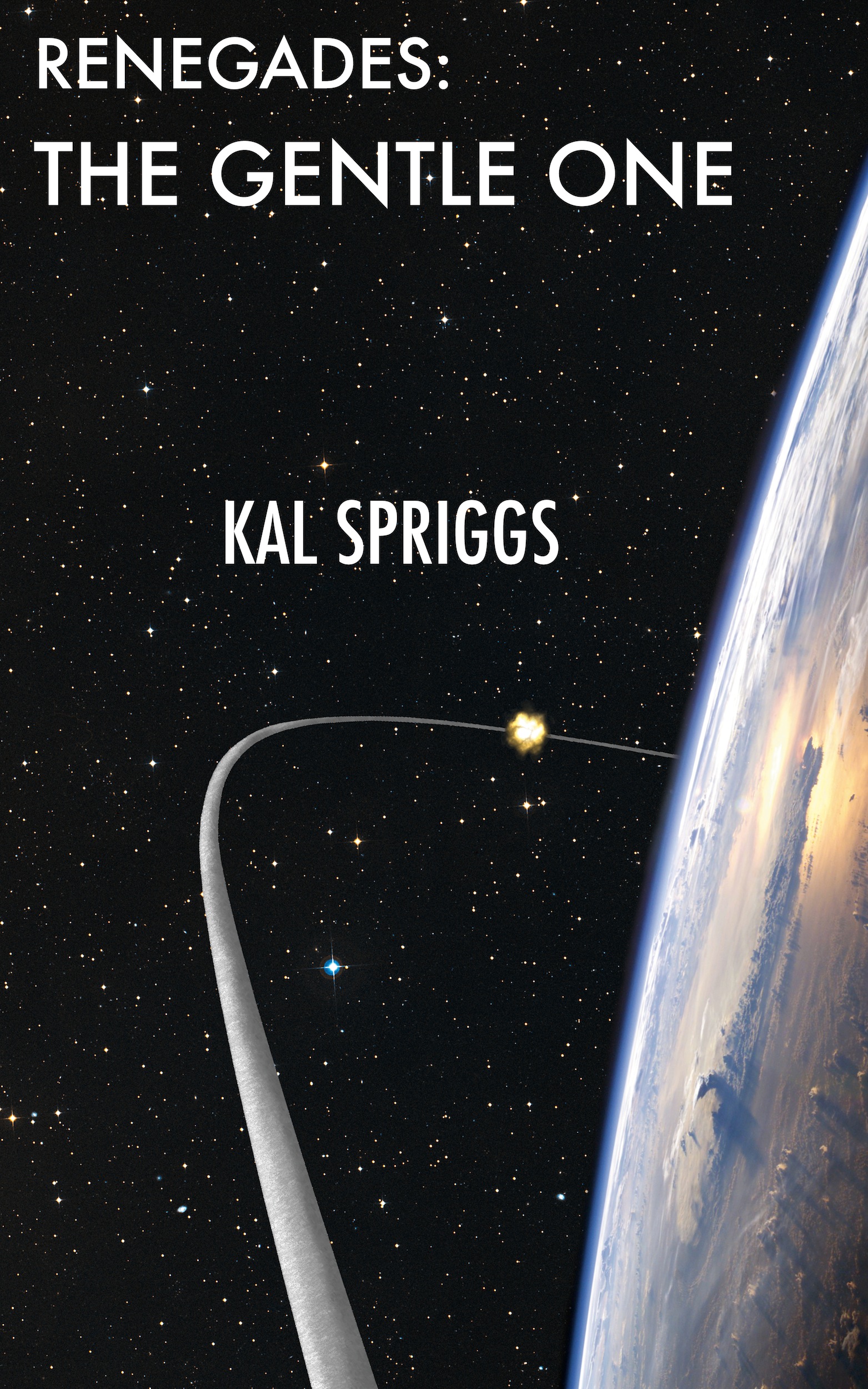
Renegades: The Gentle One now available on Amazon!

RGO Cover

My new Novella, Renegades: The Gentle One is now available from Amazon and coming soon to Smashwords (and then to various other outlets).    Renegades: The Gentle One is a 35,000 word novella and is the sequel to Renegades: Deserter’s Redemption and the continuation of the Renegades serial.  Read below for the description.

Ariadne has built her life around being a good person. She thinks positive, she tries to help people, and she never gets angry. The last is especially important, because Ariadne is a psychic, and bad things can happen if a psychic loses control of her emotions. 

The problem is, Ariadne and her friends are on the run from an expansionist alien race. As an escapee from a prison station, she’s been marked for death, and the only way out of the star system is to hijack a ship. With limited supplies, powerful enemies, and companions whose trustworthiness is questionable, her enemies seem almost assured of victory. Ariadne is going to have to do the one thing she’s sworn never to do again… 

She’s got to get angry.

Get it here from Amazon

Get it here from Smashwords, and coming soon to other outlets.

Free Stuff

I’ve just added a short story in the free fiction section.  Look to the Stars is a short story set in the same universe as Renegades and The Fallen Race.  The main character, Mason McGann, is a smuggler who is in a bind.  It introduces some of the characters and backstory for The Fallen Race.

I’ve also added a news article that ties into Renegades: the Gentle One.  It’s a translated Chxor document referenced in the story.

In other news, the final edits to Renegades: The Gentle One are underway and the eBooks will be available tomorrow on Amazon and Smashwords.  Also, the paperback version of Renegades: Deserter’s Redemption will be available at the end of the week.

The novel The Fallen Race will be available in the first part of October.  Keep looking here for updates, snippets and other free stuff!

Space Warfare: the present and future

As a science fiction author, I’ve got a particular interest in current and future space operations.  Since I also write Military Science Fiction, that interest is a bit more sharply defined.  So I’ll address a couple of points regarding combat in space, and then leave a couple other areas open for your interpretation.  The first area in question is, of course, whether there will be combat in space.  Next up, just what technologies are currently available and what the future might hold.  Then there’s the big question, what roles will humans play in all this.  Lastly, I’ll talk some of the common SF tropes and what technology we’d need to get there.

The question as to whether there will be combat in space is one which can cause a number of people to argue.  It seems odd to me that there is any argument at all.  Some of the oldest artifacts of human existence are weapons.  Inevitably, weapons are a key part of human technology… and that is because when someone wants what you have, and they’re not as moral or ethically driven as you, then they’ll resort to violence.  Resources are almost always the root of human differences, more food, more wealth, more power.  The easiest way to take and hold those resources is not through discussion, but through violence.  The easiest way to prevent such violence is to create weapons and defenses of your own.   There are various treaties against space warfare, but those treaties are only as binding as the governments and people’s will of the signatory nations.  To top that off, there are always extra-government organizations who are not only non-signatory, but often simply don’t care, or worse, would view unarmed vessels and stations as targets.  Terrorists, pirates, and corporations might easily see opportunities in violence in space.  To be disarmed is to invite such violence.

Current technologies for space combat are, whether people acknowledge them or not, already present.  The Chinese demonstrated their ability to kill a satellite in 2007, when they destroyed a weather satellite in low earth orbit.  The US has conducted its own missile launch of an SM-3 in 2008, which mirrored the result on a deorbiting satellite.   The Chinese kill resulted in serious space debris, some of which has required the movement of other satellites to avoid damage.    Futher extrapolations of this technology are apparent.  The American SM-3 is a missile designed to intercept ballistic missiles.  Further improvements of the technology could eventually see missiles of greater range and capabilities.  An example of this is how the Russians currently use retrofitted ballistic missiles as launch platforms for satillites.  Other technologies are the so-called ‘kill-sats.’   Kill-sats are satellites designed with weapons or to be weapons.  These platforms would have greater maneuverability and might come with weapons packages or be designed to ram or strike other satellites.  An extrapolation of current technology would be using older or obsolescent satellites to deliberately ram or damage newer ones, rather than deorbiting them.  These means of space combat could lead to Kessler Syndrome, which was proposed in 1978 by Donald Kessler, a scientist with NASA.  He projected that a series of collisions could cause a cascade effect.  Each object destroyed, be it station or satellite, would in turn, give off a cloud of further debris.  This would fill the Earth’s orbitals with a cloud of fast-moving projectiles which would make space operations extremely hazardous.  It is a sort of nuclear option, which would deny the use of space platforms to anyone.

Future technologies are varied.  Lasers, once thought to be fantasy, are more and more prevalent even in the civilian sector.  Lasers powerful enough to be used as weapons are options, though this has limits based on energy density of what can be packed into a space-going platform.  Laser weapons on the ground, used to fire into space are also an option, though thermal bloom within the atmosphere robs these weapons of some of their punch.   Drones, which will be discussed later, are already prevalent in ground and air combat, it is easy enough to project their use in space as technologies develop further.   One thing to note in all of this, is that space combat, at least in the near-term, is extremely lethal.  One solid hit virtually guarantees the destruction of a target.  Current space craft are the equivalent of the first powered aircraft:  lightly built, individually constructed, and designed for specific purposes.   To make matters more difficult, space is an inherently inhospitable place.  A pinhole in the pressure compartment of a manned space craft could potentially kill the entire crew.  Radiation, debris, and a host of other dangers make survival in space problematical even without adding in the threat of someone trying to kill you.  It could very well be that space combat becomes a matter of whoever gets the first strike is the victor… or a case of mutually assured destruction.  More advanced technologies can change this.  Especially in the areas of increased energy density: reliable fusion, super-capacitors, and a host of other ideas are steps in the right direction.  Larger, more robust space platforms would be more likely given increases in the ability to lift as would the creation of a legitimate space infrastructure.  Even more advanced technologies could entirely alter the paradigm; warp drives, energy shielding, the real science fiction aspects, would further evolve the nature of space combat.

What exactly are humanity’s roles in space combat.  At least at first, we have little direct role.  Current technology space suits are cumbersome, at best.  Fighting in a low gravity environment would be difficult in the extreme.  Drones and robots, currently seen in ground and air combat, are more likely, especially given the shift by NASA towards robotic exploration.  It could be something so simple as the ability to throw dirt over the enemy’s solar panels or as complex as weapons mounted aboard, but as exploration continues, and space becomes a frontier full of resources rather than the distant void which money funnels into, sabotage and combat are inevitable.  Humans first roles might be that of hacker or saboteur, as a means to destroy or disable enemy drones and robots.   Eventually, however, as humans get out there, the role of combat will shift.  Direct control of drones from nearby will allow higher bandwidth and greater control of operations.  From there, it is only a step to imagine that the human controlling the drones becomes the target, and therefore needs some means of protection.  Ships might set out with a dozen combat drones, which could function as combination weapons platform, missile and probe, and mounting their own internal weapons such as lasers or projectiles.  All of this would be controlled by a handful of crew.

The last area of discussion is the common SF tropes.  Shields, antigravity, force fields, ray guns, lasers, missiles… the list goes on and on.  Many of these are highly dependent upon the technologies, societal preferences, and the combat paradigms.  Various sub-genres of SF have their own favorites.  Generally the space fighter is very common.  Issues with that are numerous, to include the fact that a drone would be capable of sharper maneuvers and greater accelerations.  However, one could easily imagine a future where the common man is very uncomfortable with the thought of space-going death being controlled by a computer.  This might preclude the use of such drones by the major powers.  Furthermore, perhaps hacking has become so prevalent that drones are seen as too unreliable, and are relegated to the role of support ships.  The same goes for ship automation.  Powerful lasers might well become extremely prevalent as new energy sources become available.  Warp drives might allow missiles that can strike an enemy before they know you’ve fired it, or allow ships to execute maneuvers that would be impossible to otherwise accomplish.  Powerful, world destroying weapons such as singularities, quarkium, and molecular disruption device might one day make our current nuclear arsenal seem amusing by comparison.

That’s the broad overview of what I think about combat in space.  Next week I’ll go more into depth on some of the topics and introduce some complications.  If I get time, I’d like to run through a hypothetical scenario, or war-game on a couple of these topics, mostly as illustration.  As always, I’d love to hear people’s input.

Books and Authors I Recommend

I’m an avid reader, and something that I’ll freely admit is that I’m always looking for a new author or three to try out.   I have rather eclectic tastes, but I thought I’d write a bit about what authors I’m currently reading and what authors I recommend.  I’ll break it down by genre, because otherwise this would just become a long list, and who wants that?  This is just a broad overview and by no means covers everything off my shelves. 

Fantasy:

The obvious here is Tolkien.  The Hobbit and Lord of the Rings are well known.  Less well known are some of his shorter fiction.  Farmer Giles of Ham is an excellent short novel, and often overlooked.  I’d also recommend David Eddings with two of his series: The Belgariad and the Elenium.  Both series are long enough to provide plenty of entertainment.  Raymond Feist’s Midkemia series (starting with Magician) is another good read, though it can be difficult to discern what order to read some of the books.  Ryk Spoor’s Phoenix Rising is a more recent entry, and one of the few recently published fantasy stories that I could really get into.  Excellent characterization, amazing setting, tough decisions and good fighting evil are all blended together into an excellent story.

Urban Fantasy:

There’s a variety of urban fantasy, some of it very violent, some not so much.  Mercedes Lackey’s SERRAted Edge series combines race cars with elves and some more classic fantasy elements as well as renn faires and dragons.  It’s highly entertaining and mostly PG, so a good read for kids.  Larry Correia’s Grimnoir Chronicles and his Monster Hunter series are both brilliant.  Both series contain lots of humor, over the top action, and an excellent knowledge of firearms and combat techniques.  John Ringo’s Princess of Wands is another excellent urban fantasy, with the twist that it’s a church-going soccer mom who’s fighting demons and necromancers.  Wen Spencer writes an excellent series of elves and parallel dimensions with Tinker and the rest of her Elfhome series.

Science Fiction:

The general area of science fiction is hard for me to nail down.  I’m drawn to the classics, if I’m recommending to a new reader.  Robert Heinlein’s works: Citizen of the Galaxy, The Moon is A Harsh Mistress, Orphans of the Sky, and The Menace from Earth are all excellent.  Frank Herbert’s Dune is definitely worth a read, though so popular in media that most readers of SF have already read it.  Isaac Asimov’s Foundation series is a good read.    More recently, Eric Flint and Ryk Spoor’s Boundary is excellent science fiction.    Sarah Hoyt writes some very good science fiction with the Darkship Renegades, with a lot of excellent social and political commentary.

Military Science Fiction

This is my main area of interest at the moment, and unlikely to change any time soon.  Robert Heinlein’s Starship Troopers, of course, takes pride of precedence.   David Weber has written a host of amazing science fiction books, especially his Honor Harrington series, but also his Imperium of Man series which starts with Mutineer’s Moon.  He’s also written several standalone books such as The Apocalypse Troll and Out of the Dark which are very good.  John Ringo is massively prolific, with a number of excellent series.  A Hymn Before Battle is an excellent near-future novel that starts a great series.   A bit of warning, the series currently ends in a cliff hanger with no final books to close it out in sight.  John Ringo’s team up with Travis Taylor in the Voyages of the Space Bubble series starts with Into the Looking Glass.  The series is excellent with lots of humor, great science, and tons of action.  Mike Shephard’s Kris Longknife series is another fun read, with a main character that has grown and developed over time.  David Drake has a number of excellent series, with Hammers Slammers being his most well known.  Another excellent new author is Leo Champion, whose Legion series has some serious combat and excellent overall story arc.

General Fiction

I’ll be honest, I don’t read a lot of general fiction, and most of what I do read tends to edge towards the ‘techie’ or military spectrum anyway.   Tom Clancy’s Hunt for Red October is excellent, as is Without Remorse, Executive Orders, and Patriot Games.  Also good is Larry Correia and Mike Kupari’s Dead Six and Swords of Exodus, both military genre, though with elements of what I consider fantasy.  Tom Kratman’s Countdown series is excellent in that regard as well, though rather grim at times.

Classics

I’ll be honest, I’m a sucker for some of the classics of literature.  Robinson Crusoe, Treasure Island and Swiss Family Robinson are all excellent reads, especially for children.  Mark Twain has a host of good stuff.  Almost everything by Jules Verne is absolutely excellent.

Conclusion:

I’m certain I’m missing an author or two here or there, and I know I’ve left out some books by different authors.  Still, if you’re anything like me, I highly recommend these authors and series.  Next week I’ll try to cover each genre, what I like and what I don’t, what themes I’m seeing as a reader and what I want to work on as a writer.