Category Archives: Reading

Urban Fantasy

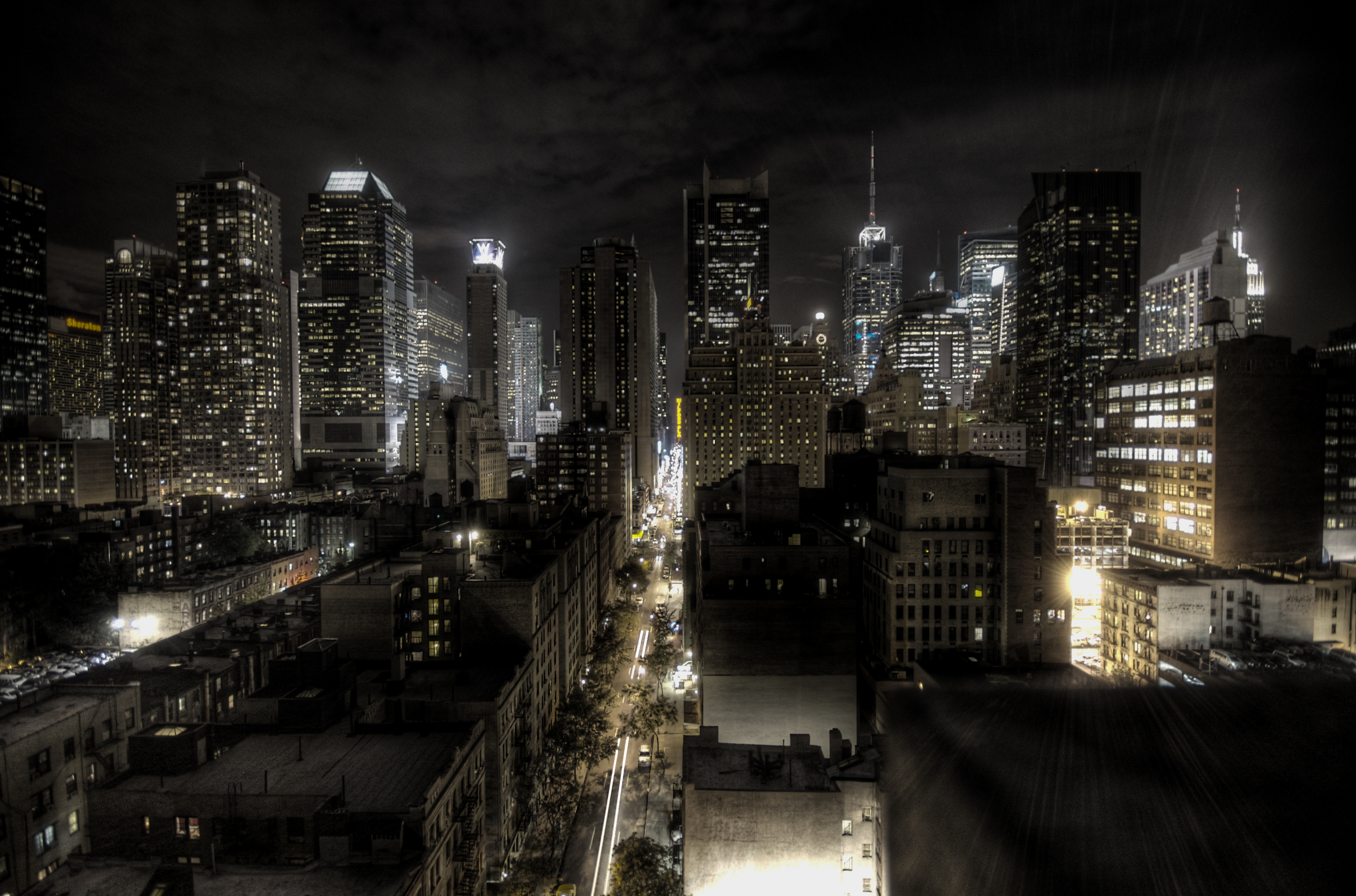
It's easy to imagine the extraordinary when superimposed on the ordinary...
It’s easy to imagine the extraordinary when superimposed on the ordinary…

Urban fantasy is, at its root, a mishmash of a variety of genres.  The typical urban fantasy author often combines one or more genres of fiction with fantasy in their story.  The fun of urban fantasy stories often lies in the contrast between the ordinary and the extraordinary.  Wizards duke it out with magic and bullets, Police investigate supernatural crimes, and elves drink Miller Lite and watch Nascar.   The possibilites are limitless, especially when the stories can be told in so many ways.  Supernatural Romance, Paranormal Investigation, Zombie Apocalpyse, even Superpower Crime Noir novels are all under the broad catagory of Urban Fantasy.  As a market, the genre has been extremely successful, from the Harry Potter series to Twilight, there has been far more mainstream appeal to Urban Fantasy than other aspects of Science Fiction or Fantasy.

Why is that?  Well, there’s a number of reasons.  Honestly, one of the big ones is that it’s easier for the average person to get into.  They don’t have to try to memorize funny names for people or places, they don’t have to figure out some other world.  The setting is someplace they’ve heard of, maybe even lived in.  The events and history, while different in the particulars, are the same history that they learned in school.  Sure, magic might be a smaller or greater effect in that history, but these little changes often are part of the charm.  What if the Kaiser used necromancers in World War I to raise zombie hordes such as in Larry Correia’s Grimnoir Chronicles?  What if the Red Vampires secretly seduce and abduct thousands of people across the country as in Jim Butcher’s Dresden Files?  It doesn’t change how the main course of history went, and society, places, and events are still the same.  This makes it easy for the average person to pick up a book for casual reading.

Another reason that Urban Fantasy novels tend to be so popular is that they’ve gotten their hooks into this generation.  Many kids grew up with Harry Potter, and now that they’re adults, urban fantasy seems relatively mainstream.  They read these types of books, they’ve seen the movies, they are ready to suspend their disbelief that magic exists in secret.  The resurgence of general media such as Warehouse 13, Doctor Who, and others has also encouraged this.  These are shows that amplify the paranormal, and put out logical reasons for the existance of the supernatural.  These shows are also extremely popular because they encourage such imagination and questions of ‘what if.’

Another reason for the popularity, urban fantasy stories often provide characters that the readers can easily identify with.  A soccer mom makes an easy person to relate to, she drives a minivan, picks her kids up from school, films her daughter’s softball game, and happens to channel the powers of light to slay demons such as in John Ringo’s Princess of Wands.  It is an easy buy-in for a reader.  A private investigator who helps out the police now and again could be the character in almost any standard fiction story.  When that story’s character happens to be best friends with a twenty thousand year old vampire who is the lone survivor of Atlantis such as Ryk Spoor’s Digital Knight, the story becomes interesting to say the least.  Yet everyone has the odd friend or two, so this isn’t something that would totally confuse a new reader.

Of interest to me, both as an author and a reader, urban fantasy often acts as a gateway genre to more traditional fantasy books.  Readers sometimes really like the ideas and concepts and so they’ll dive a little deeper into the overall broader fantasy genre.  Also, writers who have made their break in urban fantasy often branch out into other areas, such as Jim Butcher with his Codex Alera series.  Sometimes it works the otherway, such as with John Ringo, who wrote Princess of Wands after he established an extensive science fiction bibliography.

Overall, there are a number of excellent books that I’d recommend.  Urban Fantasy is an exciting and fun genre of books to read, and there are plenty of books to check out.  Off hand, I recommend: Jim Butcher’s Dresden Files, Larry Correia’s Monster Hunter series, John Ringo’s Princess of Wands, and a few others in the Books I’d Recommend section.


Characterization Case Study: Gravity

originalThe best way to study characterization and plot is to look at examples, both good and bad, and to note what worked and what didn’t.  I’m going to do a quick case study of the recent movie Gravity.  It’s an interesting movie that (due to a very small cast and a rather linear plot) can be analyzed with relative ease.  As a quick disclaimer: this is not a movie review and it will hold some spoilers.  As a secondary disclaimer: I enjoyed the movie, the music, special effects, science and plot were all relatively well grounded and a lot of fun… but I’m going to dissect the characters in the movie as examples of good and bad characterization. 

First things first, a look at characterization.  There are really only two characters in the movie: Stone and Kowalski.  The movie does an excellent job right away to establish Kowalski as a cowboy, right down to his music selection as he bounces around the hubble telescope on his EMU (Extravehicular Mobility Unit).  He’s excited to be where he is, cocky, and clearly knows what he’s doing.  Throughout the rest of his (brief) stint in opening part of the movie, this is all we really see of Kowalski.  Stone on the other hand, is more difficult to characterize.  At first, she is totally focused on her work.  Later when things begin to go wrong, she panics.  We learn that she doesn’t want to die, that she is afraid, and that she really doesn’t seem to like space.

This last was the part that broke characterization for me.  The way things are now, if someone isn’t totally dedicated and driven to become an astronaut, they won’t even stand a chance.  It doesn’t matter what your background is or how important your mission, you can always train someone else.  There are millions of applicants and countless intelligent people willing to learn whatever skills it takes to go to space, they won’t want someone who doesn’t want to be there.

But then Kowalski shows up to save Stone.  The two learn that they are the only survivors from the shuttle and both deal with it in their own ways.  Kowalski becomes professional and reverts to an almost military mode.  From the perspective of characterization, this is excellent.  We see the other side of a character, and we see that his cowboy persona is just one facet of a more complex person.  Stone just sort of shuts down.  She says that she’s low on oxygen, she doesn’t volunteer any information, and at several points, tells Kowalski that he should leave her, that she’s slowing him down.  This, frankly, makes her character seem rather dull.  In the initial panic and worry of the disaster, we are immediately sympathetic to her character.  She is adrift and struggles to survive, we want to root for her.  Her giving up after being found and rescued by Kowalski gives away a lot of that initial viewer sympathy.  No one likes a quitter, and the apathy that she begins to show about her own death makes her character seem very bland and hard to identify with.

Then, in typical survival mode, Kowalski asks Stone about where she is from, if she has anyone who waits for her back home, if she likes her job and what she does after work.  This is the perfect moment in a book for the viewer to identify with a character.  You learn about the details of their life, the things that guided them and shaped them.  The scene could not have been framed better, with only the two characters, tethered by a single cable and with the entire Earth as a backdrop.  Literally, they’re the only two people who exist, with no other distractions… and Stone takes a right turn to depression.  Stone doesn’t have a family, she had a daughter who died in an accident.  She apparently doesn’t have parents, siblings, or any romantic interest at all either.  In fact she seems to have no reason to go on living.  She concludes her brief explanation with a statement that she ‘just drives.’  She seems to be a woman with no reason left to live… so why exactly is she in space?  Please, tell me that her device would prevent future falling accidents such as the one that killed her daughter or cure cancer or at least give her some goal or drive to base her life upon.  Give me something, I want to root for these characters.  They’re in a disaster with miniscule odds of survival, I want to think that their lives mean something.

The two characters reach their destination, but in true movie fashion, the EMU (rather like a jetpack) runs out of fuel in the last seconds.  The two tumble and scramble for a hold, and in the end, Stone is tangled in some line attached to the station and Kowalski is attached to Stone by the tether.  Of course, the cables are slipping and there is too much mass for the friction of the cables to overcome.  Kowalski says that he’s going to cut himself loose, and explains to Stone what she’ll have to do to survive.  This is a pivotal moment in both character’s story arcs.  The cowboy/professional mission commander sacrifices himself (showing yet another side of himself) while the frightened and confused Doctor Stone has to come out and shine, to find her internal strength and succeed despite the odds.  Frankly, I think it was a bit heavy-handed.  The scene could have played out more true to Kowalski’s character if done in a split-second decision, rather than as it played out… a long and agonizing moment for Stone.  They did it more for plot reasons than characterization, I think.  They set up Stone without the tools to survive so they wanted Kowalski to give her those.  Given the amount of time they had, and the way they established Kowalski’s character, I think it more likely he would have attempted something dramatic to save them both.  However, clearly the story they wanted to explore was Stone’s growth, even if Kowalski was the more interesting character.

Stone then follows Kowalski’s guidance.  As an added threat, besides the debris that moves faster than any Earth-bound bullet, the station catches fire.  Because, really, Stone needed something to get her to get moving again.  Stone begins step two of three towards her return to earth and then discovers that her ride to the next stop is out of fuel.  This would be a perfect time for her to show her internal strength and that drive to survive.  Instead, she tries to reach someone, anyone, for help.  In the end, after a tearful conversation with some chinese guy with a dog and a baby, she decides that she doesn’t want to wait another ninety minutes for the debris to hit her yet again, she’ll just turn down the air and go to sleep.

Okay, I’m sorry, but while the plot of the movie had me hooked, at this point I just stopped caring about the character of Doctor Stone.  She has no family, no goals, no dreams, no ambition… she’s survived to this point because she doesn’t want to die and because someone we did care about sacrificed himself so that she would have a chance.  Honestly, I come back to the whole question: why is Doctor Ryan Stone here in space and who chose the hardest person in the world to identify with to be the survivor?

Cue the return of Mission Commander Kowalski.  His snarky comments and upbeat words breathe some life into Stone just before the obvious reveal that he was a figment of her subconscious as her brain shut down from lack of oxygen.  Luckily, she realizes she does have a way to survive after all, and goes about it.  She seems to have decided to live because Kowalski wanted her to, which in itself is something, at least.  Do it for the dead guy, it works in sports movies for a reason, and it at least gives us a reason why the lone survivor doesn’t just die.

As far as characterization, that concludes the entire movie.  We get a brief moment at the end where Stone stands up on the beach, somewhere on Earth and walks away.  This seems more a statement of survival than anything more profound.  In fact, the character of Doctor Stone doesn’t really seem to draw any closure.  She survives, which closes out the plot, but we don’t have any way to see what she has become, or even if she has changed at all.  What will drive her, after her survival, what will she do and who will she become afterwards?  These question remain unanswered, which, as a viewer I would find supremely irritating… except I really didn’t care at that point.  Stone was just the point of view for the ride, and I could walk away without any of those questions being answered.

Hopefully my fellow writers can take away some lessons from this.  I know I did, the biggest being that if you create a character that doesn’t care about themselves… your audience wont either.  That doesn’t necessarily mean it will be a disaster, but the rest of your product, book, movie or game, will have to make up for that in other areas.

Finding Time to Write

Quick disclaimer: this is a post about what works for me, a bit about my methodology of writing.  This stuff works for me and your mileage may vary and all of that.


So, working full time, self publishing, editing, and managing my private life all compete with my time for writing.  To top it off, I have a number of hobbies such as playing role-playing games, tabletop strategy games, skiing, hiking and lots of other outdoors stuff.   Oh, and now with the self publishing gig, I’ve got to do self promotion (which is another can of worms).  So how do I find time to write, and when I do find that time, how do I maximize my time?

A big key to that is establishing a rhythm or pattern.  Arrange some section of time every day where I always write.  A pattern or structure like that means that my brain settles into the process much more readily, essentially, I’m training myself to write.  Key to this, I can’t give into the “I’m not really in the mood” excuses.  Sometimes this means I’m writing stuff that I know is total crap, as I beat my head against the wall and try to get everything to click.  Sometimes, I never break through that wall and I just churn out crap that I dump into the bytes bucket.Sometimes, when I break through that wall, I find that I’m doing some of my best writing.

I do most of my writing late at night, when I’m really writing.  Three to four hours is essential, and when I can afford the lack of sleep, I’ll go five or six hours sometimes.  What do I get in that time?  Typically I write around 3000-5000 words in around four hours.  On a good night, when the stars are in alignment and things are really flowing… I can do 8000-10000 words.

Part of the essentials for writing like that lie in maximizing my use of time.  To get myself in the mood I’ll eliminate distractions: no Facebook, no emails, no Google Plus, and most importantly, no internet research.  Those things will go from, “let me just check” and quickly turn into “Where did my time go???”  Next up, I try to find either a quiet spot in the house (not always easy with multiple roommates, cats, dogs, and a fiance), or I just plug in the earbuds and crank the music.  Music is one of those things that work excellently for me.  The right songs, paused when I stopped writing, put me right back where I was when I left off.   The right music can act as a soundtrack to my writing and lets me focus on what’s important.

A comfortable position is also important.  I’ll spend three to four hours a night in the same spot.  At the end of it, if I’m hunched over a keyboard for that time, I’ll have to take breaks or I’ll end up with back issues.  A comfortable chair, brain food, and some drinks (Caffeine!!!) all are part of this.  All of this is to help focus though, and nothing should be enough to be a distraction.  I don’t want to do my writing lying down in bed, if I’m too comfortable I’ll be fighting sleep.  If I have a pile of snacks, or I’m eating a full meal, I won’t be focused on writing.

And what is brain food?  Brain food is stuff that stimulates your brain.  Chocolate, Mints, and stuff that stimulates my taste buds but doesn’t overpower them.  Eating healthy before hand (IE, eating a full meal that’s got everything I need to function) is a good thing too.

So, all in all, I do put a lot of thought into preparing for writing.   I have written out in the field, in flight (no fold down trays on a C-17), and various other places.  Even so, I get the most done when I properly prepare myself.

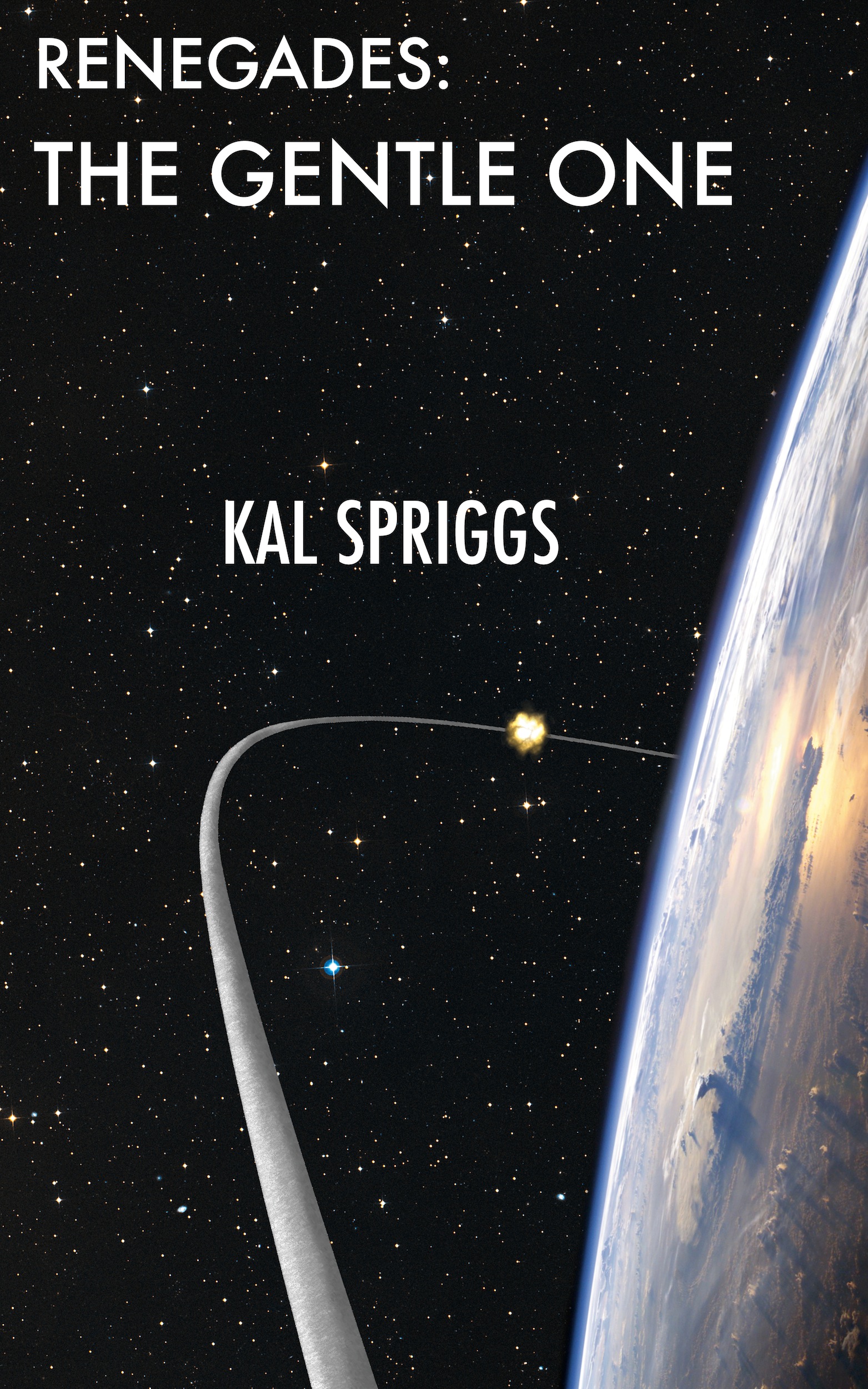
Renegades: The Gentle One now available on Amazon!

RGO Cover

My new Novella, Renegades: The Gentle One is now available from Amazon and coming soon to Smashwords (and then to various other outlets).    Renegades: The Gentle One is a 35,000 word novella and is the sequel to Renegades: Deserter’s Redemption and the continuation of the Renegades serial.  Read below for the description.

Ariadne has built her life around being a good person. She thinks positive, she tries to help people, and she never gets angry. The last is especially important, because Ariadne is a psychic, and bad things can happen if a psychic loses control of her emotions. 

The problem is, Ariadne and her friends are on the run from an expansionist alien race. As an escapee from a prison station, she’s been marked for death, and the only way out of the star system is to hijack a ship. With limited supplies, powerful enemies, and companions whose trustworthiness is questionable, her enemies seem almost assured of victory. Ariadne is going to have to do the one thing she’s sworn never to do again… 

She’s got to get angry.

Get it here from Amazon

Get it here from Smashwords, and coming soon to other outlets.

The Evolution of Fantasy

Fantasy as a genre has its origins in the myths and legends of ancient times.  These myths are often seen as primitive man’s attempts to explain the unexplainable.  Yet in modern times, we have explainations for almost everything… so why the interest in such things?  Personally, I think it is some attempt by us to recreate some of the mystery.  Some people turn to tabloids and conspiracy theories to spin wild tales… and the more mentally stable of us look to spin wild stories in other worlds.  But… I digress.  For this entry, I’ll go into a brief history of the genre of fantasy, talk a bit about some of the current trends of Epic Fantasy I’ve seen as a reader and a writer, and then write a bit about where I see the genre is headed.  I’ll also recommend some authors whose works I think are worthy of checking out.

The first ‘real’ fantasy authors included Rudyard Kipling and Edgar Rice Burroughs who pioneered the field.  Tolkien and Robert E Howard’s many stories broadened it and yet opened it out into two very different areas.   Tolkien’s works gained more wide-stream attention, for a number of reasons, but Robert Howard’s various works still maintain a substantial following.  Other authors like C.S. Lewis and Lloyd Alexander also had their parts.  These earlier authors often featured themes of good versus evil and heroes whose journeys and quests caused profound changes upon their worlds.  The overall themes and concepts tended to be heroes doing good things (or in the case of Conan, living by a barbarian code) as well as the tendency to reject technology and industrialism.  This was the general theme for the more popular and lasting epic and high fantasy for a while.  This changed somewhat with authors like Terry Brooks and David Eddings, who wrote less idealized stories, and more morally ambiguous characters.  Terry Goodkind, George RR Martin, Harry Turtledove and Robert Jordan led the way in the 1990’s with a host of epic fantasy series.  Fantasy became mainstream almost overnight, and the current round of epic fantasy began.  These authors virtually cast the mold for the ‘ideal’ Epic Fantasy series, with overnight blockbusters that continue to sell twenty plus years later.

That leads us into the current setting for Epic Fantasy, with my topic being about the current trends.  The changes brought on by the surge in readership in the 1990’s is still seen.  Authors like George RR Martin continue to sell books in the millions, have TV shows or movies, and have a massive fan base.  Their writing often includes morally ambiguous characters, convoluted plots, and severe, often drastic consequences for the characters as a consequence of their actions.  The pioneers of these types of books are often extremely proficient at both storytelling and manipulation of the reader’s emotions.  A disturbing trend, as I see it, is flood of books and authors who are not up to those standards.  The Epic Fantasy surge has led to dozens of series that come across as formulaic or rote.  There are a wide variety that follows the Campbellian Monomyth to the letter.  They have the main character on the Hero’s Journey.  They have the love interest.  They have the morally ambiguous companion/guide.  They have the mentor.  These stories check off all of the boxes, but they lack the passion and creativity of their predecessors.  Some authors have tried to replace that passion with grittiness or realism.  They often use anti-heroes or simply use lesser villains as the heroes (which can work, if done well) who turn the theme still darker and more ponderous.  In the rush to make money, fantasy has become exactly what we seek to avoid in real life: boring.  Other writers have sought to do something new or bold by changing the rules: fantasy worlds without magic or magic systems that work in some new or innovative way.  Yet I think in the roots, Fantasy started as escapism, a rejection of the world, if only for a short time, and a means to explore the imagination.  The trend of books that I’ve seen are book after book churned out by the big publishing houses, each looking for that next Robert Jordan or George RR Martin.  To me, at least as a reader, that gets old.  Fantasy, by its nature, is something that thrives on new and interesting, which is one reason we’ve seen the shift to urban fantasy around the turn of the century and more recently the expansion of steampunk.  Epic Fantasy has become too dark and too boring to be the inspiration to imagination it once was.

So what do I see in the future of epic fantasy?  As a genre, I think it hasn’t changed enough in recent times.  I think that new authors and new ideas will soon force it to change.   Evolution is a natural thing and something that will help that evolution along is the self-publishing market.  The variety of books that have become available means that new ideas and new blood is bound to shake things up.  Traditional publishing has stuck to what worked (which makes sense, they’re in the business of making money), but individuals, if they want to stand out, can’t afford to do that.  As a whole, I think we’ll see a lot of new ideas and concepts and hopefully some big changes overall in the market.

As a reference, here’s some authors and their books, both old and new, that are worth looking into for Epic Fantasy:

Robert Howard’s Conan series

Tolkien’s Lord of the Rings

David Eddings’ Belgariad

Terry Brooks’s Sword of Shannara

Ryk Spoor’s Phoenix Rising

Robert Jordan’s Wheel of Time

Lloyd Alexander’s Prydan series

David Weber’s Oath of Swords

Free Stuff

I’ve just added a short story in the free fiction section.  Look to the Stars is a short story set in the same universe as Renegades and The Fallen Race.  The main character, Mason McGann, is a smuggler who is in a bind.  It introduces some of the characters and backstory for The Fallen Race.

I’ve also added a news article that ties into Renegades: the Gentle One.  It’s a translated Chxor document referenced in the story.

In other news, the final edits to Renegades: The Gentle One are underway and the eBooks will be available tomorrow on Amazon and Smashwords.  Also, the paperback version of Renegades: Deserter’s Redemption will be available at the end of the week.

The novel The Fallen Race will be available in the first part of October.  Keep looking here for updates, snippets and other free stuff!

Books and Authors I Recommend

I’m an avid reader, and something that I’ll freely admit is that I’m always looking for a new author or three to try out.   I have rather eclectic tastes, but I thought I’d write a bit about what authors I’m currently reading and what authors I recommend.  I’ll break it down by genre, because otherwise this would just become a long list, and who wants that?  This is just a broad overview and by no means covers everything off my shelves. 

Fantasy:

The obvious here is Tolkien.  The Hobbit and Lord of the Rings are well known.  Less well known are some of his shorter fiction.  Farmer Giles of Ham is an excellent short novel, and often overlooked.  I’d also recommend David Eddings with two of his series: The Belgariad and the Elenium.  Both series are long enough to provide plenty of entertainment.  Raymond Feist’s Midkemia series (starting with Magician) is another good read, though it can be difficult to discern what order to read some of the books.  Ryk Spoor’s Phoenix Rising is a more recent entry, and one of the few recently published fantasy stories that I could really get into.  Excellent characterization, amazing setting, tough decisions and good fighting evil are all blended together into an excellent story.

Urban Fantasy:

There’s a variety of urban fantasy, some of it very violent, some not so much.  Mercedes Lackey’s SERRAted Edge series combines race cars with elves and some more classic fantasy elements as well as renn faires and dragons.  It’s highly entertaining and mostly PG, so a good read for kids.  Larry Correia’s Grimnoir Chronicles and his Monster Hunter series are both brilliant.  Both series contain lots of humor, over the top action, and an excellent knowledge of firearms and combat techniques.  John Ringo’s Princess of Wands is another excellent urban fantasy, with the twist that it’s a church-going soccer mom who’s fighting demons and necromancers.  Wen Spencer writes an excellent series of elves and parallel dimensions with Tinker and the rest of her Elfhome series.

Science Fiction:

The general area of science fiction is hard for me to nail down.  I’m drawn to the classics, if I’m recommending to a new reader.  Robert Heinlein’s works: Citizen of the Galaxy, The Moon is A Harsh Mistress, Orphans of the Sky, and The Menace from Earth are all excellent.  Frank Herbert’s Dune is definitely worth a read, though so popular in media that most readers of SF have already read it.  Isaac Asimov’s Foundation series is a good read.    More recently, Eric Flint and Ryk Spoor’s Boundary is excellent science fiction.    Sarah Hoyt writes some very good science fiction with the Darkship Renegades, with a lot of excellent social and political commentary.

Military Science Fiction

This is my main area of interest at the moment, and unlikely to change any time soon.  Robert Heinlein’s Starship Troopers, of course, takes pride of precedence.   David Weber has written a host of amazing science fiction books, especially his Honor Harrington series, but also his Imperium of Man series which starts with Mutineer’s Moon.  He’s also written several standalone books such as The Apocalypse Troll and Out of the Dark which are very good.  John Ringo is massively prolific, with a number of excellent series.  A Hymn Before Battle is an excellent near-future novel that starts a great series.   A bit of warning, the series currently ends in a cliff hanger with no final books to close it out in sight.  John Ringo’s team up with Travis Taylor in the Voyages of the Space Bubble series starts with Into the Looking Glass.  The series is excellent with lots of humor, great science, and tons of action.  Mike Shephard’s Kris Longknife series is another fun read, with a main character that has grown and developed over time.  David Drake has a number of excellent series, with Hammers Slammers being his most well known.  Another excellent new author is Leo Champion, whose Legion series has some serious combat and excellent overall story arc.

General Fiction

I’ll be honest, I don’t read a lot of general fiction, and most of what I do read tends to edge towards the ‘techie’ or military spectrum anyway.   Tom Clancy’s Hunt for Red October is excellent, as is Without Remorse, Executive Orders, and Patriot Games.  Also good is Larry Correia and Mike Kupari’s Dead Six and Swords of Exodus, both military genre, though with elements of what I consider fantasy.  Tom Kratman’s Countdown series is excellent in that regard as well, though rather grim at times.

Classics

I’ll be honest, I’m a sucker for some of the classics of literature.  Robinson Crusoe, Treasure Island and Swiss Family Robinson are all excellent reads, especially for children.  Mark Twain has a host of good stuff.  Almost everything by Jules Verne is absolutely excellent.

Conclusion:

I’m certain I’m missing an author or two here or there, and I know I’ve left out some books by different authors.  Still, if you’re anything like me, I highly recommend these authors and series.  Next week I’ll try to cover each genre, what I like and what I don’t, what themes I’m seeing as a reader and what I want to work on as a writer.

Building Strong Characters

One of my goals for writing characters is to develop them to the point that they feel real to the reader. Story can be interesting, but strong characters are what the reader ends up caring about. An excellent character will keep a reader coming back, again and again… and the victories and defeats of those characters are what bring out the most emotion in the reader. Flat characters are a crime that few authors can redeem themselves from. Flat characters are boring, trite, and often cliché. So how does one develop strong characters?

Strong characters feel like real people, sometimes more real that people we might interact with or deal with on a daily basis (trust me, I’ve had roommates with less personality than Master Harper Robinton from Anne McCaffery’s Pern series or Polgara from David Eddings’ Belgariad). What exactly does feeling real entail, though? I define it by several areas. First off, they typically have some defining character traits. Second, strong characters have a history, a place where they come from. Third, they have a morality (or lack thereof) that is coherent and based upon their origins. Fourth, strong characters experience joy, anger, love, and heartache just like real people. Last and most important strong characters make decisions based off of their emotions, experiences, and morality.

Character traits are often what define a character to the reader at first glance. These are often the most memorable things about them, and are often the things that pop into mind. Han Solo was a cocky and self centered rogue (he shot first!). Doc, from ‘Back to the Future’, was absent minded and excitable. Character traits are often established early on, typically in the first time the reader meets the character. It helps to make these traits memorable, as a writer, because this makes the character stand out in their mind more. Traits, however, are just a starting point. They create a character that has some resonance to them, but if that isn’t followed through, the character will seem hollow. A hollow character might be better than a flat one, but it robs the reader of the pay off of emotions as the character fails to grow over time and their experiences.

History and past play a huge role in our lives as people. It should be no less important for characters. As a writer, often I develop characters based off of the setting and their place in it. From the society and their place in it, I can develop what things they will find important, what their areas of expertise and knowledge might be. A character raised in the slums of a dystopian future might well view morality through a different lens than your typical 21st Century American. Beyond there, I typically dive into family (or lack thereof), which is often more important than society, and indeed, can alter things significantly. That same character raised in the slums might be the son of a missionary, who grew up treating the sick and injured…. Suddenly he might not be the callus killer. Throw in some life events, such as the death of his mother or the discovery that he was adopted and his adoptive parents never told him. These experiences change who he is, and will have effects upon how he acts.

Morality is often based upon the experiences of people. Morally upright characters can be vastly complicated or totally boring, whereas morally bankrupt characters can be highly entertaining or nauseating. Part of this is perspective and experience. A character who has a twisted sense of morals because of hi s experiences is understandable. He or she may frustrate a reader, but the moral code they follow will at least make sense. The same follows for a character with a comprehensive and solid code of ethics. What will drive me as a reader absolutely crazy is when there is a character whose morality doesn’t make sense. Characters who are bad because it’s cool or fun or the honorable street urchin are anomalies… and unless an author has a legitimate reason why, they quickly become an irritation. Even worse are characters with no defined or inconsistent morality. A character who will shoot a man in the back in one scene and yet fights an honorable duel in another would be incoherent without some background or logic behind his actions. A writer has a burden to show the reasoning and logic behind the characters’ decisions.

Emotion is the next crucial part of a strong character. A character who doesn’t experience emotion is boring, regardless of how many explosions or how interesting the setting might be. One of the best examples of this is from the movie Red Sonya. The main character’s sister — her only surviving family – dies in her arms in the opening part of the movie. Red Sonya then says something to the effect of “This is terrible, drops her sister’s corpse, and stalks off to exact her revenge. For a close knit family, the death of a family member is a powerfully emotional event. This event was supposed to drive Red Sonya to exact her revenge. This isn’t to say that the character should have fallen to pieces, but some small signs can go a long way to establishing the emotional toll of such an event. An excellent positive example of this is from Saving Private Ryan, where Tom Hank’s character, after the Invasion of Normandy, goes to open a canteen and his hands are shaking so much as to make it nearly impossible. This shows that, despite his calm demeanor, he is barely holding it together, and mostly doing so for his men. A show of such emotional turmoil and yet strength immediately establishes his character as someone who feels real. Later on, when he makes decisions for his men, you can see that emotional turmoil is there behind those decisions, at war with his moral code and his defining character traits.

The last crucial part of strong characters is the decisions they make and, as a writer, ensuring those decisions are in line with the character. A character who makes decisions out of line with his morality, emotions and experiences is not a strong character. A character who has his emotions and experiences at odds with his morality is complex and interesting. Difficult decisions are what life is about, and the important decisions are always complex. An important thing to note here is that sometimes the characters don’t make the right decisions. Sometimes their morality or emotions or experiences drive them to make the wrong decision. In those cases, it is often a flaw, sometimes a tragic flaw. This should not be the norm, in my opinion. Authors like George R. Martin make their living by having characters make bad decisions on an almost constant basis. Don’t get me wrong, it’s interesting reading, but as a reader, it frustrates me to the point that I give up. Good people make bad decisions sometimes, it happens in real life, and it happens in stories. Bad people make good decisions too, sometimes, which I find far more interesting.

The decisions that characters make often define them. These cause new experiences and produce new emotions that in turn, drive character growth and development. And the next step past making a strong character is to make that character grow as he progresses through the story. That’s a topic for another day. In the meantime, what is a strong character that you really liked and what were their defining traits?

Renegades, Psychics, and Aliens, oh my…

The current series that has most of my attention is what I call the Mira universe. I’ve got one completed novel and six novellas as well as five or six short stories set in this universe. This is the universe in which the series Renegades is set. It is also the setting for the book The Fallen Race, coming soon to a Kindle near you. Additionally, I’ve got two more novels outlined and nearing completion in the same universe.

What is so interesting about this universe? I’m glad you asked. The Mira universe is set several hundred years in the future. I’ve set most of my stories in times of either great social upheaval or moments where military combat is common… and sometimes both. These are times where humanity, as a race, is at a cusp, the points where the actions of a few can turn the balance and change the fates of millions.

There’s some other fun things about this universe, both as a writer, and I hope, for those of you who read it. There are boundaries to explore, new worlds, distant space, and of course, the boundaries of the human mind and body. Some humans have developed psychic abilities, and they are a powerful minority. Dealing with the fear and uncertainty that normal people feel for those who can alter their perceptions or read their thoughts adds a layer of social dynamics. In addition, the psychics themselves deal with tough questions as they explore what it really is to be human… and if they really qualify. There are renegades and outcasts of all types: mutants, deserters, pirates and mercenaries. These men and women are often the dregs of society. However, the societal upheavals often put them in positions where they are given opportunities to redeem themselves… or to become scourges who write their names in blood across countless worlds.

And then there are the aliens. There are five highly advanced races that humans have encountered in this future. The Chxor are the emotionless and implacable invaders, who seek to supplant humanity as the reigning power. The Ghornath are friendly if temperamental, eight limbed and three meters tall, generous and honorable, and the most relatable to humans. The Wrethe are violent sociopaths, each a militantly individualistic carnivore that views even their own species as prey. The Iodans are alien and almost incomprehensible. And the Balor are the unknown menace, their advanced weapons and technology sweeps aside human defenses and seems determined to make humanity extinct. Exploring these alien races allows me, as a writer, to explore humans better. When confronted by the unknown and the alien, what responses do the characters have… and what similarities do we see in even the most alien of species?

In both the Renegades series and the upcoming novel The Fallen Race, humanity is pinched between two hostile alien races, both of which will bring about the extinction of our race. Human space is fractured, with the various nations embroiled in wars with one another. Technology is on the decline, as aliens and civil wars have destroyed key infrastructure. Piracy is common, indeed, the most powerful pirates are the Shadow Lords, human psychics whose fleets loot entire worlds and drag away the populations to be their thralls. Civilization is on the decline… the barbarians are at the gates.
The Renegades is a series that explores the efforts of a handful. In feudal Japan, they might be called ronin. In the American West, they would be desperadoes or gunslingers. These are men and women and a few aliens who have no home, no place. They are — with some exceptions — bad people who do bad things. Yet they also have the power to change history. They are people with nothing left to lose… and that makes them very dangerous.

The Fallen Race is similar in concept. It follows the crew of the battleship War Shrike, of the Nova Roma Empire. The ship is cut off after an ambush, heavily damaged and left without support. The ship’s captain is considered little better than a traitor by his own nation, despite numerous heroics, and his family’s history lays over his every accomplishment like a burial shroud. Yet they struggle to take a stand, to halt the steady grind of history before it churns everything they know and care about into the mud.

As a writer, both series allow me to explore the setting. The characters are products of their time, often flawed, sometimes tragically so, they are people, and their emotions and experiences feel as real and raw as those of real people. Everyone has a story; from the Pirate Tommy King, whose every good deed goes wrong, to the psychic Kandergain, whose own mother turned her into a weapon. There is a history here, which I love to explore, one that I hope to share with my readers… and I hope it is as fun to you as it is for me.

So, that’s what I’m working on now. Welcome, and feel free to look around. There will be a short story added to the free fiction section in the near future, something of a prequel to the events of Renegades: Deserter’s Redemption. Thanks for reading, and I hope you enjoy.