Category Archives: Entertainment

Oddball SF/F: Cyberpunk

I was reading through various forums when I came across an interesting question… what is Cyberpunk.  Cyberpunk is a subgenre of Science Fiction and Fantasy that tends to be very singular, though in today’s markets, blending of Cyberpunk with other genres has occured.  As a subgenre of science fiction, it tends to be defined by a near-future semi-dystopian world, often with post-modern aesthetics.  The characters tend to be outcasts from society, often renegades, who are often antiheroes.  The latter is the ‘punk’ part, the main characters are often societal rejects, often by choice, who have rejected the system, much like Punk Rock.

Cyberpunk is odd because it often takes an anti-technology standpoint, almost to the point of suggesting that certain technology is inherently too dangerous.  Cyberpunk often utilizes cybernetic implants, hacking, cloning, and genetic engineering, all items that our society has serious ethical questions.  Most cyberpunk stories show deliberate missuses of these technologies, often by the companies or countries which should (in theory) protect their employees or citizens from such misuse.  Cyberpunk stories are often very dark, with characters who struggle for survival rather than to effect any real changes in society or the world at large.  An important theme to much of cyberpunk is the ethical delimmas posed by technology, and cyberpunk authors are sometimes unique in science fiction for questioning the advance of technology.

William Gibson is often considered the defining author of cyberpunk.  Many of Phillip K. Dick’s novels and short stories (to include a lot of them which have been made into movies such as Blade Runner and Minority Report) are very similar in themes and setting to standard cyberpunk.

A SF Writer’s Thanksgiving

It’s Thanksgiving, a purely US holiday. I was talking with a friend of mine, an immigrant, who told me that he really didn’t get the whole idea of Thanksgiving, so he mostly just ignored it. I’ll say this, everyone has their own take on it, but for me, it’s a time to reflect on all the good things in life, to appreciate what I have. As a writer, I’m appreciative of all the books and authors that have inspired me. I wouldn’t be the person I am if I couldn’t curl up around a good book on a chill fall day.

I’m very thankful that we’ve had the great authors who inspired so much. I’m grateful that those pioneers dared to think about the possibilities. I’m grateful for Jules Verne  and Edgar Rice Burroughs who wrote the first fantastical fiction.   I’m grateful for the writers they inspired such as Robert Howard, Doc Smith, and Robert A. Heinlein, and Issac Asimov.   And I’m grateful for the science fiction writers who followed, who continued to think big, and to dream of what lay beyond the horizon.

As a writer, the important part of Thanksgiving for me is the reflection, the time spent looking at where we are and where we’re going.  Take the time today, as a reader or a writer, to think about the stories you love, and to be grateful for the people who wrote them.

Free Space Opera / SF Novella

For a limited time, I’m giving away free copies of the first novella of my Renegades series. For the next five days, if you use the coupon code MG57A when you check out, you can get Renegades: Deserter’s Redemption for free from Smashwords (link).

Mike doesn’t want to be anyone’s friend. He doesn’t want to be a leader. He sure doesn’t want to be a hero. He’s tried all of that before; it didn’t work out then and he knows it wouldn’t work out now.

He doesn’t have a choice.

Caught by an invading alien race and shipped off to a prison station as (expendable) labor, Mike will have to become all of those things in order to escape. More, he’ll have to turn a band of misfits into a group that can not only survive… but escape from a place where survival is measured in hours. In the doing, he may have to do the one thing he knows will get him killed: learn how to trust.

Thor: Dark World Review

I’ll preface this by commenting that I grew up on action and even a few comic book movies… but I never read comic books. So while I’m sure there are some diehard comic book fans who know far more about Thor than me, well, that’s fine. I’m reviewing this as a movie, and also as part of the series of movies that Marvel has done.

Disclaimer aside, I really enjoyed Thor: The Dark World. It was fun, exciting and adventurous. Better yet, the previews, for once, didn’t give the whole movie away. The movie had an irreverent sense of humor, epic scope and felt almost more like space opera than a comic book movie. Which is good, because I’m awful sick of the ‘dark gritty’ feel I’ve gotten from some comic book movies of late (Batman and Superman, I’m looking at you).

I’ll do a quick rundown of things I liked first, and I’ll do my best to avoid spoilers. First off, the characters. We got to see a different side of Thor, Loki, and the ‘mere’ mortals who run around in their circles. We got to see Thor planning and thinking, rather than just smashing. We saw Loki and some of his other motivations… and just how twisted his brain can be. There was some character development for Jane Foster, we got to see the long term effects of Loki’s mind control of Doctor Selvig, and we even got to see the indomitable Odin affected by events.

As far as the plot, things worked along at a pretty reasonable pace. There were plot twists, and changes and all manner of transitions. Thankfully, the movie didn’t try to overwhelm. I would say the best plot twists are those used in marketing. The trailers often suggested certain things to happen, yet they didn’t happen quite the way you might expect. In fact, some of the trailers set up false expectations which I really enjoyed during the movie, because when I got to those points, I had context and I realized that I didn’t know what was going to happen from the trailers. In fact, I had to figure things out during the movie.

As far as the actual effects and visuals… I found it interesting. I would not watch it in 3D if I saw it again (which I might). The 3D graphics were sort of meh. The overal visual effects were pretty good, though I would say that they made some parts of Asgard less grand in scale and other parts much bigger. I thought the overall looks of the movie were very impressive, and I never felt like the plot or any particular scenes happened just to show of some new special effect.

As far as the emotional impact, this movie managed to generate excitement, happiness, laughter, sadness, and even a sense of wonder. That’s pretty good for a superhero movie. In fact, they managed a couple scenes that were both beautiful and sad, which I found impressive. I’ve heard some complaints about the humor being buffonery of certain characters, but I’d disagree. In the context of how they presented the characters, it was at least internally consistant. Besides, they managed to produce the humor without undercutting the principle characteristics of those characters. The humor, the irreverence, kept this movie from feeling pretentious, and showed the audience that it wasn’t afraid to laugh at itself a little.

I continue to be impressed by how Marvel has both handled the individual movies of their series and also how they have continued to build the franchise. They’ve planned how these movies connect and yet managed to make them stand effectively alone. They’re big, blockbuster movies, but they’re fun, and they go into all of them with goals and plans of what they want to attain. It’s a refreshing change for movies, rather than how most sequels are “quick, milk the franchise for all the money we can!”

My National Write a Novel Month Writing Goals

Just a quick update on my National Write a Novel Month Writing Goals, or since the whole endeavor seems rather enamored of acronyms: NaNoWriMoWriGo.  And if you can say that out loud without giggling, you might have something wrong with you.

My goals for this coming month are to complete four stories.  The first is a novella in the Renegades series, Out of the Cold.  It covers the arrival of the crew to inhabited human space… and some of their misadventures.  The next one is Renegades: Assassin.  The one after that is an as-yet untitled Renegades story from Pixel’s perspective.  Last, I want to complete Renegades: Privateer.  All told, the writing goal for November is around 130k words.

On top of this, I’m continuing to edit several novels and novellas for self-publishing.  Next one to come is another Renegades novella, with (hopefully) The Fallen Race, my first full length self-published novel, to come before December.  We shall see.  I’ll also have a bit more free fiction available, to include a background short story of one of the more interesting characters from Renegades: Run the Chxor.  That one will be out in the next few days.

Thanks for reading!

Urban Fantasy

It's easy to imagine the extraordinary when superimposed on the ordinary...
It’s easy to imagine the extraordinary when superimposed on the ordinary…

Urban fantasy is, at its root, a mishmash of a variety of genres.  The typical urban fantasy author often combines one or more genres of fiction with fantasy in their story.  The fun of urban fantasy stories often lies in the contrast between the ordinary and the extraordinary.  Wizards duke it out with magic and bullets, Police investigate supernatural crimes, and elves drink Miller Lite and watch Nascar.   The possibilites are limitless, especially when the stories can be told in so many ways.  Supernatural Romance, Paranormal Investigation, Zombie Apocalpyse, even Superpower Crime Noir novels are all under the broad catagory of Urban Fantasy.  As a market, the genre has been extremely successful, from the Harry Potter series to Twilight, there has been far more mainstream appeal to Urban Fantasy than other aspects of Science Fiction or Fantasy.

Why is that?  Well, there’s a number of reasons.  Honestly, one of the big ones is that it’s easier for the average person to get into.  They don’t have to try to memorize funny names for people or places, they don’t have to figure out some other world.  The setting is someplace they’ve heard of, maybe even lived in.  The events and history, while different in the particulars, are the same history that they learned in school.  Sure, magic might be a smaller or greater effect in that history, but these little changes often are part of the charm.  What if the Kaiser used necromancers in World War I to raise zombie hordes such as in Larry Correia’s Grimnoir Chronicles?  What if the Red Vampires secretly seduce and abduct thousands of people across the country as in Jim Butcher’s Dresden Files?  It doesn’t change how the main course of history went, and society, places, and events are still the same.  This makes it easy for the average person to pick up a book for casual reading.

Another reason that Urban Fantasy novels tend to be so popular is that they’ve gotten their hooks into this generation.  Many kids grew up with Harry Potter, and now that they’re adults, urban fantasy seems relatively mainstream.  They read these types of books, they’ve seen the movies, they are ready to suspend their disbelief that magic exists in secret.  The resurgence of general media such as Warehouse 13, Doctor Who, and others has also encouraged this.  These are shows that amplify the paranormal, and put out logical reasons for the existance of the supernatural.  These shows are also extremely popular because they encourage such imagination and questions of ‘what if.’

Another reason for the popularity, urban fantasy stories often provide characters that the readers can easily identify with.  A soccer mom makes an easy person to relate to, she drives a minivan, picks her kids up from school, films her daughter’s softball game, and happens to channel the powers of light to slay demons such as in John Ringo’s Princess of Wands.  It is an easy buy-in for a reader.  A private investigator who helps out the police now and again could be the character in almost any standard fiction story.  When that story’s character happens to be best friends with a twenty thousand year old vampire who is the lone survivor of Atlantis such as Ryk Spoor’s Digital Knight, the story becomes interesting to say the least.  Yet everyone has the odd friend or two, so this isn’t something that would totally confuse a new reader.

Of interest to me, both as an author and a reader, urban fantasy often acts as a gateway genre to more traditional fantasy books.  Readers sometimes really like the ideas and concepts and so they’ll dive a little deeper into the overall broader fantasy genre.  Also, writers who have made their break in urban fantasy often branch out into other areas, such as Jim Butcher with his Codex Alera series.  Sometimes it works the otherway, such as with John Ringo, who wrote Princess of Wands after he established an extensive science fiction bibliography.

Overall, there are a number of excellent books that I’d recommend.  Urban Fantasy is an exciting and fun genre of books to read, and there are plenty of books to check out.  Off hand, I recommend: Jim Butcher’s Dresden Files, Larry Correia’s Monster Hunter series, John Ringo’s Princess of Wands, and a few others in the Books I’d Recommend section.


Characterization Case Study: Gravity

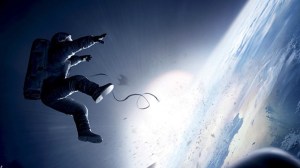
originalThe best way to study characterization and plot is to look at examples, both good and bad, and to note what worked and what didn’t.  I’m going to do a quick case study of the recent movie Gravity.  It’s an interesting movie that (due to a very small cast and a rather linear plot) can be analyzed with relative ease.  As a quick disclaimer: this is not a movie review and it will hold some spoilers.  As a secondary disclaimer: I enjoyed the movie, the music, special effects, science and plot were all relatively well grounded and a lot of fun… but I’m going to dissect the characters in the movie as examples of good and bad characterization. 

First things first, a look at characterization.  There are really only two characters in the movie: Stone and Kowalski.  The movie does an excellent job right away to establish Kowalski as a cowboy, right down to his music selection as he bounces around the hubble telescope on his EMU (Extravehicular Mobility Unit).  He’s excited to be where he is, cocky, and clearly knows what he’s doing.  Throughout the rest of his (brief) stint in opening part of the movie, this is all we really see of Kowalski.  Stone on the other hand, is more difficult to characterize.  At first, she is totally focused on her work.  Later when things begin to go wrong, she panics.  We learn that she doesn’t want to die, that she is afraid, and that she really doesn’t seem to like space.

This last was the part that broke characterization for me.  The way things are now, if someone isn’t totally dedicated and driven to become an astronaut, they won’t even stand a chance.  It doesn’t matter what your background is or how important your mission, you can always train someone else.  There are millions of applicants and countless intelligent people willing to learn whatever skills it takes to go to space, they won’t want someone who doesn’t want to be there.

But then Kowalski shows up to save Stone.  The two learn that they are the only survivors from the shuttle and both deal with it in their own ways.  Kowalski becomes professional and reverts to an almost military mode.  From the perspective of characterization, this is excellent.  We see the other side of a character, and we see that his cowboy persona is just one facet of a more complex person.  Stone just sort of shuts down.  She says that she’s low on oxygen, she doesn’t volunteer any information, and at several points, tells Kowalski that he should leave her, that she’s slowing him down.  This, frankly, makes her character seem rather dull.  In the initial panic and worry of the disaster, we are immediately sympathetic to her character.  She is adrift and struggles to survive, we want to root for her.  Her giving up after being found and rescued by Kowalski gives away a lot of that initial viewer sympathy.  No one likes a quitter, and the apathy that she begins to show about her own death makes her character seem very bland and hard to identify with.

Then, in typical survival mode, Kowalski asks Stone about where she is from, if she has anyone who waits for her back home, if she likes her job and what she does after work.  This is the perfect moment in a book for the viewer to identify with a character.  You learn about the details of their life, the things that guided them and shaped them.  The scene could not have been framed better, with only the two characters, tethered by a single cable and with the entire Earth as a backdrop.  Literally, they’re the only two people who exist, with no other distractions… and Stone takes a right turn to depression.  Stone doesn’t have a family, she had a daughter who died in an accident.  She apparently doesn’t have parents, siblings, or any romantic interest at all either.  In fact she seems to have no reason to go on living.  She concludes her brief explanation with a statement that she ‘just drives.’  She seems to be a woman with no reason left to live… so why exactly is she in space?  Please, tell me that her device would prevent future falling accidents such as the one that killed her daughter or cure cancer or at least give her some goal or drive to base her life upon.  Give me something, I want to root for these characters.  They’re in a disaster with miniscule odds of survival, I want to think that their lives mean something.

The two characters reach their destination, but in true movie fashion, the EMU (rather like a jetpack) runs out of fuel in the last seconds.  The two tumble and scramble for a hold, and in the end, Stone is tangled in some line attached to the station and Kowalski is attached to Stone by the tether.  Of course, the cables are slipping and there is too much mass for the friction of the cables to overcome.  Kowalski says that he’s going to cut himself loose, and explains to Stone what she’ll have to do to survive.  This is a pivotal moment in both character’s story arcs.  The cowboy/professional mission commander sacrifices himself (showing yet another side of himself) while the frightened and confused Doctor Stone has to come out and shine, to find her internal strength and succeed despite the odds.  Frankly, I think it was a bit heavy-handed.  The scene could have played out more true to Kowalski’s character if done in a split-second decision, rather than as it played out… a long and agonizing moment for Stone.  They did it more for plot reasons than characterization, I think.  They set up Stone without the tools to survive so they wanted Kowalski to give her those.  Given the amount of time they had, and the way they established Kowalski’s character, I think it more likely he would have attempted something dramatic to save them both.  However, clearly the story they wanted to explore was Stone’s growth, even if Kowalski was the more interesting character.

Stone then follows Kowalski’s guidance.  As an added threat, besides the debris that moves faster than any Earth-bound bullet, the station catches fire.  Because, really, Stone needed something to get her to get moving again.  Stone begins step two of three towards her return to earth and then discovers that her ride to the next stop is out of fuel.  This would be a perfect time for her to show her internal strength and that drive to survive.  Instead, she tries to reach someone, anyone, for help.  In the end, after a tearful conversation with some chinese guy with a dog and a baby, she decides that she doesn’t want to wait another ninety minutes for the debris to hit her yet again, she’ll just turn down the air and go to sleep.

Okay, I’m sorry, but while the plot of the movie had me hooked, at this point I just stopped caring about the character of Doctor Stone.  She has no family, no goals, no dreams, no ambition… she’s survived to this point because she doesn’t want to die and because someone we did care about sacrificed himself so that she would have a chance.  Honestly, I come back to the whole question: why is Doctor Ryan Stone here in space and who chose the hardest person in the world to identify with to be the survivor?

Cue the return of Mission Commander Kowalski.  His snarky comments and upbeat words breathe some life into Stone just before the obvious reveal that he was a figment of her subconscious as her brain shut down from lack of oxygen.  Luckily, she realizes she does have a way to survive after all, and goes about it.  She seems to have decided to live because Kowalski wanted her to, which in itself is something, at least.  Do it for the dead guy, it works in sports movies for a reason, and it at least gives us a reason why the lone survivor doesn’t just die.

As far as characterization, that concludes the entire movie.  We get a brief moment at the end where Stone stands up on the beach, somewhere on Earth and walks away.  This seems more a statement of survival than anything more profound.  In fact, the character of Doctor Stone doesn’t really seem to draw any closure.  She survives, which closes out the plot, but we don’t have any way to see what she has become, or even if she has changed at all.  What will drive her, after her survival, what will she do and who will she become afterwards?  These question remain unanswered, which, as a viewer I would find supremely irritating… except I really didn’t care at that point.  Stone was just the point of view for the ride, and I could walk away without any of those questions being answered.

Hopefully my fellow writers can take away some lessons from this.  I know I did, the biggest being that if you create a character that doesn’t care about themselves… your audience wont either.  That doesn’t necessarily mean it will be a disaster, but the rest of your product, book, movie or game, will have to make up for that in other areas.


Renegades: The Gentle One now available on Amazon!

RGO Cover

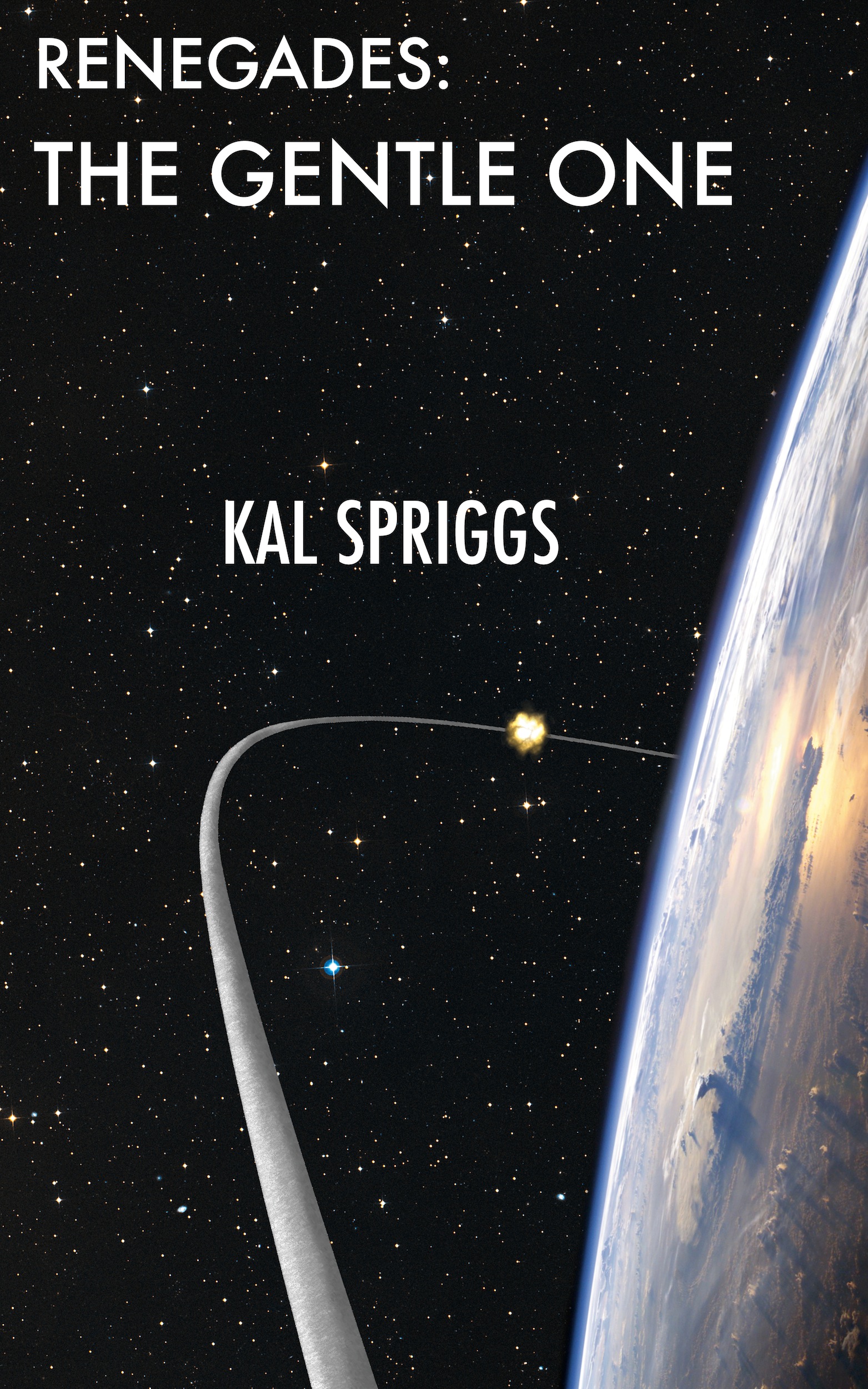
My new Novella, Renegades: The Gentle One is now available from Amazon and coming soon to Smashwords (and then to various other outlets).    Renegades: The Gentle One is a 35,000 word novella and is the sequel to Renegades: Deserter’s Redemption and the continuation of the Renegades serial.  Read below for the description.

Ariadne has built her life around being a good person. She thinks positive, she tries to help people, and she never gets angry. The last is especially important, because Ariadne is a psychic, and bad things can happen if a psychic loses control of her emotions. 

The problem is, Ariadne and her friends are on the run from an expansionist alien race. As an escapee from a prison station, she’s been marked for death, and the only way out of the star system is to hijack a ship. With limited supplies, powerful enemies, and companions whose trustworthiness is questionable, her enemies seem almost assured of victory. Ariadne is going to have to do the one thing she’s sworn never to do again… 

She’s got to get angry.

Get it here from Amazon

Get it here from Smashwords, and coming soon to other outlets.

The Evolution of Fantasy

Fantasy as a genre has its origins in the myths and legends of ancient times.  These myths are often seen as primitive man’s attempts to explain the unexplainable.  Yet in modern times, we have explainations for almost everything… so why the interest in such things?  Personally, I think it is some attempt by us to recreate some of the mystery.  Some people turn to tabloids and conspiracy theories to spin wild tales… and the more mentally stable of us look to spin wild stories in other worlds.  But… I digress.  For this entry, I’ll go into a brief history of the genre of fantasy, talk a bit about some of the current trends of Epic Fantasy I’ve seen as a reader and a writer, and then write a bit about where I see the genre is headed.  I’ll also recommend some authors whose works I think are worthy of checking out.

The first ‘real’ fantasy authors included Rudyard Kipling and Edgar Rice Burroughs who pioneered the field.  Tolkien and Robert E Howard’s many stories broadened it and yet opened it out into two very different areas.   Tolkien’s works gained more wide-stream attention, for a number of reasons, but Robert Howard’s various works still maintain a substantial following.  Other authors like C.S. Lewis and Lloyd Alexander also had their parts.  These earlier authors often featured themes of good versus evil and heroes whose journeys and quests caused profound changes upon their worlds.  The overall themes and concepts tended to be heroes doing good things (or in the case of Conan, living by a barbarian code) as well as the tendency to reject technology and industrialism.  This was the general theme for the more popular and lasting epic and high fantasy for a while.  This changed somewhat with authors like Terry Brooks and David Eddings, who wrote less idealized stories, and more morally ambiguous characters.  Terry Goodkind, George RR Martin, Harry Turtledove and Robert Jordan led the way in the 1990’s with a host of epic fantasy series.  Fantasy became mainstream almost overnight, and the current round of epic fantasy began.  These authors virtually cast the mold for the ‘ideal’ Epic Fantasy series, with overnight blockbusters that continue to sell twenty plus years later.

That leads us into the current setting for Epic Fantasy, with my topic being about the current trends.  The changes brought on by the surge in readership in the 1990’s is still seen.  Authors like George RR Martin continue to sell books in the millions, have TV shows or movies, and have a massive fan base.  Their writing often includes morally ambiguous characters, convoluted plots, and severe, often drastic consequences for the characters as a consequence of their actions.  The pioneers of these types of books are often extremely proficient at both storytelling and manipulation of the reader’s emotions.  A disturbing trend, as I see it, is flood of books and authors who are not up to those standards.  The Epic Fantasy surge has led to dozens of series that come across as formulaic or rote.  There are a wide variety that follows the Campbellian Monomyth to the letter.  They have the main character on the Hero’s Journey.  They have the love interest.  They have the morally ambiguous companion/guide.  They have the mentor.  These stories check off all of the boxes, but they lack the passion and creativity of their predecessors.  Some authors have tried to replace that passion with grittiness or realism.  They often use anti-heroes or simply use lesser villains as the heroes (which can work, if done well) who turn the theme still darker and more ponderous.  In the rush to make money, fantasy has become exactly what we seek to avoid in real life: boring.  Other writers have sought to do something new or bold by changing the rules: fantasy worlds without magic or magic systems that work in some new or innovative way.  Yet I think in the roots, Fantasy started as escapism, a rejection of the world, if only for a short time, and a means to explore the imagination.  The trend of books that I’ve seen are book after book churned out by the big publishing houses, each looking for that next Robert Jordan or George RR Martin.  To me, at least as a reader, that gets old.  Fantasy, by its nature, is something that thrives on new and interesting, which is one reason we’ve seen the shift to urban fantasy around the turn of the century and more recently the expansion of steampunk.  Epic Fantasy has become too dark and too boring to be the inspiration to imagination it once was.

So what do I see in the future of epic fantasy?  As a genre, I think it hasn’t changed enough in recent times.  I think that new authors and new ideas will soon force it to change.   Evolution is a natural thing and something that will help that evolution along is the self-publishing market.  The variety of books that have become available means that new ideas and new blood is bound to shake things up.  Traditional publishing has stuck to what worked (which makes sense, they’re in the business of making money), but individuals, if they want to stand out, can’t afford to do that.  As a whole, I think we’ll see a lot of new ideas and concepts and hopefully some big changes overall in the market.

As a reference, here’s some authors and their books, both old and new, that are worth looking into for Epic Fantasy:

Robert Howard’s Conan series

Tolkien’s Lord of the Rings

David Eddings’ Belgariad

Terry Brooks’s Sword of Shannara

Ryk Spoor’s Phoenix Rising

Robert Jordan’s Wheel of Time

Lloyd Alexander’s Prydan series

David Weber’s Oath of Swords